Fort Batenstein: A Dutch Colonial Trading Post in Ghana
Site at a Glance
- Rating
- 4
- Popularity
- Very Low
- Country
- Ghana
- Primary era
- Early Modern
- Eras represented
- Early Modern
- Civilizations
- Dutch
- Site type
- Military
- Remains
- Fort
On this page7 sections
History
Fort Batenstein is a Dutch fortified colonial trading post in Ghana, situated on a hill overlooking Butre Bay. The Dutch West India Company completed it in 1656 as part of the Dutch network on the Gold Coast, the historical European name for the coastal region of present-day Ghana. The fort served both commercial and military purposes, including the slave trade, and was built chiefly to prevent the Swedish Africa Company from restoring its trading presence in the area.
Origins and Dutch establishment
The fort followed an earlier Swedish connection with Butre. Hendrik Carloff, a former employee of the Dutch West India Company, established a trading lodge there in 1650. At Dutch instigation, the Encasser attacked the lodge in 1652. The Dutch then built Fort Batenstein to block a Swedish return, rather than because the location offered especially promising commercial opportunities.
On 27 August 1656, the Treaty of Butre was signed at the fort. Through this agreement, the people of Upper Ahanta and Butre accepted the authority of the Dutch West India Company, and the treaty was also concluded with the Encasser. Its wording established subjection to Dutch authority. This differed from the earlier Treaty of Axim, which described mutual obligations and jurisdictions between the Dutch and local communities around Fort Saint Anthony at Axim.
War, colonial administration, and transfer
Fort Batenstein remained a secondary Dutch installation until the Dutch-Ahanta War of 1837 made it the centre of Dutch military operations along the coast. After the war, the Dutch organized Ahanta as a protectorate, a political arrangement in which a local territory retained some internal authority while accepting the protection and external control of a stronger power. The fort’s commandant became vice-governor of Ahanta, with the Dutch invoking the provisions of the 1656 treaty.
In the years that followed, the Dutch made an unsuccessful attempt to establish a gold mine near Butre. The Netherlands ceded Fort Batenstein and the rest of the Dutch Gold Coast to Britain in 1872. Butre’s inhabitants protested the transfer in 1873 by displaying Dutch flags and firing guns. In October of that year, British forces shelled Butre in retaliation for an attack on Dixcove, a British trading post.
The fort was under Dutch control from 1656 to 1872, British control from 1872 until Ghanaian independence in 1957, and Ghanaian ownership thereafter. Its successive role was connected first with the defense of the Dutch Gold Coast and later with the defense of the British Gold Coast. Fort Batenstein became part of the UNESCO World Heritage property “Forts and Castles, Volta, Greater Accra, Central and Western Regions” in 1979. This international designation recognizes the historical importance of the forts and castles in European trade and exploitation in West Africa.
The meaning of Batenstein
The name Batenstein literally means “profit fort.” Historian Albert van Dantzig interpreted it, together with the names of several other Dutch forts, as evidence of the Dutch West India Company directors’ cynical humor. In this reading, the name belonged to a pattern that included Komenda, called Vredenburgh (“peace borough”) despite the Komenda Wars, Senya Beraku, called Goede Hoop (“Good Hope”) despite its commercial failure, and Apam, called Lijdzaamheid (“Patience”) after its lengthy construction amid local resistance.
Remains
Fort ruins and coastal position
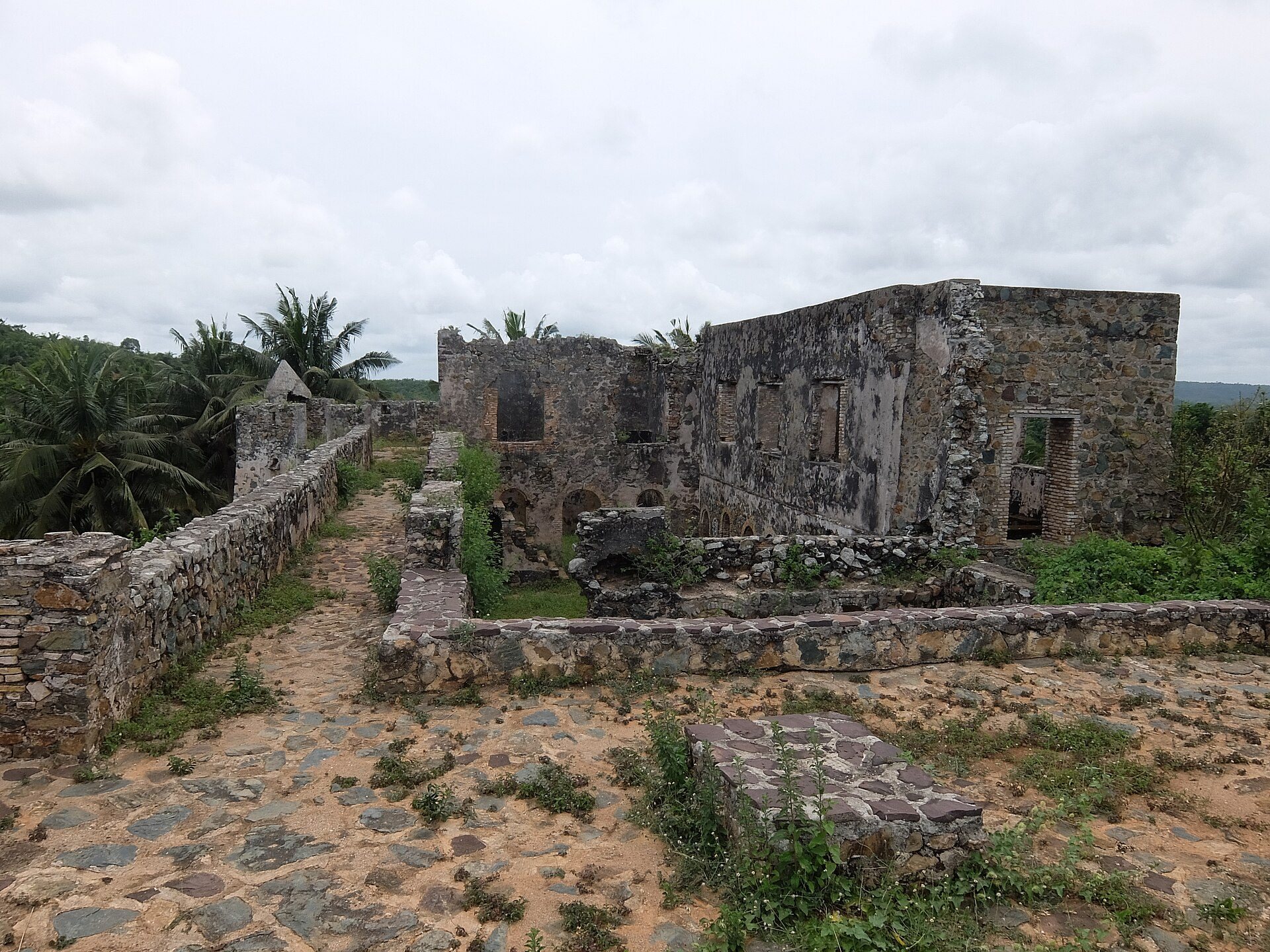
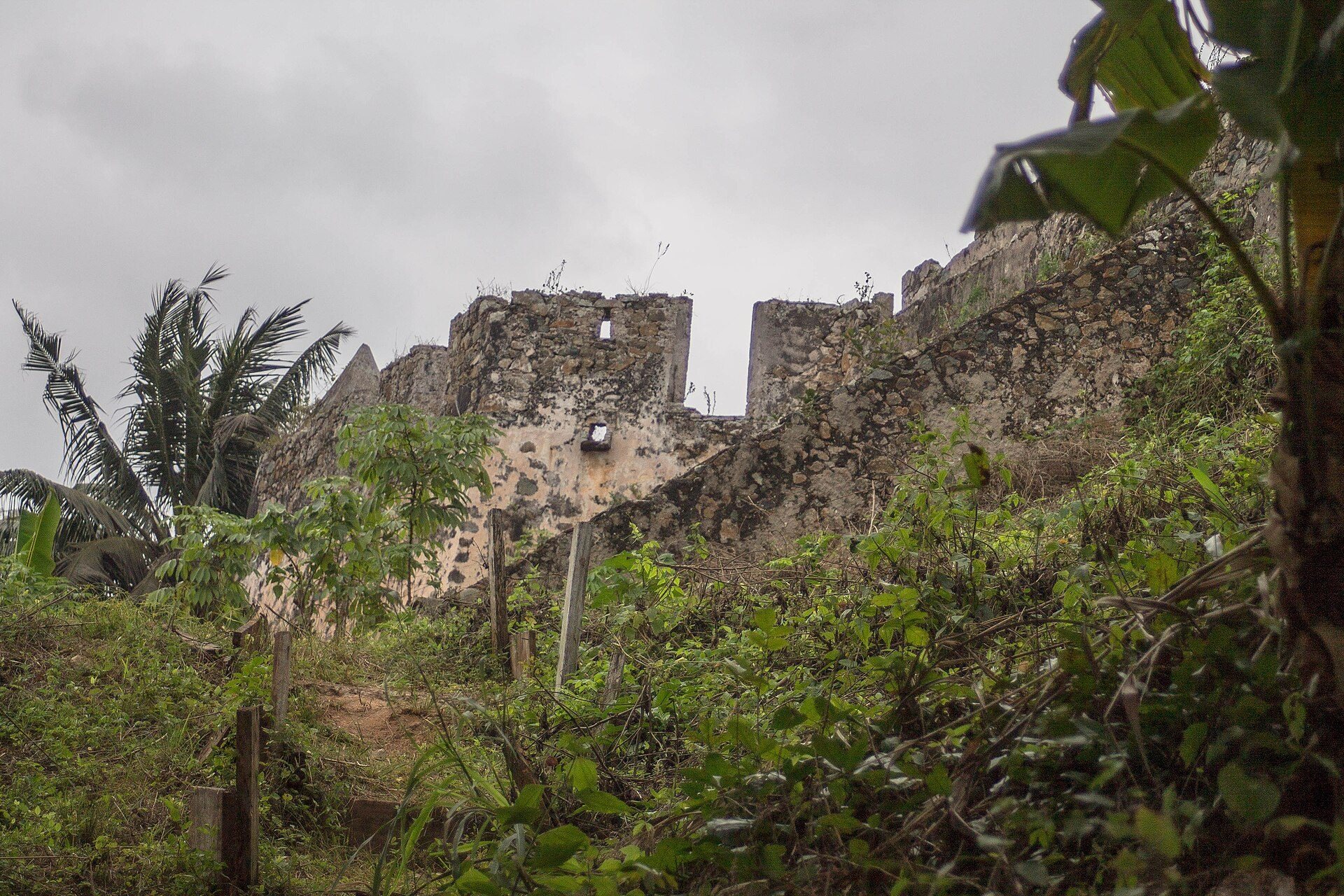
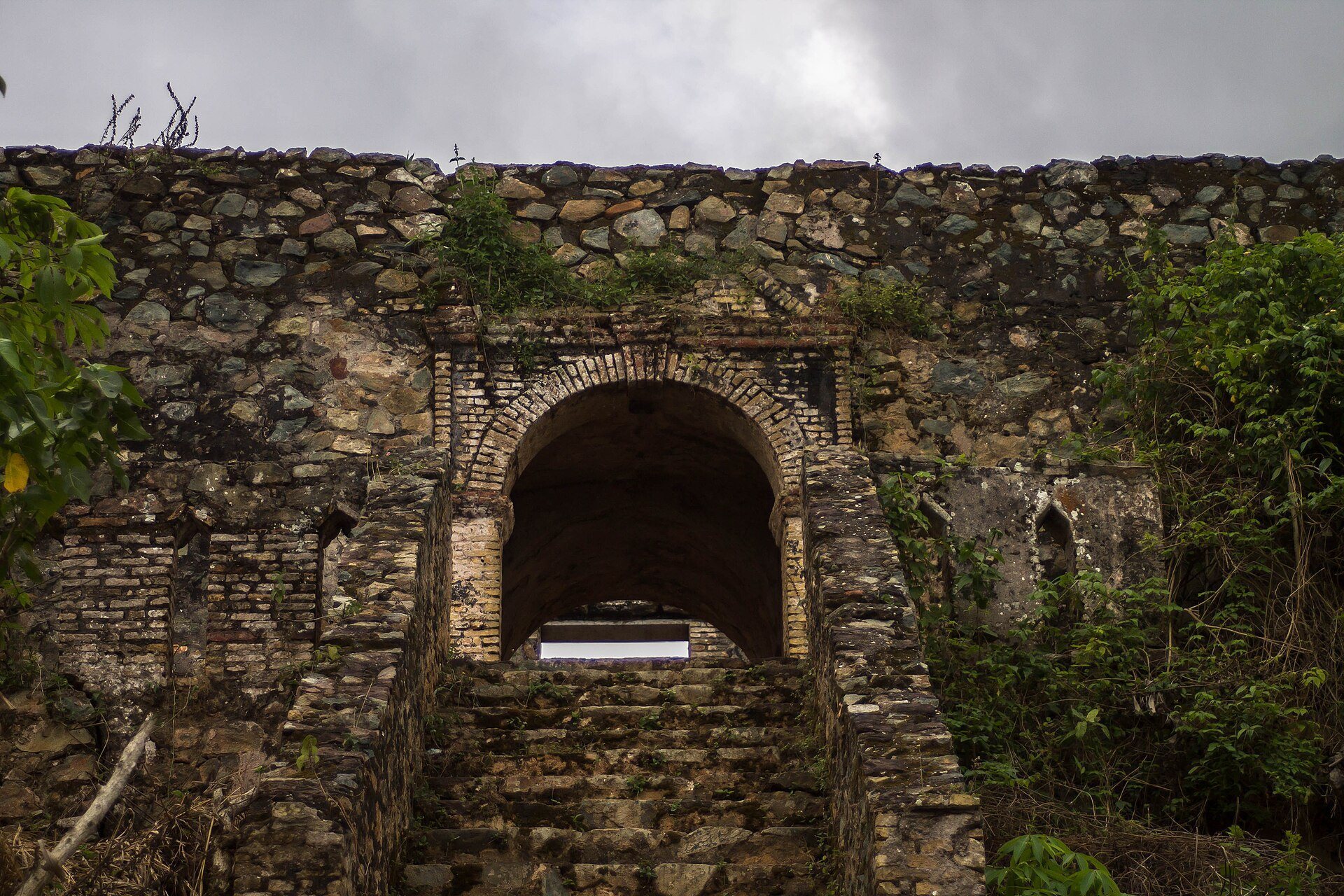
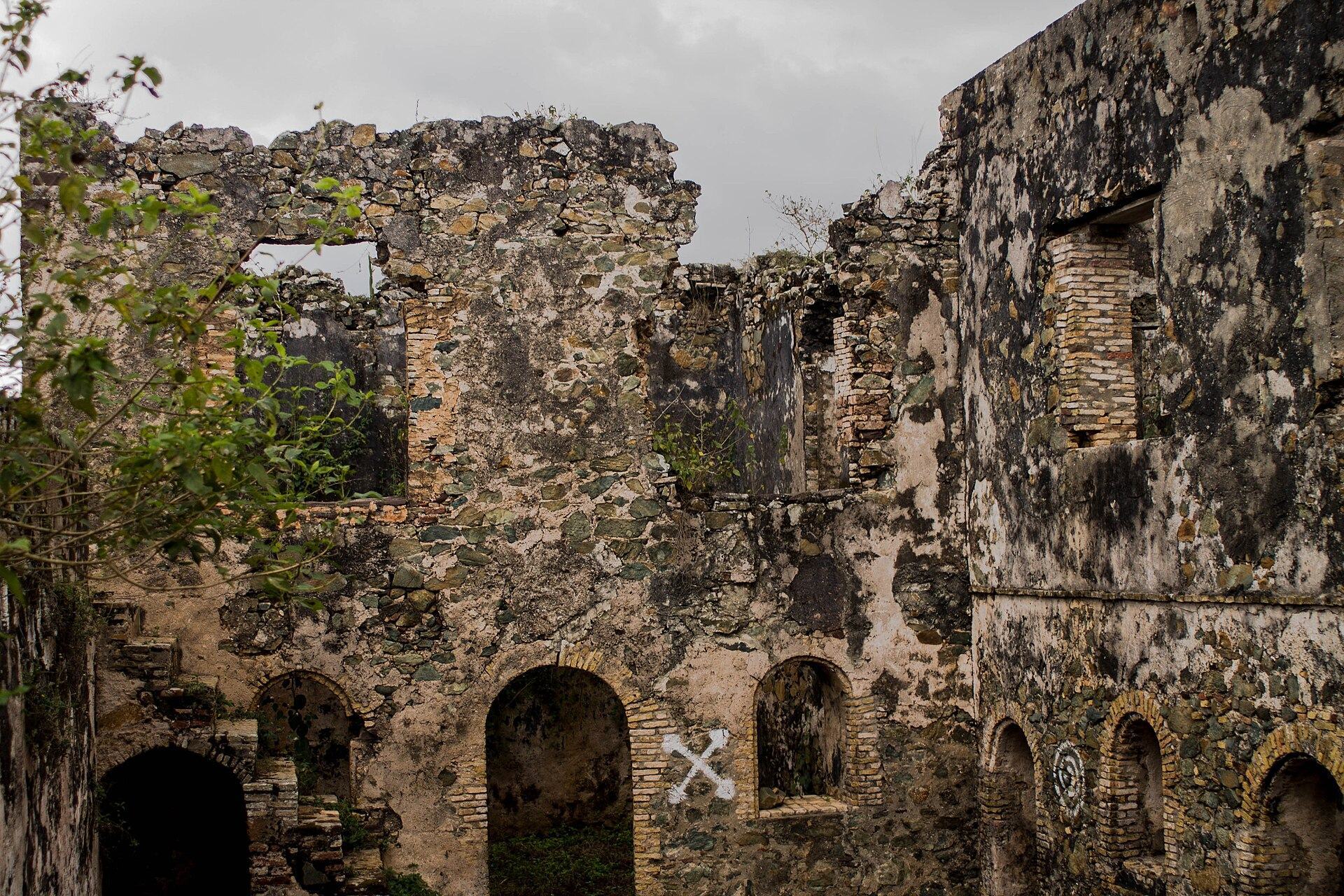
Fort Batenstein survives as ruins on a hill overlooking Butre Bay. It was built as a fortified colonial trading post and formed part of the Dutch defensive and commercial network on the Gold Coast. The Ghanaian state is the site’s current owner.
Eighteenth-century sawmill
An eighteenth-century sawmill formed part of the fort’s working complex. It supplied wood to other forts and to ships requiring construction or repair, linking the installation to the maintenance of the wider coastal network.