Fort Austin: A Palmerston Fort Built to Defend Plymouth
Site at a Glance
- Rating
- 4
- Popularity
- Very Low
- Country
- United Kingdom
- Primary era
- Modern
- Eras represented
- Modern
- Civilizations
- British
- Site type
- Military
- Remains
- Fort
On this page7 sections
History
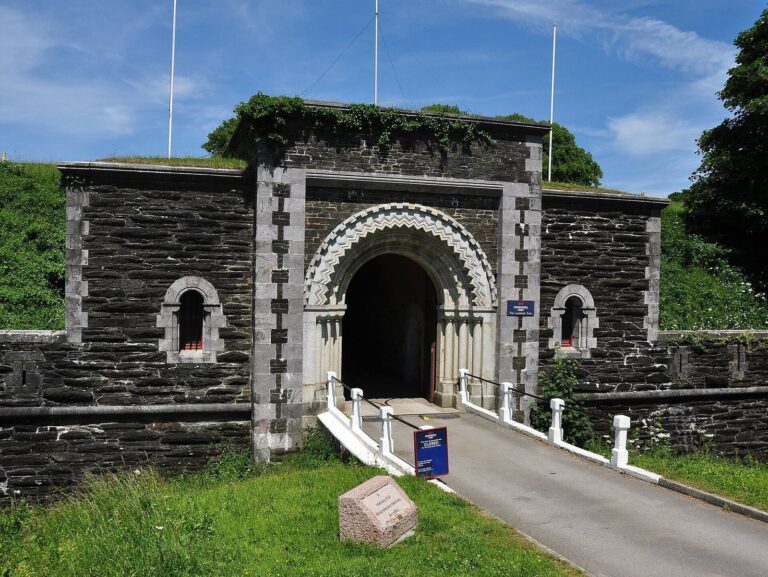
Fort Austin is a fort in the United Kingdom, constructed from 1863 to 1868 to defend the landward approaches to north-east Plymouth and the Royal Naval Dockyard at Devonport.
Construction and defensive purpose
The fort followed the 1859 Royal Commission on National Defence, a British government inquiry whose work prompted a program of national fortification. It belonged to the Palmerston forts, named for Prime Minister Henry John Temple, Viscount Palmerston, who promoted the scheme. Captain Edmund Frederick Du Cane designed Fort Austin. George Baker and Company undertook the building work, which the Royal Engineers, the British Army’s military engineering corps, completed.
Military decline and later use
By the early 1900s, Fort Austin was judged obsolete as a defensive position and its guns were removed. During the Second World War, the Devon and Cornwall Auxiliary Unit used the fort. The unit was prepared to carry out resistance operations in the event of an invasion.
The War Office sold Fort Austin to Plymouth City Council in 1958. It received Grade II listing in 2008, an English designation for a building of special architectural or historic interest. The fort is now a Thai Buddhist temple established by Chao Khun Laow Panyasiri, a senior Thai Buddhist monk. It is described as privately owned, with Plymouth City Council identified as its controlling authority.
Remains
Fort structure and features
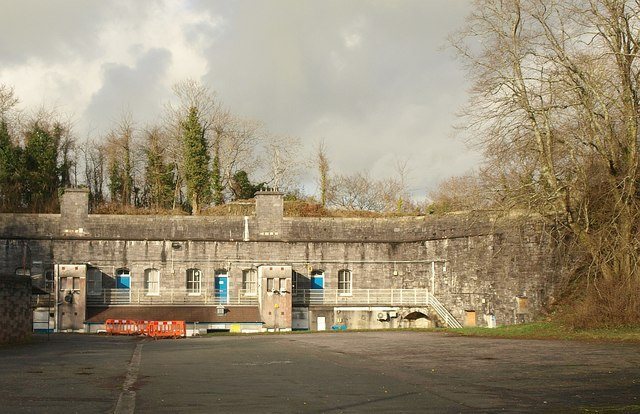
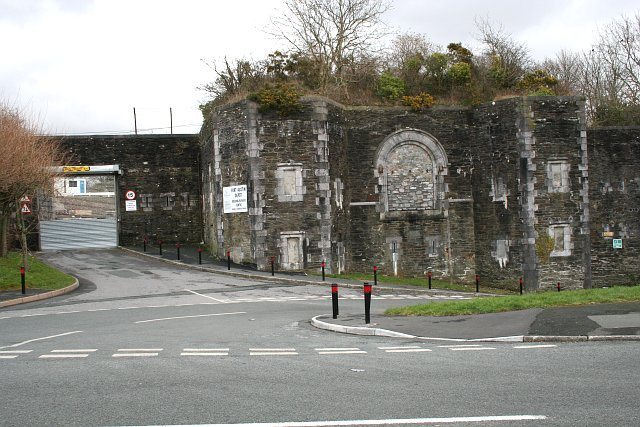
Built of earth and masonry, the fort remains largely intact despite alterations. Its surviving features include a barrack block in the rear section and the original entrance, which has been bricked up.
Barrack block
The barrack block provided accommodation for 60 members of the garrison.
Defensive armament
Fort Austin’s stated armament comprised fifteen guns and five mortars.