Fort Al Jalali: A Portuguese Harbor Fortress in Muscat, Oman
Site at a Glance
- Rating
- 4.3
- Popularity
- Low
- Country
- Oman
- Primary era
- Early Modern
- Eras represented
- Early Modern
- Civilizations
- Omani, Portuguese
- Site type
- Military
- Remains
- Fort
On this page10 sections
History
Fort Al Jalali is a Portuguese-built harbor fortress in Muscat, Oman, constructed between 1586 and 1588 in the late sixteenth century to protect the harbor. It stands in Old Muscat and was known to the Portuguese as Forte de São João. The fortress was built under Philip I of Portugal after Ottoman forces sacked Muscat for a second time in 1582, and it appears to have incorporated the foundations of an older structure.
Portuguese control of Muscat
Muscat became a regular Portuguese port of call during the early sixteenth century, as Portuguese campaigns under Afonso de Albuquerque helped establish control over maritime routes and ports in the western Indian Ocean. Portuguese construction in the town included barracks, a warehouse, and a chapel begun in 1527 and apparently completed in 1531. A first fort was built elsewhere in the harbor in 1550, but Ottoman forces destroyed it during the siege of 1552.
The later fortress of Al Jalali was intended to secure the harbor after the Ottoman attack of 1582. Following the Persian-English capture of Hormuz in 1622, the Portuguese strengthened the fort, apparently planning to make it their principal regional stronghold. In 1623, however, Fort Al-Mirani across the harbor was still regarded as the more important of the two. Portuguese walls and towers were added around Muscat in 1625, and remains of these wider defenses survive on the rocky ridges surrounding the bay.
The Omani capture
Omani forces captured Muscat in December 1649. Portuguese defenders withdrew into the harbor fortifications and surrendered on 23 January 1650. The fall of Muscat began a major expansion of Omani maritime power and ended Portuguese control of the town.
Persian occupation and Al Said renovation
Al Jalali was damaged during the Omani civil wars of 1718 to 1747. Persian forces captured the harbor forts in 1738 after being invited to support the rival Imam Saif bin Sultan II, then withdrew after plundering the area. They returned in 1743, captured Muscat, and initially left Al Jalali and Al-Mirani resisting. The forts eventually surrendered after forged orders were produced when Saif bin Sultan II had been deprived of his personal seal.
Ahmad bin Said al-Busaidi, the first ruler of the Al Said dynasty, captured the forts in 1749 and extensively renovated Al Jalali. Under his rule, its function developed from passive harbor defense into a base from which troops could be dispatched. His sons Sultan and Saif later controlled Al Jalali and Al-Mirani during their conflict with their father in the early 1780s. They used the forts while bombarding Muscat and held Al Jalali for several months after Ahmad retook Al-Mirani. They surrendered in January 1782 after their brother Said bin Ahmad escaped from imprisonment inside the fort.
Refuge, prison, and political history
Al Jalali continued to serve as a refuge or prison for members of Oman’s ruling family. During the reign of Said bin Ahmad from 1783 to 1789, the governor of Muscat imprisoned one of his sons in the fort until another son freed him. In 1803, Badr bin Saif attempted to seize Al Jalali while the ruler of Oman was on pilgrimage in Mecca. According to the recorded story, Badr was detected after being smuggled into the fort in a large box. In 1850, Hamad, who had become governor of Sohar, died in imprisonment there after his detention was arranged following a revolt connected with efforts to suppress the slave trade. Sultan Faisal bin Turki took refuge in the fort in 1895 during a tribal sack of Muscat.
For most of the twentieth century, Al Jalali was Oman’s principal prison, holding about 200 prisoners. Among them were Omanis captured during or after the Jebel Akhdar War of 1954 to 1959 and prisoners from the Dhofar Rebellion of 1962 to 1976. The prison became notorious for harsh conditions. In 1963, 44 prisoners escaped, although most were recaptured, and in 1969 a guard helped two members of the royal family escape. The prison closed in the 1970s.
Restoration and later role
The fort was restored in 1983 and converted into a private museum of Omani cultural history. It remains owned by the Government of Oman and is not open to the general public, although visiting dignitaries, including heads of state, may be admitted. Al Jalali continues to be used for special events connected with the Omani monarchy and harbor ceremonies. It is also listed as Portuguese heritage.
Remains
Harbor setting and defenses
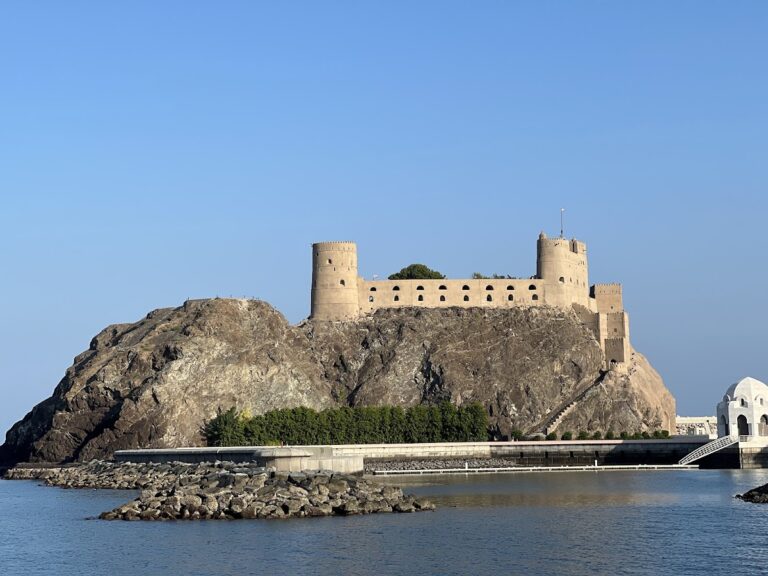
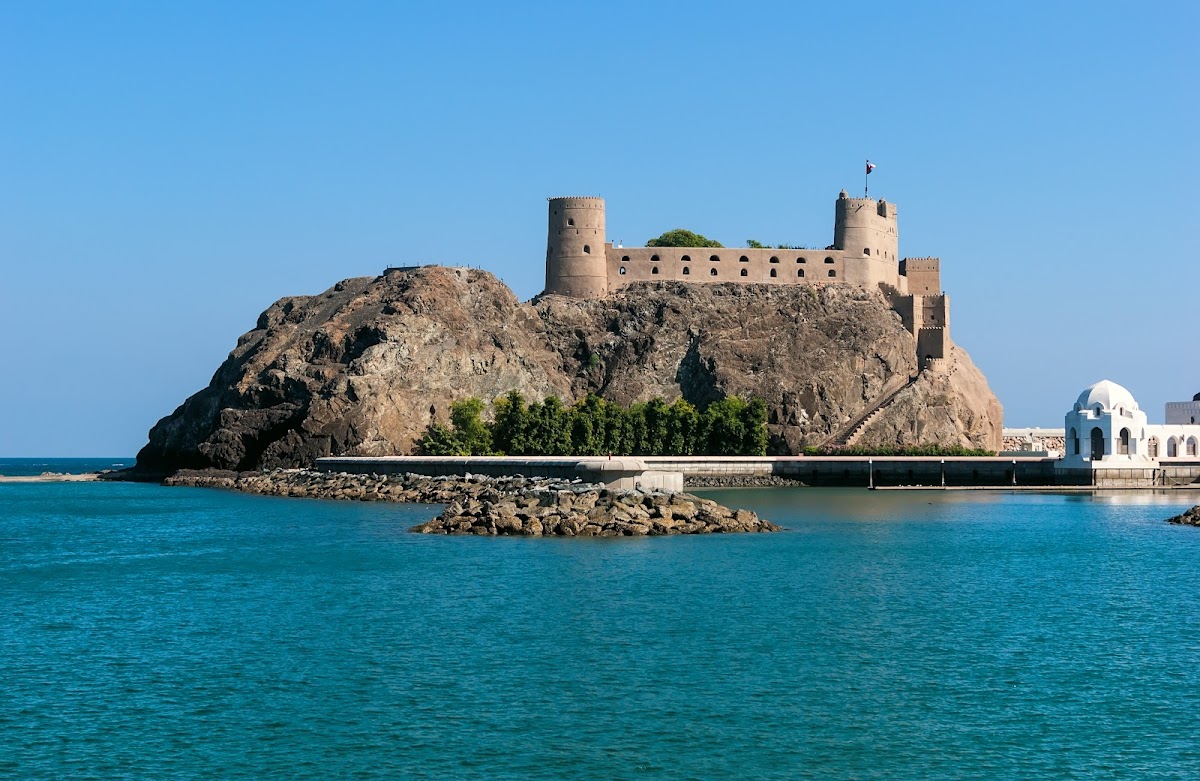
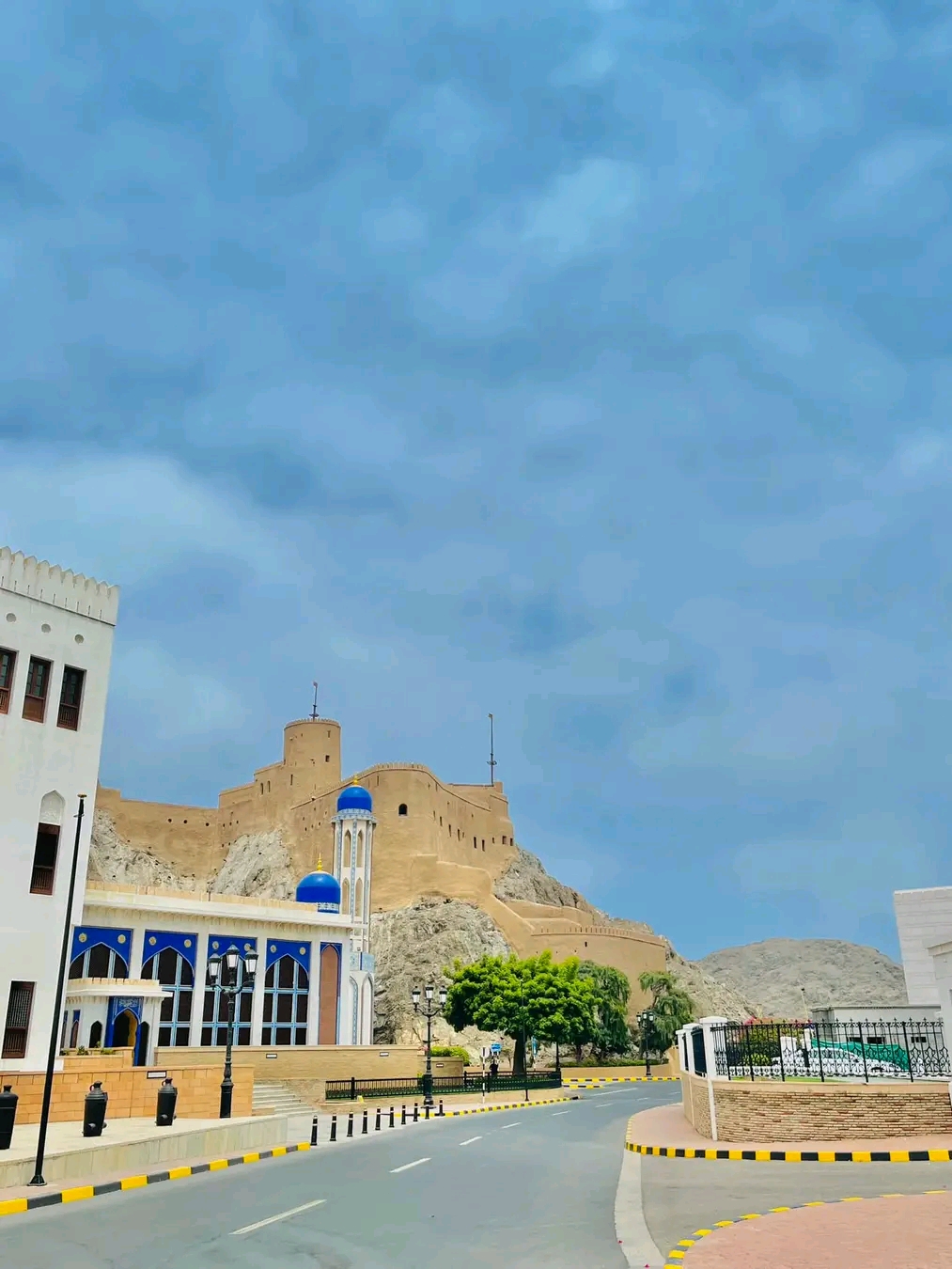
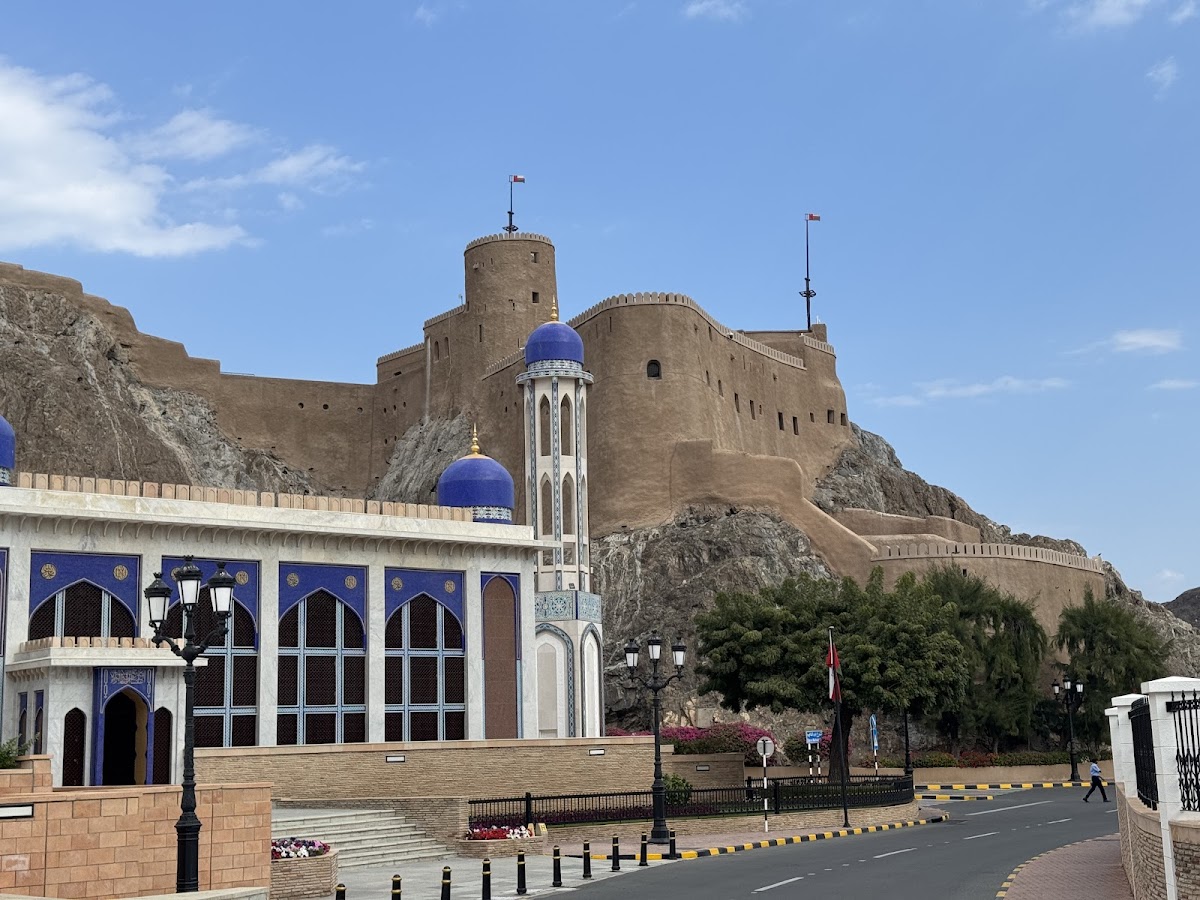
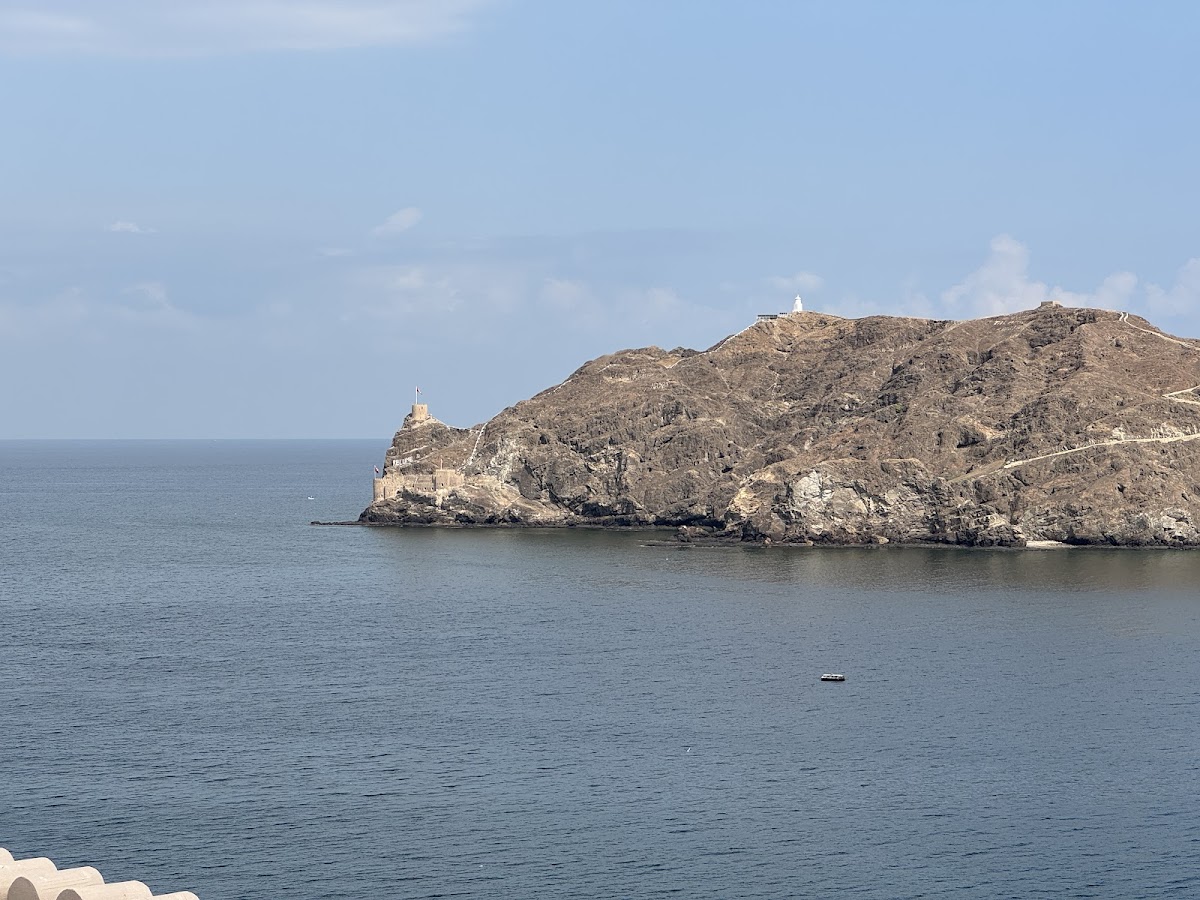
Al Jalali occupies a rocky outcrop on the eastern side of Muscat harbor and faces Fort Al-Mirani on a separate outcrop to the west. Together with Al-Mirani, Muttrah Fort farther west, and other fortifications on the ridges around the bay, it formed part of Muscat’s defenses against attacks from the sea. Old Muscat lies beside a natural harbor on the Gulf of Oman, between the Persian Gulf and the Indian Ocean. The bay is about 700 meters across, protected from the open sea by a rocky island, while surrounding mountains make access from the landward side difficult.
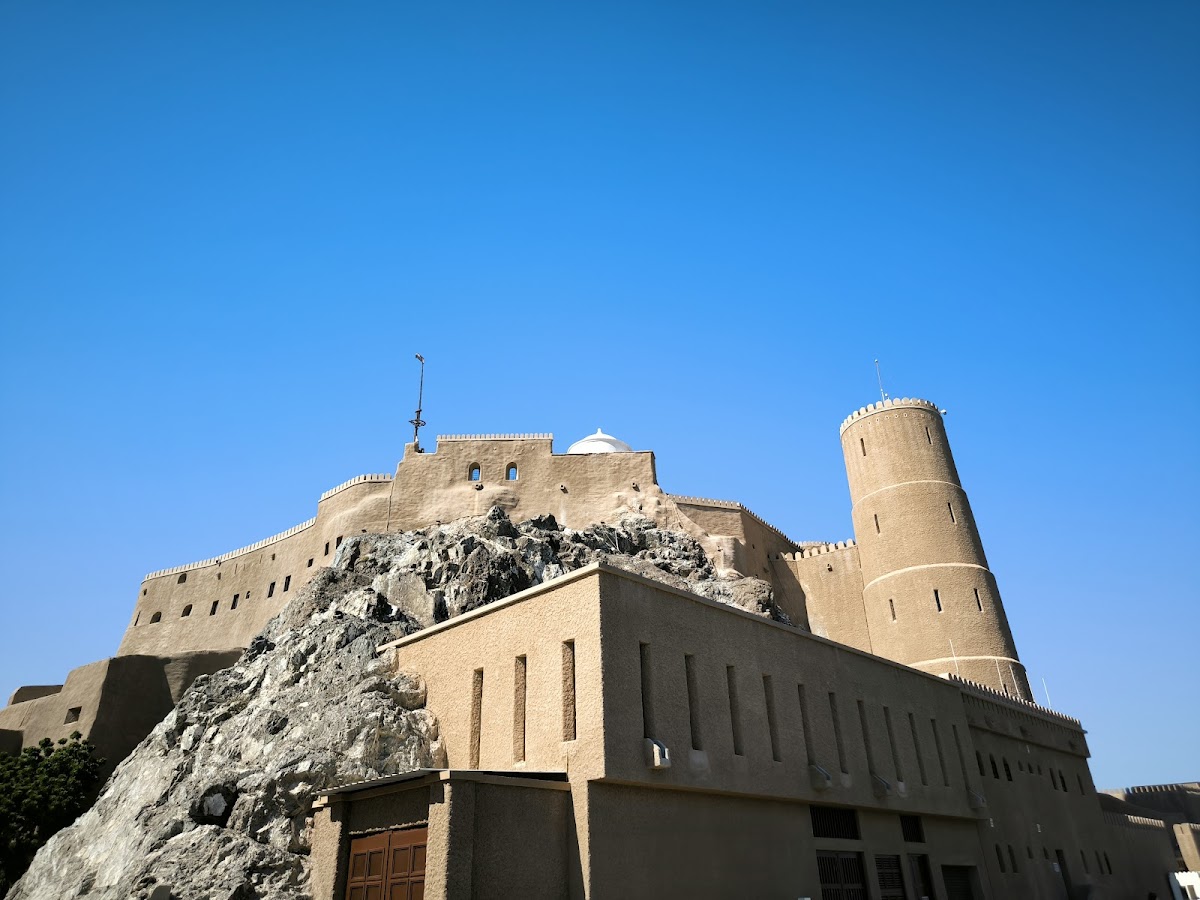
The summit of the outcrop was leveled before construction, and the surrounding rock was cut back to make the fort walls difficult to scale. Portuguese builders added artillery positions aimed toward the harbor, a cistern, which is a constructed reservoir for storing water, and cannon armament. The present fortress consists of two towers joined by a wall pierced with gun ports, or openings through which cannons could be fired. Later additions included a large central building and round towers, constructed in the decades after Ahmad bin Said’s renovation.
Courtyard and internal structures
A central courtyard planted with trees is surrounded at several levels by rooms, enclosures, and towers. The different spaces are linked by a complex system of stairways that may originally have served a defensive purpose. Massive doors with projecting iron spikes protect some sections. During the fort’s modern use as a museum, the interior was extensively landscaped with fountains, pools, trees, and gardens, a treatment that has been described as “Disneyfication.”
Museum collections
The fort’s military displays include cannons installed at the defensive gun positions, shot, ropes, firing equipment, old muskets, and matchlocks. A matchlock is an early firearm ignited by a smoldering cord or similar device. Maps and historical illustrations are also exhibited, including a plaque showing the winds and currents of Muscat Bay. One room has a ceiling made from palm logs and contains cultural relics of Oman.
The central square tower houses the main museum displays, with rugs, pottery, jewelry, weapons, household utensils, and incense holders. A dining hall overlooking the courtyard is intended for distinguished visitors. An old manually operated breeze-making device is preserved inside the fort and has since been mechanized. Portuguese-period inscriptions remain among the surviving evidence of the fortress’s original builders.