Falkenstein Castle: A Medieval Imperial Fortress in Austria
Site at a Glance
- Rating
- 4.7
- Popularity
- Low
- Country
- Austria
- Primary era
- Medieval
- External website
- Open
- Eras represented
- Medieval, Early Modern
- Civilizations
- Duchy of Austria, Holy Roman Empire
- Site type
- Military
- Remains
- Castle
On this page9 sections
History
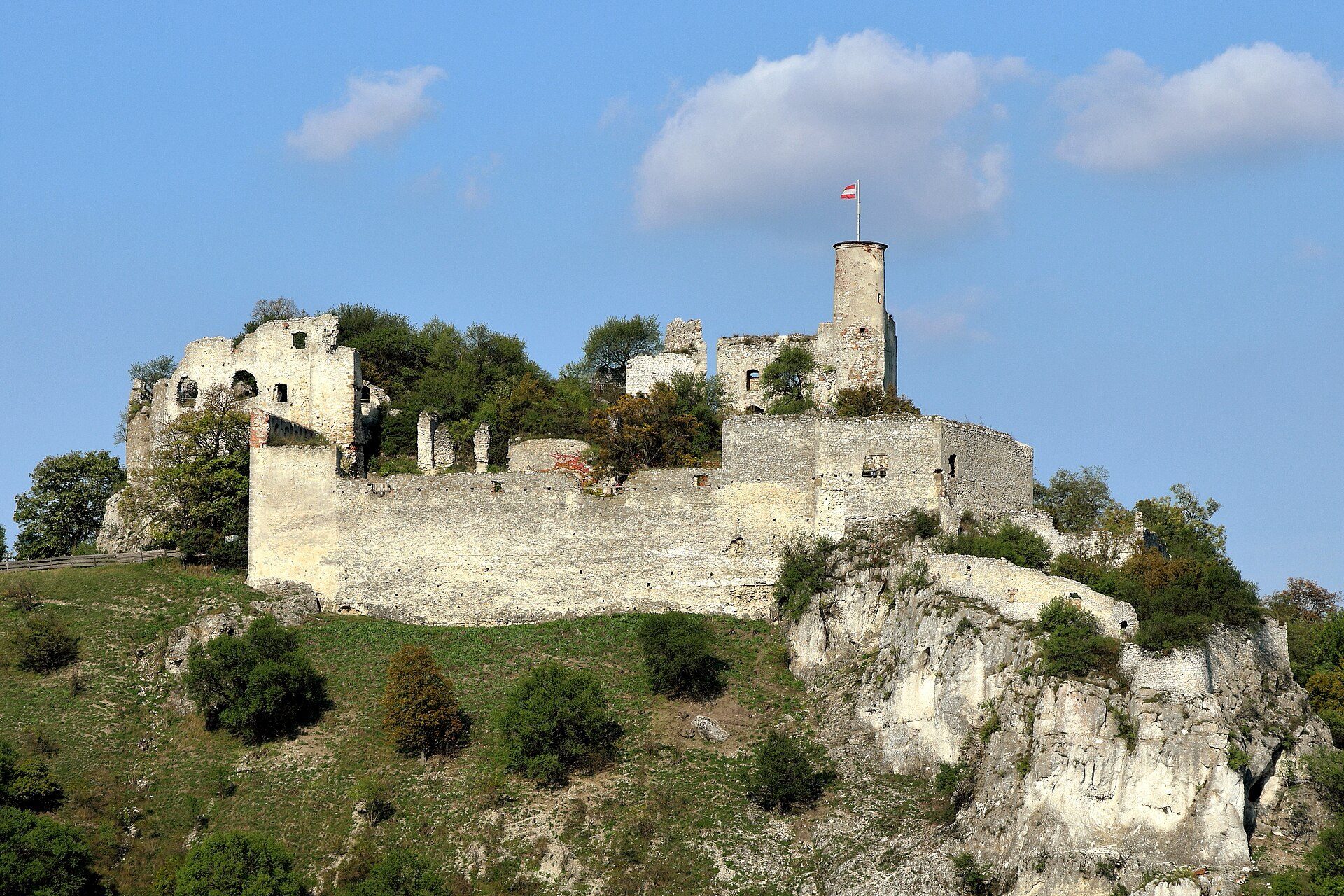
Falkenstein Castle is a medieval hilltop fortress in Austria, established around 1050 as an imperial fortress in the northern Weinviertel of Lower Austria. Probably founded during the second Bavarian colonization of the region, it was associated with the creation of the Falkenstein parish and helped protect the imperial realm, the Marchfeld, and the Moravian plain.
Imperial Foundation and Austrian Rule
The foundation is generally attributed to Emperor Henry III, a Salian ruler of the Holy Roman Empire, although the Counts of Neuburg-Falkenstein were also connected with its establishment as regional nobles or vassals. In 1106, Falkenstein passed to the Austrian rulers in connection with the marriage of Leopold III, Margrave of Austria, to Agnes of Waiblingen, the emperor’s daughter.
The castle remained a princely fief until 1571. During that period, its lordship was repeatedly pledged to noble families, including the Liechtensteins. From 1480 to 1571, it was held by the Fünfkirchen family. After Hans III Fünfkirchen died, the castle was sold to the Trautson family, while his son Johann Bernhard Fünfkirchen was excluded from the succession. In 1572, Emperor Maximilian II sold Falkenstein and its lordship to Hans Freiherr von Trautson.
Anabaptist Imprisonment
In 1539, 150 Anabaptists were imprisoned at Falkenstein. The Anabaptists were a radical Reformation movement that rejected infant baptism and promoted adult baptism. In 1540, the prisoners were transferred to Trieste and sold as galley slaves. The group included Kaspar Braitmichel, a Hutterite chronicler, who escaped. Their fate was also recounted in the Martyrs Mirror, a major historical account of Anabaptist persecution and martyrdom.
Renaissance Transformation and Wartime Capture
From 1600, Hans Trautson’s son, Paul Sixt III Trautson, transformed the medieval stronghold into a Renaissance fortress. The Renaissance was a European cultural and architectural period that revived classical forms and influenced fortification design from the fifteenth through the seventeenth centuries. Construction was completed around 1620 with the erection of the round chapel tower.
During the final phase of the Thirty Years’ War, a European conflict fought from 1618 to 1648 amid religious, dynastic, and political struggles, Swedish forces under General Lennart Torstensson captured Falkenstein in 1645. The castle was not destroyed. Its defenders betrayed it by handing the gate keys to the Swedish troops. A later siege in 1646, led by Jean-Louis Raduit de Souches, was associated with the Swedish withdrawal from the castle.
Decline and Preservation
The castle’s decline began at the end of the seventeenth century, when its owners and local inhabitants dismantled parts of the complex for inexpensive building material. This process continued until the entrance gate was walled up around 1820.
After Prince Johann Wilhelm Trautson, Count of Falkenstein, died in 1775, the Trautson line became extinct. The estate passed to the Auersperg family, followed by an inheritance dispute involving Johann Nepomuk Friedrich von Lamberg, who was related to the Trautson family by marriage. Falkenstein was sold to the Bartenstein family in 1799 and passed to the Vrints family in 1850. Members of the Vrints family held the title Counts of Falkenstein from 1860.
Under the present owner, Georg Thurn-Vrints, the ruins were reopened and an association for their preservation was established. Archaeological excavations have been conducted under the direction of the Federal Monuments Office since 1992. Falkenstein is protected as a historic monument. In 2011, the Anabaptist Vault museum opened in a historic vaulted space within the ruins.
Remains
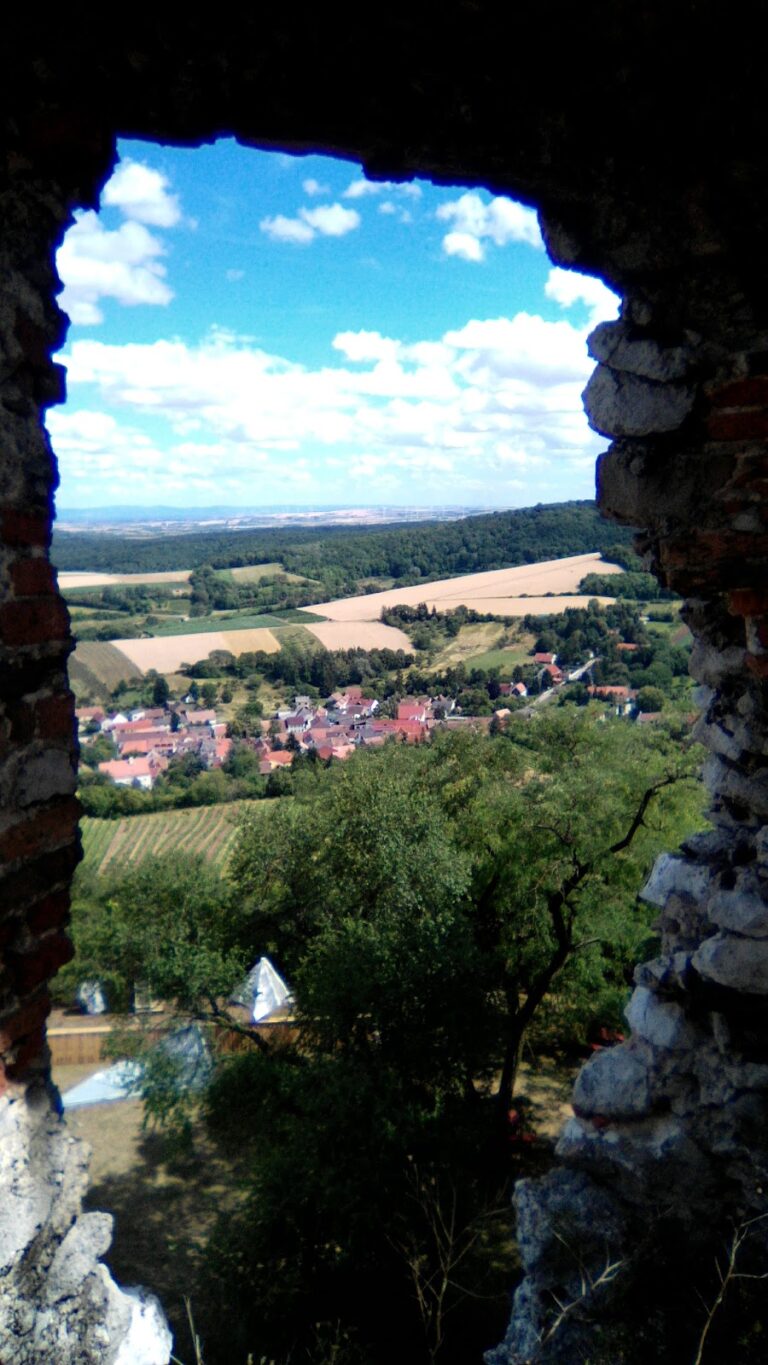
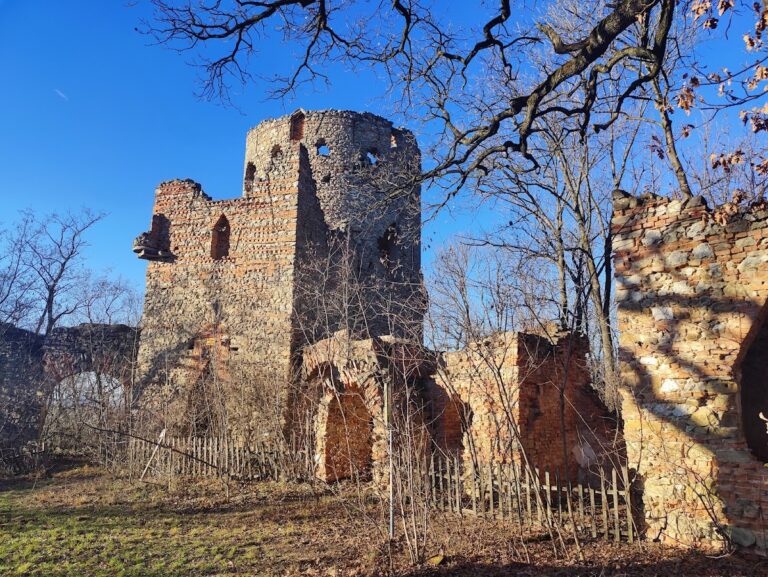
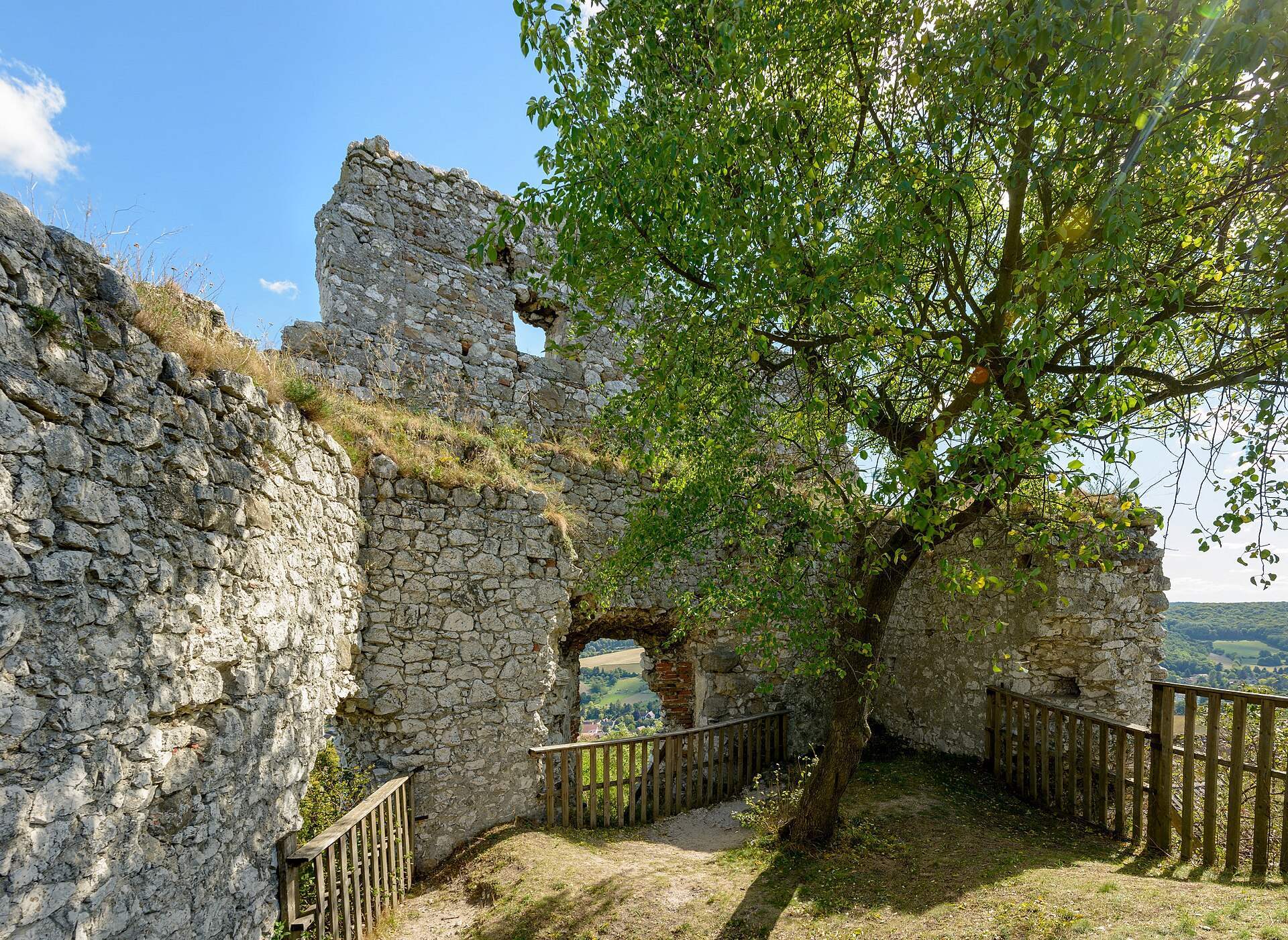
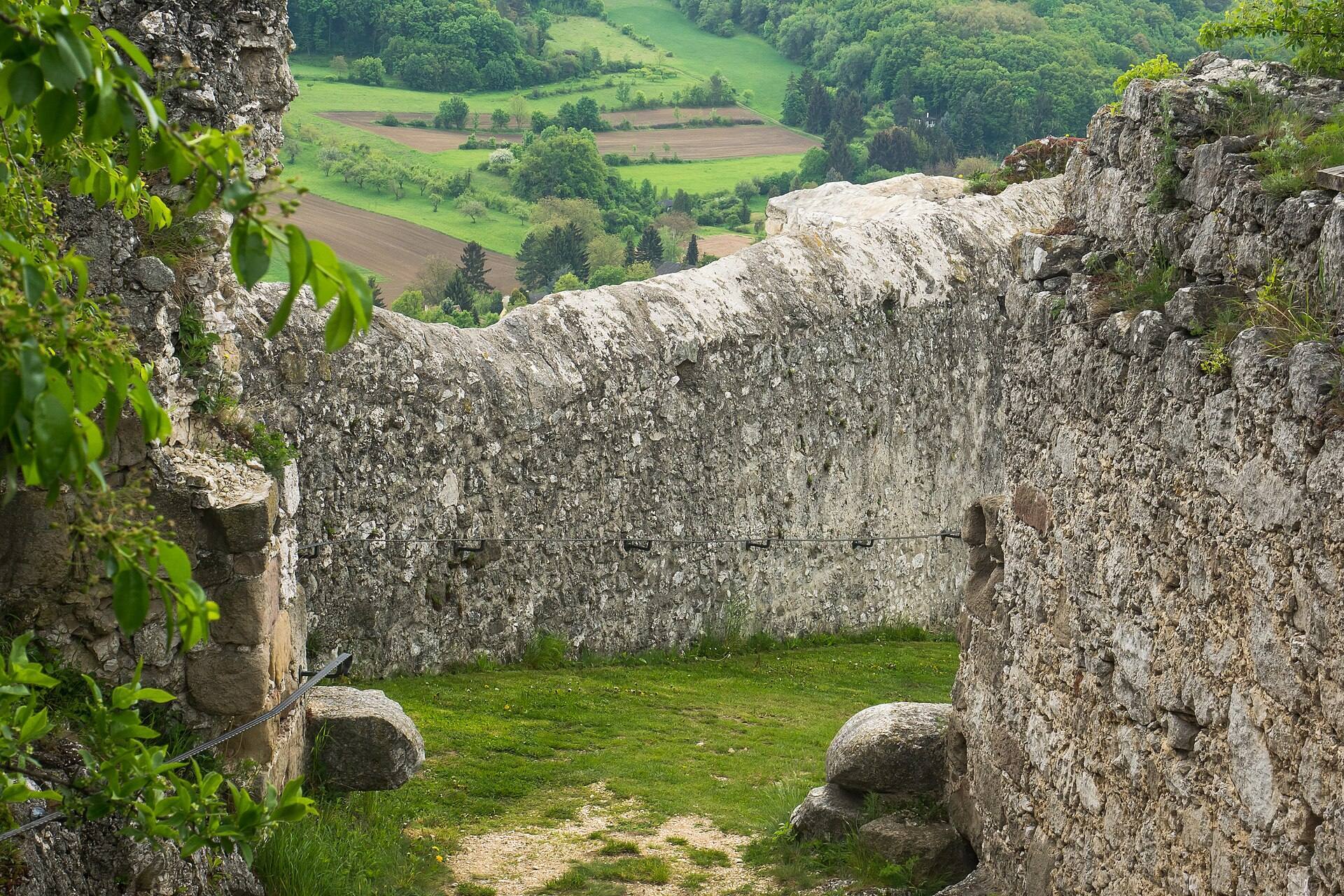
Falkenstein stands at about 415 metres above sea level on a limestone cliff in the Waschberg zone, northwest of the settlement of Falkenstein. Its elevated position provided a wide view across much of southern Moravia and the surrounding plain. The surviving complex is a hilltop ruin formed through several building phases, beginning with the original fortress and continuing with later enlargements and Renaissance defenses.
Fortifications and Courtyards
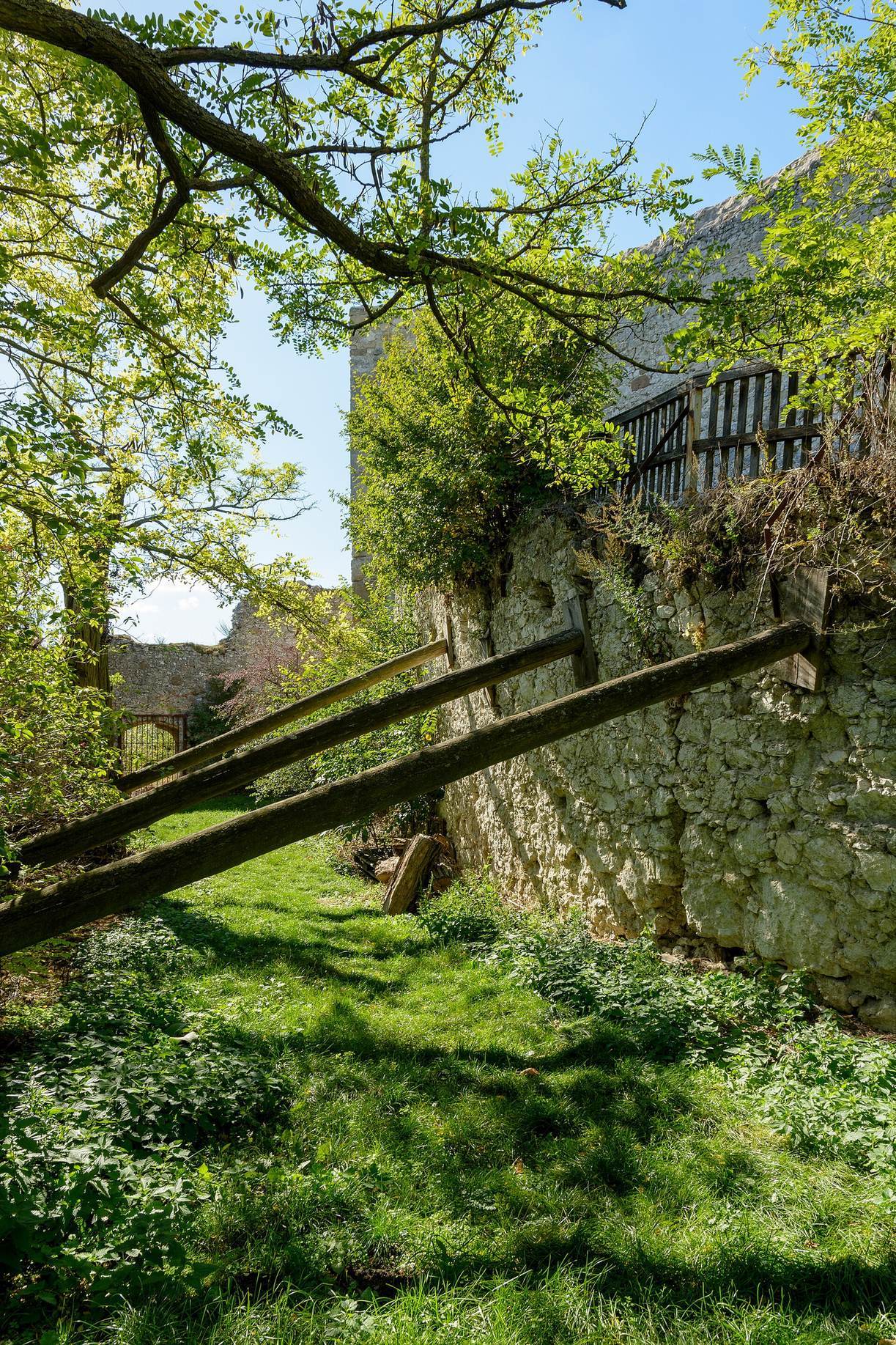
The Renaissance rebuilding added a southern wall with a projecting rondel, a rounded artillery or defensive structure, together with a zwinger, an outer defensive area between fortification lines. A third courtyard and an area known as the Rose Garden expanded the complex into a three-part enclosure. The castle also contained a tournament courtyard, which remains part of the surviving arrangement and is used for seasonal performances and medieval events.
Chapel Tower
The round chapel tower was erected around 1620 as the final major element of the Renaissance transformation. It forms part of the ruined fortress complex and reflects the period when Falkenstein was being reshaped from a medieval stronghold into a Renaissance mountain palace.
Anabaptist Memorial Features
A historic vaulted space within the ruins houses the Anabaptist Vault museum, which commemorates the prisoners held at Falkenstein in 1539. The courtyard contains a scale reconstruction of the hull of a historical galley, recalling the transfer of the imprisoned Anabaptists to Trieste and their sale as galley slaves in 1540.