Evangelical Church of the Augsburg Confession in Dobšiná: A Late Gothic Church in Slovakia
Site at a Glance
- Rating
- 4.2
- Popularity
- Very Low
- Country
- Slovakia
- Primary era
- Modern
- External website
- Open
- Eras represented
- Medieval, Early Modern, Modern
- Civilizations
- Austria-Hungary, Habsburg, Hungarian
- Site type
- Religious
- Remains
- Church
On this page7 sections
History
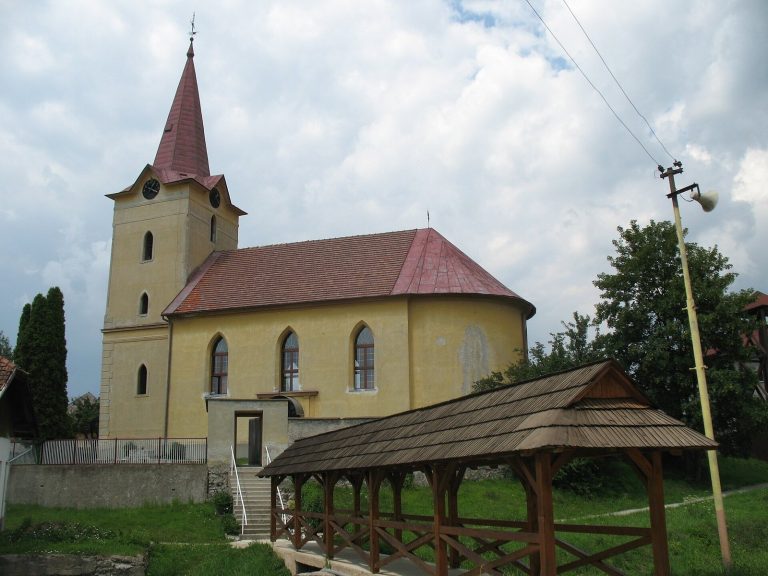
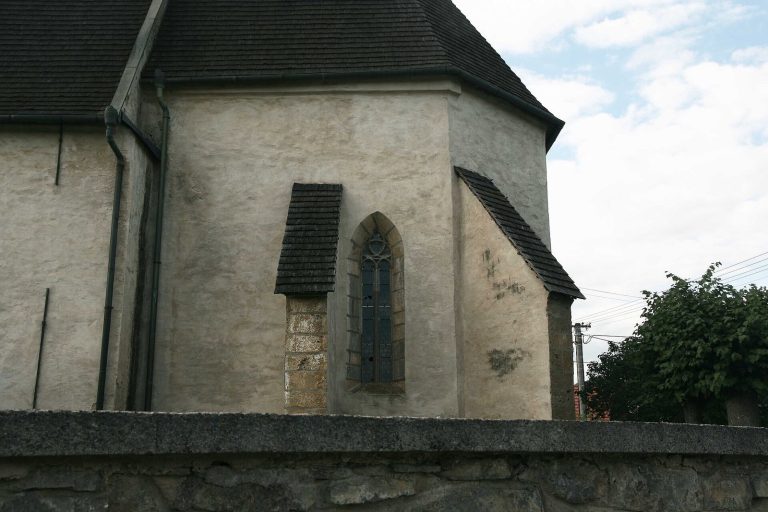
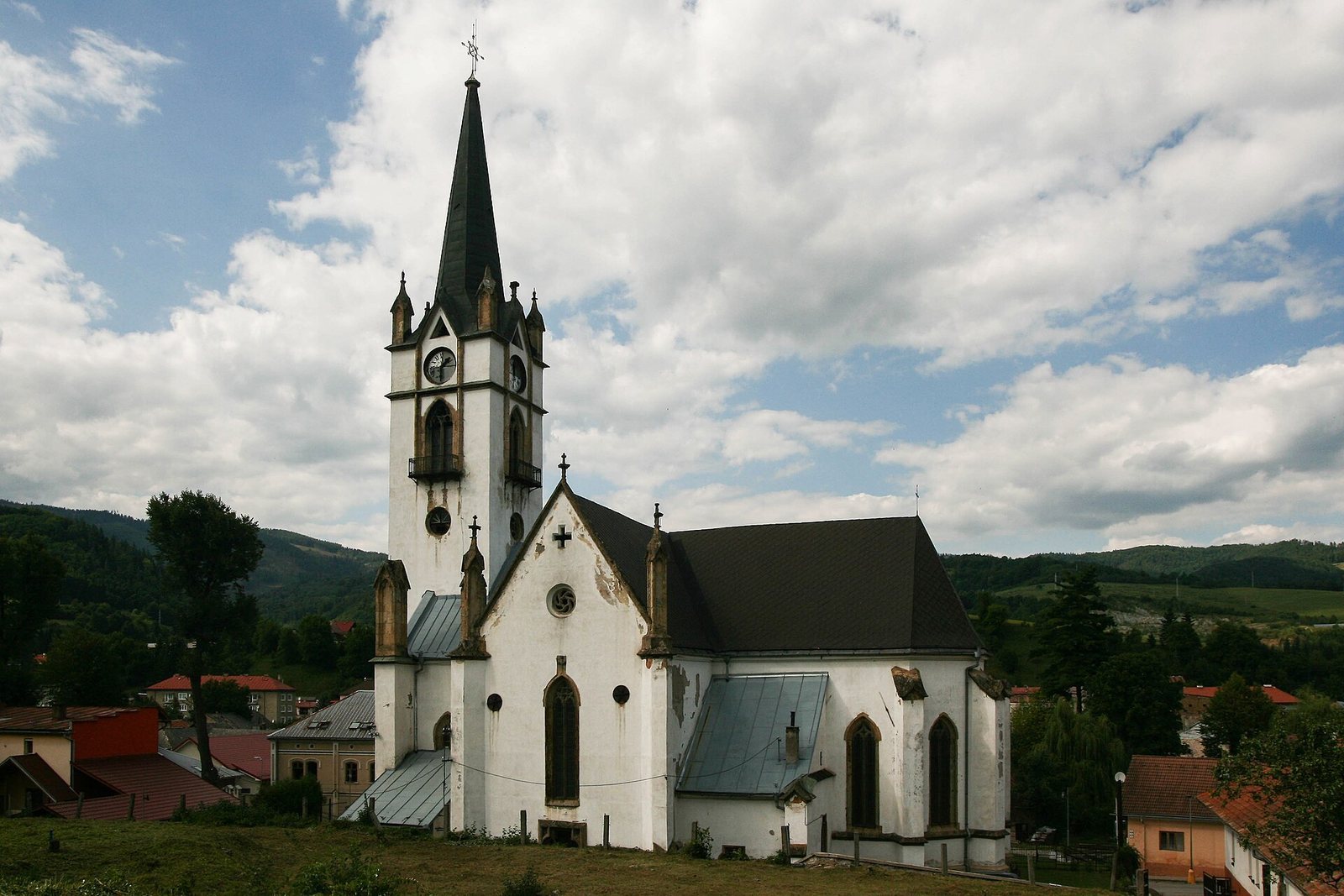
The Evangelical Church of the Augsburg Confession in Dobšiná, Slovakia, is a Protestant church whose late Gothic origins reach back to the fifteenth century. A Chapel of Saint Valentine stood on the site during the first half of the fourteenth century, and a single-nave late Gothic church was built beside it in 1480. The date is also the first written reference to a church in Dobšiná. The quality and extent of the medieval paintings later found in the sanctuary reflect the town’s economic prosperity during the second half of the fifteenth century.
Medieval origins and the Reformation
The church has remained in Protestant hands since the Reformation. Its present congregation belongs to the Evangelical Church of the Augsburg Confession, the Lutheran tradition based on the confession of faith presented at Augsburg in 1530. Administratively, it forms part of the Eastern District and Gemer Seniorate within the Dobšiná congregation.
Expansion and rebuilding
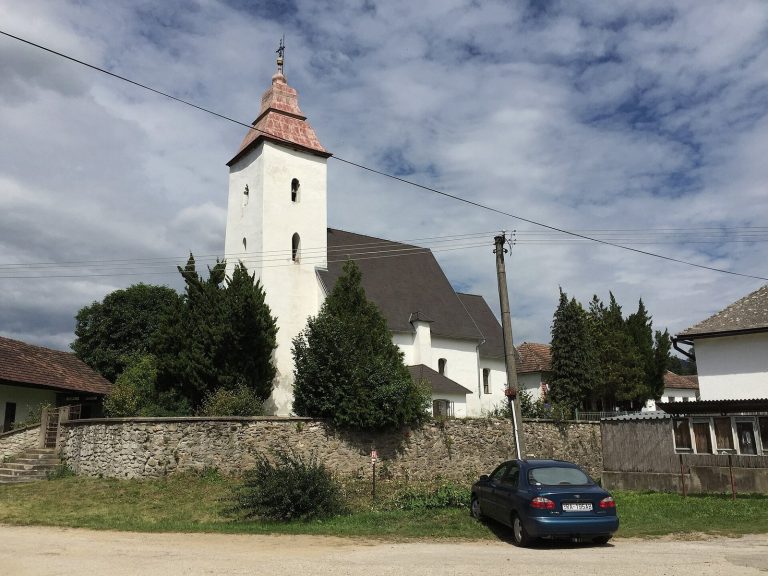
In 1641, the Chapel of Saint Valentine and the late Gothic church were joined into one complex. Population growth led to a further enlargement in 1727, when a transept, the crosswise part of a church, was added. The formerly separate bell tower was subsequently connected to the church, changing the relationship between the main building and the tower. A major rebuilding in 1891 gave the church its predominantly Neo-Gothic appearance, a nineteenth-century revival of medieval Gothic architecture, while preserving its late Gothic origins.
Modern recognition and restoration
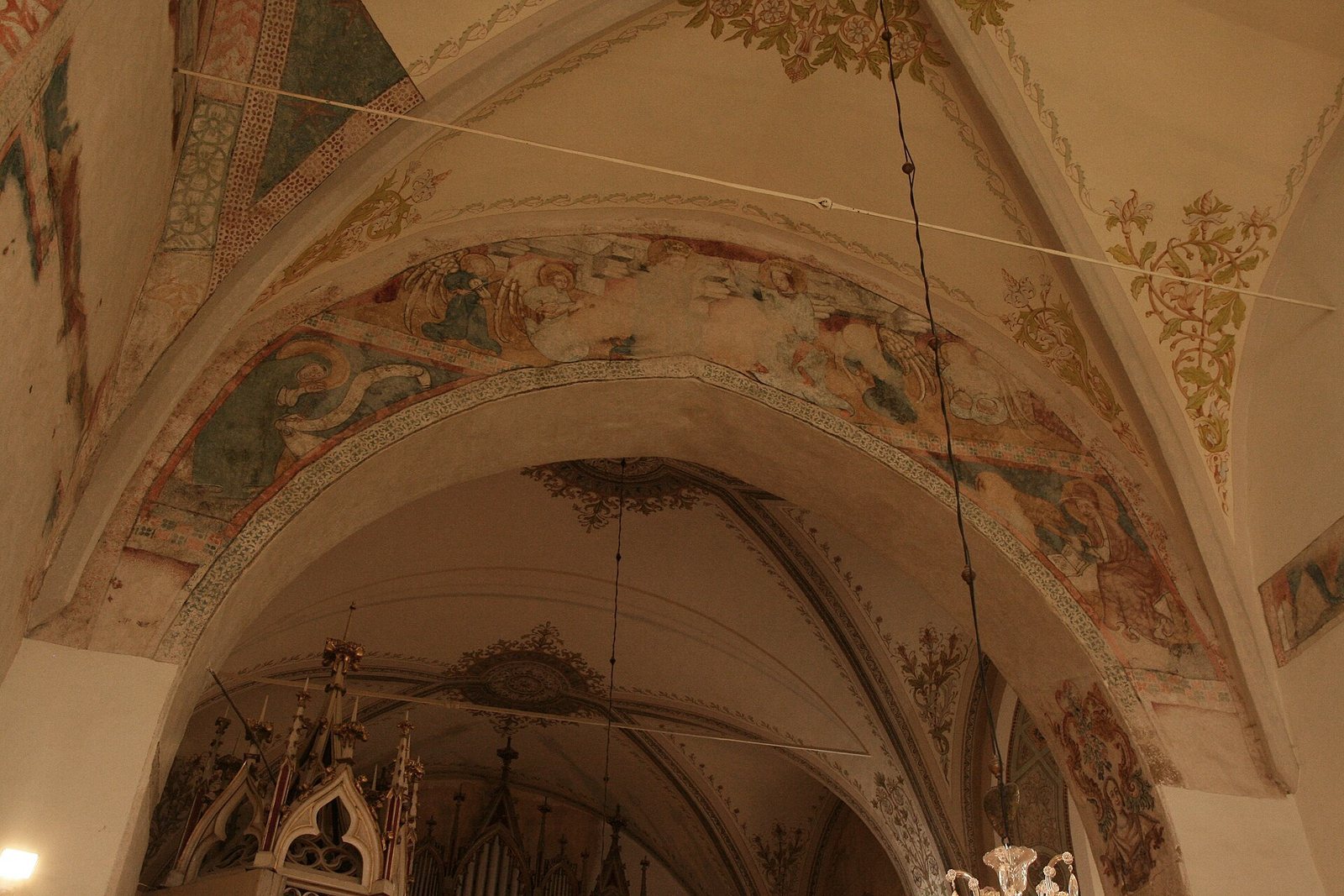
The church was declared a national cultural monument of the Slovak Republic on 6 May 1963 and entered the Central List of the Monument Fund under number 487. An examination of the sanctuary in 2002 revealed original Gothic frescoes, increasing recognition of the church’s historical importance. Restoration work followed 1989 and helped preserve the building and its surviving historical fabric.
Remains
Plan and sanctuary
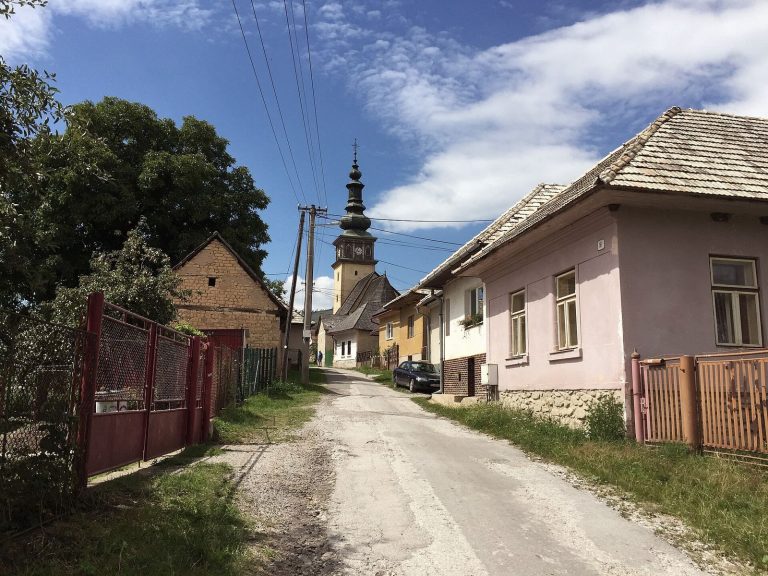
The church stands on Zimná Street in the centre of Dobšiná and has a Greek-cross plan formed through successive alterations. Its original late Gothic structure was a single-nave building. The addition of the transept produced the cross-shaped layout, and the later connection of the bell tower further integrated the complex. The sanctuary, or presbytery, the liturgical area around the main altar, contains medieval frescoes. On the left side of the triumphal arch, which separates the nave from the sanctuary, Hildegard of Bingen appears in monastic dress. She was a twelfth-century German Benedictine abbess, religious writer, composer, and visionary. German colonists brought her veneration to the church, and the image is described as her only representation in Slovakia. On the right, Saint Jerome wears a cardinal’s hat and removes a thorn from the paw of a wounded lion, following the traditional legend associated with him.
Furnishings and tower
The interior preserves Baroque paintings of the four Evangelists, together with a stone baptismal font, a wooden pulpit, and a wooden Protestant gallery. A two-manual organ made in 1876 by the Viennese organ-builder Karl Hesse forms another important part of the furnishings. The sacristy contains a memorial plaque commemorating the Turkish incursion into Dobšiná, with an inscription in Latin and Old German. The tower retains historic tower clocks and three bells made after the First World War, adding later layers to the church’s medieval and nineteenth-century fabric.