Ericsberg Castle: A Baroque Estate in Sweden
Site at a Glance
- Popularity
- High
- Country
- Sweden
- Primary era
- Early Modern
- Eras represented
- Early Modern, Modern
- Civilizations
- Swedish
- Site type
- Domestic
- Remains
- Castle
On this page7 sections
History
The Pintorp Estate and the Gyllenstiernas
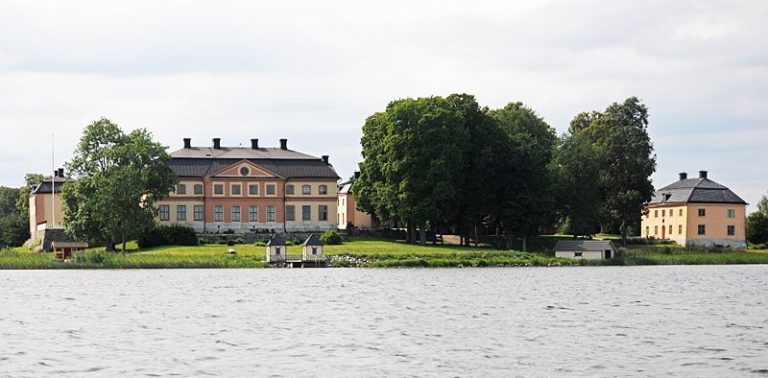
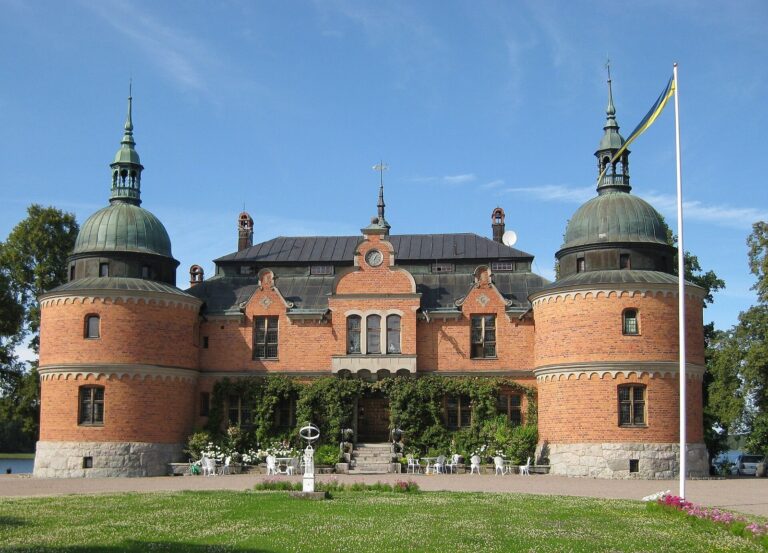
Ericsberg Castle is a Baroque castle near Katrineholm, Sweden, begun by Erik Karlsson Gyllenstierna in 1650. The castle is also dated to 1664. Before it took the name Ericsberg, the estate was known as Pintorp during the medieval period. In 1508, Knut Nilsson of Bosgård sold it to Anna Karlsdotter, widow of Erik Eriksson Gyllenstierna the Younger. Through Anna, it passed into the Gyllenstierna family.
Construction and the Ericsberg Name
Erik Karlsson Gyllenstierna, a Swedish nobleman and member of the Council of the Realm, a royal advisory and administrative body, began building the castle. After his death, his wife Beata von Yxkull and their son Christopher continued the work. Beata managed the estate when her husband was away and after his death, and renamed it Ericsberg in his honor. Christopher later commissioned additional wings and exterior decoration. Nicodemus Tessin the Elder has been credited with work on the design and completion, although his role is uncertain.
Beata has also been identified as one of the models for the Pintorpafrun, a legendary woman in Swedish folklore associated with a tale about a cruel estate mistress.
Hildebrand and Bonde Ownership
The castle gradually fell into disrepair during the eighteenth century, when David Henrik Hildebrand and his son David Gotthard Hildebrand owned the estate. David Gotthard had held it since 1791 and sold it to the Bonde family in the early nineteenth century. The Bondes began repairs and improvements in 1812 and have continued to own the castle and estate.
During the nineteenth century, the palace underwent repairs and restoration. Its main residential block was restored in 1896–97. Baron Carl Jedvard Bonde established a private library for the estate, acquiring 3,500 volumes in 1843. The collection, focused on Swedish history, topography and Nordic antiquities, eventually grew to 50,000 volumes.
Ericsberg was designated a listed building on 21 September 1965. From about 2005, the family’s collections of coins, books and paintings were sold through antiquarian dealers and at auctions.
Remains
The Castle and Its Interiors
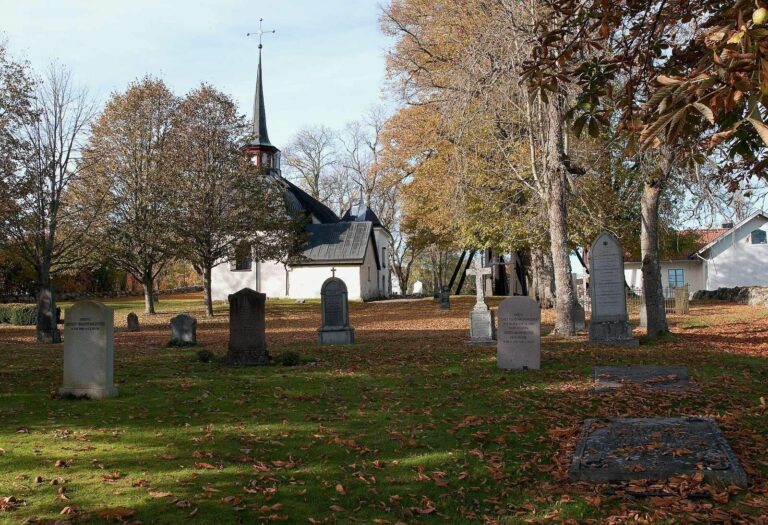
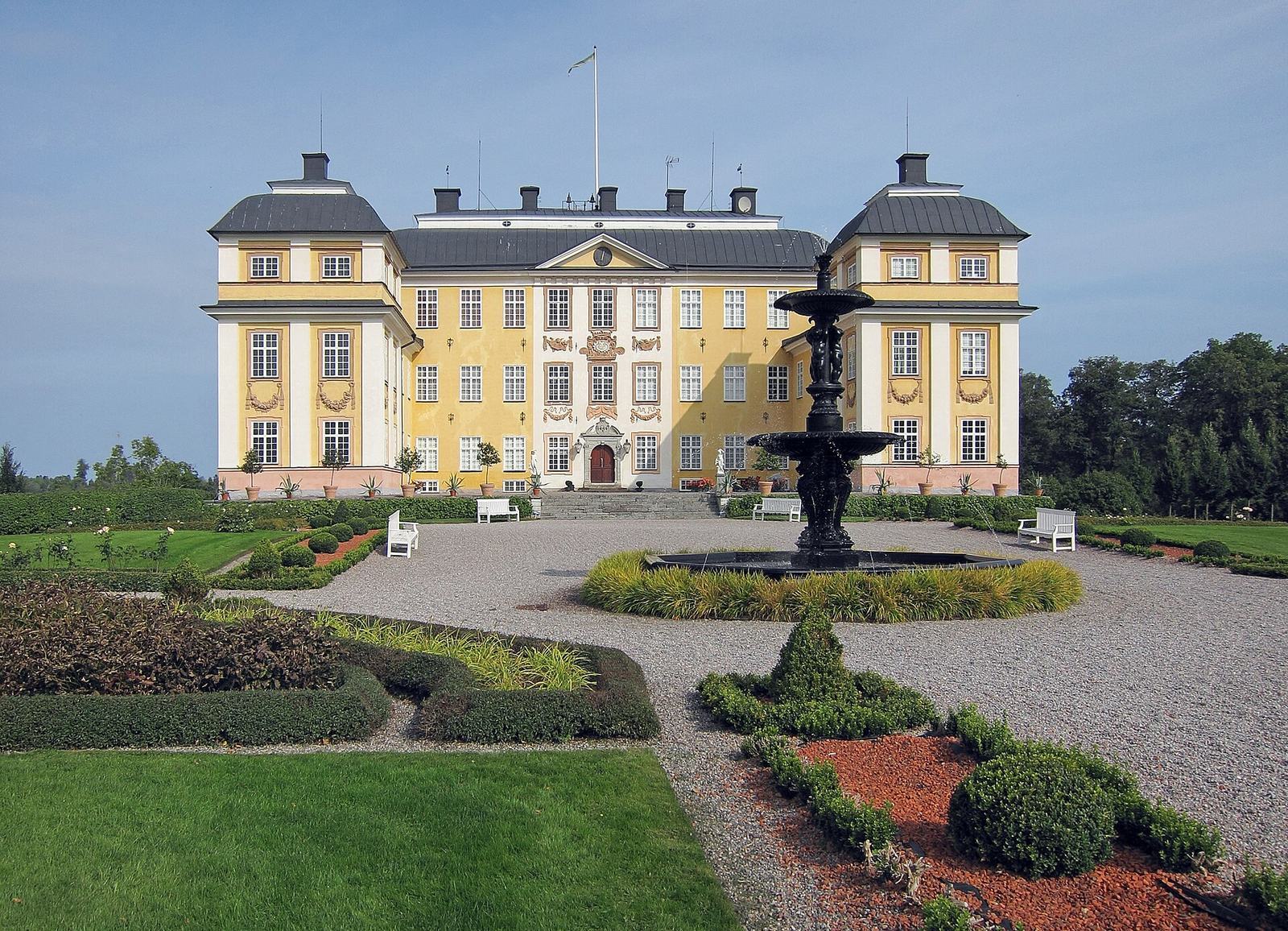
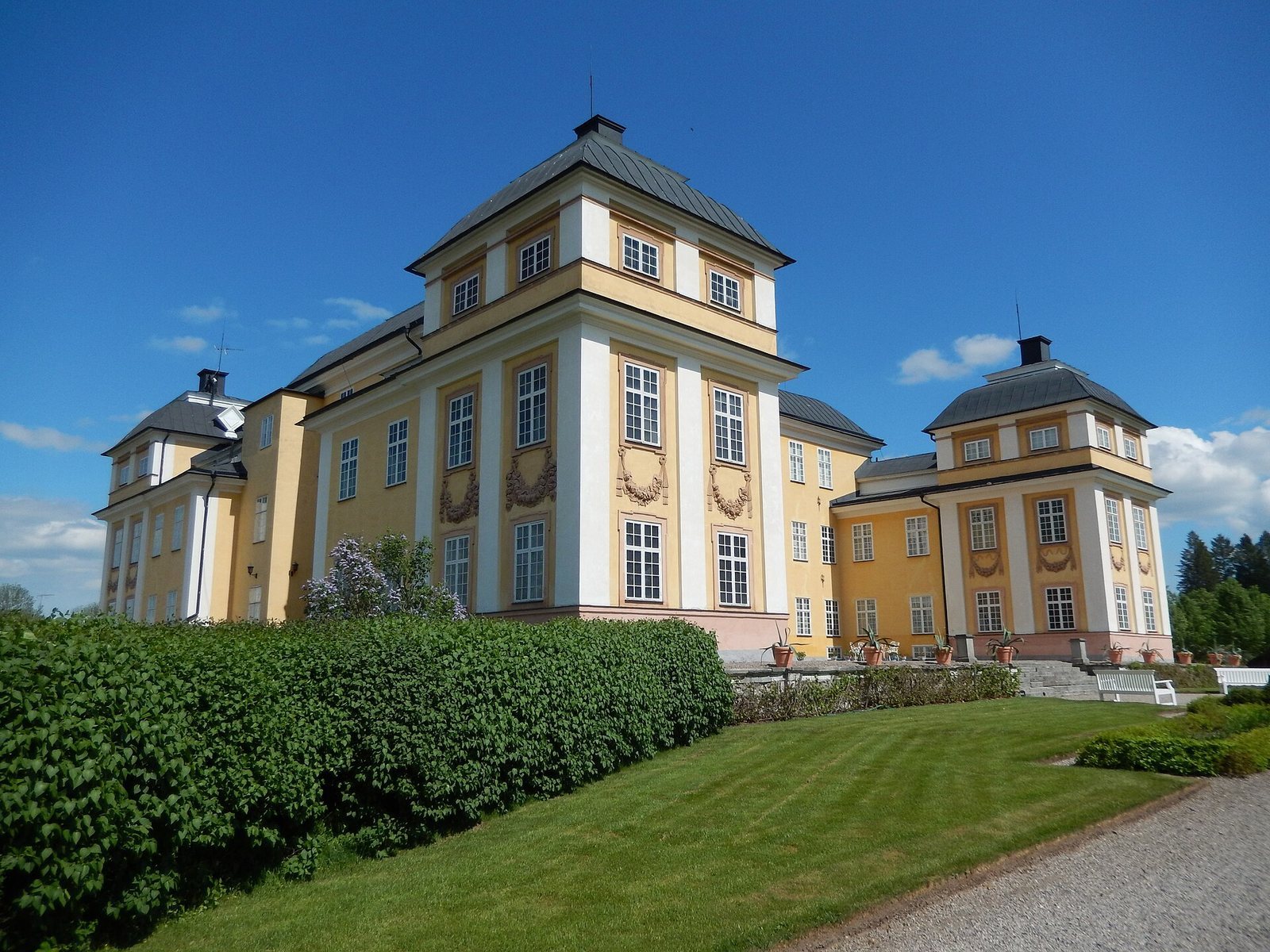
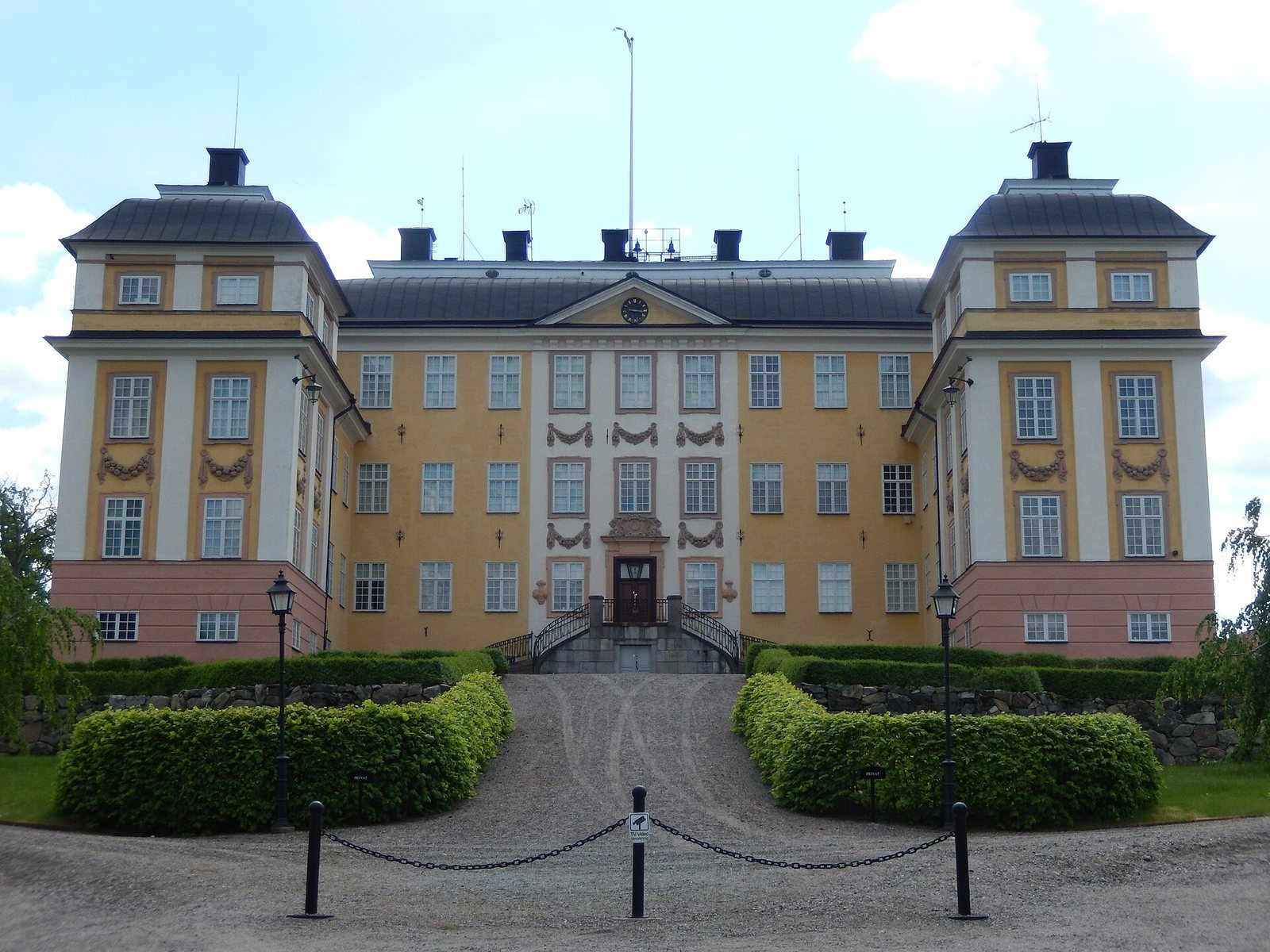
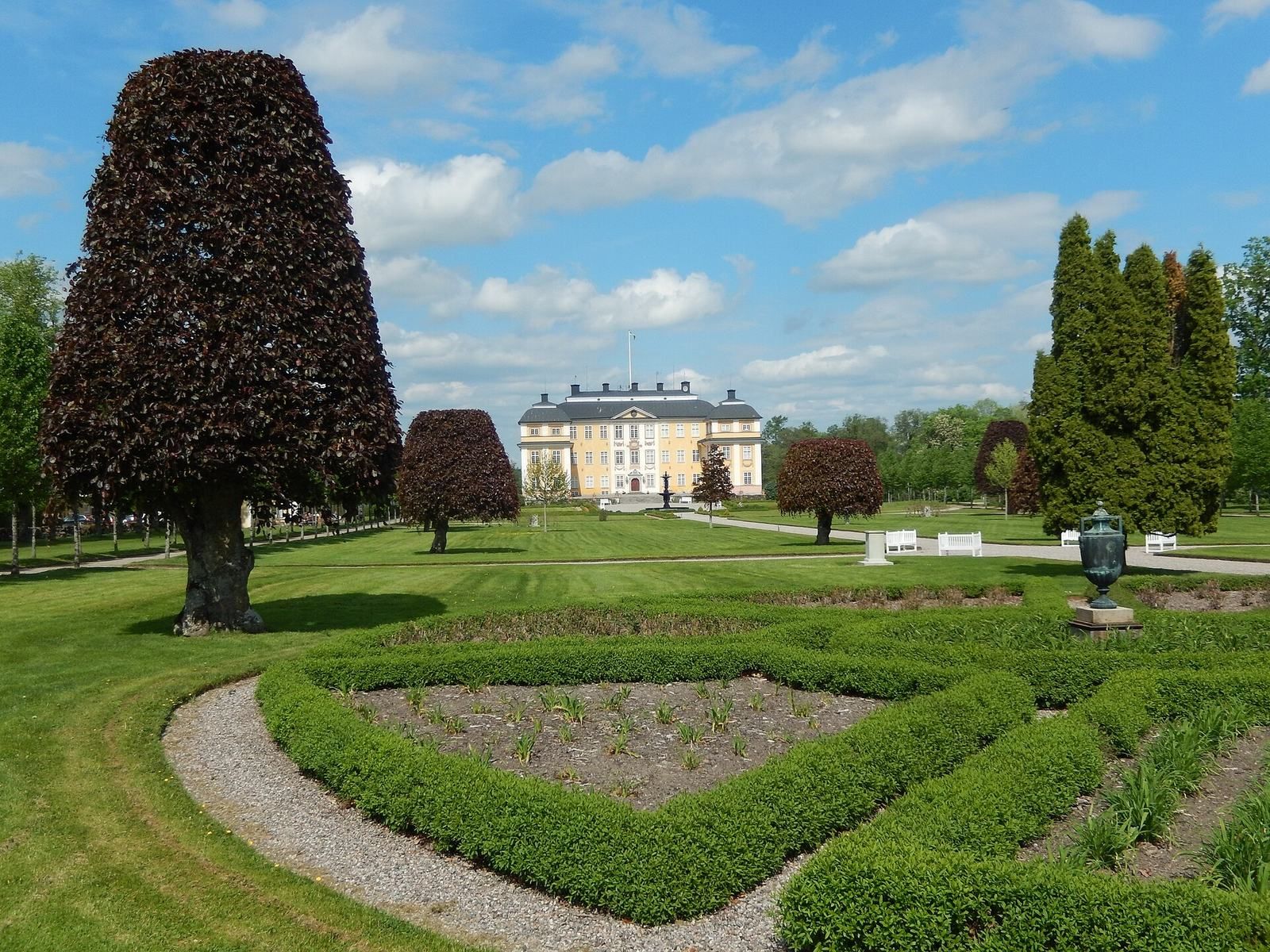
Set on a small rise beside Kårtorpssjön, the Baroque castle has four wings and towers, with three storeys above a basement. Its central main block is arranged without an inner courtyard. A chapel occupies the southwest wing, and several rooms have decorated ceilings painted by David Klöcker Ehrenstrahl. South of the castle, a terrace includes a fountain; another fountain, attributed to Fredrik Wilhelm Scholander, stands outside the southern wall.
Garden and Orangery Buildings
Orangery buildings, used to shelter citrus and other tender plants, were erected around 1850. Between 1895 and 1905, the castle garden was enlarged and a maze of linden hedges was laid out.