Engelberg Abbey: A Benedictine Monastery and Baroque Complex in Switzerland
Site at a Glance
- Rating
- 4.7
- Popularity
- Low
- Country
- Switzerland
- Primary era
- Early Modern
- External website
- Open
- Eras represented
- Early Modern
- Civilizations
- Unclassified
- Site type
- Religious
- Remains
- Monastery
On this page13 sections
History
Engelberg Abbey is a Benedictine abbey in Switzerland, founded on 1 April 1120 by Count Conrad of Sellenbüren. The community followed the Rule of Saint Benedict and was dedicated to the Blessed Virgin Mary and Saint Nicholas. Monks from Muri Abbey settled the foundation, and Conrad later joined the community as a monk before his death in 1126. The abbey’s early documents used the names Mons Angelorum and Engilberc.
Foundation and early development
Adelhelm, a monk of Muri Abbey, became Engelberg’s first abbot. In 1124, Pope Callistus II and Emperor Henry IV formally recognized the institution, placing it under the immediate jurisdiction and protection of the Holy See. This meant that the abbey was exempt from ordinary diocesan authority and answered directly to the pope.
After Adelhelm’s tenure, three disputed abbots divided the community. Leadership then passed to abbots from Saint Blaise’s Abbey in the Black Forest. Frowin governed from 1143 or 1147 until 1178, followed by Berchtold from 1178 to 1197 and Henry from 1197 to 1223. During Frowin’s administration, Engelberg became a double monastery, with separate communities of monks and nuns under one institutional foundation.
A women’s community probably emerged during the twelfth century below the men’s monastery and soon had its own church. It remained associated with Engelberg until 18 February 1615, when the nuns were transferred to Sarnen. There they continued as the Saint Andreas Monastery.
Territorial authority and religious change
Engelberg’s abbots exercised quasi-episcopal authority over the abbey’s vassals and dependents. In spiritual matters, this gave them powers resembling those of a bishop within specified areas, including the settlement that grew around the monastery walls. In temporal affairs, the abbey held supreme authority over a territory that included 115 towns and villages under a papal bull issued by Gregory IX in 1236.
The abbey was formerly associated with the Diocese of Constance and is now connected with the Diocese of Chur, while retaining exemption from ordinary diocesan administration. Its territorial authority was sharply reduced after the French invasion and the creation of the Helvetic Republic in 1798. The former territory was attached to Nidwalden in 1803 and to Obwalden in 1815.
Repeated epidemics also weakened the community. Plague outbreaks struck in 1349, 1548, and 1565. During the 1565 outbreak, only one priest serving in Küssnacht survived from the community. The Reformation and the spread of Zwingli’s teachings, part of a sixteenth-century Swiss movement that challenged Roman Catholic institutions and practices, further weakened Engelberg’s political and religious position. In 1602, the abbey joined the Swiss Congregation, a federation of Benedictine monasteries within the wider Benedictine Confederation.
Recovery and rebuilding
Abbot Benedict Sigrist and his successors helped restore Engelberg’s position during the seventeenth century. Lost possessions and rights were recovered, while monastic discipline and learning were renewed. The abbey had also developed an important intellectual tradition. A writing school and library were established during Frowin’s administration, and the monastery’s writing room, or scriptorium, produced and illuminated manuscripts around 1200. The artist Richene is associated with this work.
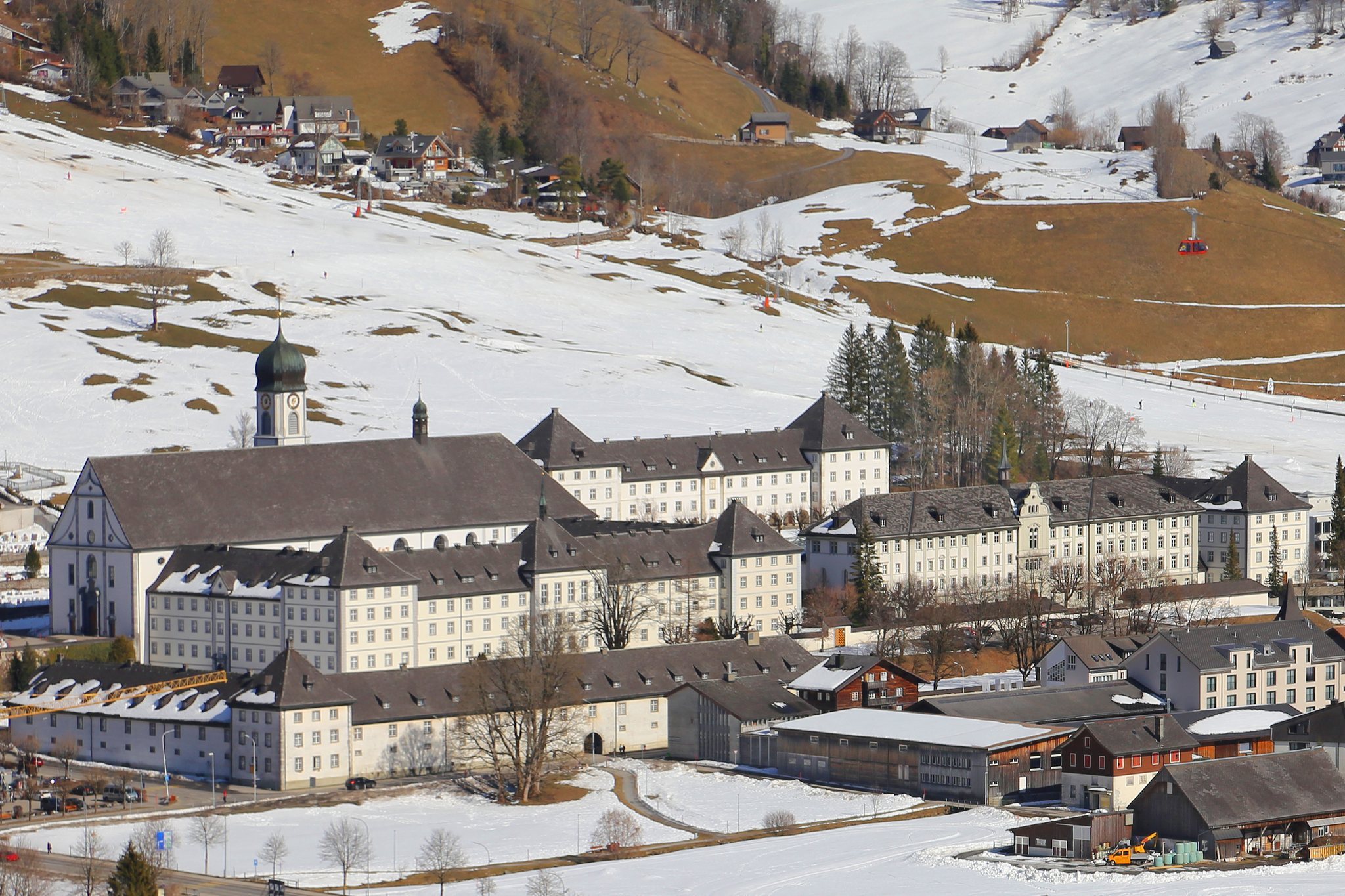
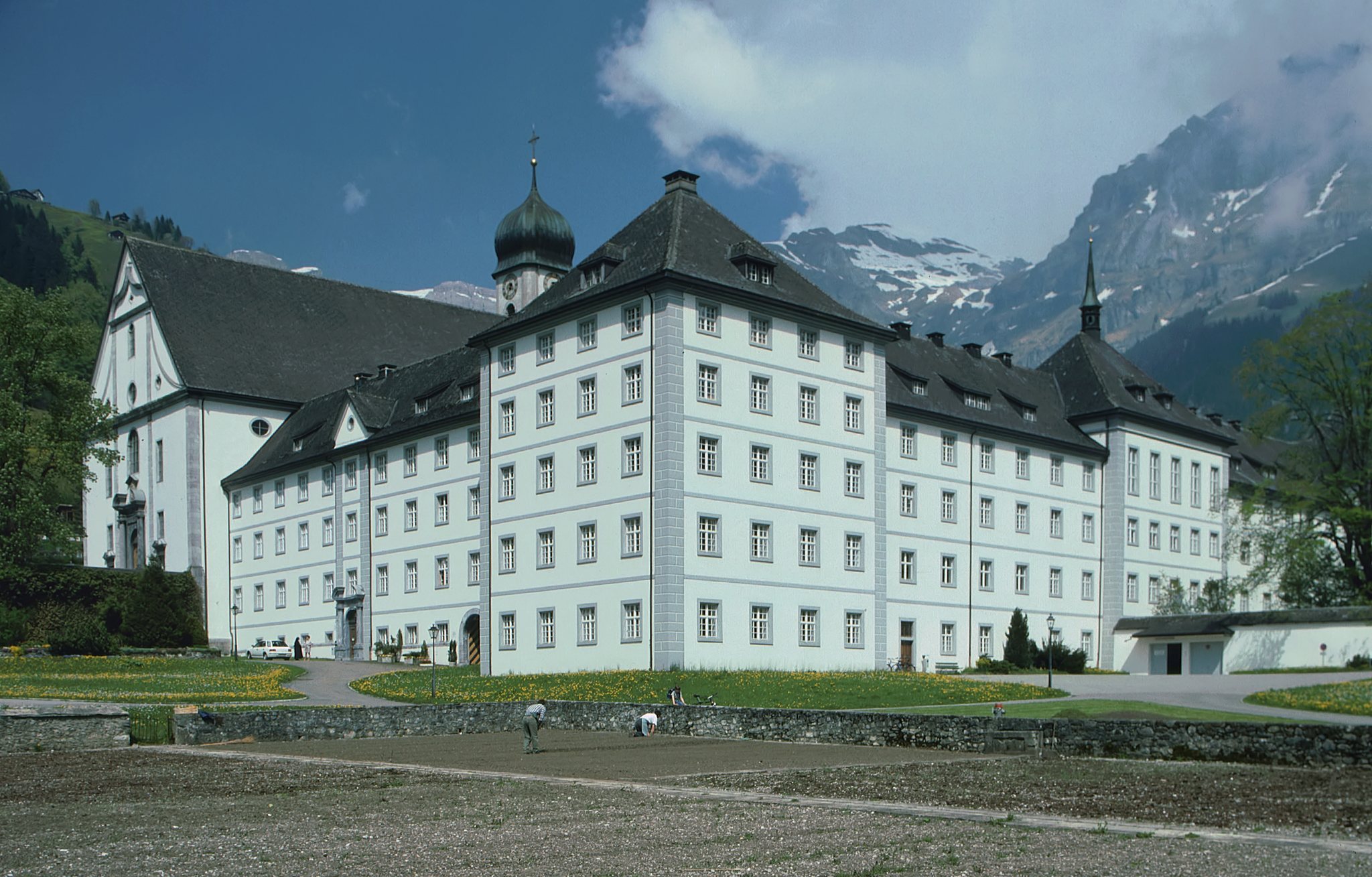
Fire repeatedly damaged the monastery during the Middle Ages. The third and most destructive blaze took place on 29 August 1729. The present baroque complex was then constructed largely between 1730 and 1745. The abbey church was built between 1730 and 1737 and consecrated on 5 September 1745.
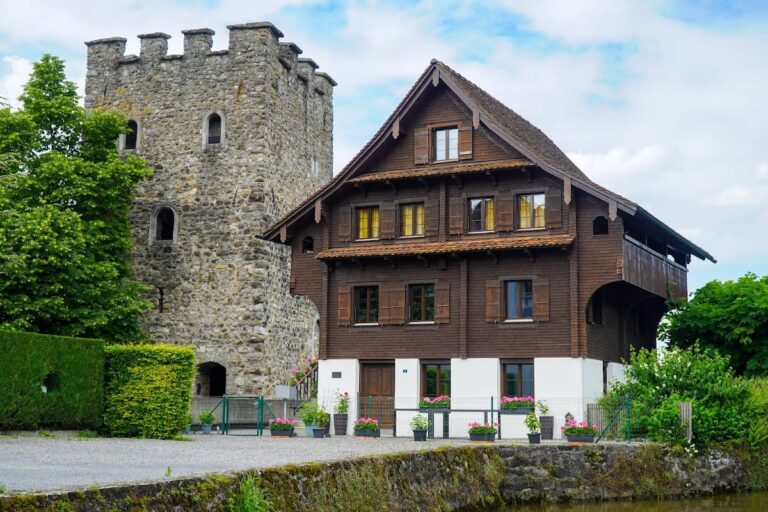
The French invasion brought further losses in 1798, including the plunder of the library. Before this event, the collection was said to contain more than 20,000 volumes and 200 selected manuscripts. The library later retained a complete collection of Martin Luther’s writings. From 1271 to 1798, Engelberg also maintained a residence in Lucerne. Two wooden houses, one for the men’s monastery and one for the women’s monastery, were replaced in 1538 by the stone Engelbergerhaus.
Education and wider connections
Engelberg Abbey has continued to combine religious life with education and economic activity. Engelberg Abbey School has belonged to the monastery since 1851. It includes a boarding school and offers a bilingual German-English Matura as well as the International Baccalaureate.
The abbey also established or maintained connections with religious communities beyond Switzerland. A colony from Engelberg founded Conception Abbey in Missouri in 1873, while Mount Angel Abbey in Oregon was founded in 1882 as another daughter foundation. The former women’s convent at Sarnen, the monasteries of Melchtal and Maria-Rickenbach, and Marienburg at Wikon remain connected with Engelberg through the abbot’s role as their competent ordinary. Engelberg also has a dependent priory at Mont Fébé in Yaoundé, Cameroon, whose abbot is likewise the abbot of Engelberg.
Traditional economic activities have included administration, carpentry, hospitality, gardening, agriculture, hydropower generation, and viticulture. The abbey’s operations include the St. Josefshaus and Sonnwendhof hotels, the Grafenort inn, the Tagenstal hydroelectric plant, and agricultural leaseholds. Its vineyard at Lake Biel was reacquired in 2018. Tourism began expanding in the mid-nineteenth century and became the valley’s dominant economic factor during the twentieth century, while the monastery’s social influence declined as Engelberg became more outward-facing.
Remains
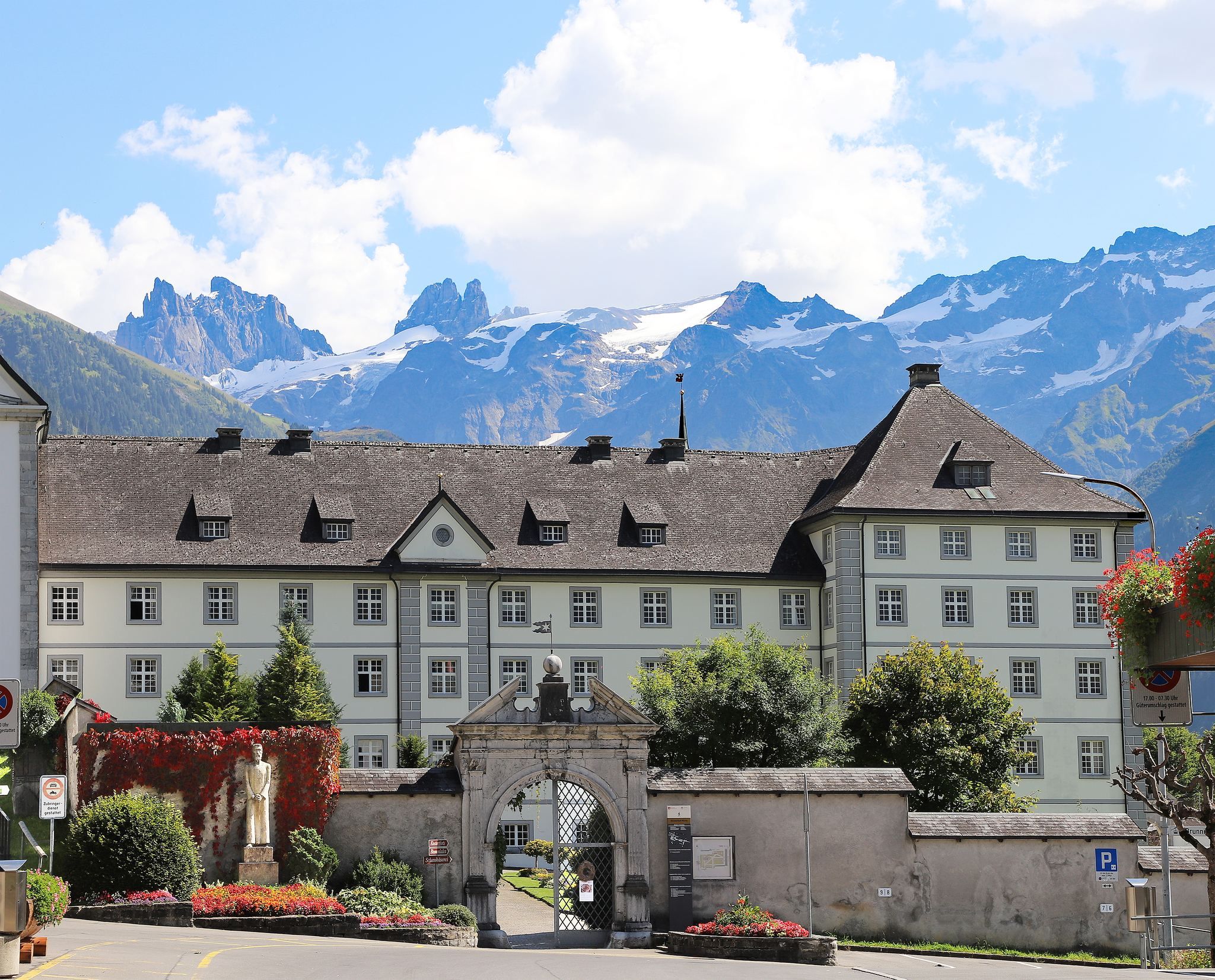
The monastery buildings form one of central Switzerland’s largest baroque complexes. They occupy a commanding position at the head of the Nidwalden Valley. Most of the present complex belongs to the rebuilding campaign that followed the fire of 1729, with construction continuing from 1730 until substantial completion in 1745.
Abbey church
Baroque church and patronage
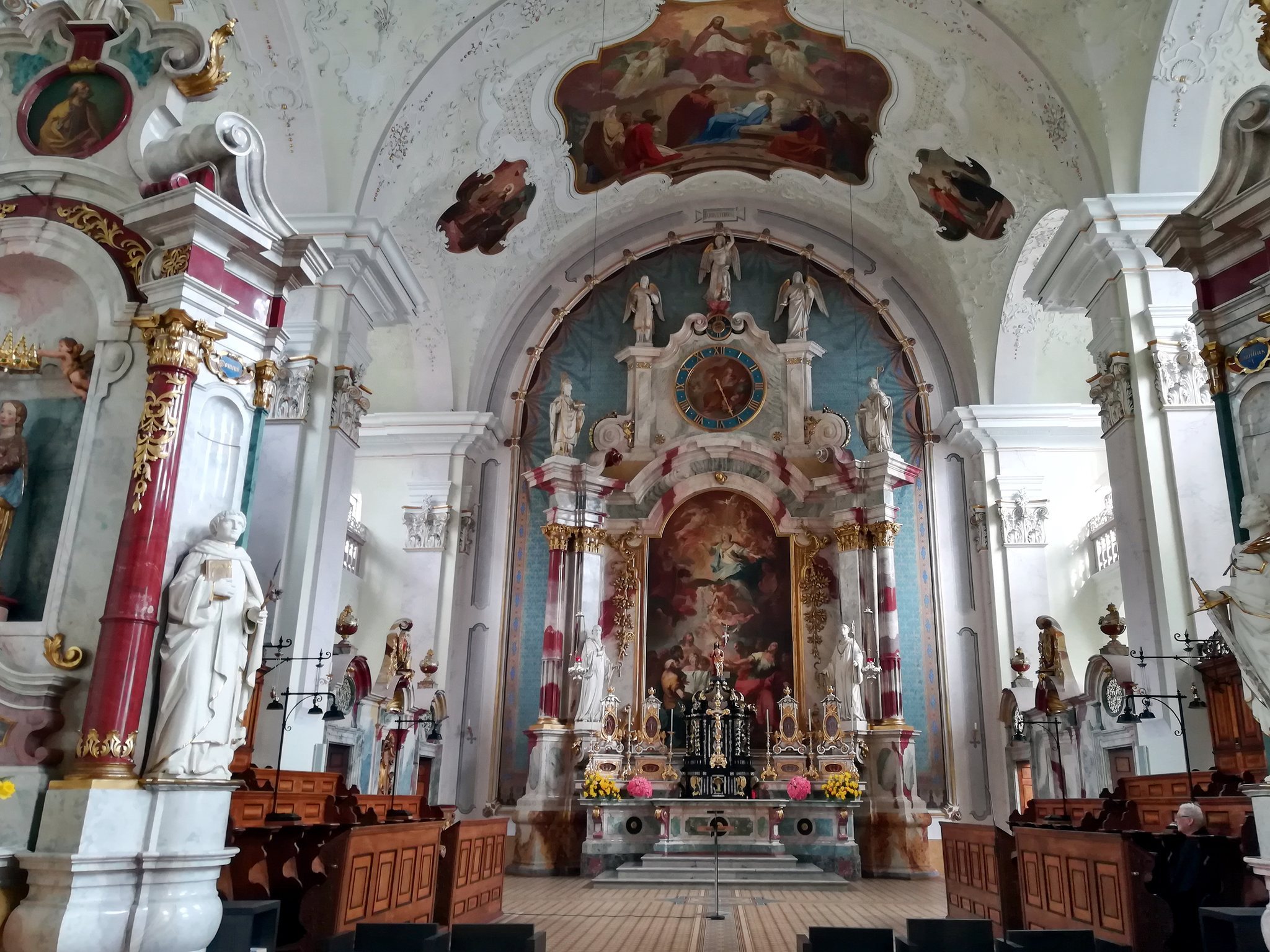
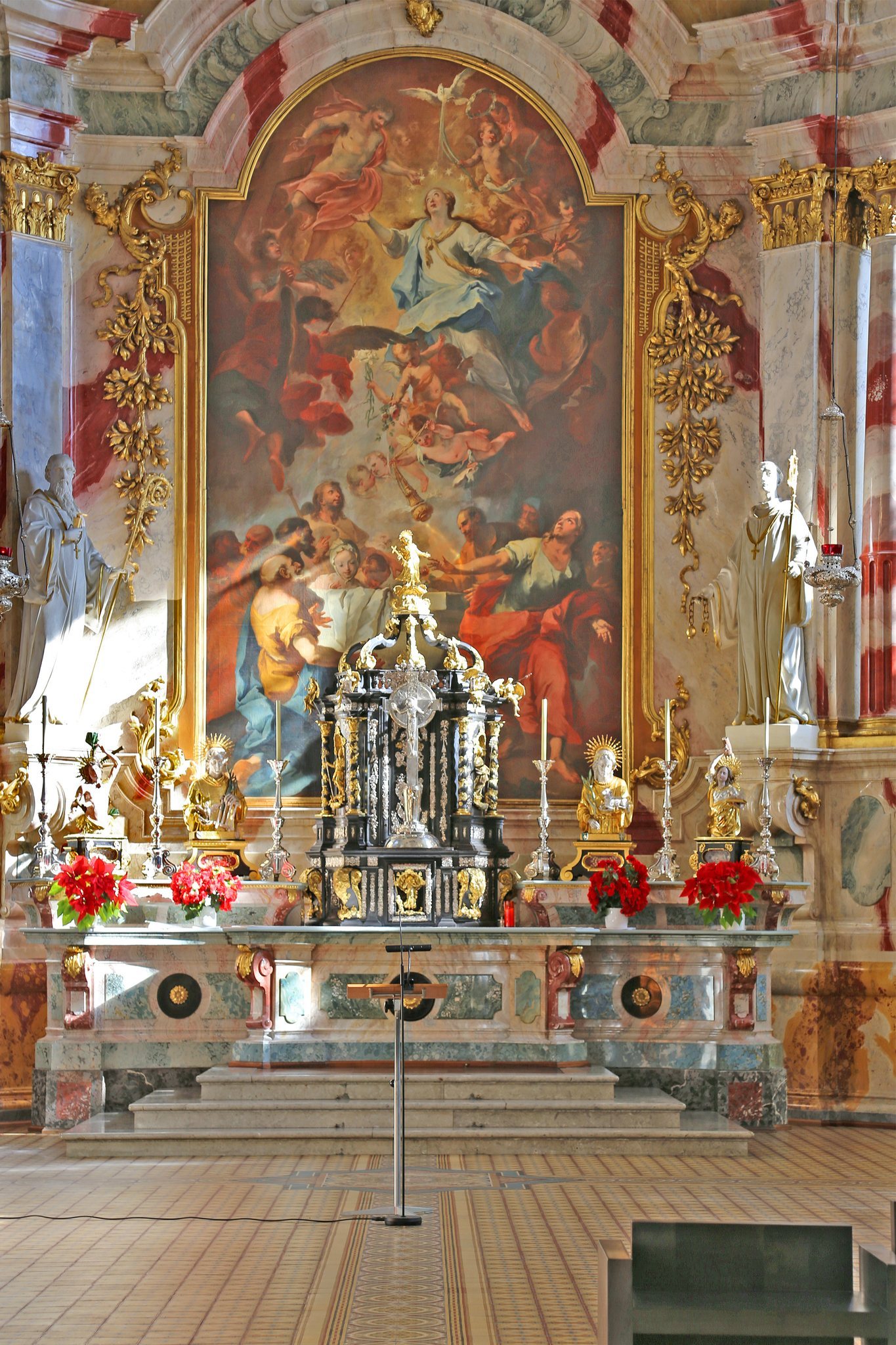
The baroque abbey church was built by Johannes Rueff between 1730 and 1737. It was consecrated in 1745 and dedicated to Our Lady under the patronage of the Assumption of Mary. Saints Nicholas, Leonard, Theodore, and Eugene are also named as patrons. Side altars are dedicated to Saint Anthony and Saint Benedict.
Organs and bells
The church contains Switzerland’s largest organ. Its main instrument originated with an organ built by Friedrich Goll in 1876 and 1877. Later extensions brought it to 137 stops on four manuals and a pedal. A stop is a controllable group of pipes with a particular tone, while the manuals are the keyboards and the pedal is operated by the feet. The church also contains a choir organ dating from 1902 with 26 stops.
The tower holds a seven-bell peal cast by Emil Eschmann in 1964. The bells almost fill the bell chamber and are tuned in the “filled and extended minor-major motif.” Two surviving choir bells and the convent bell belong to an earlier group and are separate from the main peal.
Former convent and associated buildings
Women’s convent
The former women’s convent stood below the men’s monastery, on the site of the present economic buildings. It had its own church before the women’s community moved to Sarnen in 1615.
Herrenhaus Grafenort
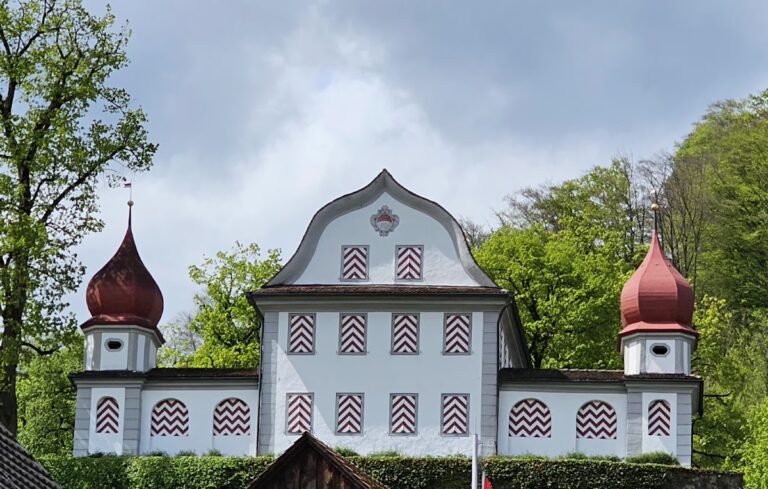
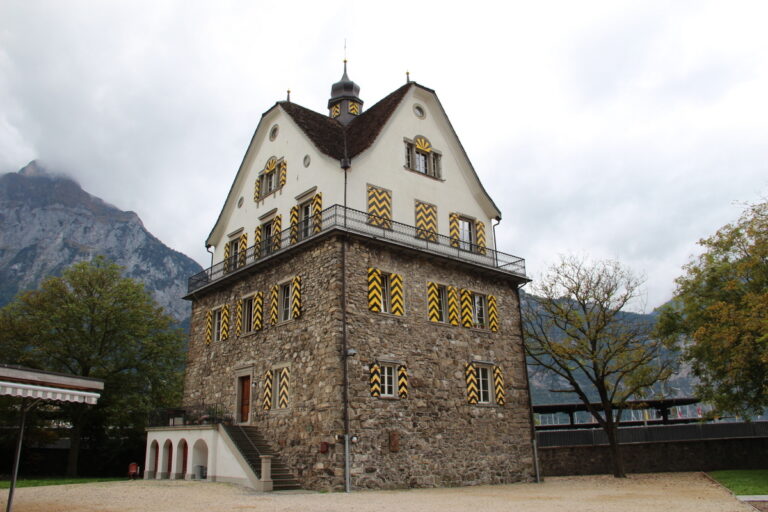
Herrenhaus Grafenort was built in 1690 in the lower Engelberg Valley as a retreat house for the abbot and monks. The property remains associated with conference and seminar use.
Library and manuscript tradition
Engelberg’s scriptorium produced and illuminated books around 1200 under Frowin, with the artist Richene associated with the work. The monastery library was said to have held more than 20,000 volumes and 200 selected manuscripts before the French plunder of 1798. Its later holdings included a complete collection of Martin Luther’s writings.