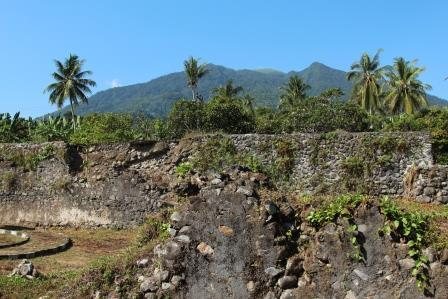
Fort Tolukko: An Iberian Colonial Artillery Fort in Indonesia
Site at a Glance
- Rating
- 4.5
- Popularity
- Medium
- Country
- Indonesia
- Primary era
- Early Modern
- Eras represented
- Early Modern
- Civilizations
- Spanish
- Site type
- Military
- Remains
- Fort
On this page7 sections
History
Fort Tolukko is a small Iberian colonial fortification in Ternate City, Indonesia, connected with Portuguese and Spanish activity in the sixteenth and seventeenth centuries. Its early identity remains uncertain: Portuguese forces built a fort in 1522, while Spanish forces constructed a fort at Tolukko in 1611 and called it San Juan de Toluco. The fort stood on the east coast of Ternate, facing Halmahera, in the Maluku Islands, also known as the Spice Islands because they were a major source of cloves.
The Portuguese in Ternate
European powers competed for the Maluku spice trade because cloves grew on only a few islands before the eighteenth century. Ternate and Tidore, neighboring Islamic sultanates that competed for regional influence and control of commerce, became central targets of Portuguese, Spanish, Dutch, and British expansion.
The Portuguese reached the region in 1512 after an expedition from Malacca led by António de Abreu. His deputy, Francisco Serrão, traveled to Ternate, where the sultanate allowed the Portuguese to establish a fort. The arrangement partly reflected a Portuguese promise to assist Ternate against Tidore, which was allied with Spain.
In June 1522, the Portuguese built Fort Sao Joao Batista beside the sultan’s residence at Gamalama, present-day Kastella. It was established on 24 June, the feast day of Saint John the Baptist. The relationship between that fort and the present Fort Tolukko is uncertain.
Portuguese attempts to monopolize the spice trade provoked an attack by the Ternatese under Dajalo in 1533. The assault failed, but António Galvão later restored peace in Ternate, allowing Portuguese control of the trade to continue. A treaty concluded in 1570 between the Portuguese governor Lopez de Mesquita and Sultan Khairun Jamil strengthened the Portuguese position. After Mesquita ordered Khairun’s murder, the sultan’s son Babullah began a seven-year war. Ternate gradually captured the Portuguese forts and expelled the Portuguese from the region in 1575. The former Fort Sao Joao Batista was then used by the sultan as a fortified royal residence.
Spanish and Dutch control
Spain established itself in Ternate in 1606 at the former Portuguese fort associated with Gamalama and made it the capital of its Moluccan possessions. The Dutch established themselves the following year at Malayo, about 10 kilometres to the north, where they built Fort Orange.
In 1611, Juan de Silva, governor of the Philippines, sent an expedition from Manila to drive the Dutch from Ternate. A force led by Captain Fernando de Ayala built the fort at Tolukko as a base for attacking Fort Orange from the north and named it San Juan de Toluco.
The Spanish abandoned the fort in 1612 because Fort Orange stood between Tolukko and their principal fortress at Kastella, making Tolukko difficult to maintain. The Dutch occupied it in the same year, renamed it Fort Hollandia, and repaired and improved it for the Dutch East India Company, a chartered Dutch trading and colonial corporation that also exercised military and political power in the East Indies. A few years later, they transferred the fort to the sultan of Ternate for use as a residence.
Local rule and later military use
In 1661, the Dutch government authorized Sultan Mandar Syah of Ternate to occupy the fort with his soldiers. It was later renamed Fort Tolukko after Kaicil Tolukko, the tenth ruler of the Ternate Sultanate, whose reign began in 1692.
On 16 April 1799, Tidorese forces led by Kaicil Nuku, the nineteenth sultan of Tidore, attacked the fort. Combined Ternate and Dutch East India Company forces drove them back. The continuing war between Ternate and Tidore severely reduced Ternate’s population through starvation, warfare, and flight to Halmahera.
British forces occupied the fort in 1810 during their invasion of the Moluccas in the Napoleonic Wars, the early nineteenth-century European conflicts in which Britain seized positions in parts of the region. In 1864, the Dutch resident P. Van der Crab ordered the dilapidated buildings inside the fort demolished and the fort vacated. The area was renovated in 1996, but inadequate conservation caused the loss of historic elements.
Remains
Fort and defensive layout
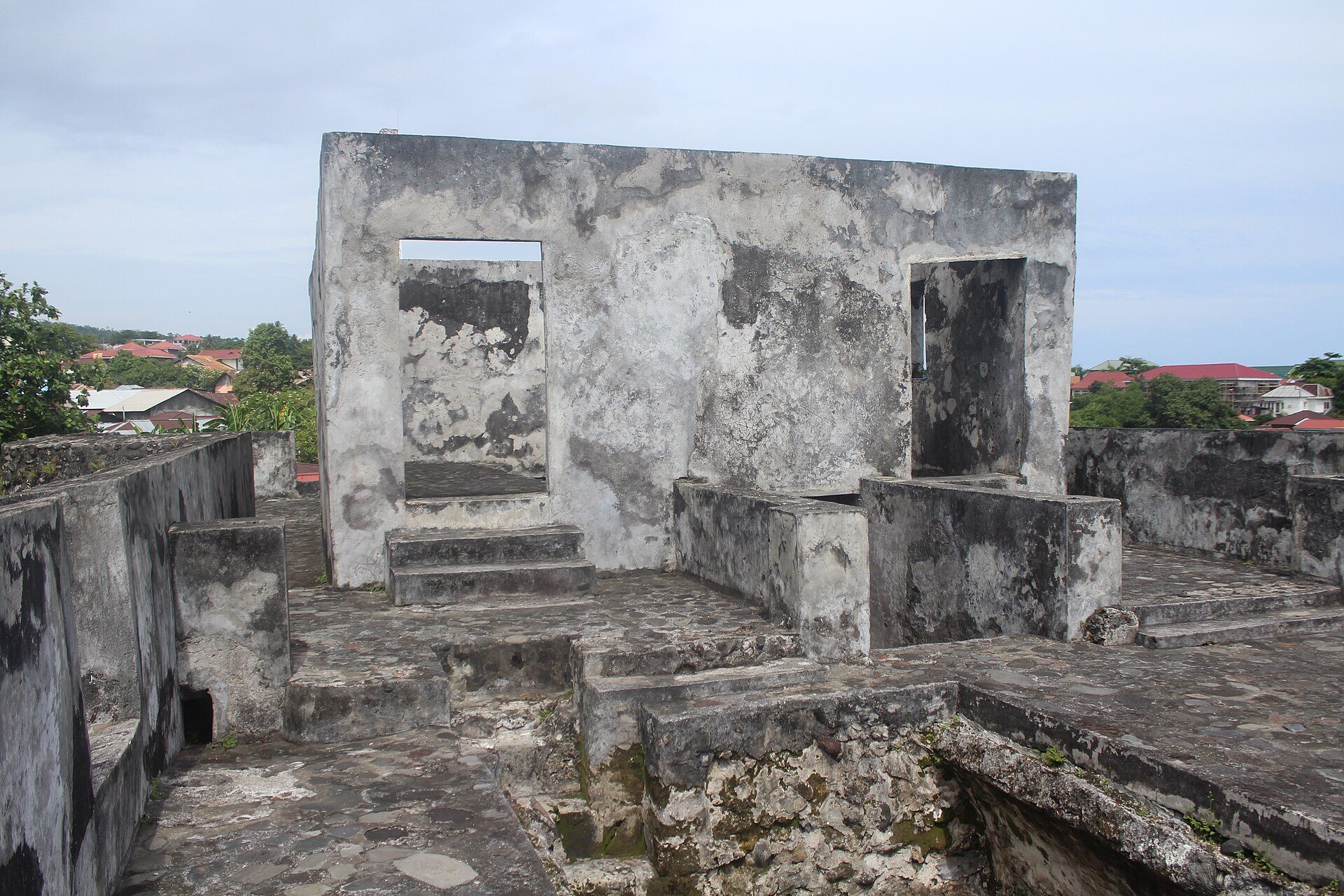
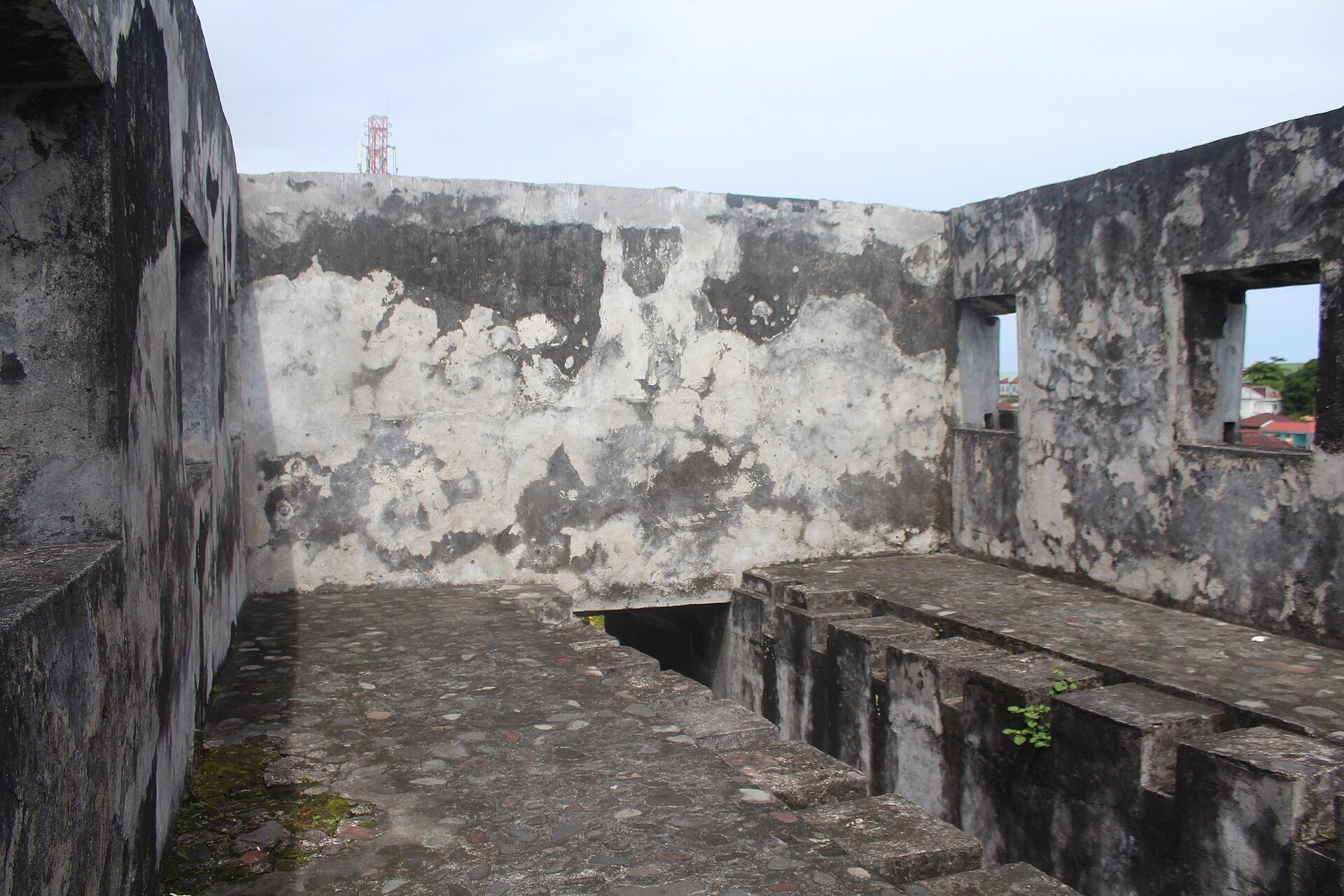
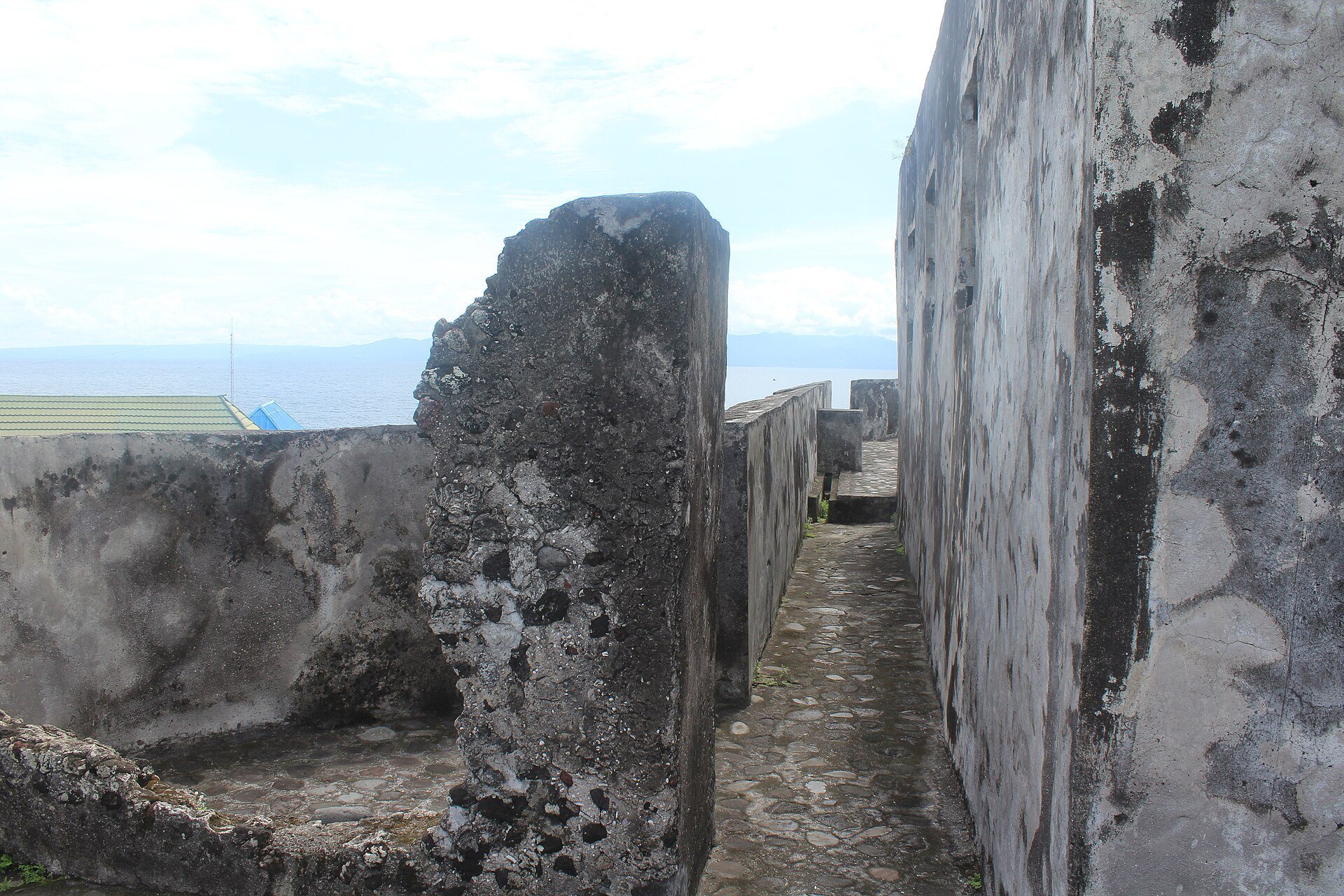
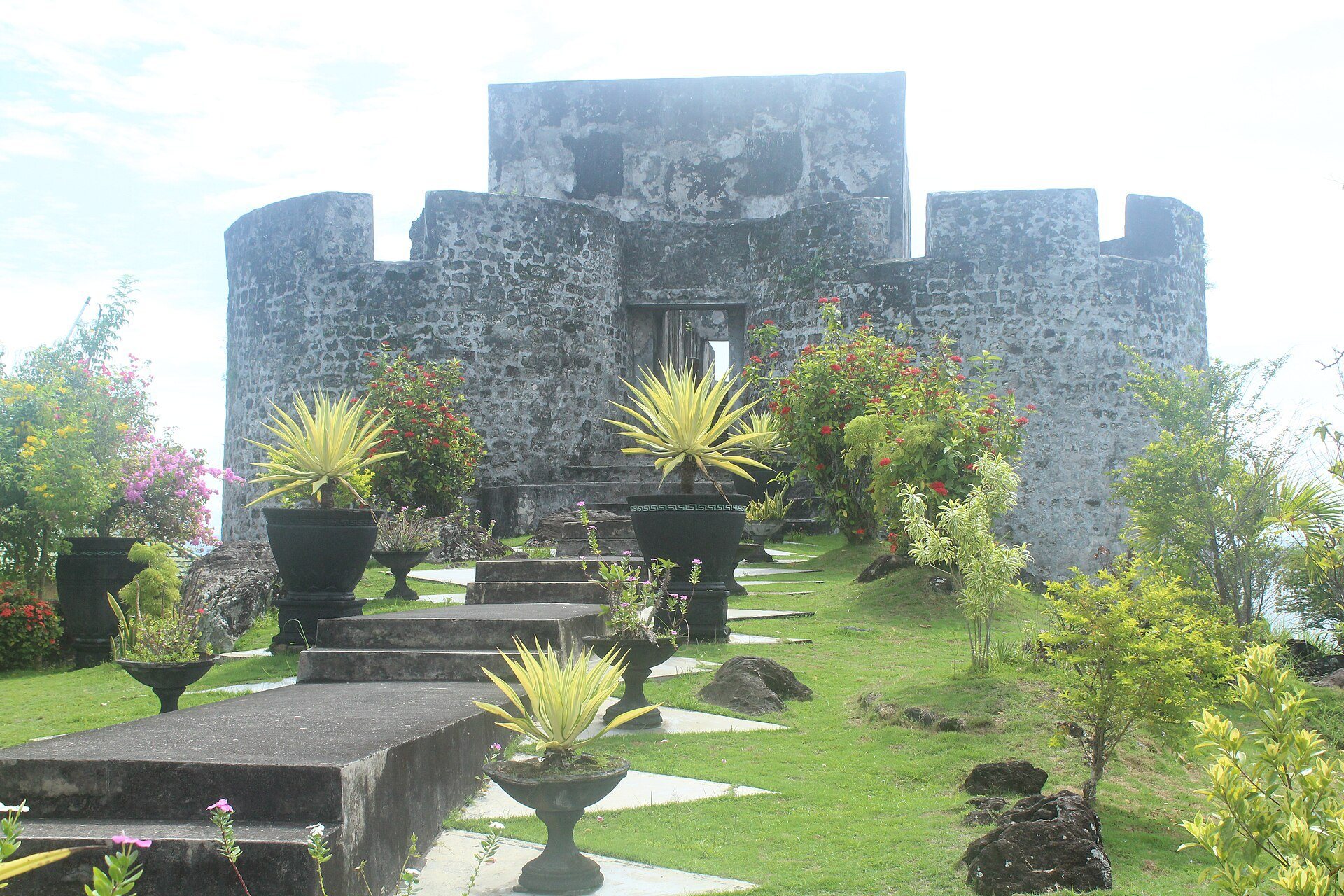
Fort Tolukko stands in Dufa Dufa village on a cape at the edge of Ternate City, facing Halmahera. The narrow stone-built fort occupies ground approximately 10.5 metres above sea level and rises about 6 metres high. Its plan has an unusual phallic shape, attributed to the immediate topography. The design is Iberian, reflecting the defensive building traditions of Spain and Portugal, rather than the Dutch tradition seen at Fort Orange and Fort Kalamata.
The fort has two bulwarks, projecting parts of a fortification designed to provide defensive fire along the walls and approaches. Its position directly above a rare landing point free of coral reefs gave the structure a specific military function: controlling access to the shore. The fort was designed to accommodate a garrison of 160 soldiers.
Landing-point connection
Historic tunnels connected the fort with the landing point on the beach. These passages formed part of the fort’s relationship with the shore, but they were among the historic elements lost through inadequate conservation after the 1996 renovation.