Saint-Paul Church in Lyon: A Romanesque and Gothic Parish Church
Site at a Glance
- Rating
- 4.4
- Popularity
- Medium
- Country
- France
- Primary era
- Medieval
- Eras represented
- Medieval, Early Modern, Modern
- Civilizations
- French, Holy Roman Empire
- Site type
- Religious
- Remains
- Church
On this page14 sections
History
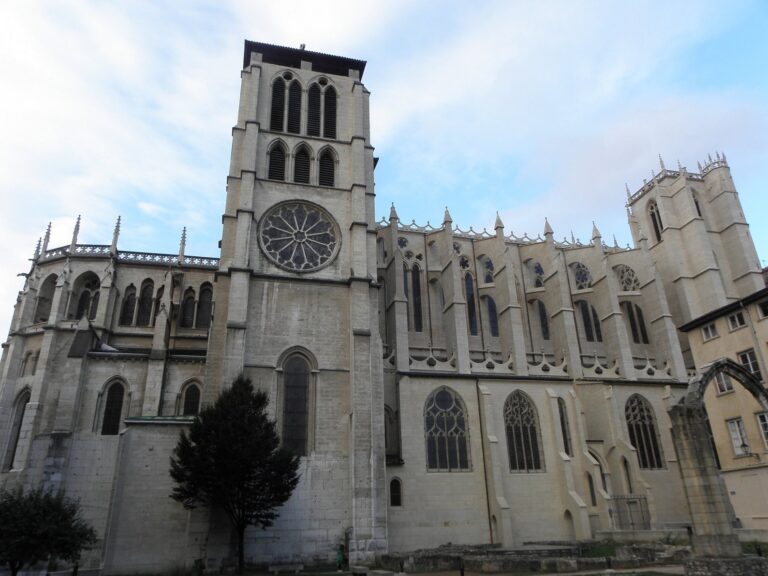
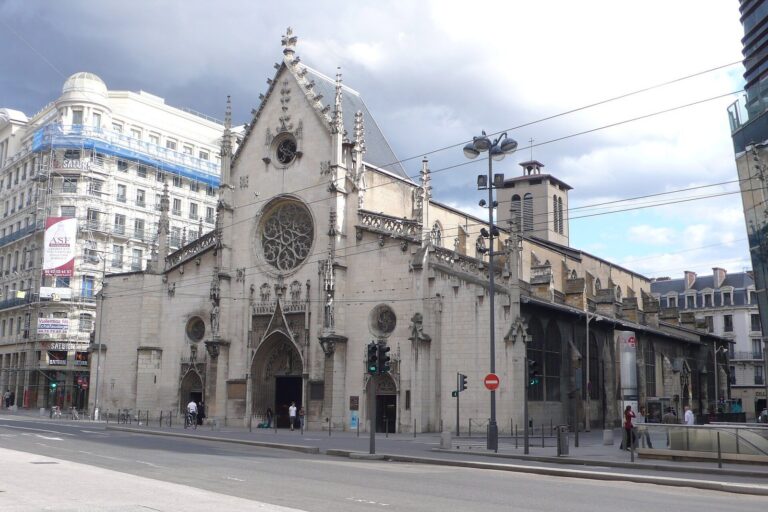
Saint-Paul Church is a Roman Catholic church in the Saint-Paul quarter of Vieux Lyon, in Lyon, France. Built around 549 by Saint Sacerdos, bishop of Lyon, it combines Romanesque and Gothic architecture. After becoming a burial ground in the tenth century, it was repeatedly rebuilt and altered over the following centuries.
Early foundation and medieval rebuilding
By the ninth century, records concerning the church had been transmitted by Archbishop Leidrade of Lyon to Charlemagne, the Frankish king who later became emperor. The church was damaged in 732 and restored in the early ninth century under Leidrade. In the tenth century, its grounds became a necropolis, or burial area, with three cemeteries.
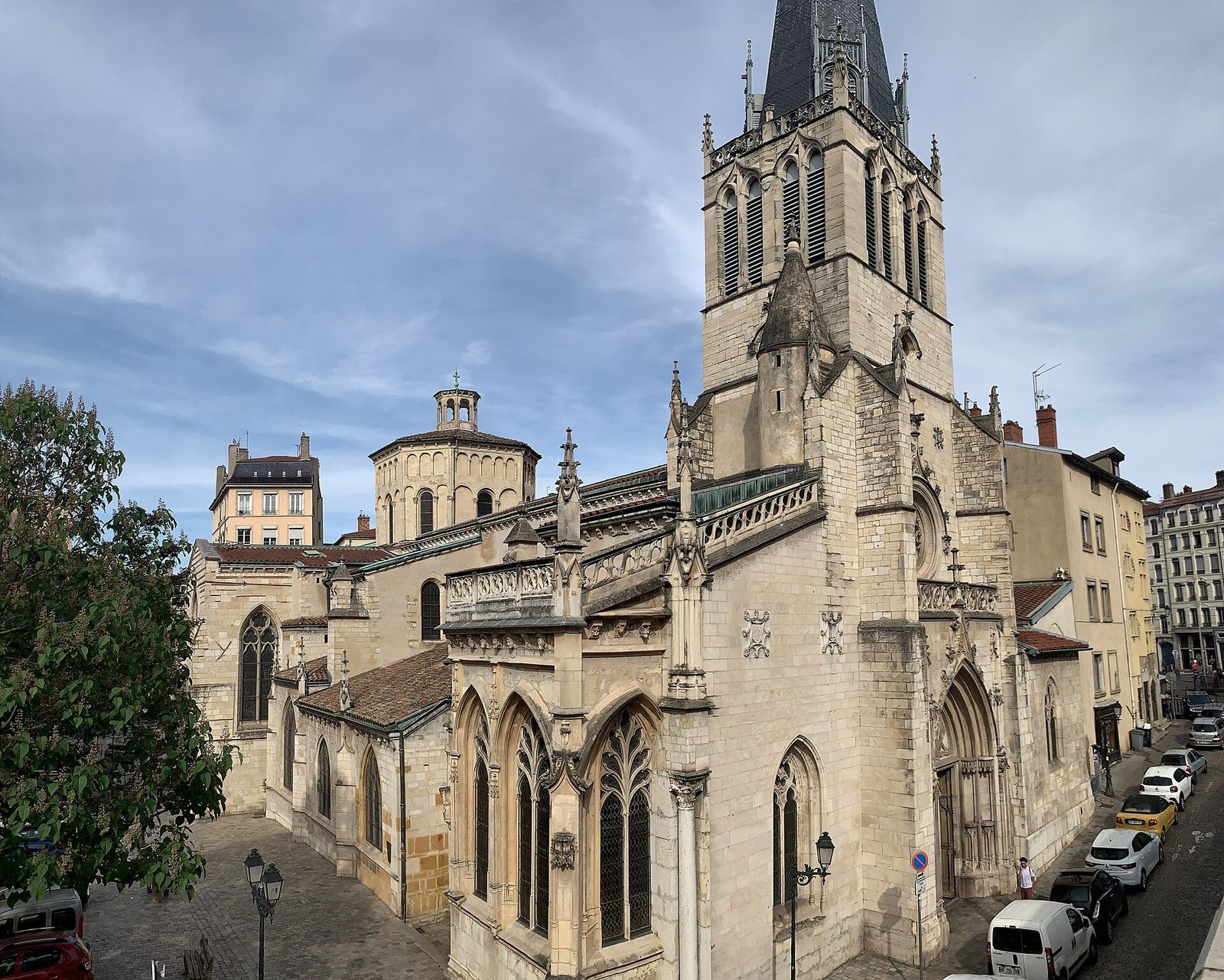
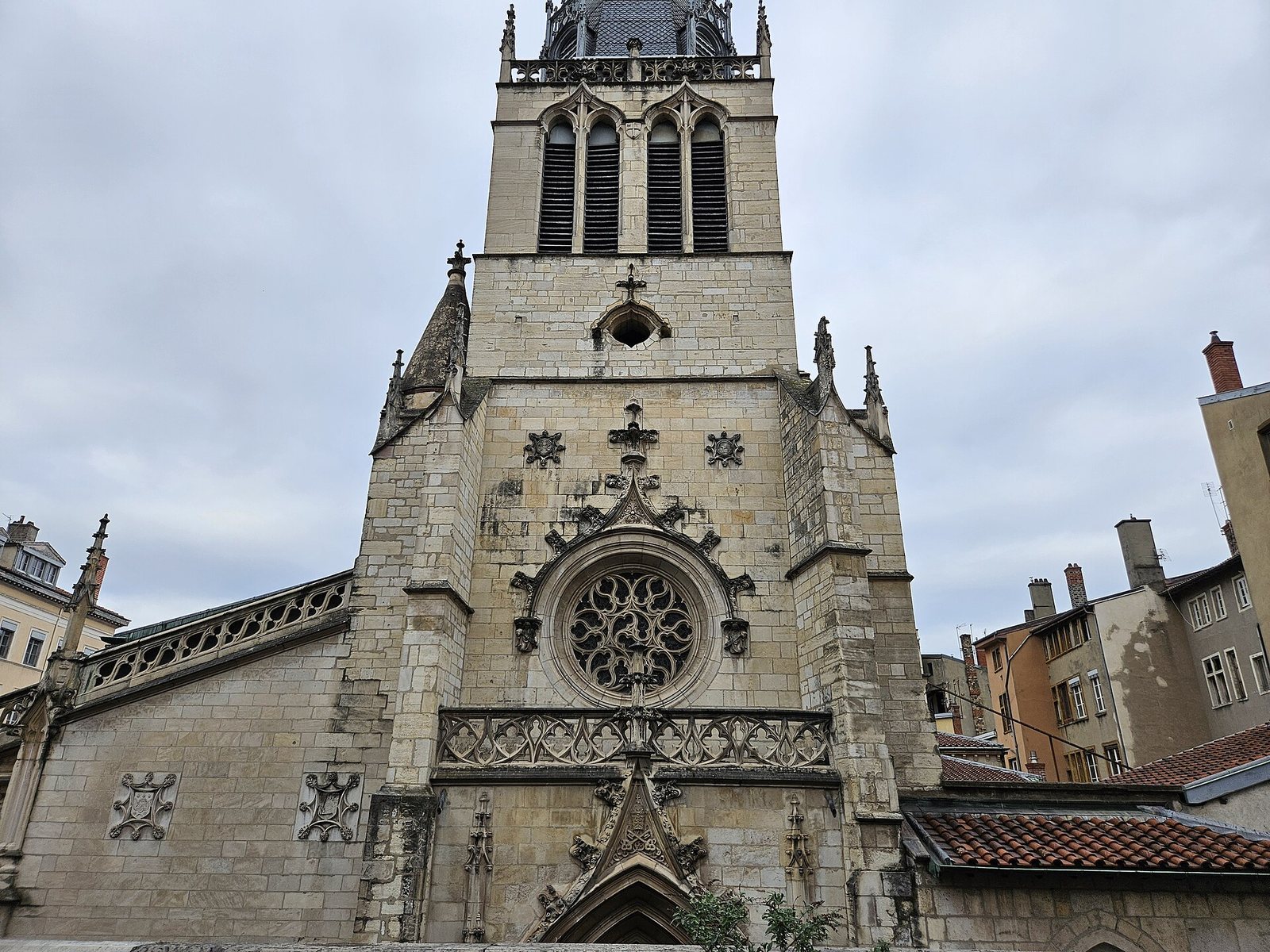
Archbishop Hugh called for the church to be rebuilt, and reconstruction took place during the eleventh and twelfth centuries. The Romanesque work that survives began in the second half of the twelfth century and continued into the thirteenth. The bell tower was built in 1440.
Later medieval and early modern changes
Gothic features were added during the fifteenth and sixteenth centuries, including a rebuilt porch at the bell tower and side chapels. The church was damaged during a siege led by the Baron des Adrets, a French commander active in the sixteenth-century Wars of Religion. A portal in the Doric classical style was added in the seventeenth century.
In the eighteenth century, architect Cyr Decrénice was commissioned to enlarge the main apse. The church suffered further damage during the French Revolution in 1793. It was then used to store saltpetre, a potassium nitrate used in gunpowder, before becoming a parish church in 1801.
Restoration and protection
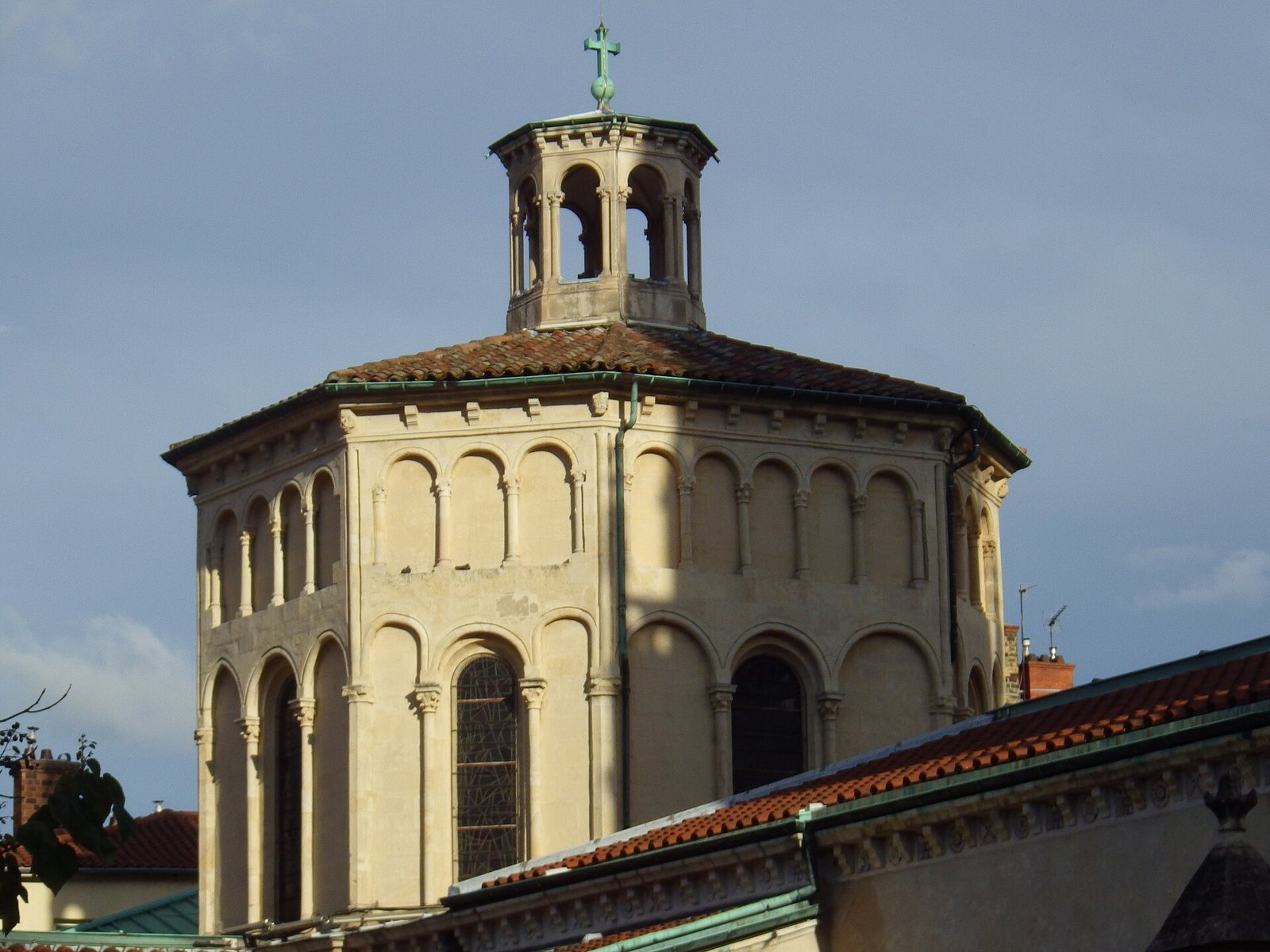
After the revolutionary damage and a period of neglect, architect Claude-Anthelme Benoît began major restoration work in the 1840s. His sons and grandson continued the work. The stone spire was lost around 1818, a wooden replacement was installed in 1875, and the stone spire was rebuilt in 1982. Other nineteenth-century changes included a lantern atop the octagonal tower in 1835 and a Gothic portal in 1877.
Work from 1898 to 1904 restored the interior and removed plaster that had covered it since the eighteenth century. The whole church was restored again in 2002. The tower-lantern has been protected as a historic monument since 1920, and that designation was extended to the entire church in 1996. The church belongs to the Archdiocese of Lyon.
Remains
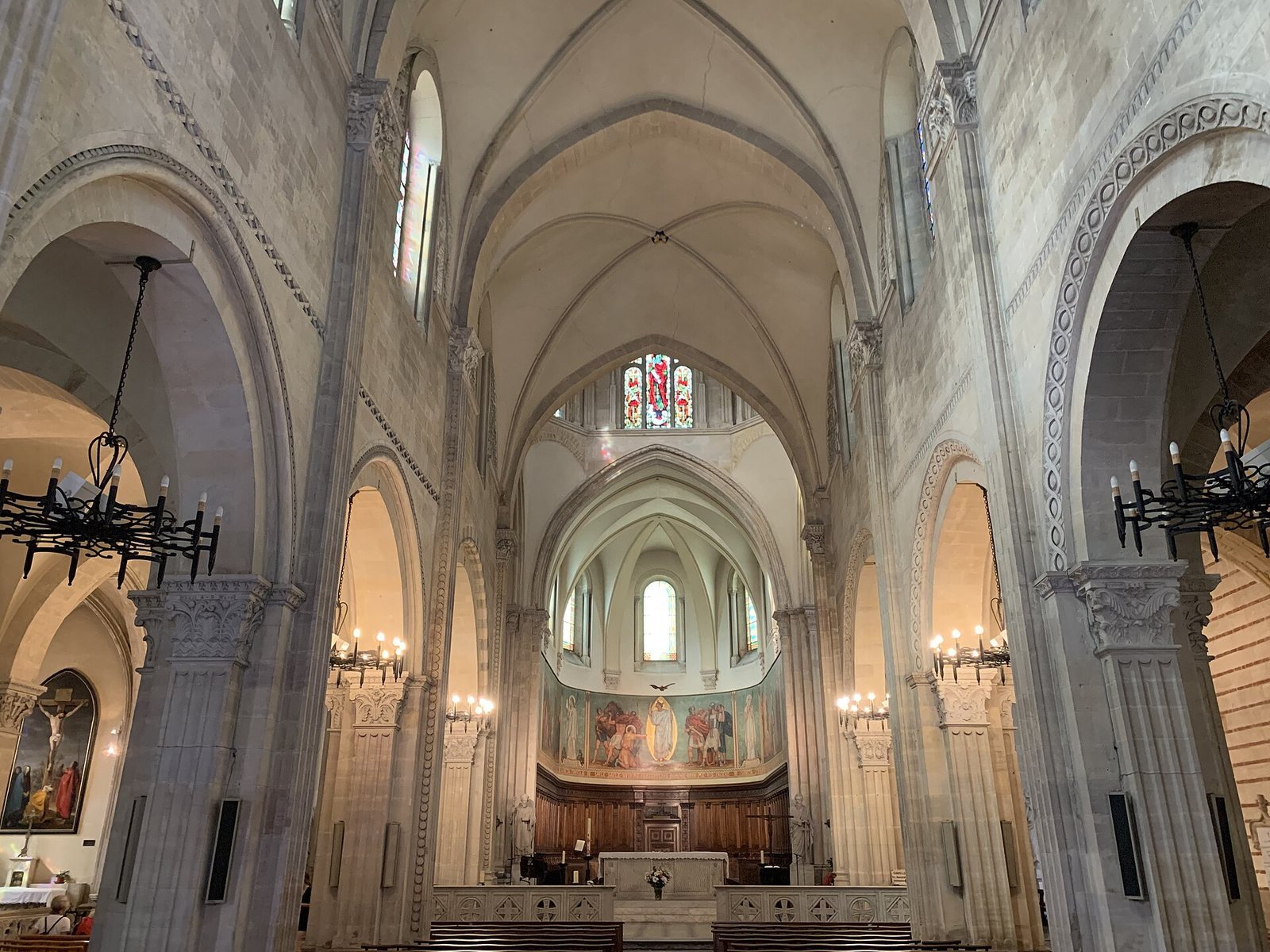
The church is about 45 metres long and 16.5 metres high beneath the arch. Its surviving fabric brings together Romanesque and Gothic work, arranged around a nave, aisle chapels, a main apse, and a tower-lantern.
Interior layout and decoration
Nave and chapels
The nave, the main body of the church, has four bays, or interior sections, supported by four pillars with carved capitals. Sixteen small chapels line the aisles; the earliest dates from after 1470. A chapel associated with the baptismal fonts dates to the sixteenth century and is attributed to designer Jean Palmier.
Choir paintings
Paintings by Paul Borel were added to the choir in 1899, as part of the church’s later interior decoration.
Portals and carved features
Portals and western façade
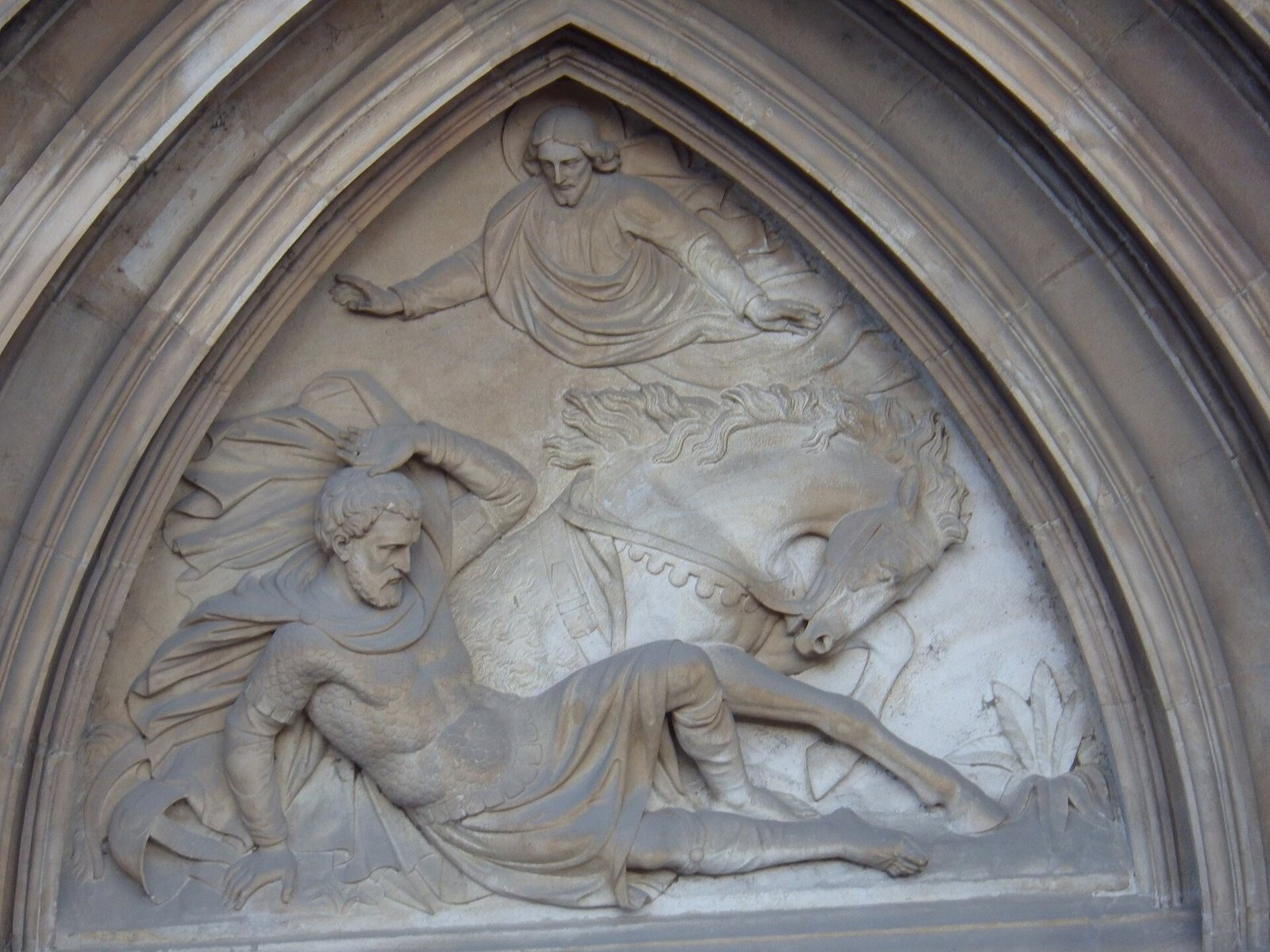
The Romanesque Saint-Laurent portal is one of the church’s medieval features. The church also has a Doric portal and a Gothic portal. Its nineteenth-century western façade includes a gallery of quatrefoils, four-lobed motifs, as well as a rose window and shields. A Neo-Gothic tympanum, the decorated area above a doorway, depicts the conversion of Saint Paul on the road to Damascus.
Carved ornament
Sculpted modillions, projecting ornamental supports, and metopes, decorative panels, embellish the Romanesque work. The metopes show animal, human, and monstrous figures.
Tower and bells
Tower-lantern and spire
The octagonal tower carries a lantern, an upper structure with openings that admit light. Above it rises a stone spire about 24 metres high, reconstructed after the earlier spire was lost.
Bells
Eleven bells are housed in the bell tower. The smallest, Eleanor, was made in 1626. The lower bell weighs more than four tonnes and was cast in Lyon by Gédéon Morel.