Church of the Presentation of the Theotokos in Komárno: A Serbian Orthodox Church
Site at a Glance
- Popularity
- Low
- Country
- Slovakia
- Primary era
- Early Modern
- Eras represented
- Early Modern
- Civilizations
- Habsburg, Hungarian
- Site type
- Religious
- Remains
- Church
On this page8 sections
History
The Church of the Presentation of the Theotokos in Komárno is an Eastern Orthodox church in Slovakia, first built by Serbian monks from Hilandar and consecrated on 17 May 1511. The Theotokos is Mary, the mother of Jesus in Eastern Christian usage, and the Presentation commemorates her presentation at the Temple. Hilandar is a Serbian Orthodox monastery on Mount Athos. The present stone church is Baroque, a European artistic and architectural style, with construction dated to 1753–54.
First churches and parish records
A parish was established at the church in 1511. The original building was demolished in 1648 during work to reconstruct Komárno Fortress. A later replacement was also torn down during another rebuilding of the town, and a third church was built in 1665.
A chronicle kept by the Serbian Orthodox community from 1659 to 1777 lists its trustees. Church registers began in the first half of the eighteenth century.
Eighteenth- and nineteenth-century rebuilding
Komárno’s Serbian community rebuilt the present church, with construction dated to 1753–54. Dionisije Novaković, Bishop of Buda, laid its cornerstone on 10 October 1756 and consecrated it that year. A fire damaged the building in 1760, and construction work was completed in 1770.
A fire that swept through Komárno on 17 September 1848 destroyed much of the town and badly damaged the church. Its bells melted, so Antal Plister cast replacements in 1850. Repairs to the church were completed in 1851.
Community and religious jurisdiction
In 1861, the parish had about 50 Orthodox members. Its priest, Aleksa Dragić, gathered 22 florins, one ducat, and one thaler from local Serbs for a celebration honoring Sava Tekelija, a Serbian philanthropist and cultural patron. The following year, Dragić subscribed to the Novi Sad journal Danica. In 1905, the Serbian community comprised eight households and 32 people, and the church had no permanent priest. The building was then in very good condition inside and out.
After the First World War, the Serbian community dwindled to a few people, and the church went unused for several decades. Its religious life revived in 1998. Following later restoration, services were again held regularly on Sundays and holidays.
After communist rule was established in Czechoslovakia, jurisdiction over the church passed from the Serbian Orthodox Church’s Eparchy of Buda, an Orthodox diocese, to the Orthodox Church of the Czech Lands and Slovakia. It now belongs to that church’s Prešov Eparchy and is Slovakia’s only Serbian Orthodox church.
In 2019, Rastislav, Archbishop of Prešov and Metropolitan of the Czech Lands and Slovakia, invited the Serbian Orthodox Bishop of Buda from Szentendre to celebrate a joint service at the church. The service was followed by the blessing and breaking of a Slava cake. Slava is a Serbian Orthodox family celebration associated with a patron saint; the custom continued even though most worshippers were not of Serbian origin.
Remains
Church building and interior
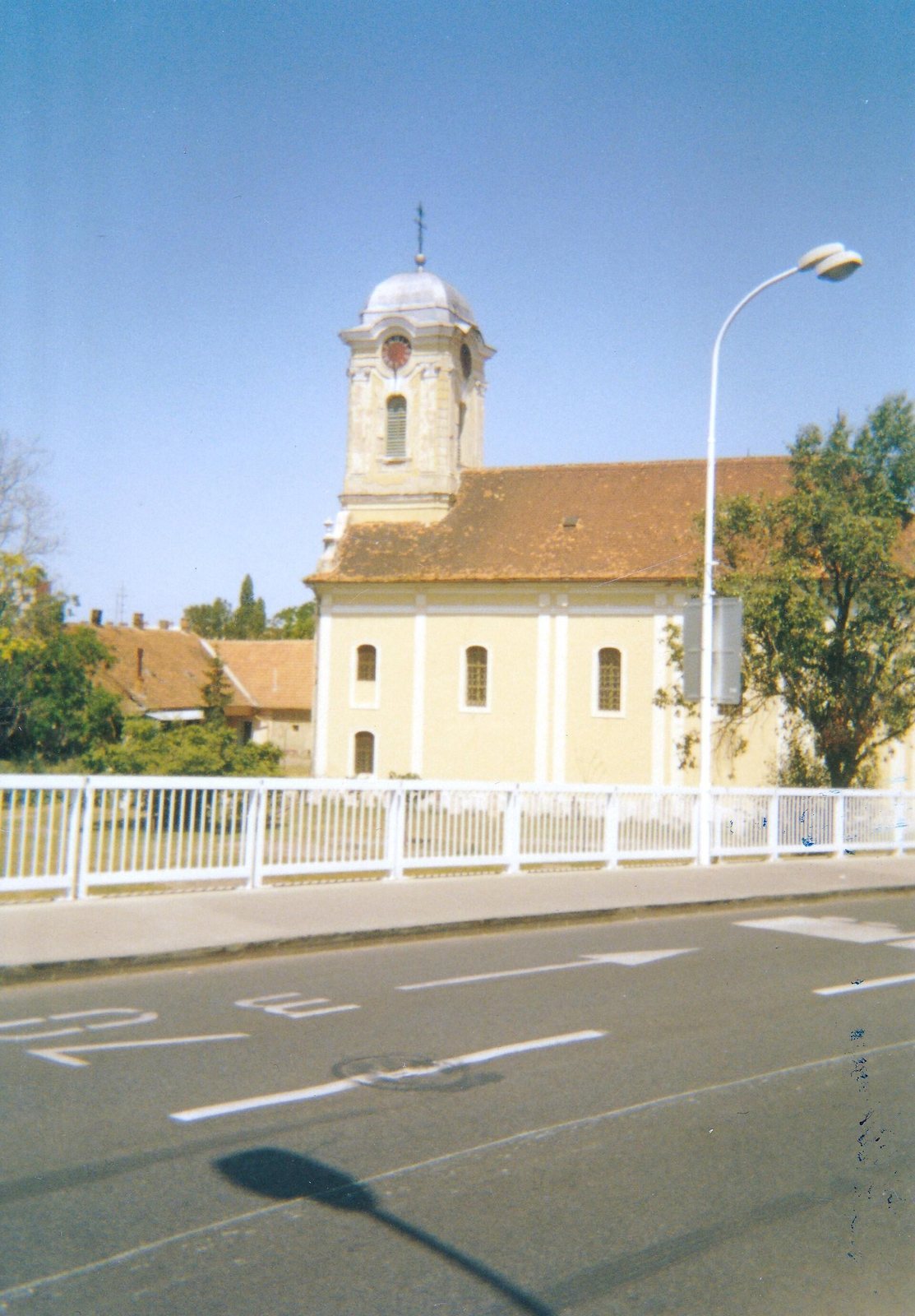
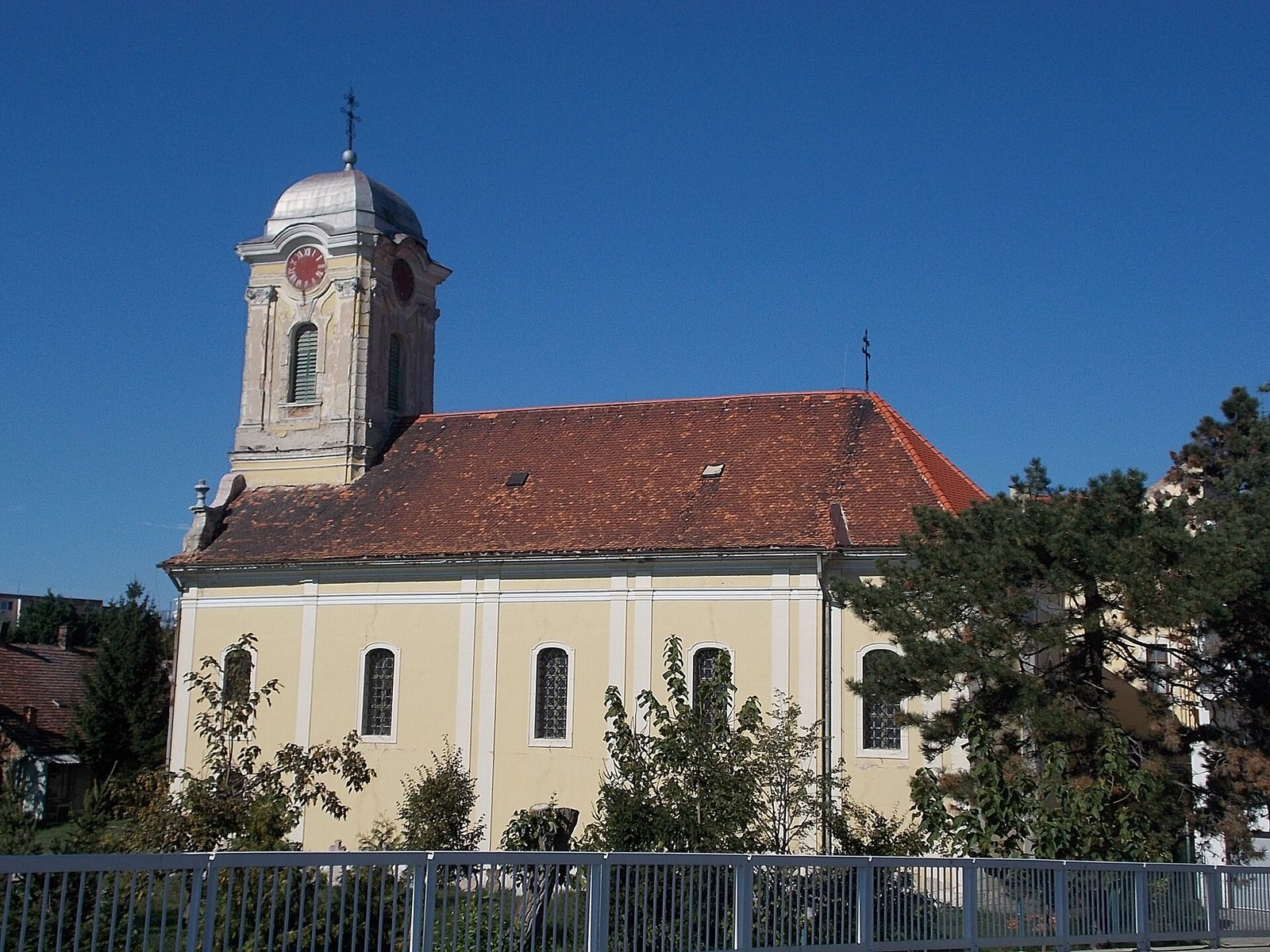
The stone church stands at the edge of Komárno’s old town, near the Danube, which forms the border with Hungary in this area. It measures 28.44 metres long and 7.58 metres wide, and reaches 30.33 metres in height including its bell tower. The building has had its present form since repairs in 1851. Although the tower was repaired after the 1848 fire, its earlier taller form was not restored. Inside is a richly decorated icon screen in the Rococo style, known for elaborate ornament and curved forms.
Churchyard
The churchyard contains old monuments, including one to General Davidović dated 1818.
Objects associated with the church
A 100-gram gold church seal carried an inscription in Cyrillic identifying the Serbian Orthodox church’s dedication to the Presentation. A 1905 listing of religious objects included a Marian icon titled Image of the Most Holy Mother of God, thought to date from the time of Serbian Emperor Stefan Dušan; a gold-embroidered liturgical shroud from 1693; and an old Gospel book with gold covers, valued at 1,000 crowns.