Dybäck Castle: A Historic Manor Complex in Scania, Sweden
Site at a Glance
- Rating
- 3.6
- Popularity
- Very Low
- Country
- Sweden
- Primary era
- Medieval
- Eras represented
- Medieval, Early Modern, Modern
- Civilizations
- Danish, Swedish
- Site type
- Domestic
- Remains
- Manor House
On this page9 sections
History
Dybäck Castle is a manor complex about 9 km south of Skurup in Scania, Sweden. Built in phases from the fifteenth through the seventeenth century, it combines Gothic, Renaissance, and Baroque traditions.
Fourteenth-century record
The estate is known from the fourteenth century. A document dated 1374 names Johannes Sastersen as its first recorded owner. He was reportedly wealthy enough to lend money to the knight of Näsbyholm Castle, farther north.
Noble ownership and division
The property passed through several noble families. A legend connected with the estate tells of a count of the House of Bing who returned among the living after death because of his greed. The Danish Marsvin family was also among its owners. The family included generals, and some of its members served on the Danish Council of the Realm, a body of nobles that advised the monarch and took part in government. Kirsten Munk, a daughter-in-law of the family, was married to King Christian IV of Denmark from 1615 to 1630.
The manor passed to the Bille family through Pernille, a granddaughter. After Pernille and her husband died, the manor and its lands were divided between two sons from a second marriage. Their successors disputed the division for about two centuries.
Reunification and later ownership
The estate was reunited in 1857. Its present owners belong to the Alwén noble lineage, and the manor remains privately owned. The estate’s principal products were grain, vegetables, and spirits.
Remains
Buildings and setting
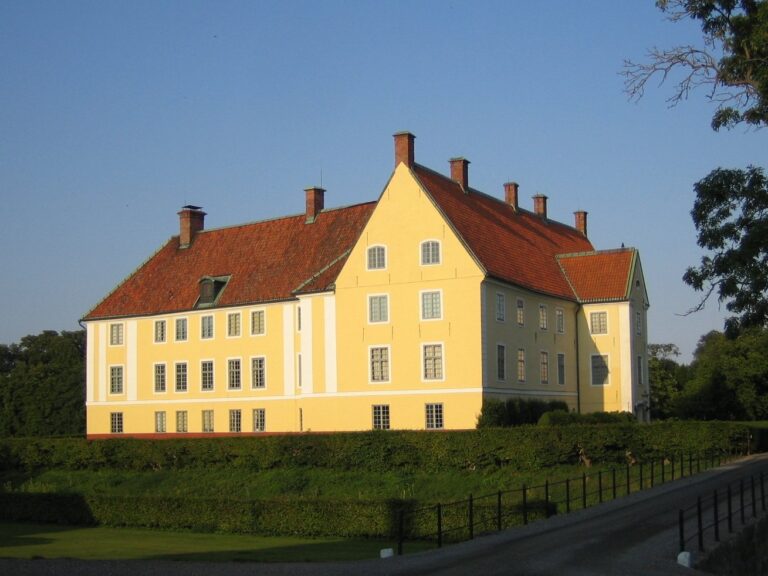
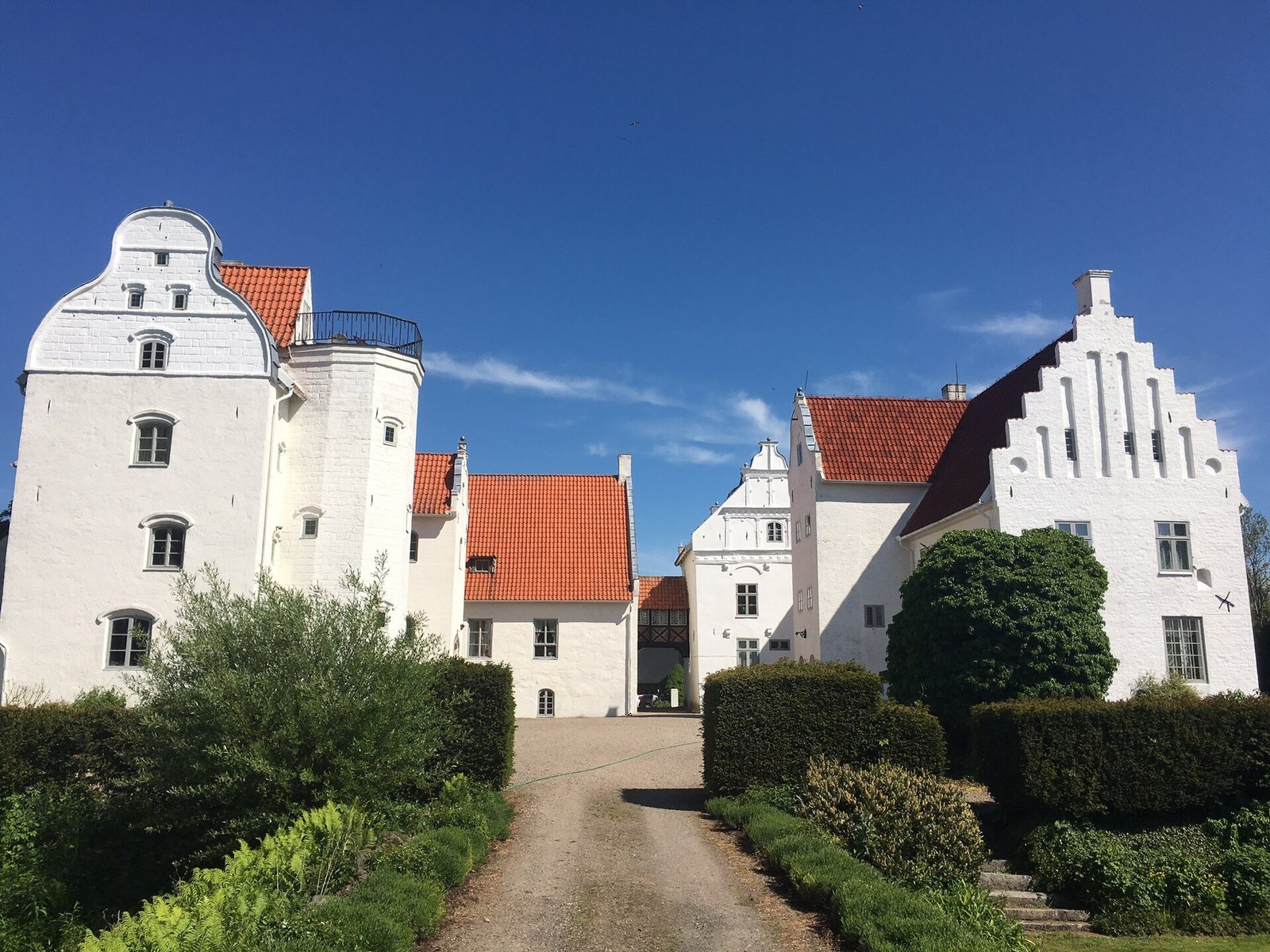
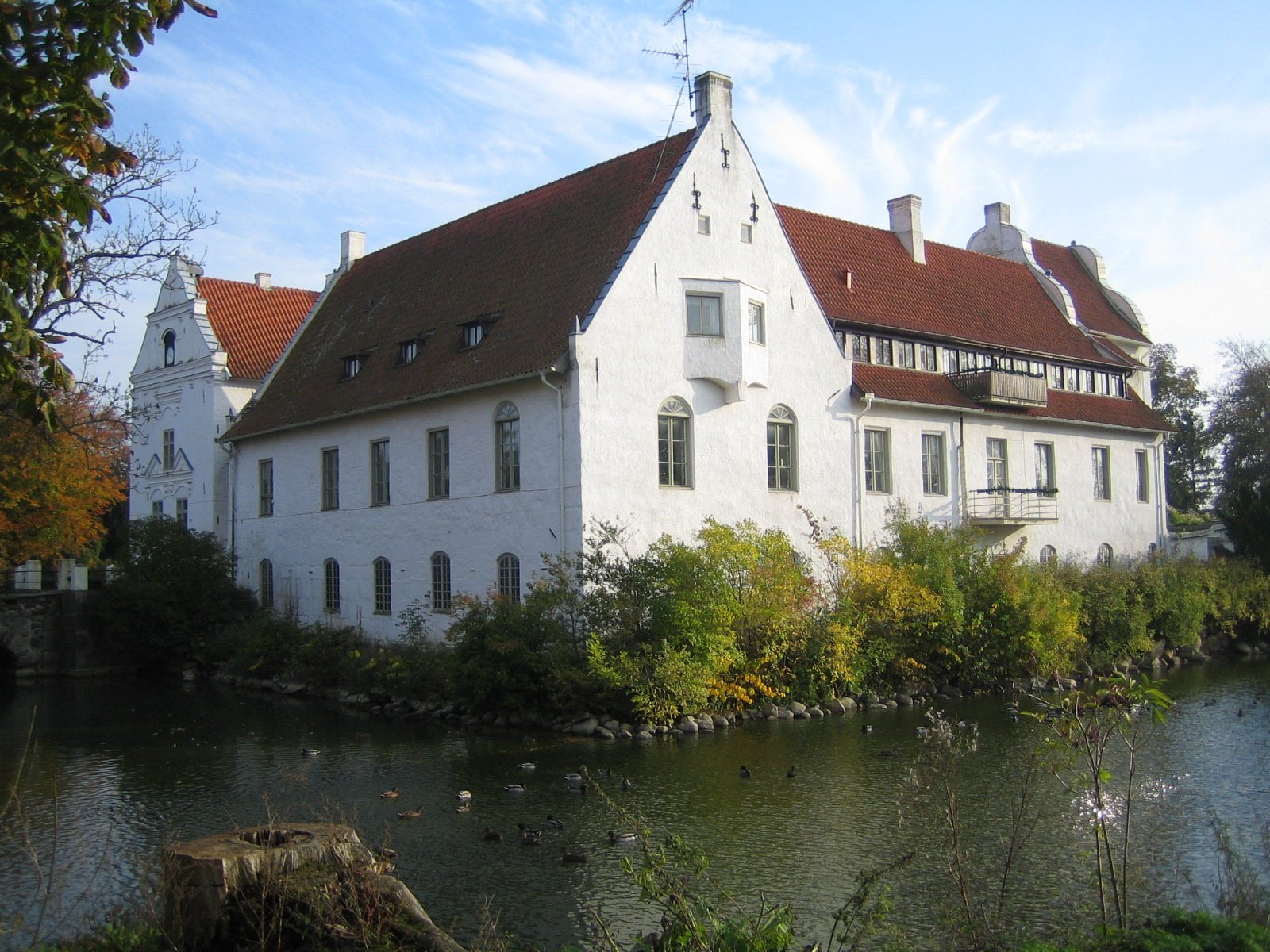
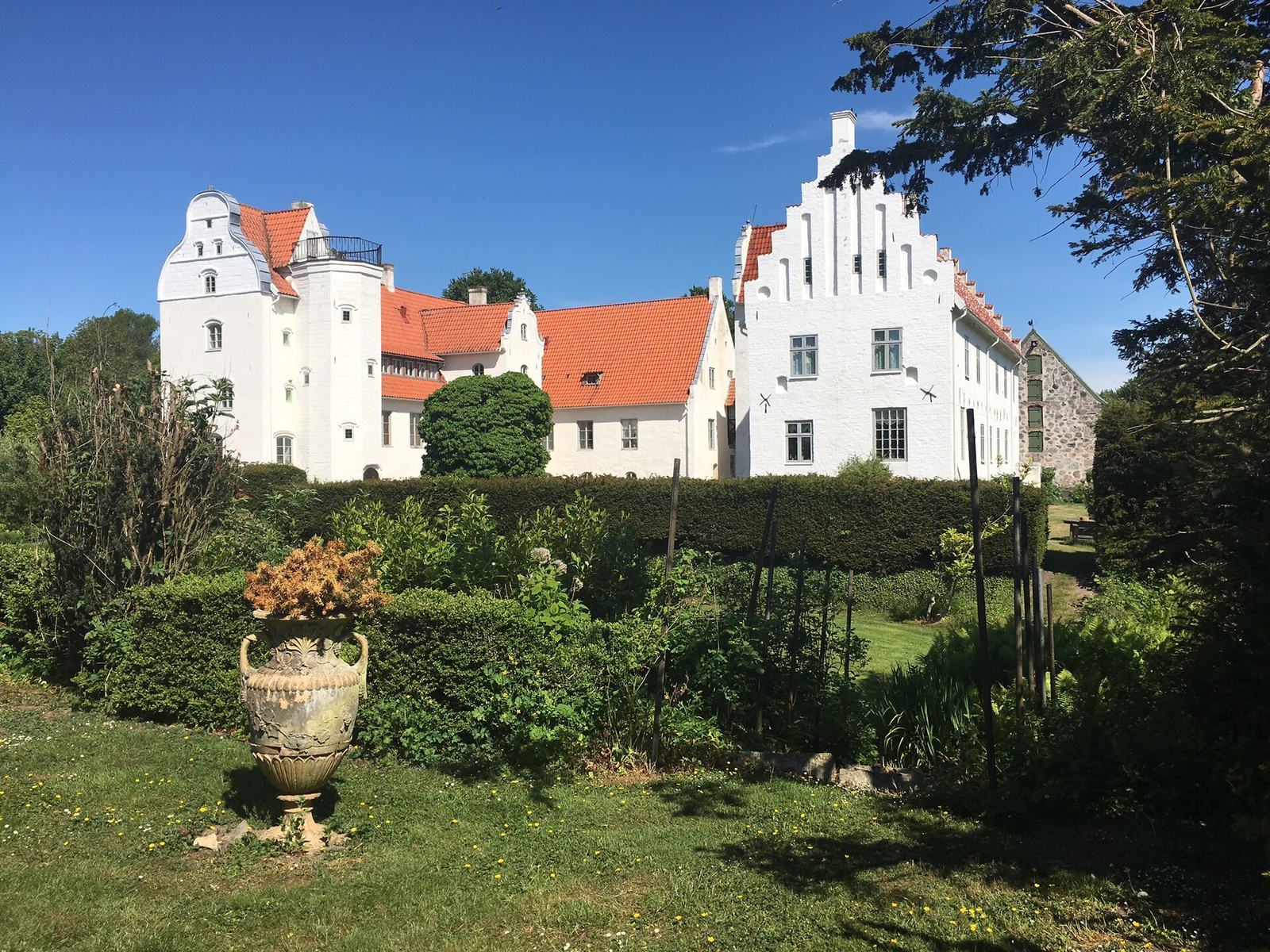
The manor consists of several connected, white-painted buildings. Together, they retain features from Gothic, Renaissance, and Baroque architecture, with the buildings arranged as a complex around a moat.
Building phases and the eastern longhouse
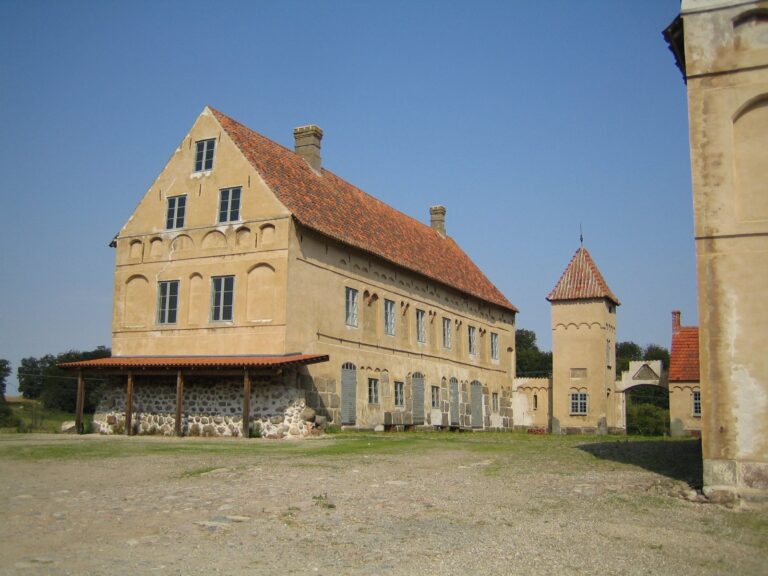
The oldest parts date to the fifteenth century, including a section built in the late fifteenth century. Additions followed in the mid-sixteenth century, while the western parts, including a stair tower, date to the seventeenth century. The eastern longhouse is among the oldest buildings. Its stepped upper gable rises above broad brick walls, and its steep roof is covered with red tiles. Other older buildings are made of gray fieldstone.
Moat and adjoining park
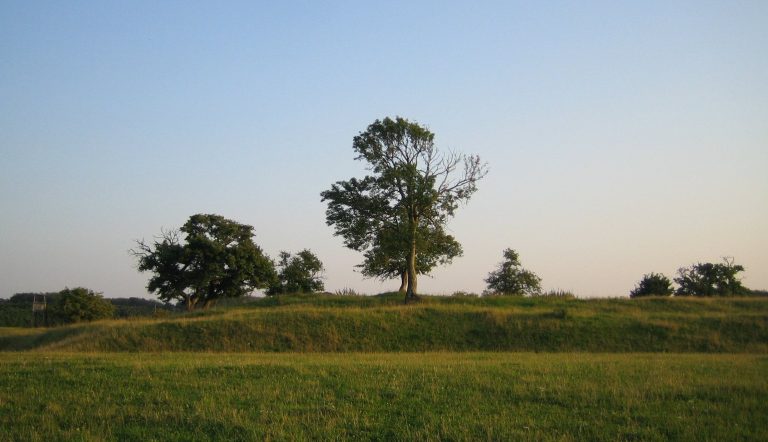
A moat surrounds the complex and was probably built for defense. Two square sections may have been defensive towers. A park adjoins the moat. The Dybäcksån River feeds it and drains Lake Näsbyholmssjön toward the Baltic Sea.
Entrance gate
The entrance gate dates to the early nineteenth century and is among the complex’s later elements.