Marsvinsholm Castle: A Seventeenth-Century Noble Residence in Scania
Site at a Glance
- Rating
- 4.5
- Popularity
- Very Low
- Country
- Sweden
- Primary era
- Early Modern
- External website
- Open
- Eras represented
- Early Modern, Modern
- Civilizations
- Denmark–Norway, Swedish
- Site type
- Domestic
- Remains
- Castle
On this page5 sections
History
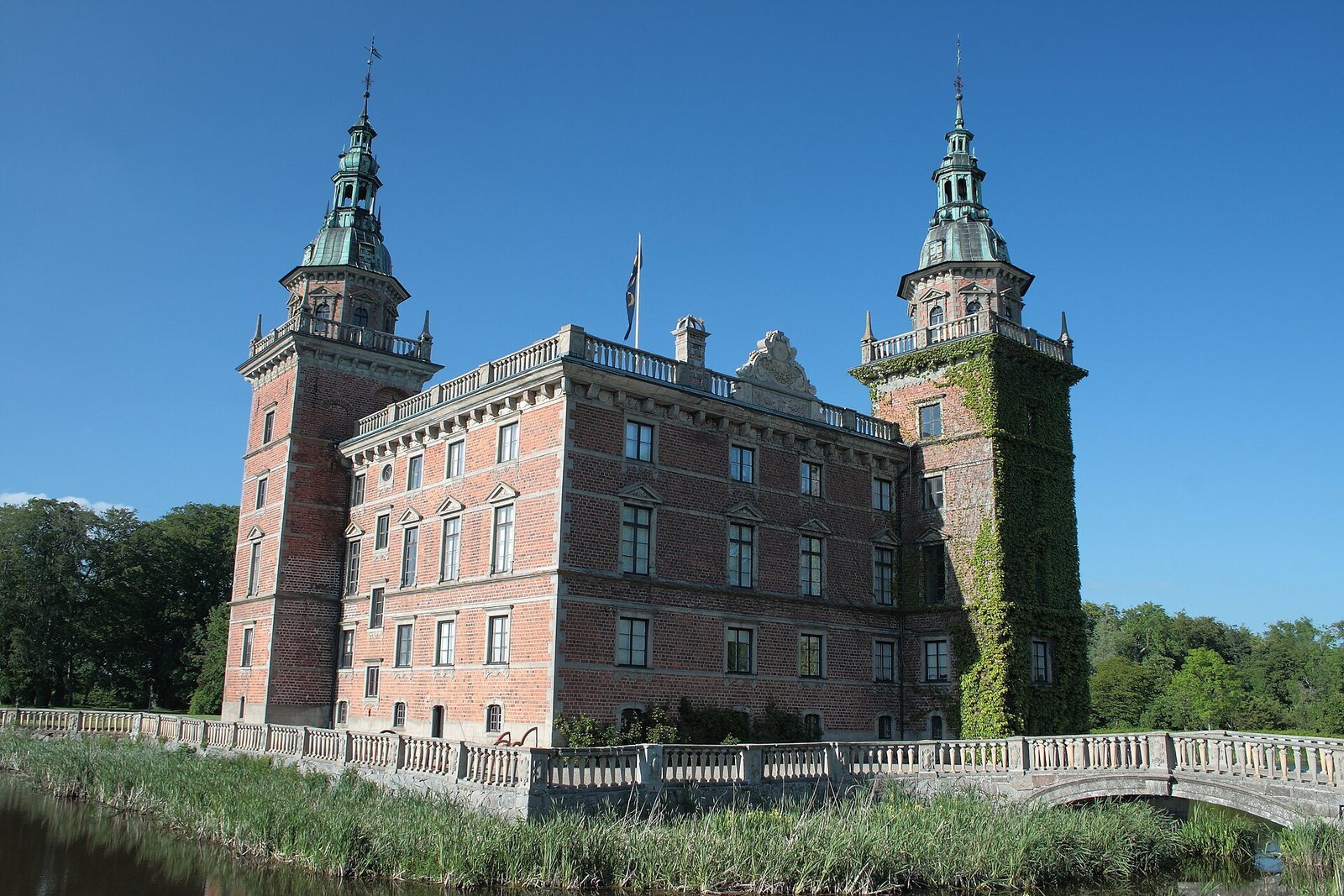
Marsvinsholm Castle is a seventeenth-century castle on the Marsvinsholm estate near Ystad in Scania, Sweden, built by Danish nobleman Otte Marsvin in 1644–1648. Its façades were later restored in the Dutch Renaissance style, a northern European form of Renaissance architecture associated with King Christian IV’s era. The Marsvin family was among Denmark’s largest landowning families and had ties to the royal household.
From royal land to noble estate
The estate appears in records from the early fourteenth century under several names, including Bosøe and Borsøe. At that time, Scania was under the Danish Crown. By the late fourteenth century, the estate had become royal land, meaning property held by the monarch. It belonged to King Valdemar Atterdag and later to his daughter, Queen Margrethe.
Around 1520, the estate was pledged to Danish admiral Jens Holgersen Ulfstand and ceased to be crown property. In the middle of the sixteenth century, it belonged to members of the Ulfeld family.
Otte Marsvin and the castle
Around 1630, Palle Ulfsted sold the estate to Otte Marsvin, who named the castle for his family. Otte’s sister, Ellen Marsvin, was the mother of Kirsten Munk, the common-law wife of Christian IV, king of Denmark and Norway from 1588 to 1648.
Ownership later shifted through inheritance and sale among noble families, including the Tott, von Königsmarck, de la Gardie, Sjöblad, Ruuth, Piper, Tornerhielm, and Wachtmeister families. During the Scanian War, a conflict between Denmark-Norway and Sweden from 1675 to 1679, the Swedish Crown confiscated the castle from its pro-Danish owner, Holger Thott.
Renovation and later ownership
Count Erik Ruuth carried out a thorough renovation from 1782 to 1786. By the mid-nineteenth century, the castle belonged to Count Carl Wachtmeister, who was also prime minister. He sold the estate to Baron Jules Stjernblad in 1854. Stjernblad commissioned Danish architect Christian Zwingmann to restore the castle in 1856–1857.
Stjernblad’s daughter, Countess Ida Eherensvärd, inherited the castle. Her children from her first marriage, Rutger, Louise, and Madeleine Bennet, owned it until 1910. Johannes Johannesen had acquired it by 1912, and in 1938 it passed to his daughter Anna Margrethe and her husband, Jørgen Wendelboe-Larsen. Their son Erik later owned the estate and sold it to Bengt Iacobaeus in 1978. Bengt’s son, Tomas Iacobaeus, is the present owner.
Remains
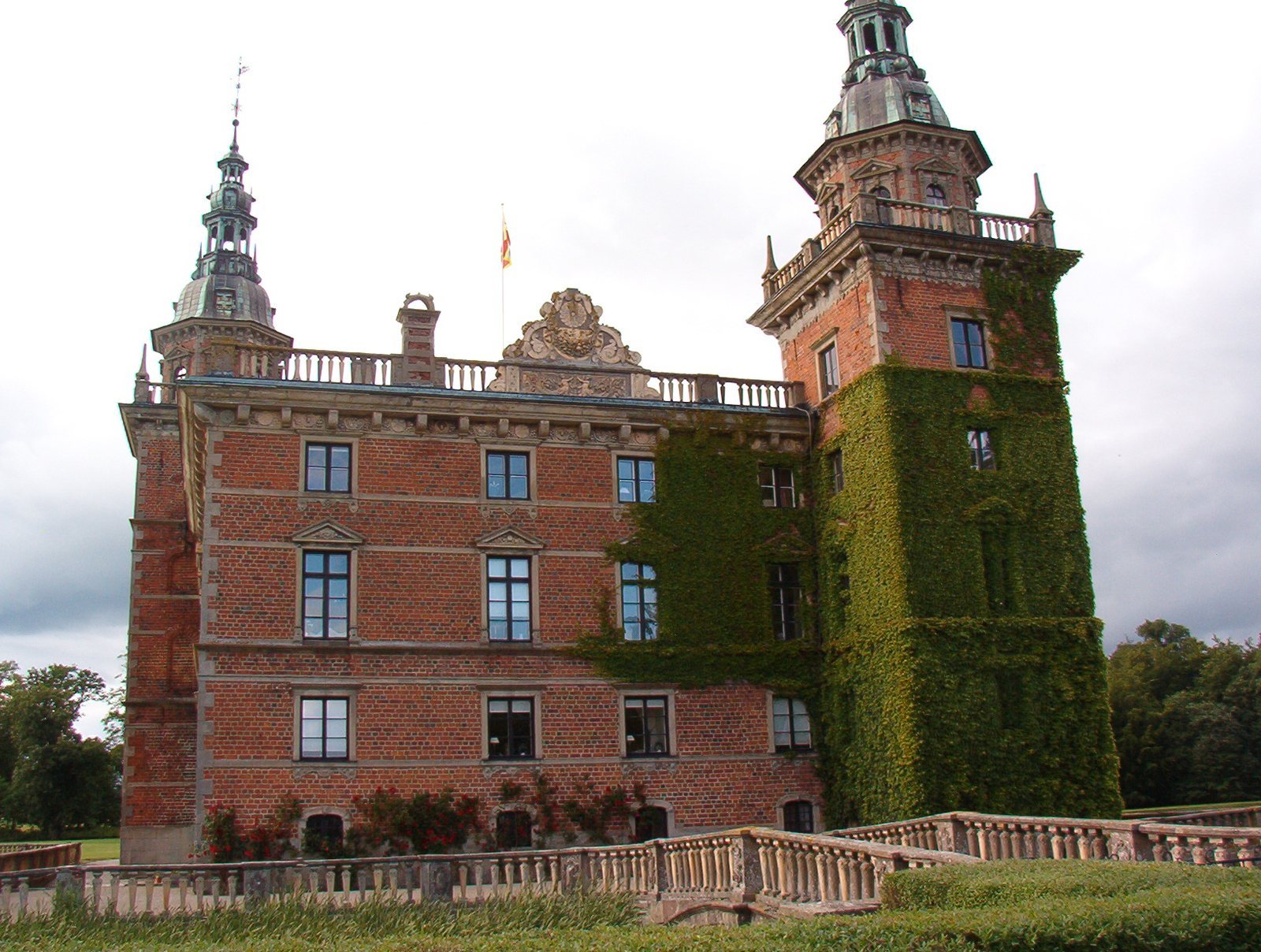
The castle complex has a square plan, with a four-storey main residence built of stone and brick. Two five-storey towers occupy diagonally opposite corners. The buildings stand on timber piles that were driven into the bed of a small lake when the castle was built.
Some of the water on the castle’s northern side was later filled in. A park surrounds the castle, and 99 fish-breeding ponds formerly lay around it.