Dobrilugk Abbey: A Cistercian Monastery in Germany
Site at a Glance
- Popularity
- Medium
- Country
- Germany
- Primary era
- Medieval
- Eras represented
- Medieval, Early Modern, Modern
- Civilizations
- German, Habsburg, Habsburg Austria, Holy Roman Empire
- Site type
- Religious
- Remains
- Monastery
On this page13 sections
History
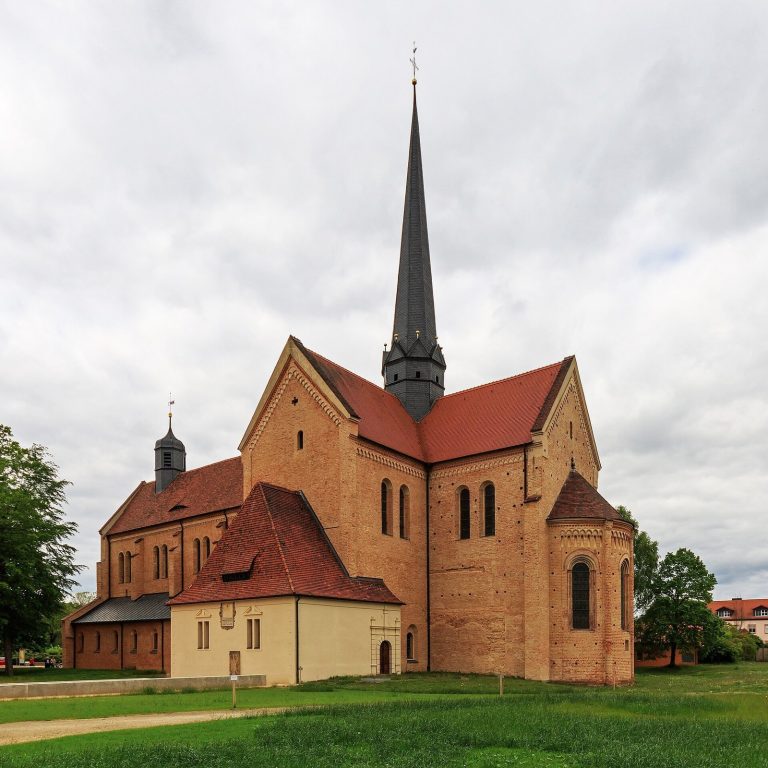
Dobrilugk Abbey was a Cistercian monastery in Germany, legally founded on 1 May 1165 by Dietrich of Landsberg and Eilenburg, a Wettin margrave, or ruler of a frontier territory, in the Ostmark and Lusatia. The Cistercians were a Catholic monastic order rooted in the Benedictine tradition. The abbey church, a Romanesque basilica with a long central nave and side aisles, was built from the late 12th into the early 13th century. Dobrilugk became the order’s earliest monastery in the lands between the Elbe and Oder. It was a daughter house, established from an existing community, of Volkenroda Abbey and belonged to the network of monasteries linked to Morimond. Its patrons were Saints Sigismund and Henry, the latter being Henry II, and it initially fell within the Diocese of Meissen.
Foundation and early growth
The place-name Dobraluh appears in 1005 in the account by Thietmar of Merseburg, a medieval bishop and chronicler, describing King Henry II’s campaigns against Poland. The abbey itself made little headway at first amid regional conflict. A 1179 incursion by the Lutici, a confederation of West Slavic peoples, and Pomeranian forces may have further delayed its growth. Fighting was reported near Lübben and later around Zinna and Jüterbog. Dietrich’s foundation received backing from Wettin relatives, Archbishop Wichmann of Magdeburg, and Bishop Werner of Płock. Werner brought relics of Saint Henry, given to him by Emperor Frederick Barbarossa at Aachen during Christmas 1165. In 1184, twelve monks arrived from Volkenroda and began forming the community.
The abbey’s endowment was set down in 1199. Its church was far enough advanced by 1209 to receive the burial of Margravine Elisabeth, wife of Konrad II, a margrave of Lusatia. The church’s consecration is traditionally placed in 1228. Around 1210–11, the poet Walther von der Vogelweide described Dobrilugk as an inhospitable place; by the 19th century, in Jacob Grimm’s era, the monastery was regarded as famous.
Landholding and regional influence
Endowments and acquisitions made Dobrilugk a substantial landholder. It controlled 18 villages by 1234 and added to its estates through purchases from 1240 onward. Among its holdings were Werenzhain, Kirchhain, Hennersdorf, Lindena, and Fischwasser. A papal document of 1253 named many other properties, including four villages described as deserted. In 1235, the Cistercians granted Kirchhain the right to hold a market. They also operated trading premises in Luckau and Lübben to sell produce from their estates. The abbey held Lübben from 1301 to about 1329, when its abbot also ruled the town. Like other Cistercian houses, it did not owe agricultural tithes to the bishop.
The abbey established a farm at Althöfchen on the Obra in 1232. Two years later, Duke Władysław Odonic of Greater Poland granted it land near Bledzew for another Cistercian foundation. A monastic farm operated there before a community was established in 1286 at Neu-Dobrilugk, now Zemsko. Dobrilugk also participated in the settlement and development of western Lower Lusatia. German settlers, including people from Saxony, Thuringia, and the Lower Rhine, helped establish villages, while most of the abbey’s subjects were Sorbs, a West Slavic people indigenous to Lusatia. Its abbot held a seat and vote in the Prelates’ Curia, the senior clergy’s body within the Lower Lusatian Landtag, or representative assembly.
In 1349, Emperor Charles IV and Duke Rudolf I of Saxony considered moving the remains of Ascanian dukes from Wittenberg to Dobrilugk, but the proposal came to nothing. In the early 1370s, Charles IV confirmed the abbey’s possession of about 40 villages and five farmsteads. Emperor Sigismund confirmed holdings of 65 villages and farmsteads in 1434. Despite this wealth, the monastery had begun a gradual decline near the end of the 14th century. As fewer lay brothers, who commonly performed agricultural and manual work, were available, the monks shifted away from direct farming and relied increasingly on rents and dues. Hussite forces, followers of the Bohemian religious reformer Jan Hus, plundered the abbey in 1431, though its economic resources remained considerable afterward.
Reformation, dissolution, and the castle estate
From the 1520s, monks departed and adopted Protestant teachings, weakening the community. The abbot fled with portable valuables in 1533. Emperor Ferdinand I demanded large contributions from monasteries in Lower Lusatia to support wars against the Ottoman Empire. In 1541, Saxon Elector Johann Friedrich I seized and secularized Dobrilugk, transferring the church estate to secular control over a financial claim against the King of Bohemia. The monks left, and the community ended. During the Schmalkaldic War, a conflict between Protestant princes and the Catholic Habsburg emperor, Ferdinand recovered the abbey lordship and returned it to Lower Lusatia, but did not permit the monks to come back. He successively mortgaged the territory to members of the Schlick and Gersdorff families.
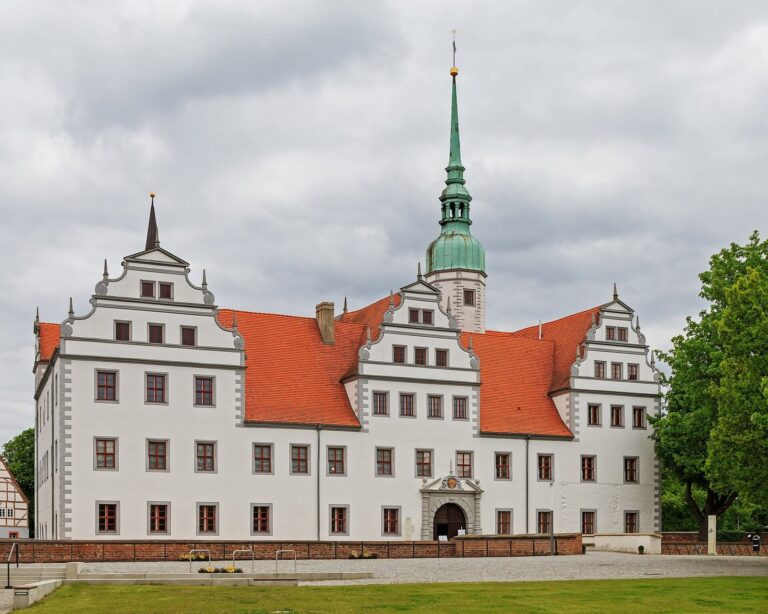
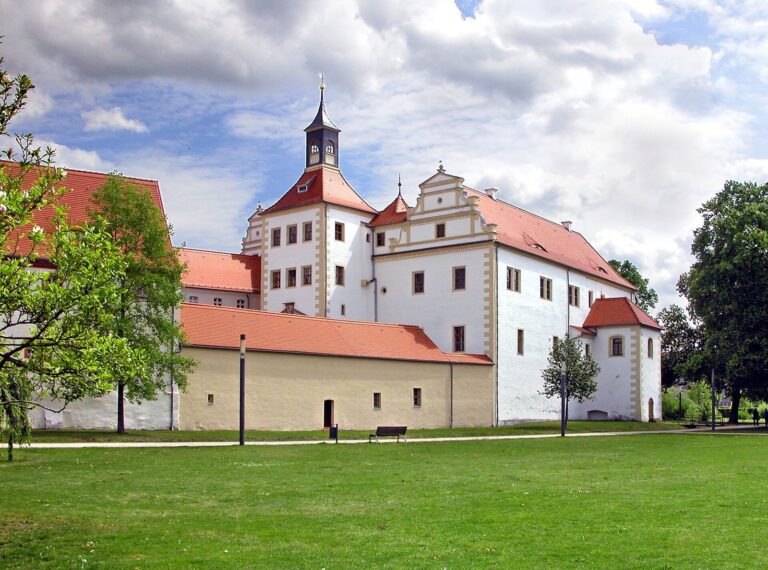
A hunting lodge was built around 1550 in place of the abbot’s residence, and work on a castle began on the former abbey grounds in 1551. Heinrich Anselm von Promnitz sold Dobrilugk to Johann Georg I of Saxony in 1624. The Lower Lusatian estates secured the territory’s continued place within the margraviate, but its administration was divided: taxes went to the Lower Lusatian treasury, Saxon electoral officials administered justice, and appeals went to the Chamber Court in Dresden rather than the regional state court. In the same year, the castle incorporated dilapidated abbey buildings and the hospice. Under the Wettin family’s Sachsen-Merseburg branch, which ruled from 1656 to 1738, Dobrilugk served as a secondary residence for the dukes, and the region experienced renewed prosperity. The town of Dobrilugk was laid out from 1664.
Swedish soldiers badly damaged the church in 1637. It was subsequently rebuilt for Protestant worship and consecrated in 1676 as an evangelical castle and parish church. A church choir was founded in 1696, and Duke Moritz Wilhelm gave it two kettledrums in 1728. Fire damaged the castle church in 1779. In 1852 another fire destroyed the cloister’s monk and lay-brother wings; those buildings were later demolished, while the church and refectory survived.
Restoration and later history
The church was restored and remodelled toward its earlier form between 1905 and 1909. Work on its roof and tower surfaces began in 1996, followed by another restoration of the church in 2004. The refectory was restored in the early 21st century, and other abbey remains were exposed during restoration work. Buildings erected on the grounds by the East German National People’s Army were demolished in 2003. The abbey church is now within the Diocese of Dresden-Meissen.
Remains
Layout and surviving fabric
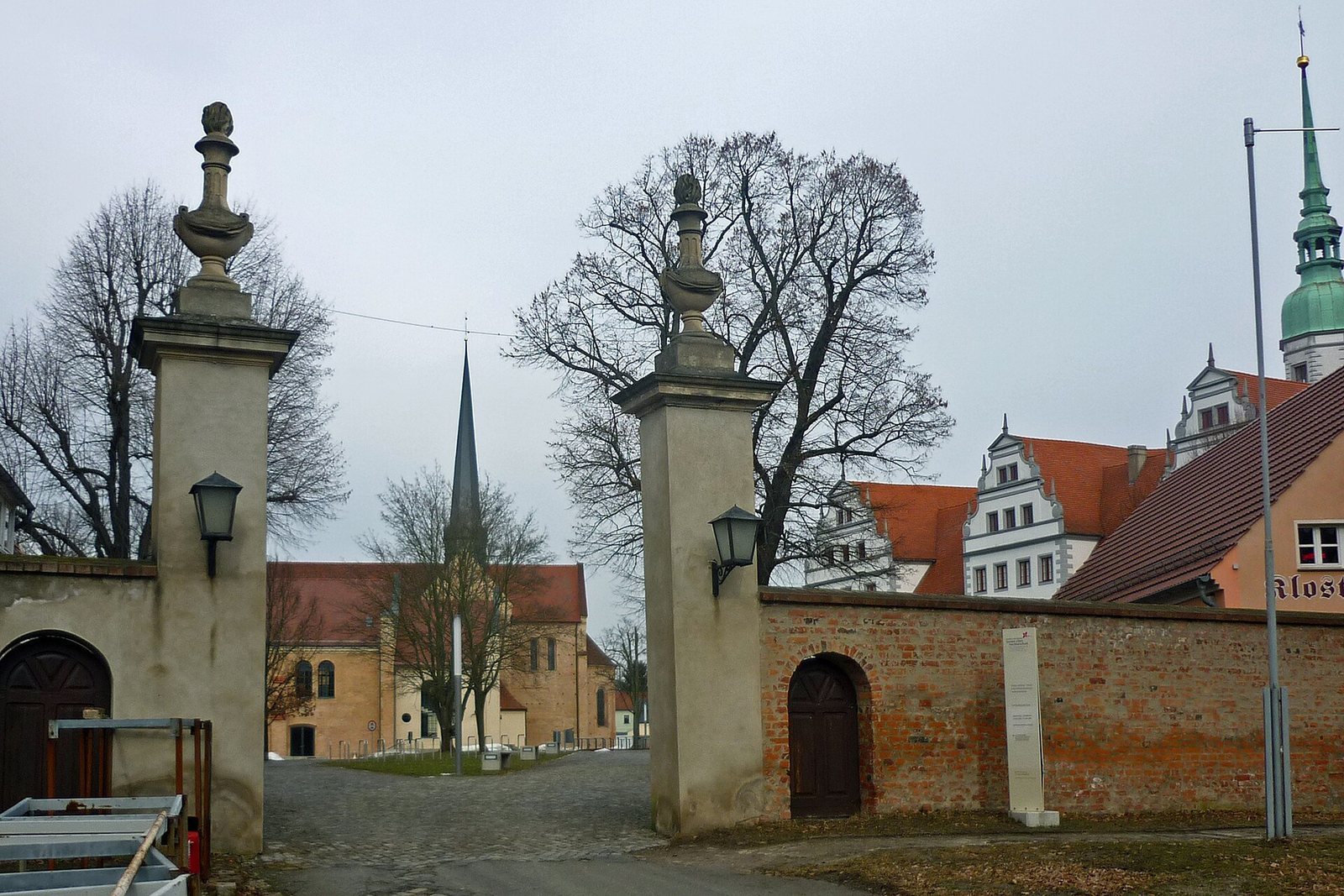
The church stood along the north side of the monastic complex. Three principal ranges completed the plan: the refectory occupied the southern wing, the chapter house and dormitory were in the eastern wing, and another range stood to the west. Service buildings, gardens, a chapel for laypeople, and an infirmary were also part of the precinct. Romanesque stonework and building remains uncovered through archaeological investigation reveal the construction character of the complex. The church and refectory are its principal surviving monastic buildings.
Church
Building
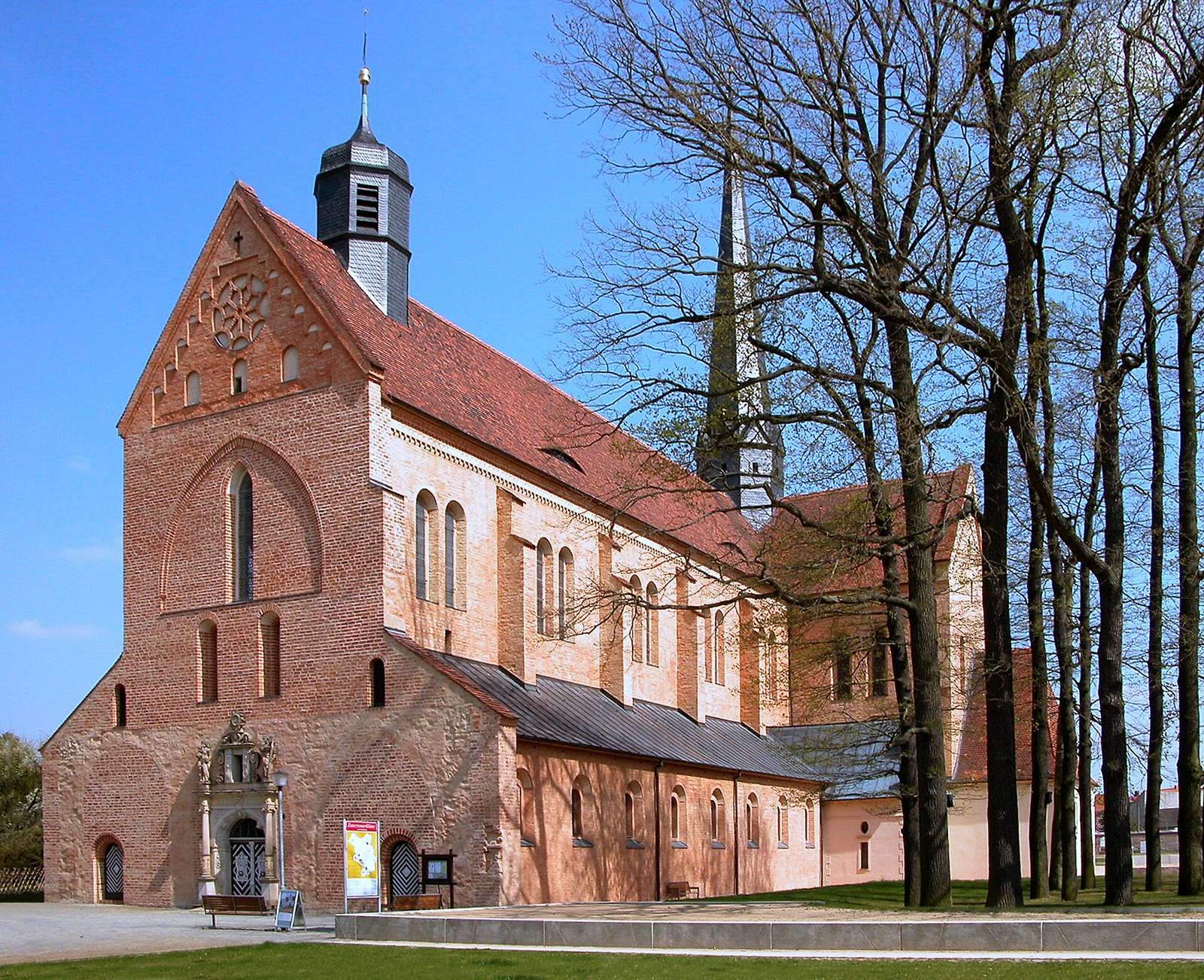
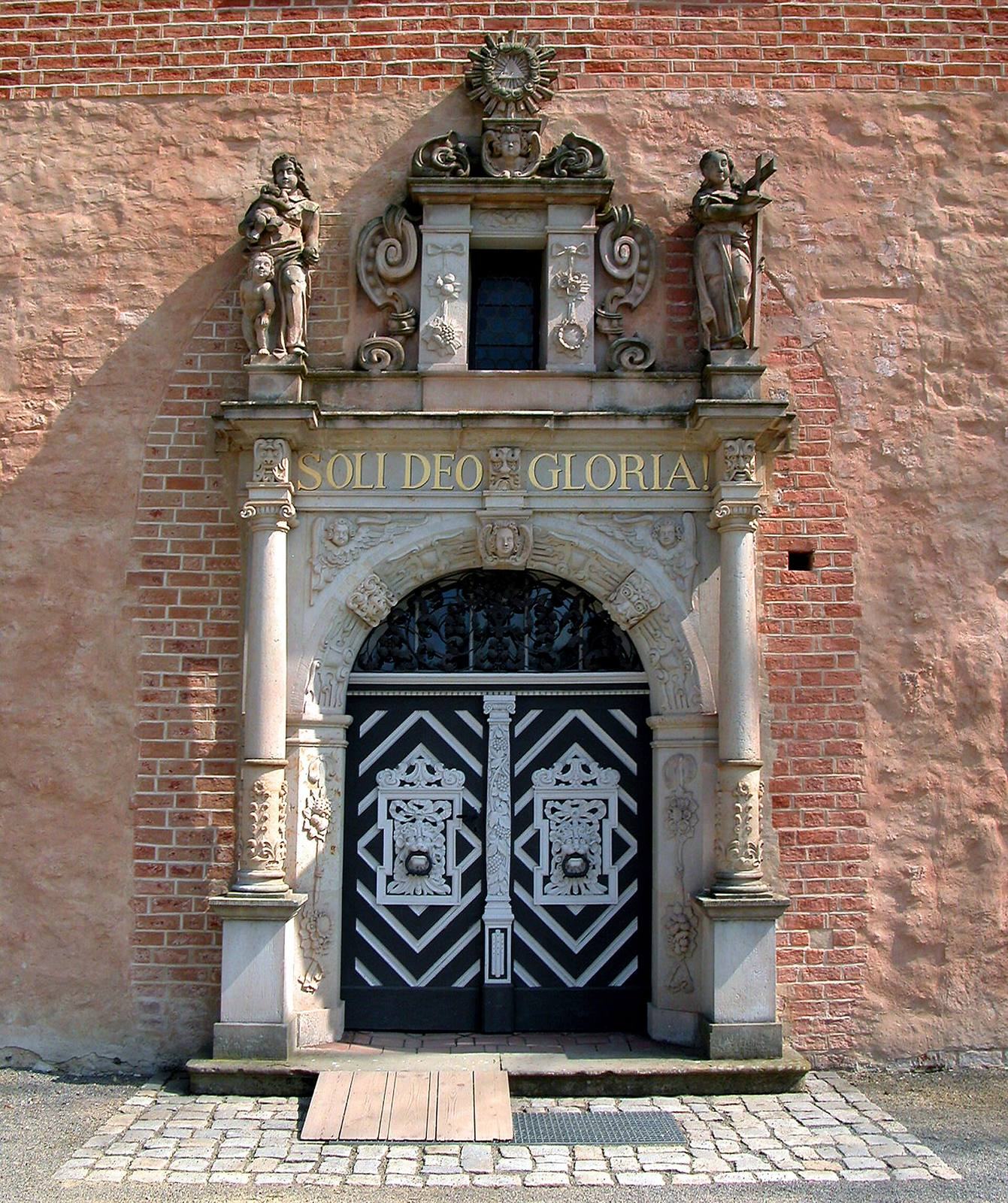
Dedicated to the Virgin Mary, the church was built as a basilica in the Romanesque tradition. Its surviving fabric reflects the restoration and remodelling carried out from 1905 to 1909, as well as later repairs and restoration. Swedish soldiers damaged the building in 1637, after which it was adapted for Protestant worship. It remains a church within the Diocese of Dresden-Meissen.
Organs and bell
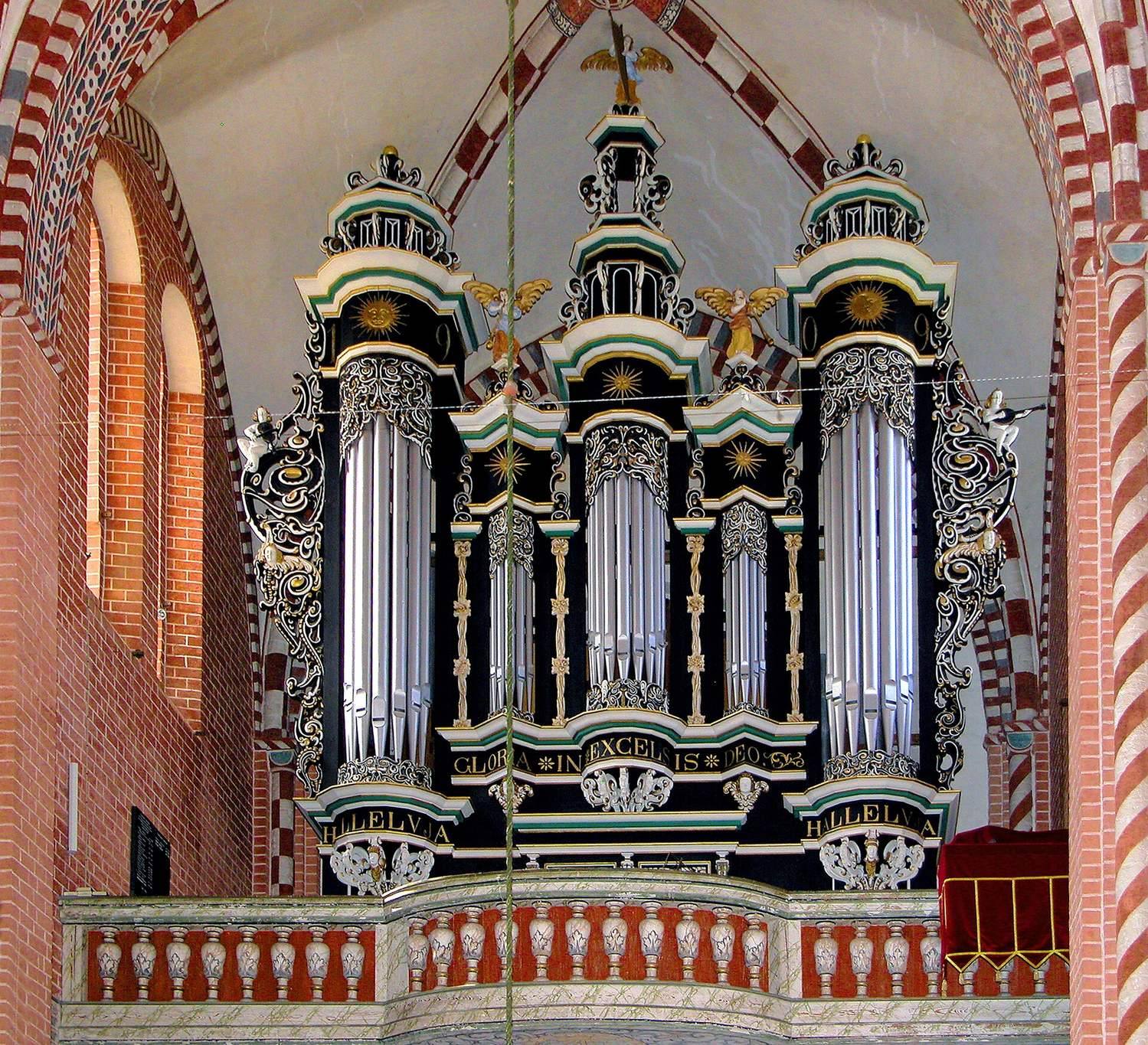
An organ with 20 stops was installed in 1676. Johann Christian Kayser built a replacement after 1789. The Sauer organ, Opus 209, installed in 1875, has two hand-operated keyboards, a foot-operated pedal, and 27 stops; its Posaune 16-foot and Trompete 8-foot stops were restored in 1998. A small organ by Orgelbau Voigt was acquired for the sacristy in 1973, and the church choir purchased a positive organ, a small freestanding instrument, from Orgelbau Kemper in 1997. A large bell in the crossing tower, which rises above the junction of the church’s nave and transept, was consecrated in 1955.
Monastic ranges and associated buildings
Refectory and cloister ranges
The refectory, the community’s dining hall, formed part of the southern range and is one of the main monastic buildings to survive. For a long period after the abbey’s dissolution, it was used as a stable. In 1952 it became a cultural center for soldiers stationed at the castle, and it underwent restoration in the early 21st century. The chapter house, where the monks met, and their dormitory occupied the eastern range, while the western range completed the three-wing arrangement. These ranges belonged to the complex’s early building phase, and exposed stonework and other remains show Romanesque construction.
Infirmary and abbot’s residence
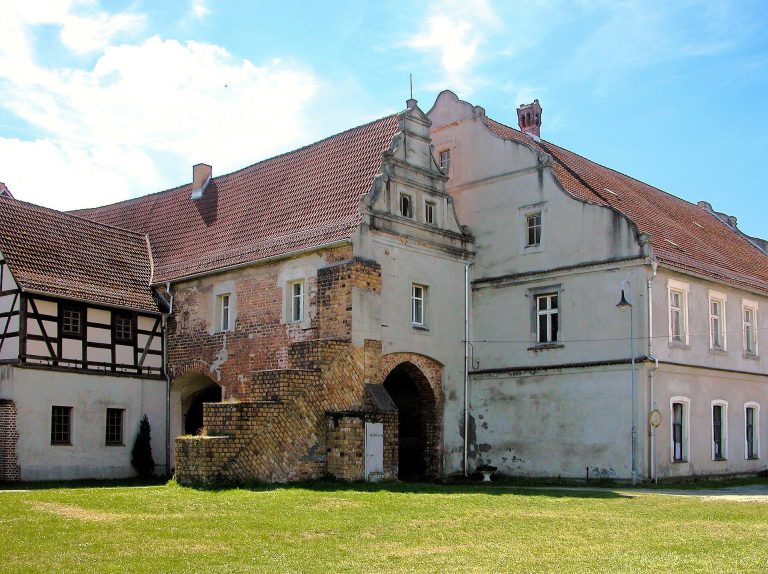
The infirmary, which cared for sick members of the community, was enlarged with a chapel in the early 14th century. The abbot’s residence, built in the second half of the 14th century, contained traces of underfloor heating. A hunting lodge replaced it around 1550. Substantially altered remains of both the infirmary and the abbot’s-house buildings later became parts of the western and northern wings of Doberlug Castle, whose construction began in 1551.