Derby Cathedral: Seat of the Diocese of Derby
Site at a Glance
- Rating
- 4.7
- Popularity
- High
- Country
- United Kingdom
- Primary era
- Early Modern
- Eras represented
- Early Modern, Modern
- Civilizations
- British, English
- Site type
- Religious
- Remains
- Cathedral
On this page19 sections
History
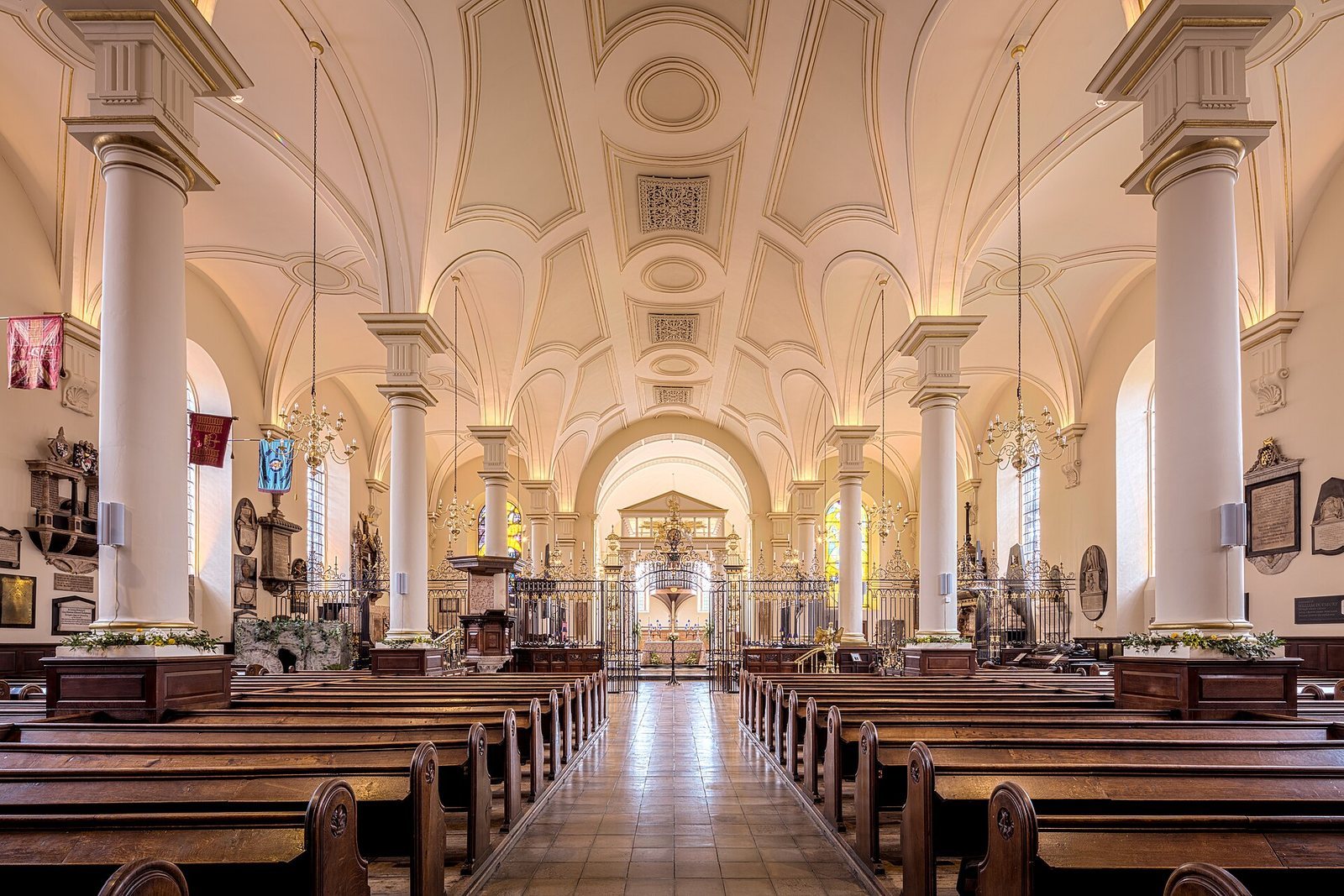
Derby Cathedral, formerly All Saints’ Church, is a Church of England cathedral in Derby, United Kingdom, and the seat of the Diocese of Derby, an ecclesiastical district overseen by a bishop. Its origins probably date to about 943, when it was founded under Anglo-Saxon King Edmund I as a royal collegiate church, served by an organized community of clergy. The main body is an eighteenth-century Georgian rebuilding, from Britain’s 1714–1830 architectural period, in the Neo-Classical style, which draws on ancient Greek and Roman forms.
Early foundations and the medieval church
After the Norman Conquest of England in 1066, the church belonged to the king. A college of seven priests served it by 1086, when the Domesday Book, a survey of English landholding, recorded the arrangement. The first church was probably replaced in the fourteenth century after becoming structurally unstable. Drawings indicate that its successor was about the size of the present church.
The late medieval and Tudor church
The surviving tower was built between 1510 and 1532. In 1556, during the persecutions of Protestants under Queen Mary I, the blind Protestant Joan Waste was tried for heresy in the church. She was later executed on Burton Road in Derby.
Eighteenth-century rebuilding
The church fabric began to deteriorate around 1650 and was ruinous by 1700. In February 1723, vicar Dr Michael Hutchinson decided it needed rebuilding and ordered its demolition overnight, before securing agreement. The mayor and corporation then raised money by subscription. Hutchinson contributed personally and worked hard to obtain donations. His efforts may have harmed his health; after disputes, he resigned in 1728 and died about eighteen months later, leaving substantial debts.
James Gibbs designed the rebuilt church, while the old tower was retained. The first sermon in the new building was preached on 25 November 1725. Robert Bakewell’s wrought-iron chancel screen was completed five years after the church opened. In 1732, a Frenchman identified as Gillinoe repeatedly descended by rope from the steeple, reaching St Michael’s Church or the bottom of St Mary’s Gate on different occasions. During one descent, an ass was sent down the rope; it broke under the animal’s weight and injured several onlookers.
Cathedral and later history
By an Order in Council, a formal Crown order made through the Privy Council, All Saints’ became a cathedral on 1 July 1927. It became the seat of the newly created Diocese of Derby and its bishop. The building was designated a Grade I listed building in 1952, the highest category of listed-building designation in England. Renovations followed in 1969–1975 and 2015–2016.
When the church became a cathedral in 1927, its bells were retuned and rehung lower in a metal frame, replacing their wooden frame. A new clock installed that year by John Smith & Son replaced an unusable clock reputedly made by George Ashmore in 1738. The earlier carillon, a mechanism that plays melodies on bells, was a seventeenth-century machine later improved by George Sorocold. John Whitehurst changed its tunes at different times between 1745 and 1762, and John Smith revised them again in 1873. A new mechanical carillon replaced it in 1931. Heavy weights drove the clock and carillon until automatic winding was installed in March 1976. On 3 July that year, the tune associated with the Sherwood Foresters was changed to “The Derby Ram” to recall the regiment’s connection with Derby and the county.
During a severe storm on 25 July 1940, a barrage balloon broke free and its chain caught on a tower pinnacle, demolishing its upper half. Peregrine falcons began occupying the tower in late 2005, and a nesting platform was installed the following year. The pair nested there through 2016. In 2017, a new male joined the female on the platform, and three chicks hatched.
Remains
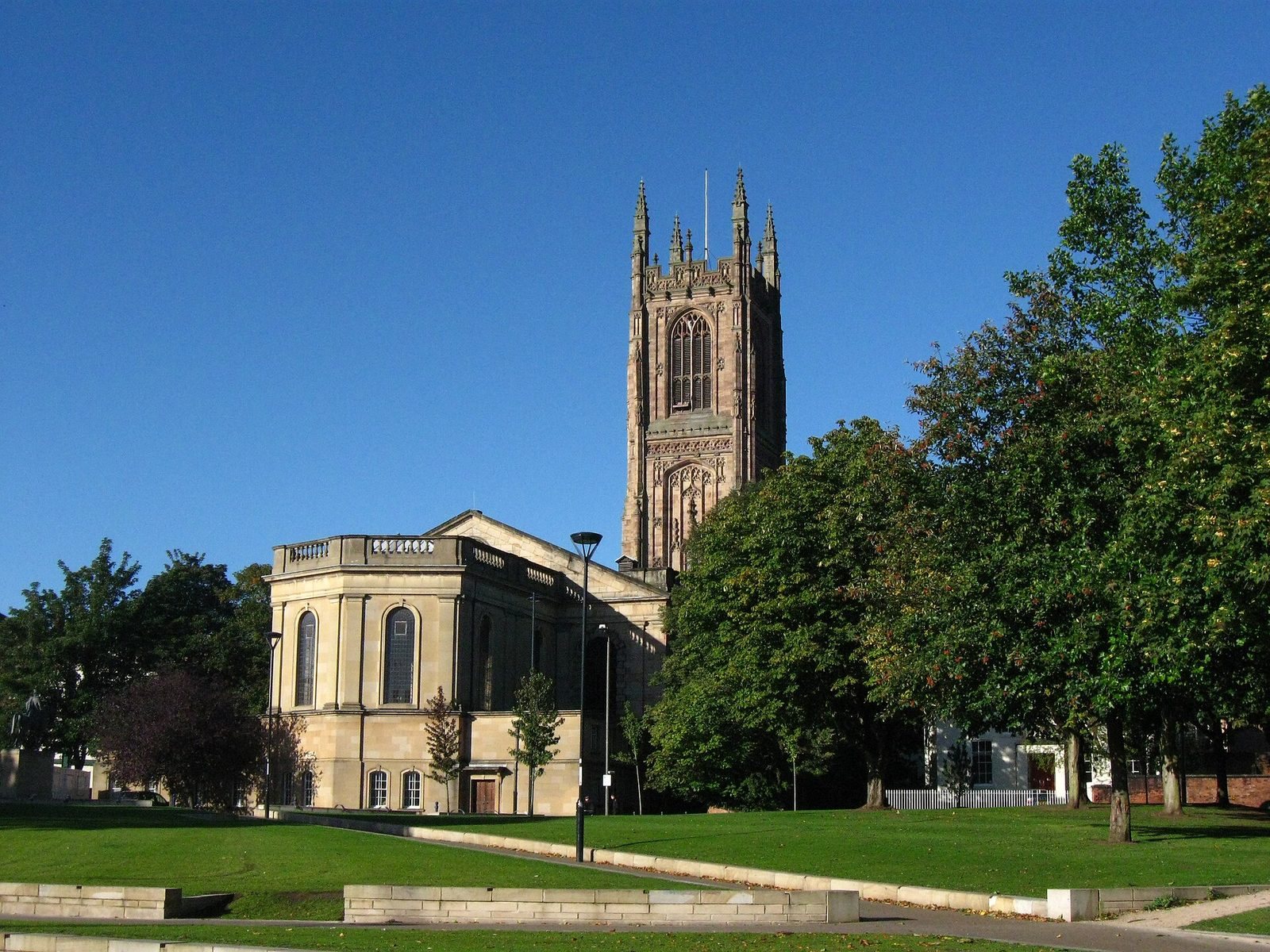
The cathedral brings together a Georgian Neo-Classical main body, a Gothic tower, and an eastern extension. Its area is 1,017 square metres, and it is the smallest Anglican cathedral in England.
Main structure and tower
Church and eastern extension
The principal body is the eighteenth-century rebuilding. At its eastern end, a retroquire, an area behind the choir, extends the building. Sebastian Comper designed this addition.
Tower and west entrance
The 212-foot (about 65-metre) tower is built of Ashover Grit sandstone from Duffield Bank quarry. Its Perpendicular Gothic design belongs to a late English Gothic style marked by strong vertical lines. Twelve sculpted animal figures crown it, three on each face. At the base, two stone heads representing Green Men, human faces associated with foliage, flank the main west door.
Interior and commemorative features
Chancel screen and memorials
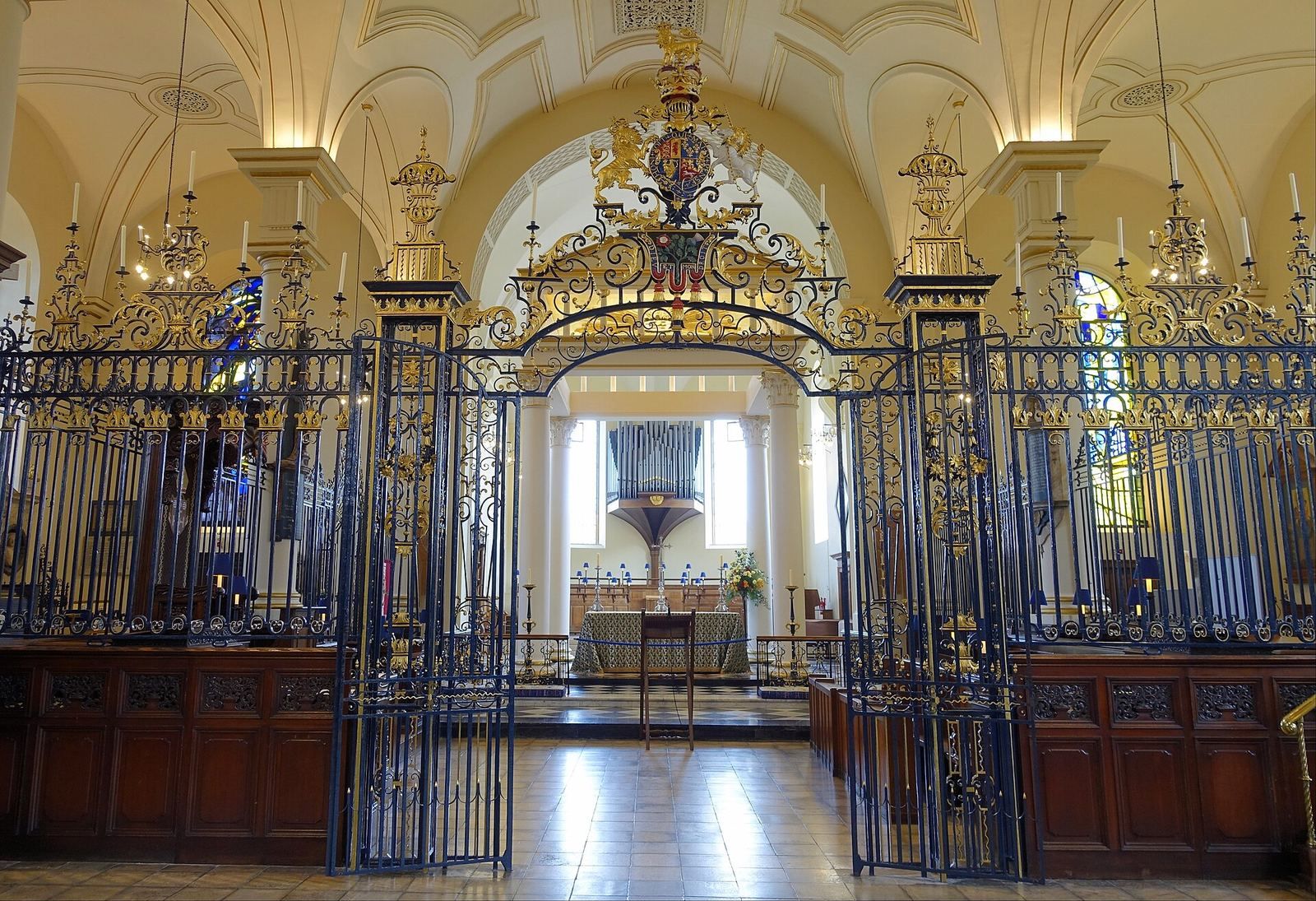
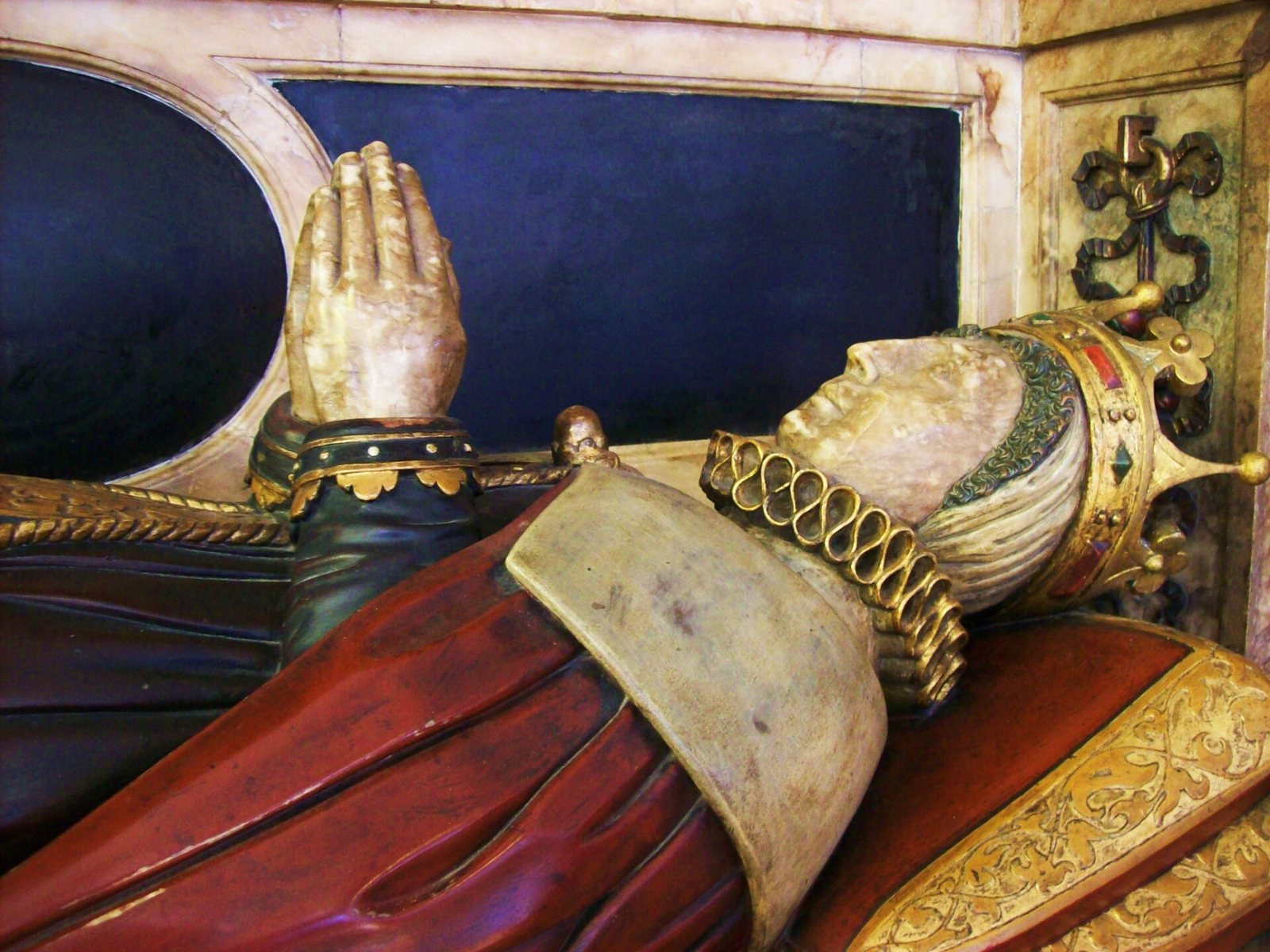
Bakewell’s wrought-iron chancel screen stretches across the full width of the church, separating the choir from the nave. A memorial tablet to Hutchinson is set in the south aisle. The cathedral also contains an effigy monument to Bess of Hardwick and engraved brass memorials to Cavendish descendants, including Henry Cavendish and Georgiana Cavendish, Duchess of Devonshire. An alabaster tomb commemorates a canon, a member of the cathedral clergy, who died in 1400. Burials include Bess of Hardwick, Henry and Georgiana Cavendish, John Lombe, William Ponsonby, 2nd Earl of Bessborough, William Cavendish, 4th Duke of Devonshire, and Charlotte Cavendish, Marchioness of Hartington.
Entrance gates
Bakewell’s iron entrance gates were moved from St Mary’s Gate to the cathedral in 1957. Refurbished in 2012, they were given the name Queen Elizabeth II Gates.
Glass and sculpture
Stained-glass windows designed by Ceri Richards include a south-east window dated 1965. It is one of a pair representing All Saints, the Christian feast honoring saints collectively, and the faithful departed, meaning deceased Christians. A bronze crucifix by Ronald Pope is also in the cathedral.
Clock, bells, and carillon
Clock
The clock has two stone dials, each eight feet (about 2.4 metres) across. One faces west toward St Mary’s Gate, and the other faces south toward Irongate. The dials were restored and gilded in 1964 and again in the early twenty-first century. Metal tubes passing through the tower walls to operate the clock were identified as barrels from cavalry firearms dating to the 1745 Jacobite rising, an attempt to restore the Stuart monarchy.
Bells and carillon
The cathedral has the world’s oldest ring of ten bells, a set arranged for bell ringing. Most have been there since 1678, when the set grew from six bells. The largest weighs 965 kilograms, sounds D-flat, and is more than 500 years old, older than the tower itself. It is believed to have come from Dale Abbey during Henry VIII’s sixteenth-century suppression of the monasteries. The youngest is the third bell, dated 1693; the eighth bell came from Ashbourne parish church and remained there until 1815.
The carillon plays tunes on the cathedral’s bells, which are also used for ringing. Its seven melodies change automatically according to the day of the week.
Organs
Main organ
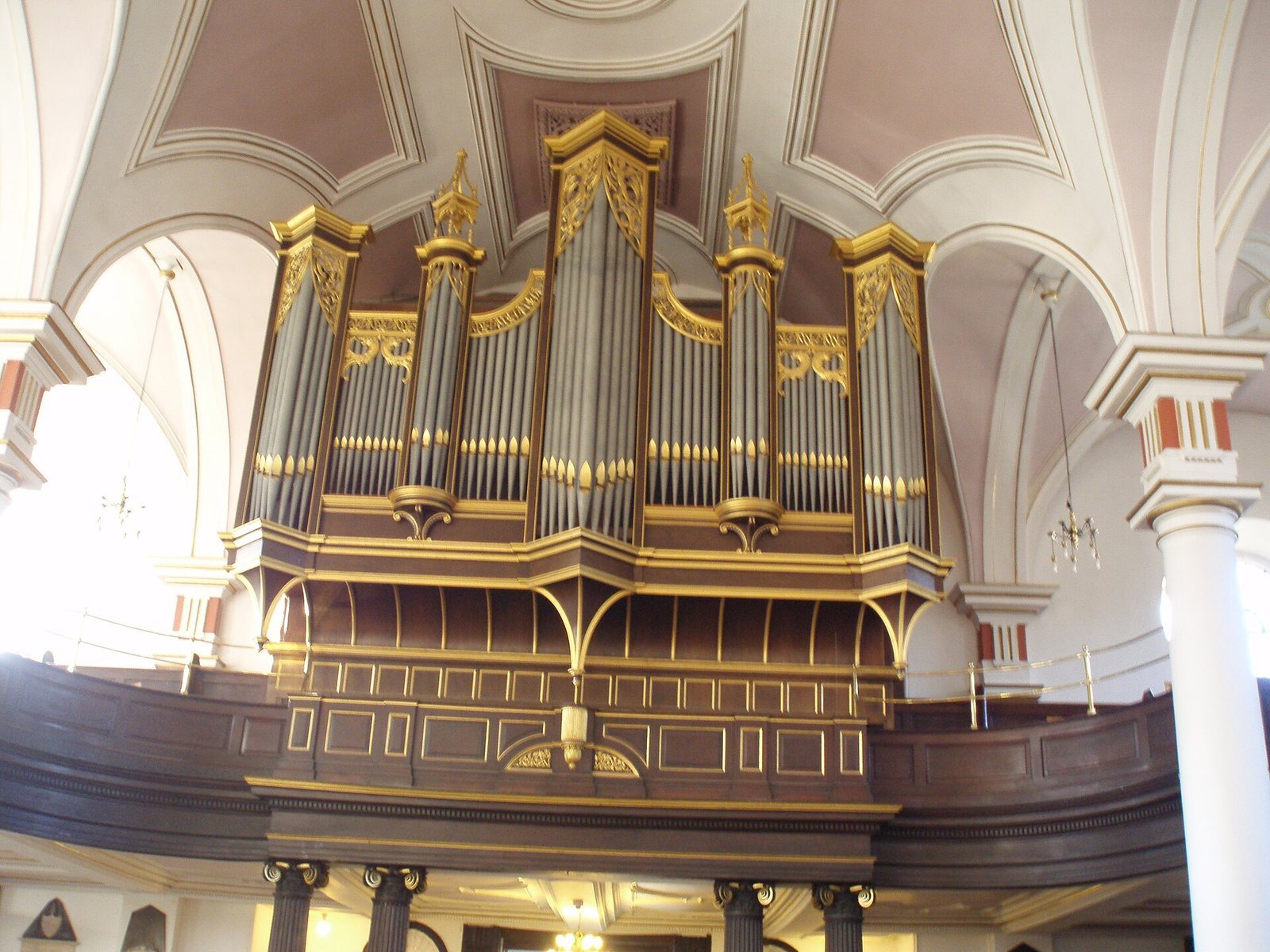
An organ was probably built for the church in 1725. Its internal components were replaced in 1807, when an organ from a music hall was brought into the building, and another instrument was built in 1879. John Compton installed a new organ in 1939, incorporating the enclosed Swell division, or section of pipes, from the 1879 instrument. Sebastian Comper designed its case, added in 1963, and the organ was overhauled in 1992. It is played from a console in the Consistory Court area, named for the diocese’s ecclesiastical court. The instrument has 101 stops, each controlling a set of pipes, four hand keyboards with 61 keys apiece, and a foot-operated pedalboard with 32 keys. Electrical controls operate it.
Retroquire organ
A second organ, made by Cousans of Lincoln, was installed in the retroquire in 1973. It has 14 stops, two hand keyboards with 58 keys each, and a foot-operated pedalboard with 30 keys.