Daugmale Hill Fort: A Baltic Trading and Craft Centre in Latvia
Site at a Glance
- Rating
- 4.6
- Popularity
- Low
- Country
- Latvia
- Primary era
- Medieval
- Eras represented
- Classical, Medieval
- Civilizations
- Unclassified
- Site type
- Military
- Remains
- Fortified Town
On this page13 sections
History
Daugmale hill fort is an archaeological complex in Latvia that developed as a fortified settlement, harbor, and craft-production centre on the left bank of the Daugava River. The site’s earliest known occupation dates to the late second millennium BC, while its fortifications appeared at the beginning of the Common Era. By the tenth century, Daugmale had become a town and an important settlement on the Daugava, Latvia’s principal river and a major waterway linking the Baltic region with eastern Europe.
Early occupation and fortified settlement
The earliest inhabitants left bronze sickles and stone tools. Fortifications were established at the beginning of the Common Era, creating the hill fort that later formed the centre of a much larger archaeological complex. The settlement stood in the Pucelene district of Upmale, a historical land of Semigallia.
During the ninth and first half of the tenth centuries, Daugmale was entirely Semigallian. By the eleventh century, its population had become substantially Liv, and Scandinavians also lived there. The wider complex included settlements on the islands of Mogile and Mārtiņsala and the Lavkskola settlement on the opposite bank of the Daugava. Two burial grounds belonged to the same settlement system. Daugmales Līves was used from the seventh to the twelfth centuries by Semigallians, Selonians, Latgalians, Scandinavians, and Livs, while Tomes Nāriņas was used by Livs in the eleventh and twelfth centuries.
A multiethnic trading centre
Daugmale flourished from the second half of the tenth century through the first half of the eleventh century. Its position beside the Daugava and near the Varžupīte confluence made it an important harbor and trading station. The river route was part of the network traditionally called the route from the Varangians to the Greeks, a combination of waterways and portages linking Scandinavia and the Baltic with Byzantium.
The settlement brought together Semigallians, Latgalians, Livs, Rusyns, Scandinavians, Krivichs, and Varangians. Finds connect Daugmale with Rus, Scandinavia, Western Europe, Byzantium, Hungary, and the Arab lands. Trade was accompanied by substantial craft production, including metalworking, pottery, jewellery manufacture, and iron smelting. Objects made at Daugmale later circulated across present-day Belarus, Russia, Ukraine, Finland, and other parts of the eastern Baltic.
Daugmale’s decline began in the mid-eleventh century as the Polotsk cities of Gerzike and Koknese emerged in the Lower Daugava region. The settlement finally declined in the late twelfth or early thirteenth century, when its fortifications were destroyed and were not rebuilt. Its commercial role was later taken over by Riga in the early thirteenth century.
Decline and medieval references
The destruction may have been connected with the German foundation of Riga, which created a commercial competitor on the Daugava. Daugmale may also have been the “Semigallian harbor” mentioned indirectly by Henry of Latvia, a German cleric whose early thirteenth-century chronicle describes the Christian conquest and political changes in medieval Livonia.
In 1200, Pope Innocent III prohibited merchants from trading at the Semigallian harbor under threat of ecclesiastical excommunication. The chronicle also records the execution of a merchant and a ship’s pilot for breaking the prohibition. Daugmale has consequently been proposed as the Portus Semigalliae or Portus Semigallorum, Latin expressions meaning “Semigallian harbor” or “harbor of the Semigallians.” The proposal is linked to the site’s position at the end of a land route from Mežotne, an important Semigallian centre, and opposite Salaspils.
A later medieval Danish chronicle, The Deeds of the Danes, tells a legendary story in which the Viking king Hadingus captured a Daugava town called “Duna” after capturing King Andvanus. The identification of “Duna” with Daugmale is possible but uncertain, since the chronicle’s account of Hadingus is not a straightforward contemporary record.
Excavation and protection
Excavations were conducted in the 1930s, from 1966 to 1970, and from 1986 to 1992. The campaigns were led by Valdemārs Ģinters, Vladislavs Urtāns, Arnis Radiņš, and Guntis Zemītis. The hill fort burned at least fourteen times during its existence. After a hydroelectric reservoir was constructed, almost the entire archaeological area was submerged, leaving the hill fort as the principal surviving part of the complex.
Daugmale hill fort, its ancient settlement, and the associated burial grounds are a state-protected cultural monument of state significance. The site received legal protection on 18 December 1998 under protection number 2090.
Remains
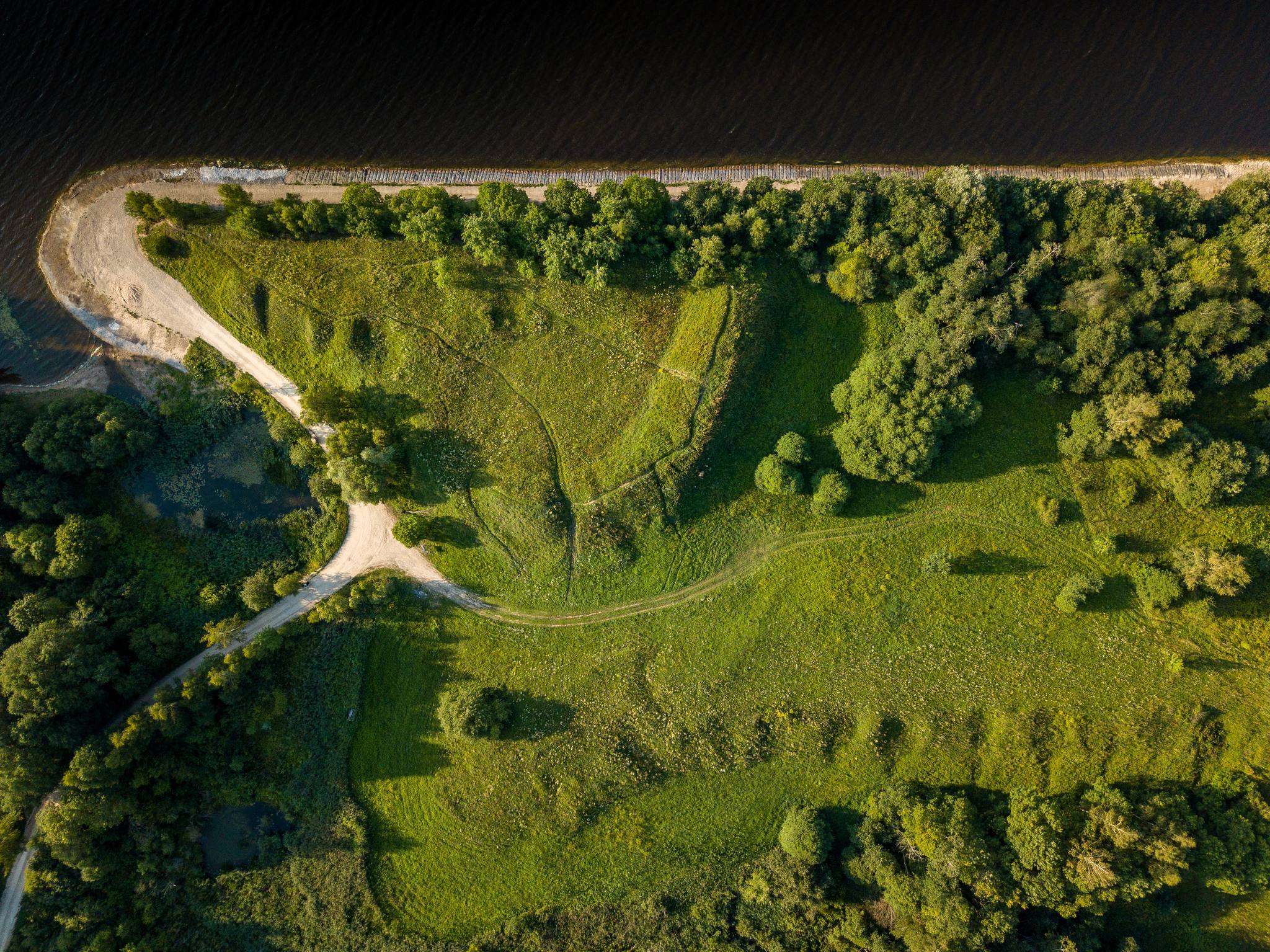
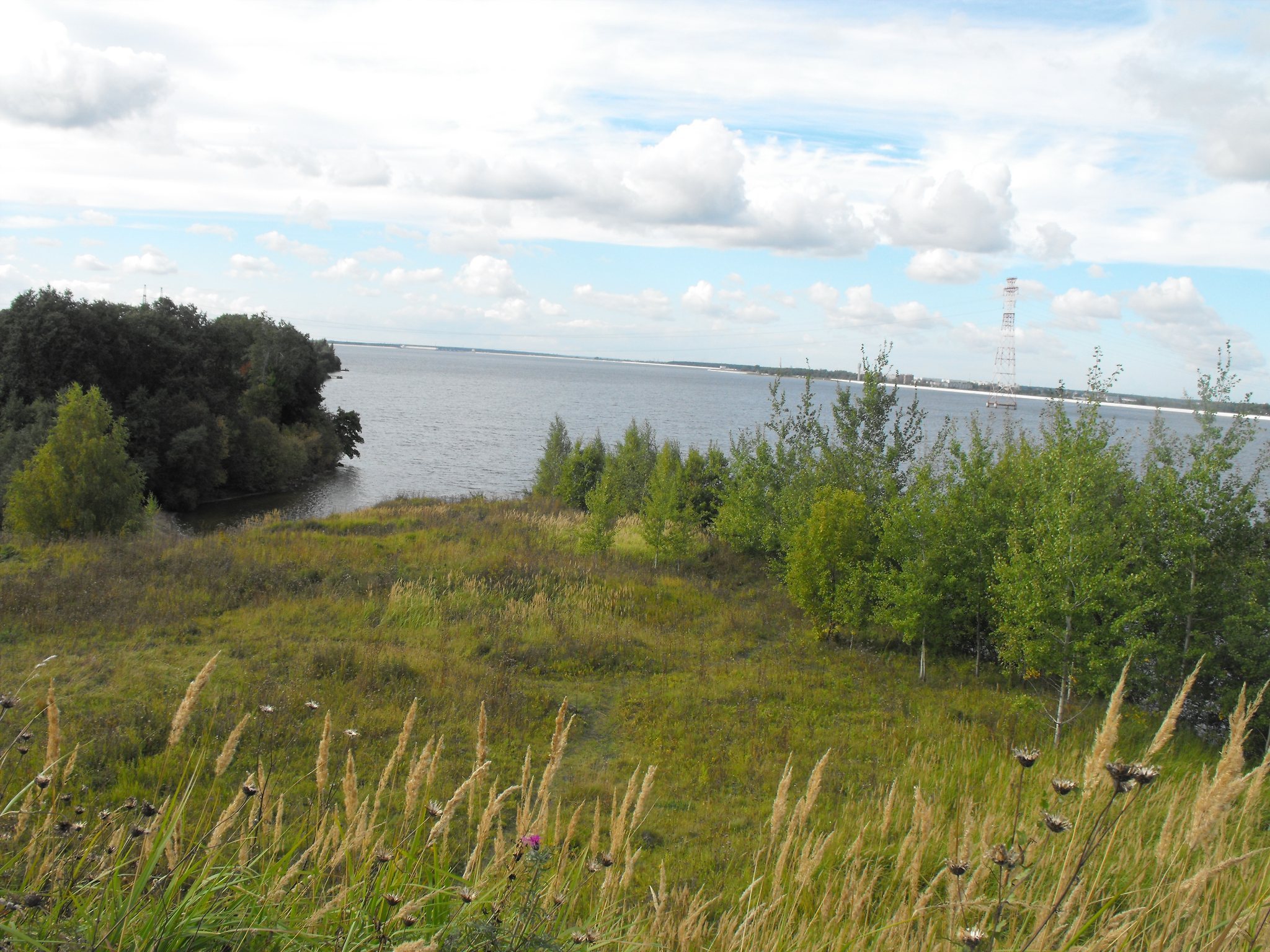
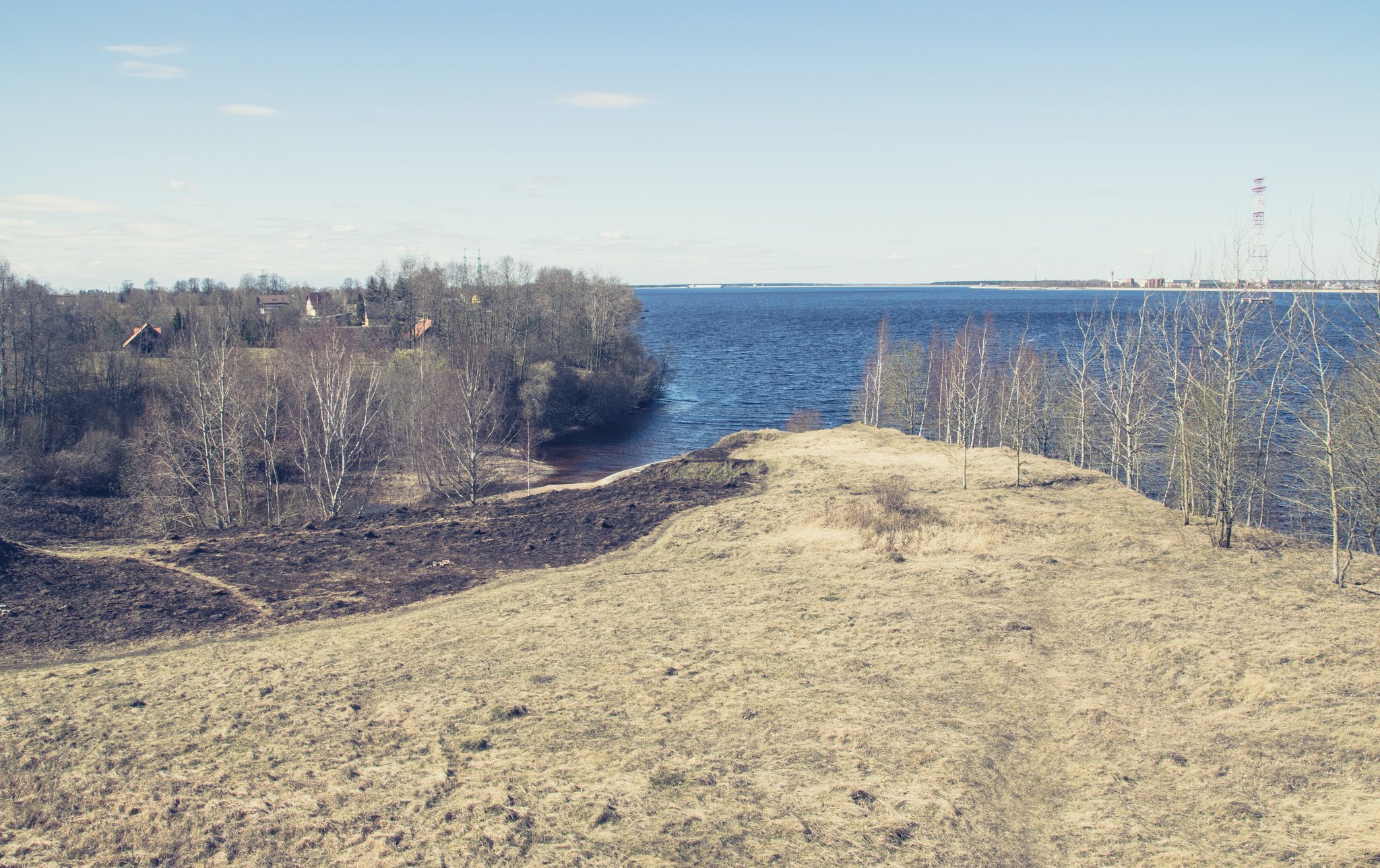
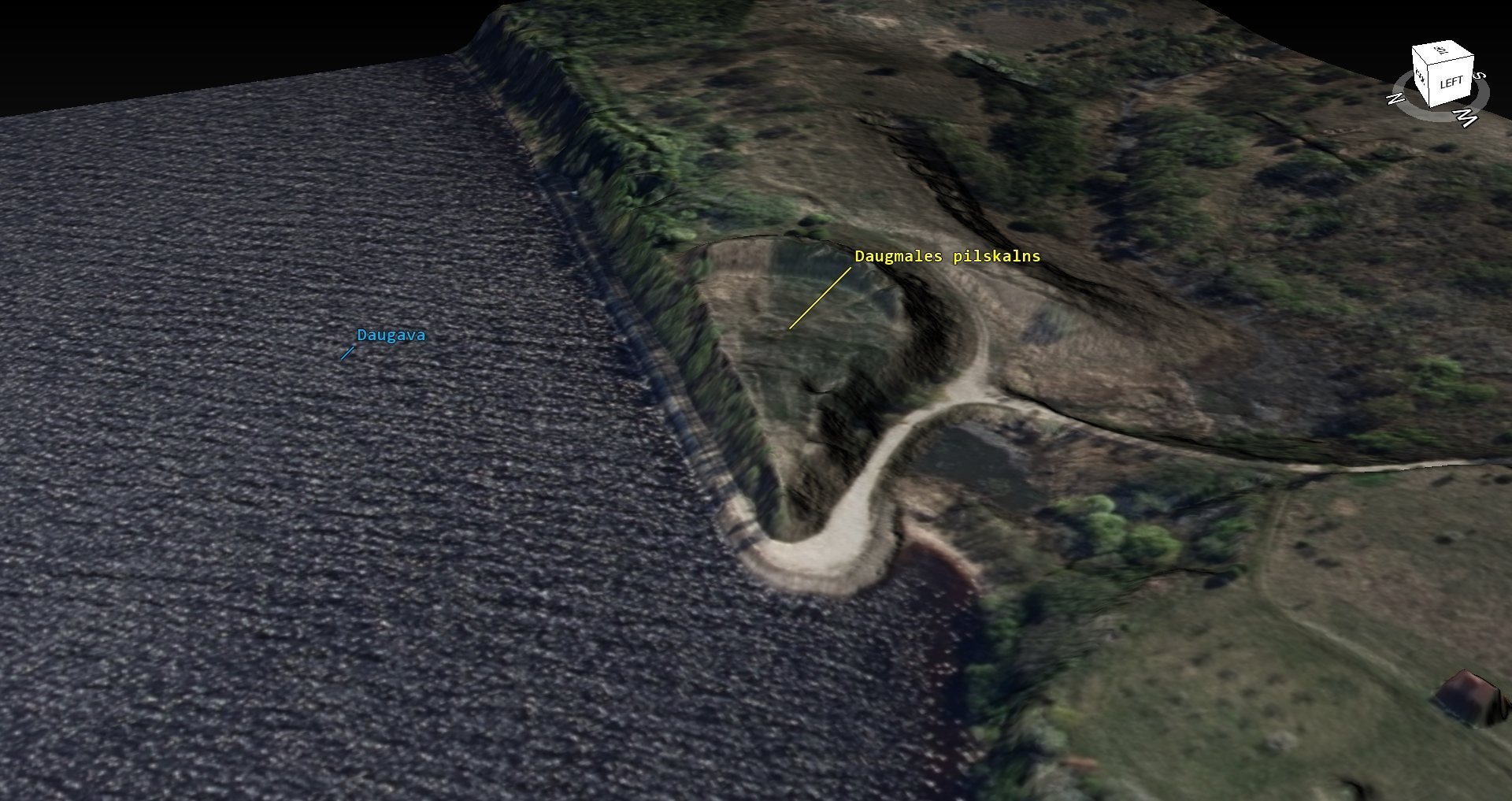
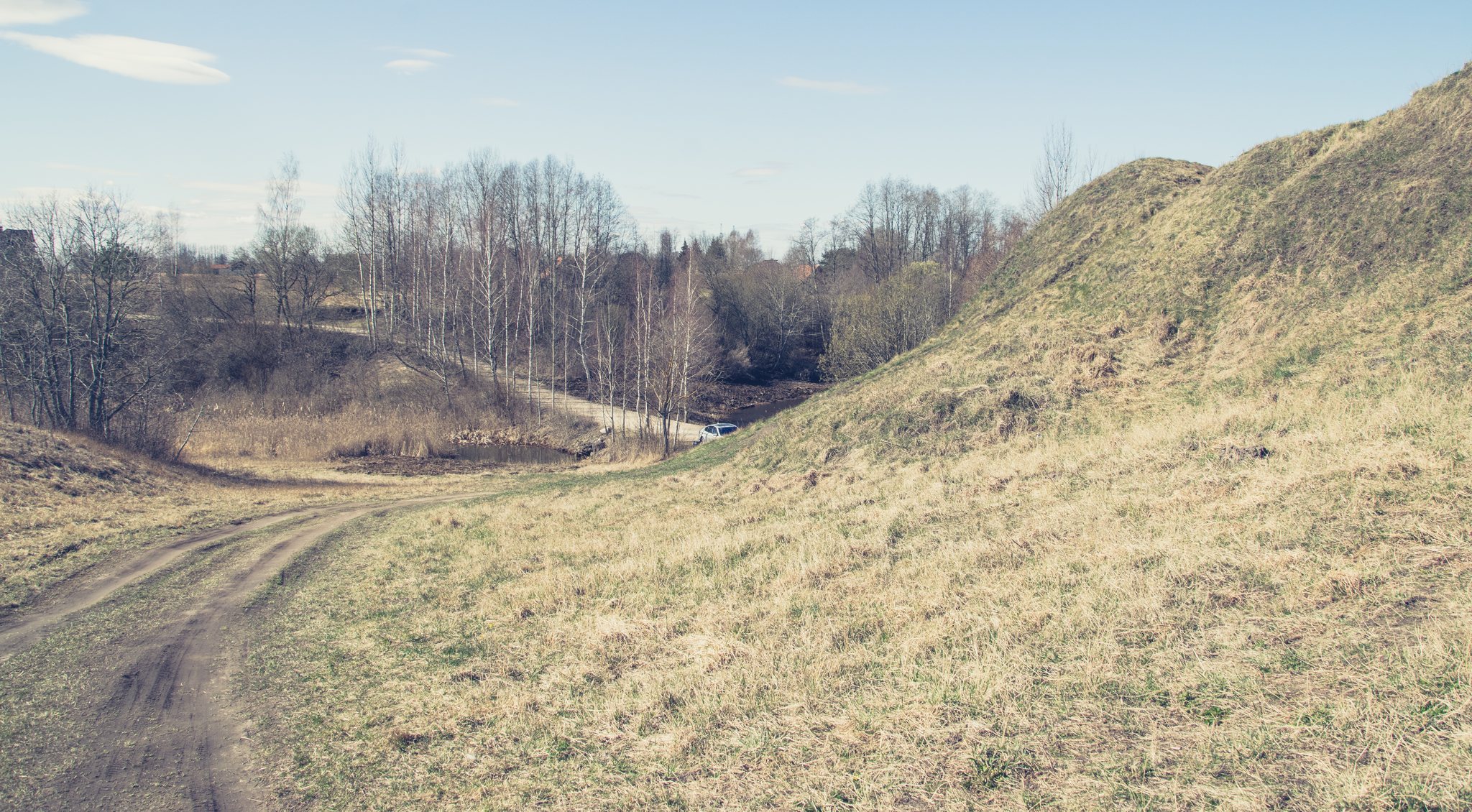
Daugmale hill fort occupied approximately 3,800 square metres, or about 0.4 hectares, on a rise approximately 25 metres high. Its defensive rampart reached about 7 metres in height. The adjacent settlement covered about 2 hectares and extended beside the fortification, with its larger section east of the rampart and a smaller section between the western slope and the Varžupīte stream, near the stream’s entrance into the Daugava. The complex also included a harbor, an outer settlement, two burial grounds, and defensive earthworks.
Fortifications and settlement
Hill fort defenses
The hill fort was protected by substantial earthworks, including a rampart rising about 7 metres above the surrounding area. Settlement gates and other defensive remains were exposed during excavation. The hill’s position beside the Varžupīte and Daugava confluence controlled an important river position and formed the defended core of the wider settlement.
Residential and economic areas
Excavations in the settlement revealed residential and economic buildings, stone and clay ovens, a grinding facility, a pottery kiln, an iron-smelting furnace, and a well. These features show that domestic activity, food processing, pottery production, and metalworking took place within the settlement. The harbor and outer settlement extended the site’s functions beyond the fortified hill.
Craft production and archaeological finds
Metalworking workshops
The excavated layers contained 265 crucibles and crucible fragments. Bronze, tin, and silver were processed at Daugmale, where craftspeople produced figurine pendants, crosses, miniature axes, and other metal objects. More than 20,000 archaeological artefacts were recovered from the hill fort and settlement, together with more than 200,000 fragments of handmade and wheel-made pottery.
Coins and imported goods
More than 190 coins dating from the eighth to twelfth centuries were found. Of these, 130 were individual finds and 60 came from hoards. The coins included Arab, Byzantine, and Western European issues. Other imported materials included glass beads, bronze and silver ingots, and Russian slate spindle whorls. Objects made according to eastern and western models, including an Islamic-type balance weight, Orthodox crucifixes, bronze figurines, and so-called resurrection eggs, reflect the settlement’s broad connections. The imported collection has been regarded as the richest of its period in the eastern Baltic.
Runic and carved objects
A limestone object found during the 1937 excavations bears an Old Norse runic inscription translated as “O made these runes.” It has been interpreted as part of a stone mace head, a probable spindle whorl, or possibly part of an official staff. The limestone came from the banks of the Daugava, and its local material has supported the possibility that the object was made at Daugmale in the eleventh century. It is now kept in a museum in Riga. The inscription is the only runic inscription reported from Latvia and provides evidence of a Scandinavian presence at the site.
A trapezoidal pendant of type 3 bears a Rurikid symbol associated with the ruling dynasty of medieval Rus. The object indicates contact with the political and cultural sphere of Rus, although it does not establish who owned it. A round bone pendant with a deer image is comparable to a find from Magdeburg and points to connections with Germans in the second half of the twelfth century. Daugmale-made pendants, figurines, crosses, miniature axes, and other metal objects have been found throughout the eastern Baltic and neighboring regions, showing the reach of the settlement’s craft-production network.