Cuasso Castle: A Multi-Phase Fortress in Italy
Site at a Glance
- Popularity
- Low
- Country
- Italy
- Primary era
- Medieval
- Eras represented
- Classical, Medieval
- Civilizations
- Lombard, Roman
- Site type
- Military
- Remains
- Castle
On this page15 sections
History
Early phases and strategic setting
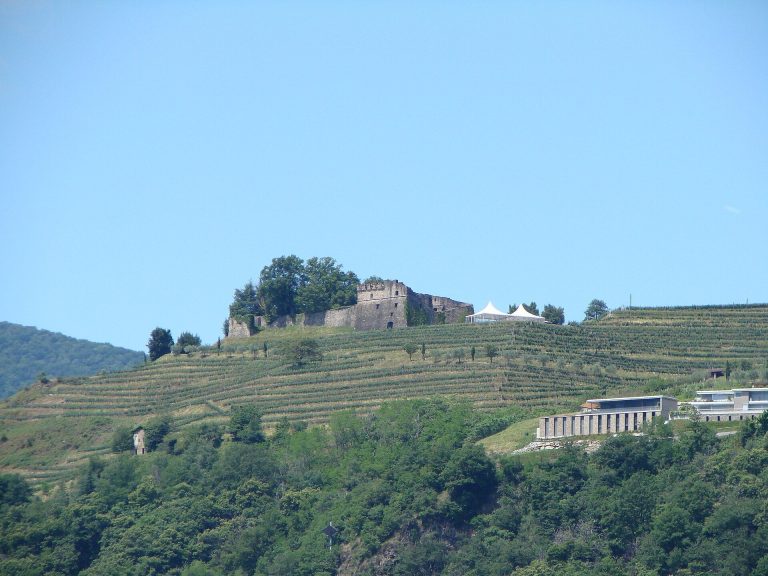
Cuasso Castle is a fortress on a ridge at Cuasso, Italy. Its earliest tower is assigned to the Gallo-Roman period, a culture shaped by Roman and Celtic influences, and was enlarged during the Lombard era. The castle later developed as an early medieval defensive structure.
The fortress guarded routes connecting Como with the Gotthard Pass and linking Milan with the San Bernardino and Gotthard passes. Before the Melide bridge was built, the principal road ran through the castle. A steep gorge helped make it difficult to capture. Nearby deposits of silver and lead, along with smaller quantities of gold, suggest that control of mineral resources may also have mattered.
The unusual plan has prompted a proposal that Saxon craftsmen helped build the castle. Comparisons include Warkworth Castle in Northumberland, whose outline is associated with an earlier Saxon settlement, and the vanished Castle of Trecate. Paul the Deacon, an eighth-century Lombard historian, records that about 20,000 Saxons came to Italy with Lombard king Alboin in spring 568. A further proposed connection is the departure from Italy in 734 of about 20,000 arimanni, Lombard free men who owed military service, amid disagreement with central authority. A tentative explanation of the name Cuasso also connects it with the Saxons, combining Latin covum, meaning “lair,” with the Germanic term Sachsum-i. This proposal is linked to the classification of Lombardic, the Lombards’ language, as a western Germanic language like Saxon.
Medieval control and decline
Cuasso Castle belonged to the County of Seprio, a medieval territorial jurisdiction in Lombardy. During the thirteenth-century struggle between Guelphs and Ghibellines, rival political factions in medieval Italy, the fortress was probably held by the da Besozzo family. It served as an eastern stronghold near the territories of the Torriani family.
After the Visconti, Milan’s ruling dynasty, secured their control and built a state that later became the Duchy of Milan, the castle gradually lost its importance. It was abandoned as a fortress around the thirteenth century. Francesco Sforza, Duke of Milan, later ordered it listed for demolition, but the order was not carried out because the abandoned fortress no longer served a purpose.
Religious and later military use
The castle site held Cuasso’s parish church until the mid-sixteenth century and was later used as a cemetery. People from Cuasso al Monte and Borgnana continued to attend San Dionigi after the fortress declined. Archbishop Carlo Borromeo ordered San Dionigi and Sant’Ambrogio to be deconsecrated and demolished. Stone from Sant’Ambrogio was reused in the original bell tower of the parish church of the same name in Cuasso al Monte, built in 1578.
The castle was later used as an observation post and stable during construction of the Northern Frontier, Italy’s defensive system along the Swiss border. Its northeastern stronghold also served as an observation point during the First World War.
Excavation
In the 1970s, Adelio Bianchi led the castle’s first and only excavation and recovery campaign.
Remains
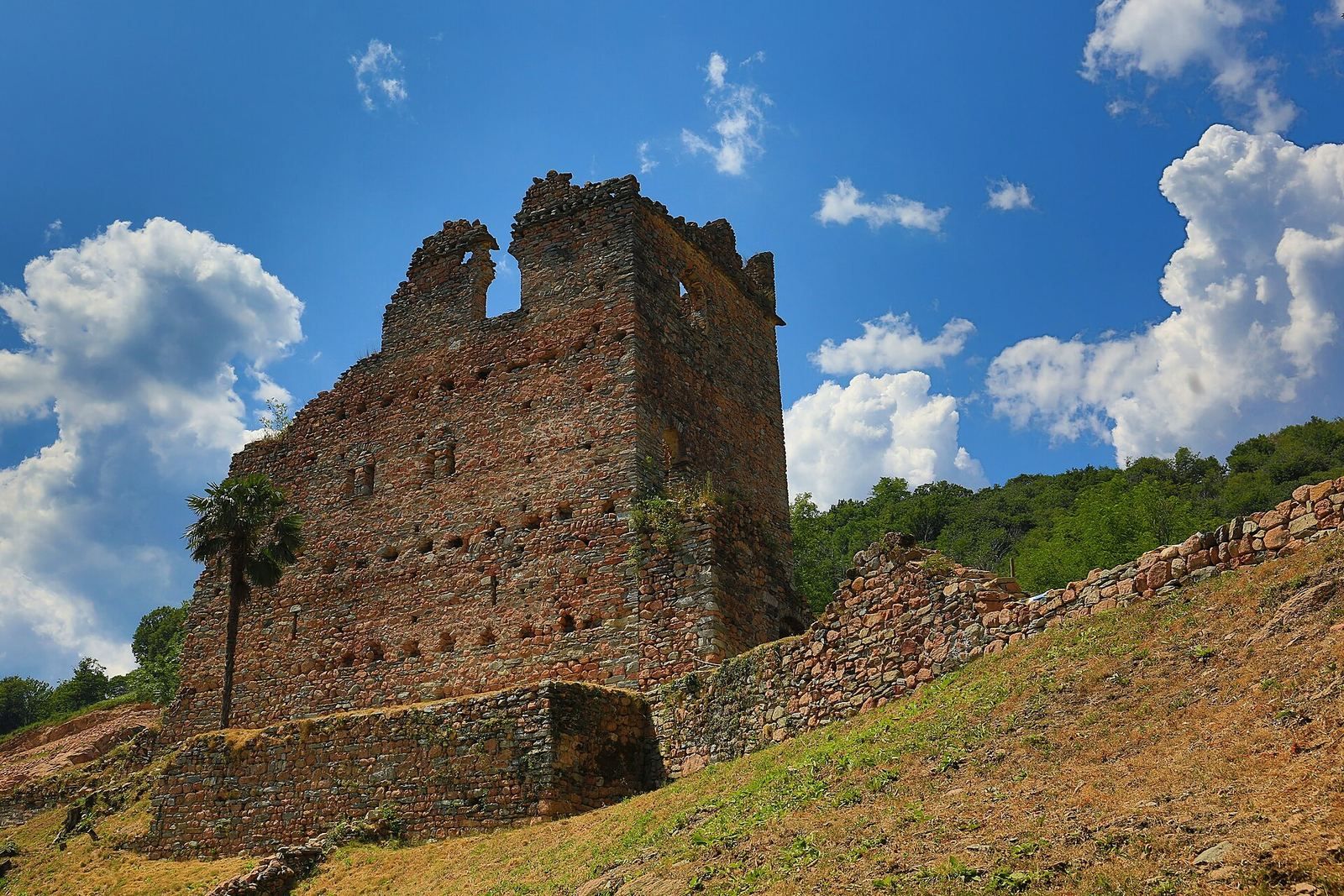
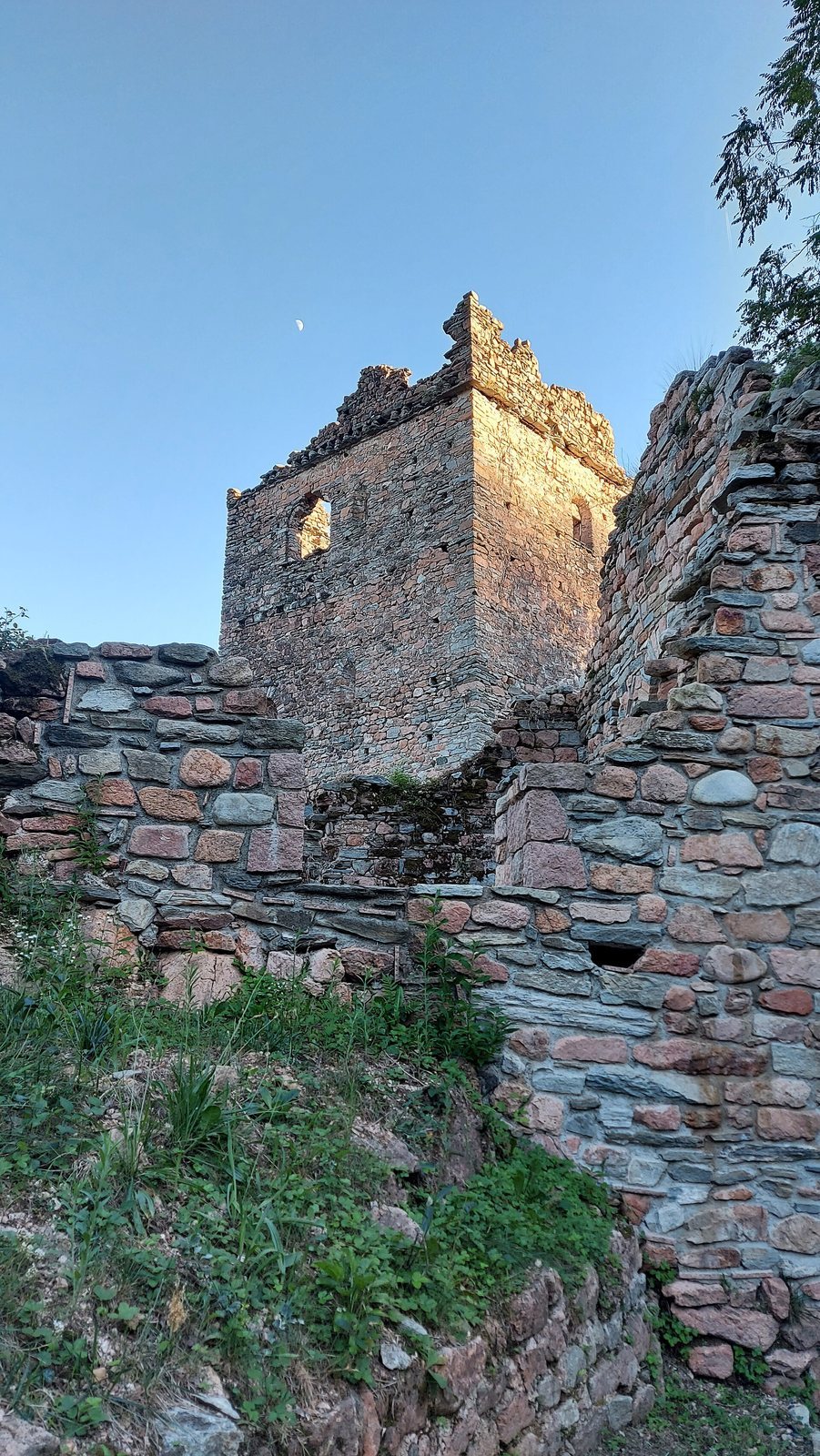
The substantial ruins occupy the full length of the hill ridge on a north–south axis. The site covers about 3,500 square metres and has a perimeter of roughly 400 metres. North of the keep, the plan widens by about 15 degrees into a fan shape around a level courtyard. The castle’s elevations range from 430 metres above sea level at the keep to 455 metres at the northeastern stronghold.
The keep and northeastern stronghold
The keep
The keep stood above the gorge approaching from the valley, positioned over the road below. Its outline resembled a ship’s prow. It had four floors, with a small stair tower attached to its western wall linking the levels. The roofline had square-topped battlements. The keep could be seen from the south from about 10 kilometres away, despite its set-back position.
The northeastern stronghold
The hilltop stronghold is the oldest part of the castle. Its elevation offers a view over the southern part of Lake Lugano, which is not visible from the keep. A steep rise and dense vegetation make access difficult.
The church of San Dionigi
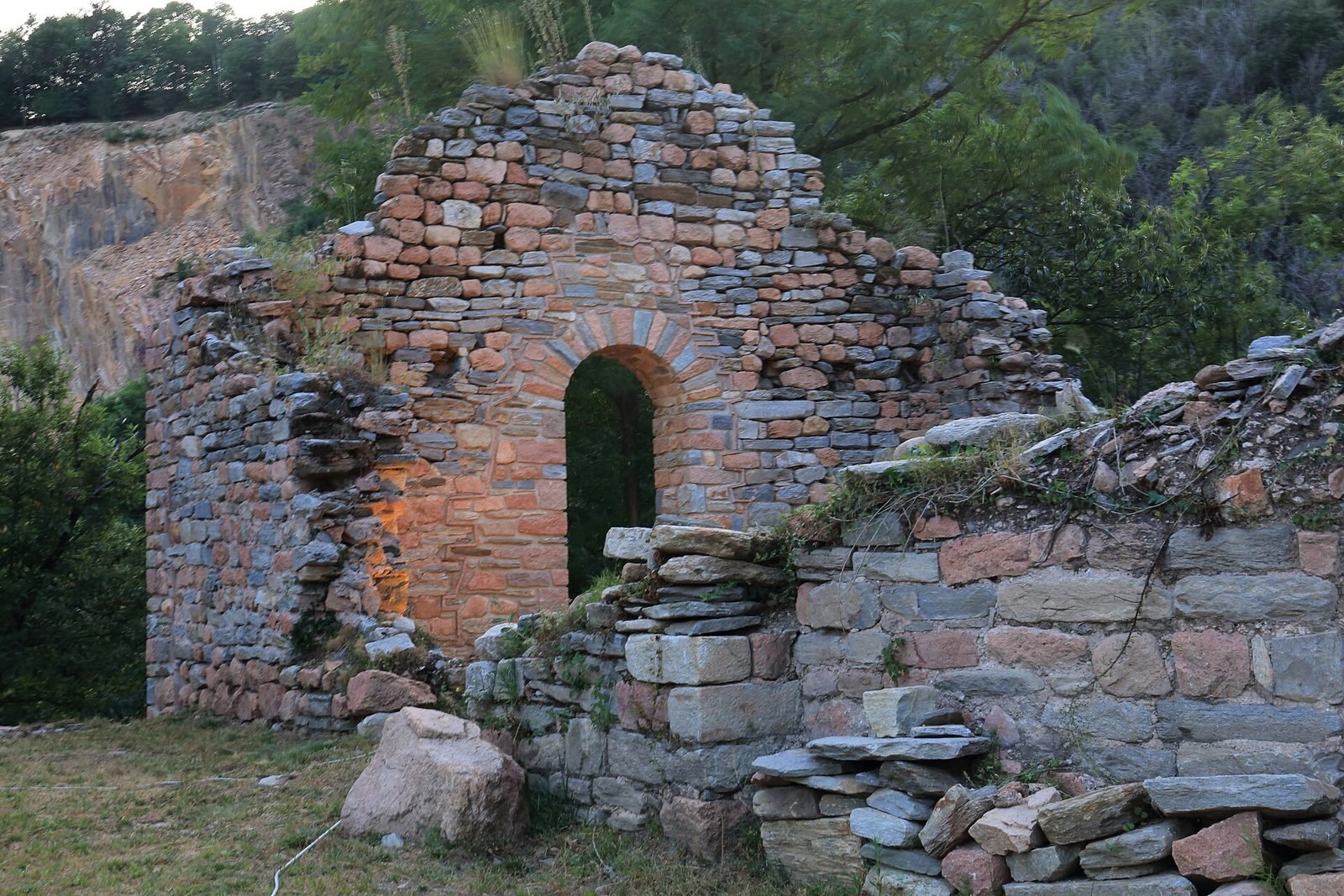
The castle’s two churches stood on opposite sides of the courtyard, with San Dionigi to the west and Sant’Ambrogio to the east. San Dionigi had an entrance on its western side, opening beyond the castle, and another on the south, facing the courtyard. Its dedication may refer either to Saint Denis, patron of Paris, or to Dionysius, a fourth-century bishop of Milan. The church’s bell tower, main hall, and curved sanctuary end remain identifiable.
Gates, courtyards, and northern structures
The carriage gate
The main carriage gate opened through the southeastern wall, just north of the proposed location of Sant’Ambrogio. It stood several metres above the ancient road, so its entrance was probably reached by a fixed or movable wooden ramp.
The western courtyard and North Gate
At the keep’s level, a wall protected a second courtyard on the western side, which was also the more defensible part of the castle. The North Gate stood at the courtyard’s northern end and had a drawbridge.
Northern buildings and terraces
Farther north, ruins of unidentified buildings may represent shops or storehouses. Terraces lay between the northwestern courtyard and the northeastern stronghold. Some terrace surfaces remain visible, and wooden or stone buildings probably stood on them.
Excavated objects
The excavation recovered objects from the Lombard period and an English coin probably dating to the tenth century. The coin has been interpreted as evidence of northern European pilgrims travelling to Rome on the Via Francigena, a route used by pilgrims from across Europe, rather than as proof of Saxon involvement in the castle’s construction.