Cromlech of Little St Bernard Pass: A Prehistoric Stone Circle
Site at a Glance
- Popularity
- Medium
- Country
- France
- Primary era
- Iron Age
- Eras represented
- Iron Age, Modern
- Civilizations
- Celtic
- Site type
- Religious
- Remains
- Sanctuary
On this page8 sections
History
The Cromlech of Little St Bernard Pass is a prehistoric ring of standing stones on the France-Italy border, in Séez, France. Built in pre-Roman prehistory, it is attributed to the Salassi, a Celtic people associated with the Valle d’Aosta, though its construction date is unknown.
Prehistory and Roman worship
The area is also associated with rites at the equinoxes and solstices, traditionally placed as far back as the Neolithic. The circle itself cannot be dated more precisely.
In the Satyricon, the Roman author Titus Petronius describes a sanctuary at the pass dedicated to Hercules Graius, the name used for Hercules in the pass’s ancient tradition. The sanctuary was linked with the myth of Hercules crossing the Alps, and the Romans called the pass Alpis Graia. The ancient Roman road Via delle Gallie, meaning Road of the Gauls, passed beside the stone circle, preserving the earlier sacred site.
Roads and damage
In 1862, an international road was routed through the circle and damaged part of it. A dolmen may have been destroyed during nineteenth-century road construction.
About twenty stones were uprooted in the early twentieth century and later put back. During Italy’s Fascist regime under Benito Mussolini, which ruled from 1922 to 1943, five stones were removed to make way for traffic on a new road through the sacred area.
Research and restoration
France designated the cromlech a historic monument in 1956. From 1997, the Valle d’Aosta Association of Archaeoastronomy (ARSAV) investigated ancient astronomical knowledge through megalithic remains and their orientations.
In 2012, a cross-border heritage project restored the cromlech as a unified archaeological site.
Remains
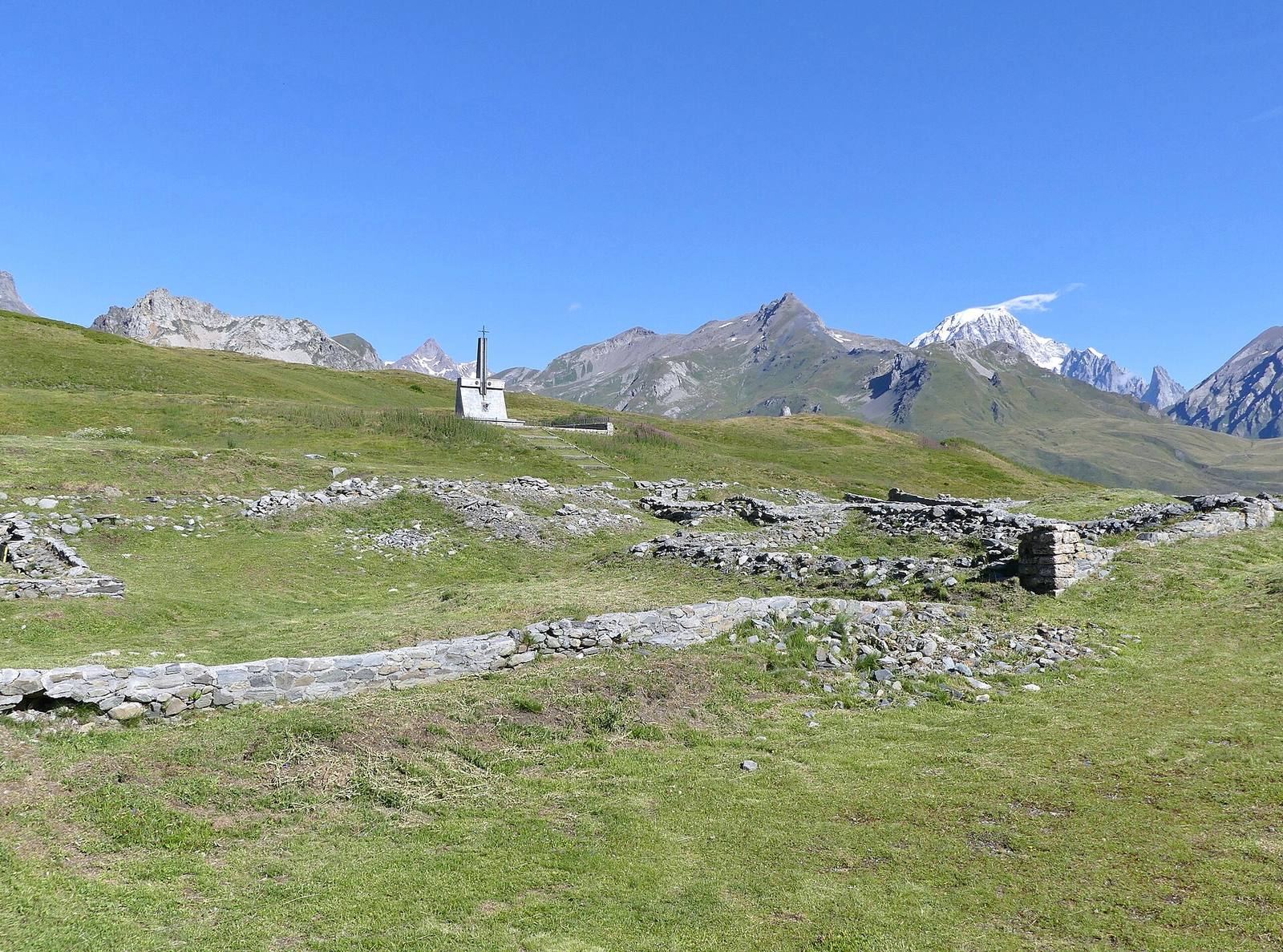
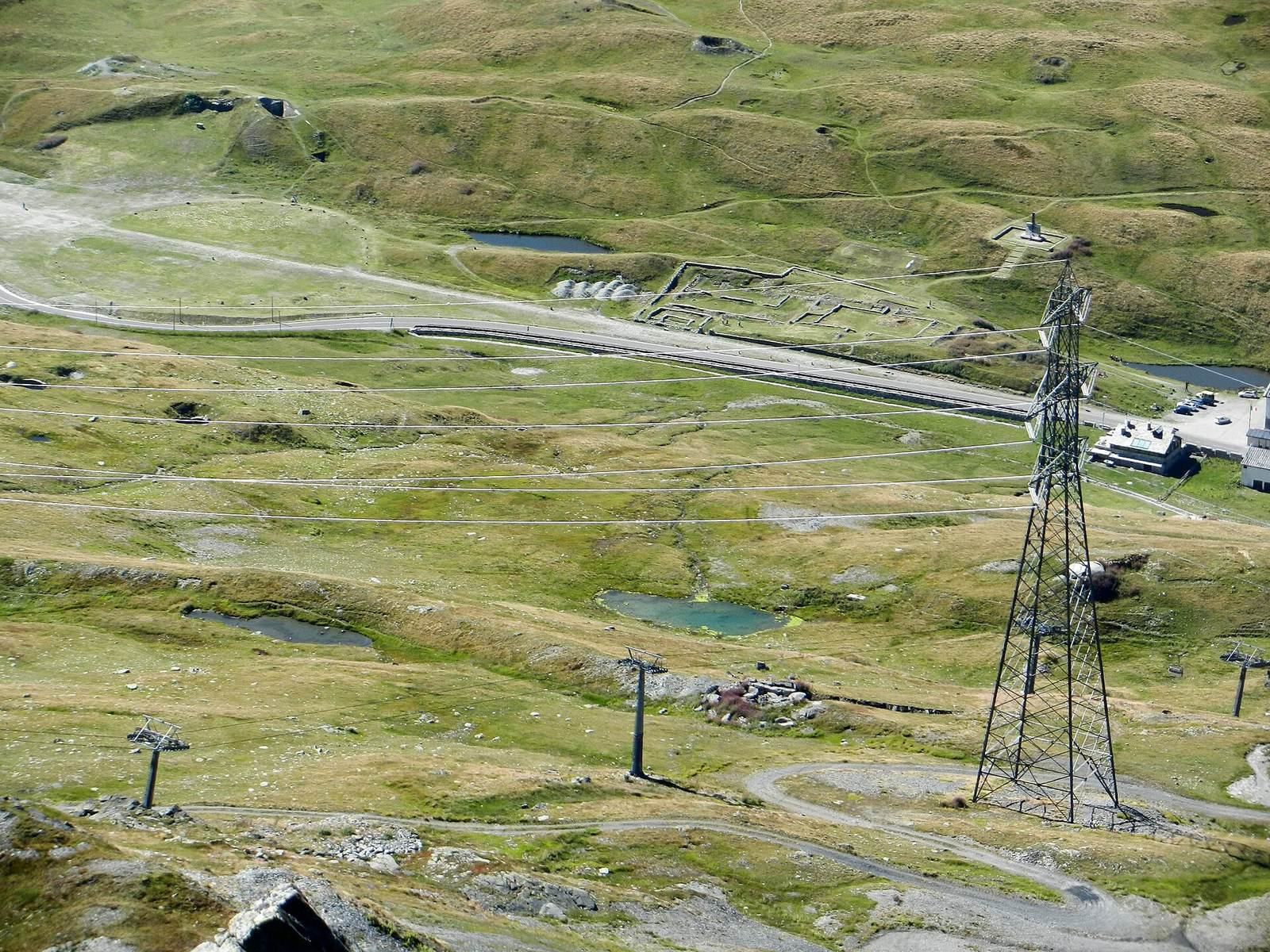
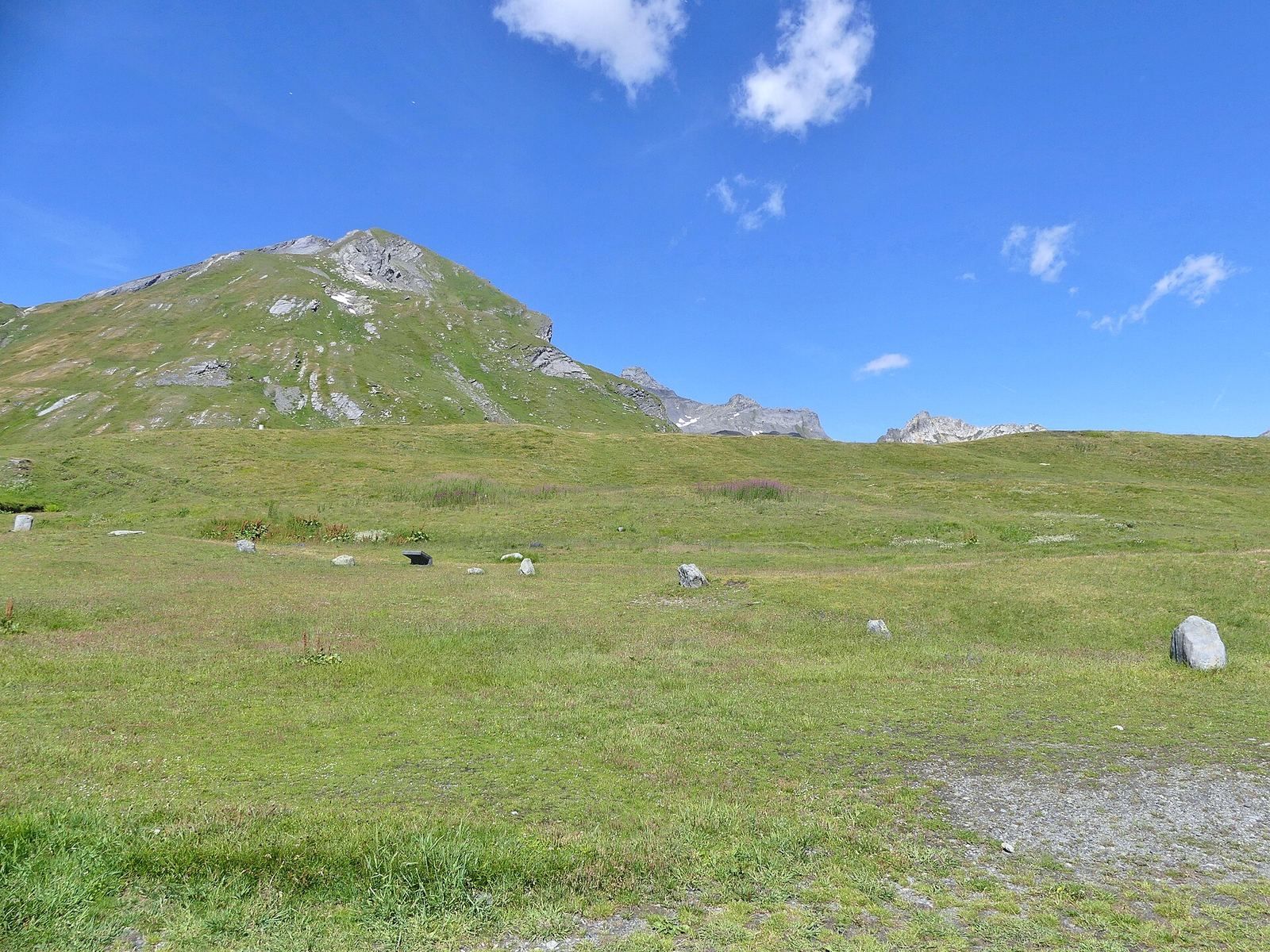
The megalithic complex lies 2,188 metres above sea level, on the watershed between the Dora Baltea and Isère basins. It extends across La Thuile in Italy and Séez in France, with the international boundary crossing the archaeological site. Its main feature is a ring about 80 metres in diameter, formed by 46 elongated, pointed stones set at irregular intervals of roughly 2 to 4 metres. The original number was probably about 50. A dolmen, a structure made from large stones, often with a capstone, may have stood at the circle’s centre and may have been lost during nineteenth-century road construction.
At the summer solstice on June 21, the sun sets behind Mount Lancebranlette, northwest of the pass, at about 7:30 p.m. Two areas of shadow progressively frame the circle, leaving a circular area illuminated. The pass road now curves around the circle following its realignment from 2012 to 2015, work that was accompanied by archaeological investigations.
Associated structures
Gallic temple
Remains of a small Gallic temple lie near the circle. Built considerably later than the cromlech, the temple points to religious activity at the pass in antiquity.
Column of Jupiter
A rough column of porphyry, a type of stone, is thought to have belonged to the monument. Known as the Column of Jupiter and locally as the Column of Joux, it now supports a statue of Saint Bernard of Menthon, a medieval Christian saint associated with the Alpine region. Local writers described the column as having once been topped by a large ruby, called the eye of Jupiter or a carbuncle.