Cawood Castle: An Archiepiscopal Medieval Palace in England


Site at a Glance
- Rating
- 4.6
- Popularity
- Very Low
- Country
- United Kingdom
- Primary era
- Medieval
- External website
- Open
- Eras represented
- Medieval, Modern
- Civilizations
- English
- Site type
- Military
- Remains
- Castle
On this page10 sections
History
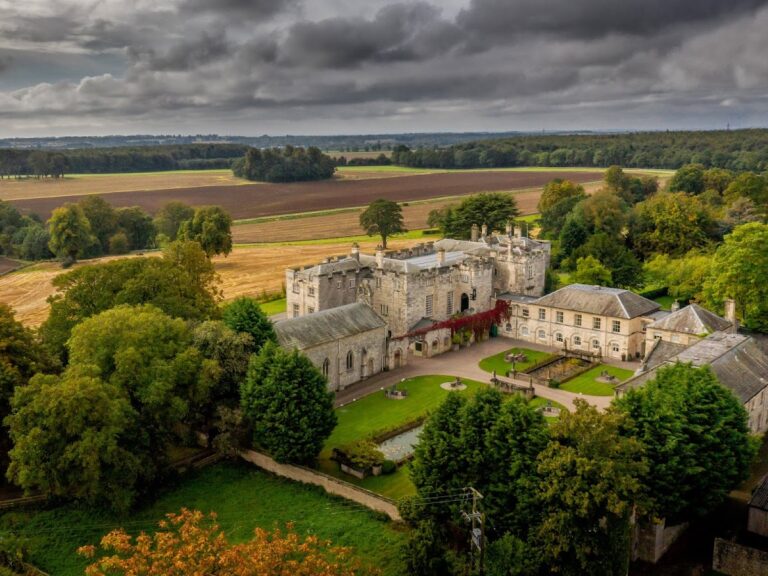
Cawood Castle in the United Kingdom, at Cawood in North Yorkshire, began as an Anglo-Saxon fortification probably established by King Æthelstan in the tenth century. By the twelfth century, Cawood had become an archiepiscopal residence, and a castle is first mentioned in 1181. The site later developed into a fortified medieval palace belonging to the Archbishops of York.
Archiepiscopal residence
William de Grenfeld is credited with constructing the western end of the castle in 1306. Between 1374 and 1388, the complex was transformed into a quadrangular castle, a fortified arrangement built around an enclosed central court. Documents record repeated improvements to the palace as it served the Archbishops of York, who were senior church leaders as well as major landholders and political figures in northern England.
Several English kings visited Cawood. During the thirteenth century, King John hunted in the nearby Bishop’s Wood. Archbishop John Kemp later constructed the gatehouse, using stone from Huddlestone Quarry near Tadcaster, the same quarry that supplied stone for York Minster.
The Great Feast and Tudor associations
George Neville became Archbishop of York in 1465 and held an elaborate feast at Cawood Castle with the assistance of his brother, the Earl of Warwick, a powerful nobleman and military commander during the Wars of the Roses. The multi-day celebration became known as the Great Feast of Cawood. The Duke of Gloucester, later King Richard III, attended, and the event was said to have been planned on a scale exceeding the King’s coronation feast. The provisions included 104 oxen, six wild bulls, 400 swans, 1,000 capons, 104 peacocks, and 25,000 gallons of wine.
Cawood was the principal residence of Thomas Savage while he served as Archbishop of York, and he died there in September 1507. In 1530, Cardinal Wolsey arrived as the new archbishop. He became popular locally by addressing the effects of years of neglect, but the Earl of Northumberland arrested him for high treason before he could be formally installed at York. Wolsey fell ill at Leicester while travelling to London and died before reaching the capital. His fate was associated with a prophecy attributed to Mother Shipton, a legendary Yorkshire prophet, which said that he would see the towers of York Minster but never be enthroned there.
Civil War and later use
During the English Civil War, the armed conflicts of the 1640s between supporters of the monarchy and Parliament, Cawood Castle was initially held by the Royalists, who supported King Charles I. Parliamentarian forces captured it, although the Earl of Newcastle briefly recovered the castle for the Royalists in 1644. Lord Fairfax, a leading Parliamentarian commander, soon retook it, after which the castle was used as a prisoner-of-war camp.
Following the Civil War, Cawood Castle was abandoned and dismantled. Farm buildings and parts of the walls survived, while rubble and soil filled the cellar. The cellar was excavated during the nineteenth century. The gatehouse later served as a courthouse until the 1930s, then as an officers’ mess and as a building used by the Home Guard, the British wartime volunteer defence force, during the Second World War.
Cawood Castle became a Grade I listed building on 5 December 1928. Grade I is England’s highest category of statutory protection for buildings of exceptional architectural or historic interest. The Landmark Trust, a charitable organisation that preserves historic buildings, acquired the castle and restored the gatehouse as a holiday residence. The two-storey banqueting hall was made sound and weatherproof, while the castle garth, the enclosed grounds surrounding the castle, was acquired by the parish council in the 1980s and preserved as an open space in the village centre. The area was later enhanced with support from the Local Heritage Initiative, a small-grants scheme established in 2000 for community heritage projects.
Remains
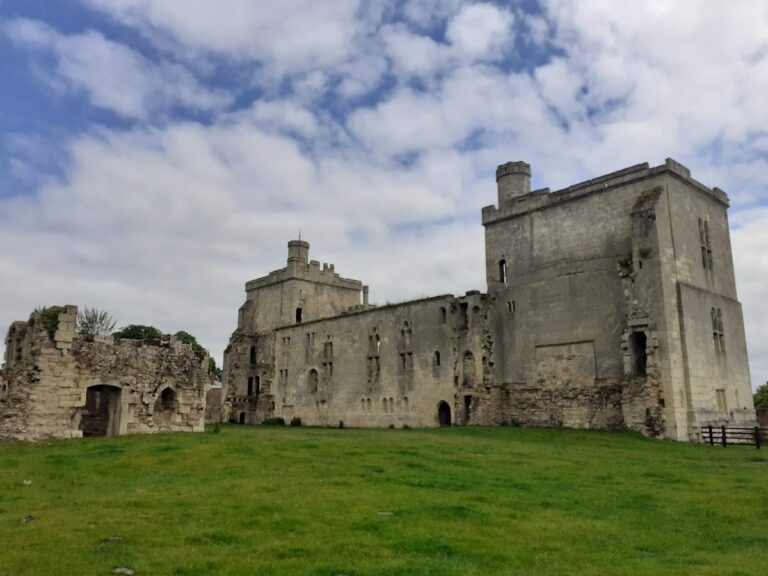
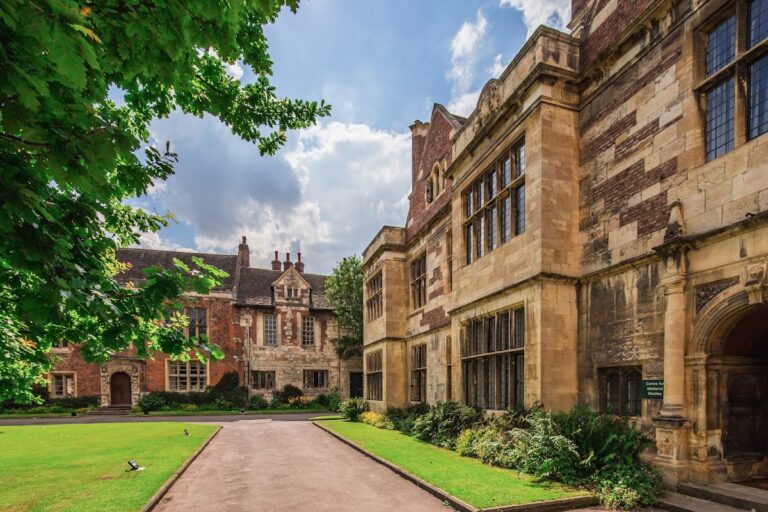
The surviving fifteenth-century buildings form part of the larger fortified medieval palace. Built of stone and brick, the remains include the principal entrance structure, a two-storey banqueting hall, foundations of other castle buildings, an excavated cellar, and additional structures outside the hall. Stones from the dismantled castle were reused in surrounding houses, while later farm buildings and a wall along the road were removed during the Landmark Trust’s acquisition and restoration.
Surviving palace buildings
Gatehouse
The gatehouse is the principal surviving entrance to Cawood Castle. Archbishop John Kemp’s fifteenth-century structure was built with stone from Huddlestone Quarry near Tadcaster. Its later uses as a courthouse, officers’ mess, and Home Guard building were followed by restoration as a holiday residence.
Banqueting hall
The surviving banqueting hall rises two storeys and was formerly part of the fortified palace. It remains sound and weatherproof but is not habitable. Alongside it, the foundations of other castle buildings and the excavated cellar preserve evidence of the wider complex.
Castle garth and water features
Castle grounds
The castle garth contains a central pond constructed in the nineteenth century for skating. It also preserves remains of medieval fishponds, linking the later open grounds with the water management associated with the medieval castle. The garth supports a population of great crested newts.
Nearby sites