Saint Bernard’s Convent and Basilica: A Religious Complex and Birthplace in France
Site at a Glance
- Rating
- 4.3
- Popularity
- Very Low
- Country
- France
- Primary era
- Medieval
- Eras represented
- Medieval, Early Modern, Modern
- Civilizations
- Duchy of Burgundy, French
- Site type
- Military
- Remains
- Castle
On this page14 sections
History
Saint Bernard’s Convent and Basilica is a historic religious complex on the Butte de Fontaine in France, associated with Bernard of Clairvaux, who was born there in 1090. Its origins lie in an 11th-century fortified house built to watch the road between Dijon and Châtillon-sur-Seine. The site later became a monastic estate and a place of pilgrimage connected with Bernard, a French Cistercian abbot and theologian known for reforming his order.
Medieval origins and changing ownership
Duke Eudes I of Burgundy entrusted the fortified house to Tescelin le Roux, a local lord bound to the duke through a feudal relationship. Tescelin and Aleth of Montbard had seven children. Bernard was born in the house’s large tower.
In 1102, Aleth founded a chapel opposite the castle and dedicated it to Saint Ambrosinien. A church later occupied the chapel’s site. Villagers brought stone to rebuild it in 1376, and it was remodelled during the 15th and 16th centuries. In the 19th century, the church became known as Saint Bernard’s Church.
The castle and lordship passed through Tescelin’s descendants. The Sombernon-Fontaine family held them in the 12th century, followed by the Saulx-Fontaine family from the 12th to the 14th century and the Marey-Fontaine family in the 14th century. In 1462, Bernard de Marey gave his share of the lordship to Cîteaux Abbey, a major Cistercian monastery, which established a chapel on the estate. The castle and lordship later passed to the Rolin and Rochefort families, and the castle underwent repeated alterations through the 16th century.
Feuillant monastery and revolutionary upheaval
The Feuillants, a reformed congregation within the Cistercian order, acquired the estate and castle from Joachim de Damas in 1613. Five years later, the castle became a place of prayer and, under Louis XIII’s protection, a royal monastery. Donations from the king and his wife, Anne of Austria, supported the decoration of the complex.
During the French Revolution, church property was confiscated and sold. Private contractors dismantled the Feuillant monastery stone by stone, and winegrowers purchased the land. The buildings then stood abandoned until 1821.
Restoration and religious use
In 1840, Canon Renault bought the ruins and returned them to religious use. Later in the 19th century, the Congregation of the Most Holy Redeemer purchased part of the former Feuillant property. Pilgrimages to Bernard’s birthplace resumed in 1873, and the park was then opened only for religious processions. The birthplace was restored between 1881 and 1897, alongside further late-19th-century renovation work.
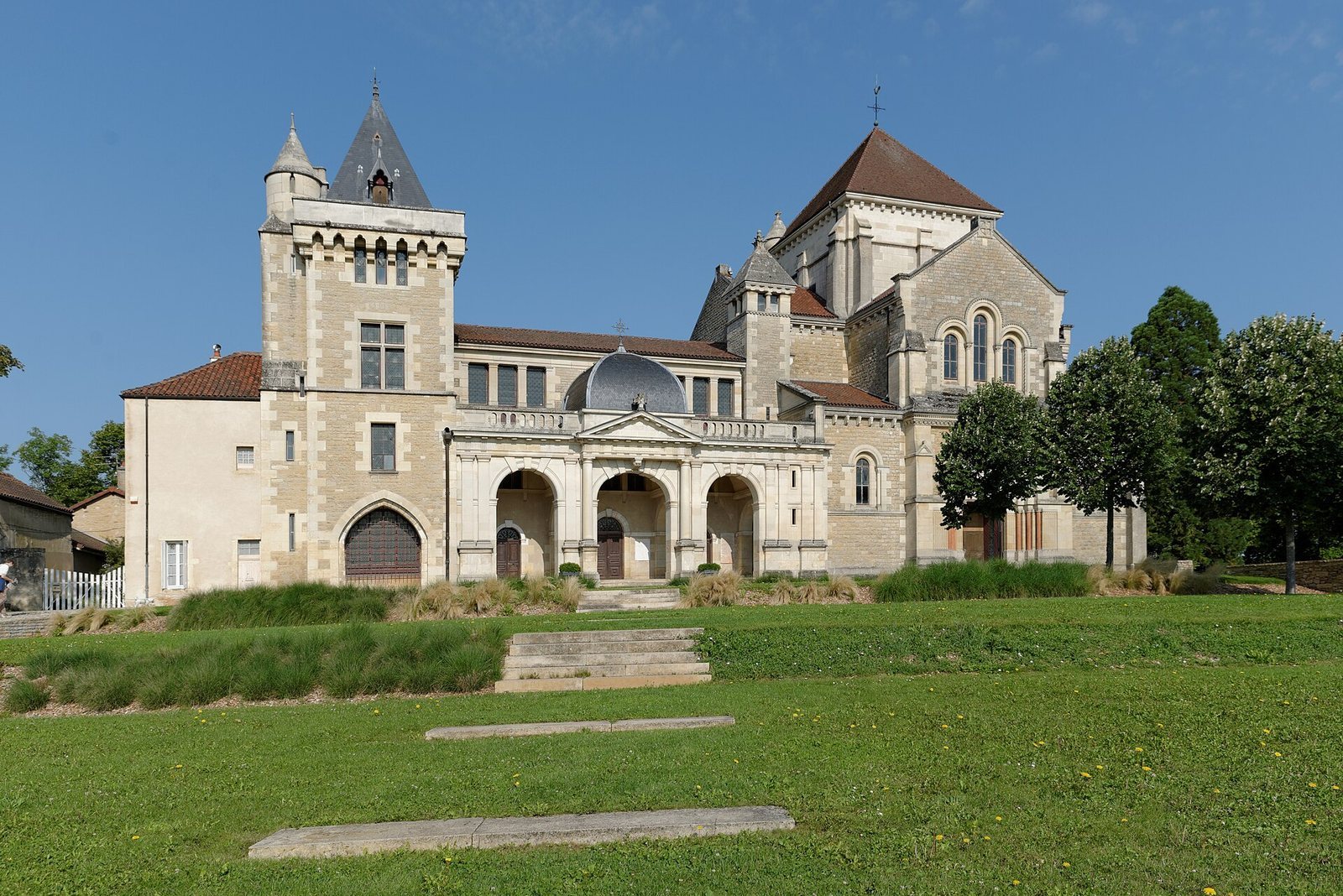
A new church was built against the castle in 1891 for the 800th anniversary of Bernard’s birth. It is commonly called the basilica, but it was never consecrated and did not receive the Holy See’s formal honorific title of basilica. Its permanent roof was completed in 1991. The complex was registered as a French historic monument in 1988.
Redemptorists occupied the site from 1919 to 1978. In 2002, it came into use by the Brothers of the Resurrection and the Priestly Fraternity of Saint Peter. Since 2021, canons of the Institute of Christ the King Sovereign Priest have used the basilica; priests from the local parish serve the Louis XIII chapels.
Remains
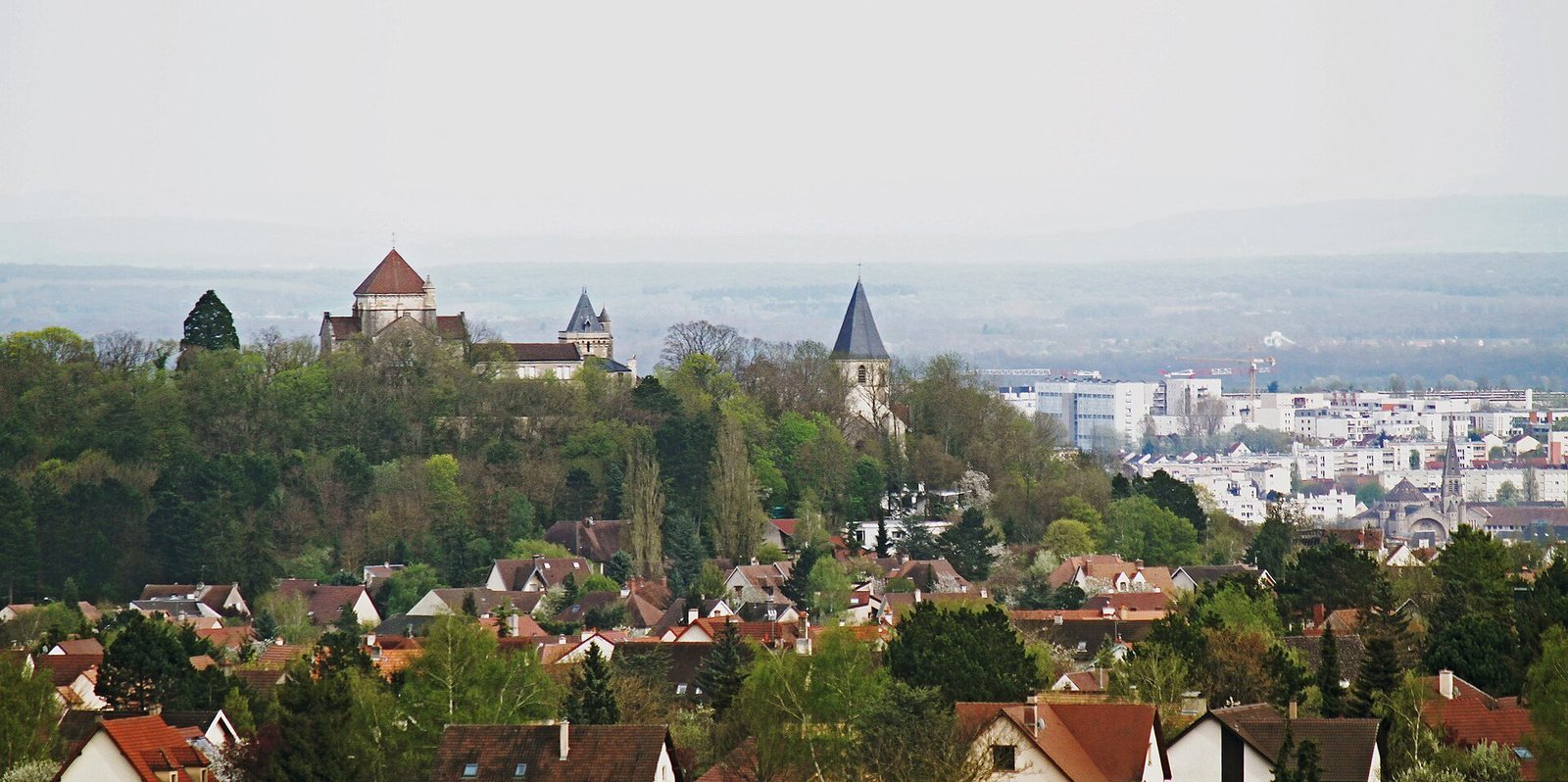
The castle, Saint Bernard’s Church, the basilica, and the convent stand together in a public park on the Butte de Fontaine, overlooking Dijon and the surrounding countryside. The castle, basilica, and church frame the large open square known as Place des Feuillants.
Castle and church
Castle
The castle’s surviving buildings and fortifications date from no earlier than the later medieval period, after substantial changes to its original form. The old entrance tower is identified as Bernard’s birthplace. During its 19th-century restoration, the tower was raised and fitted with defensive parapets made of alternating raised sections and gaps. The defensive wall around the castle was moved from the position described in a 15th-century charter. The restoration aimed to give the birthplace the appearance of a medieval fortress.
Church
Saint Bernard’s Church occupies the site of Aleth’s earlier chapel beside the castle. The church and castle are among the principal buildings bordering Place des Feuillants. Depictions of Bernard appear at the church and at the castle entrance.
Basilica and associated structures
Basilica
The church called the basilica is attached to the castle and helps define the edge of Place des Feuillants. Its permanent roof dates to 1991, completing a building begun in 1891.
Chapels and gallery
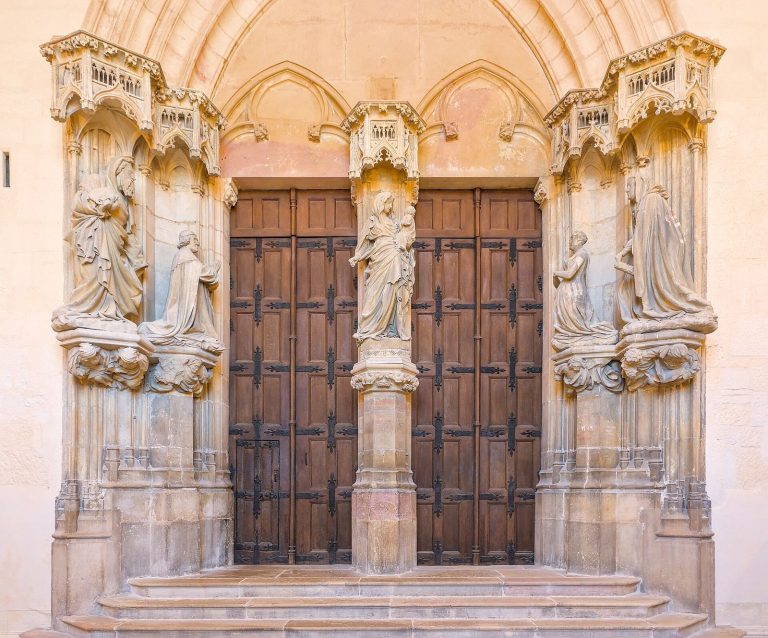
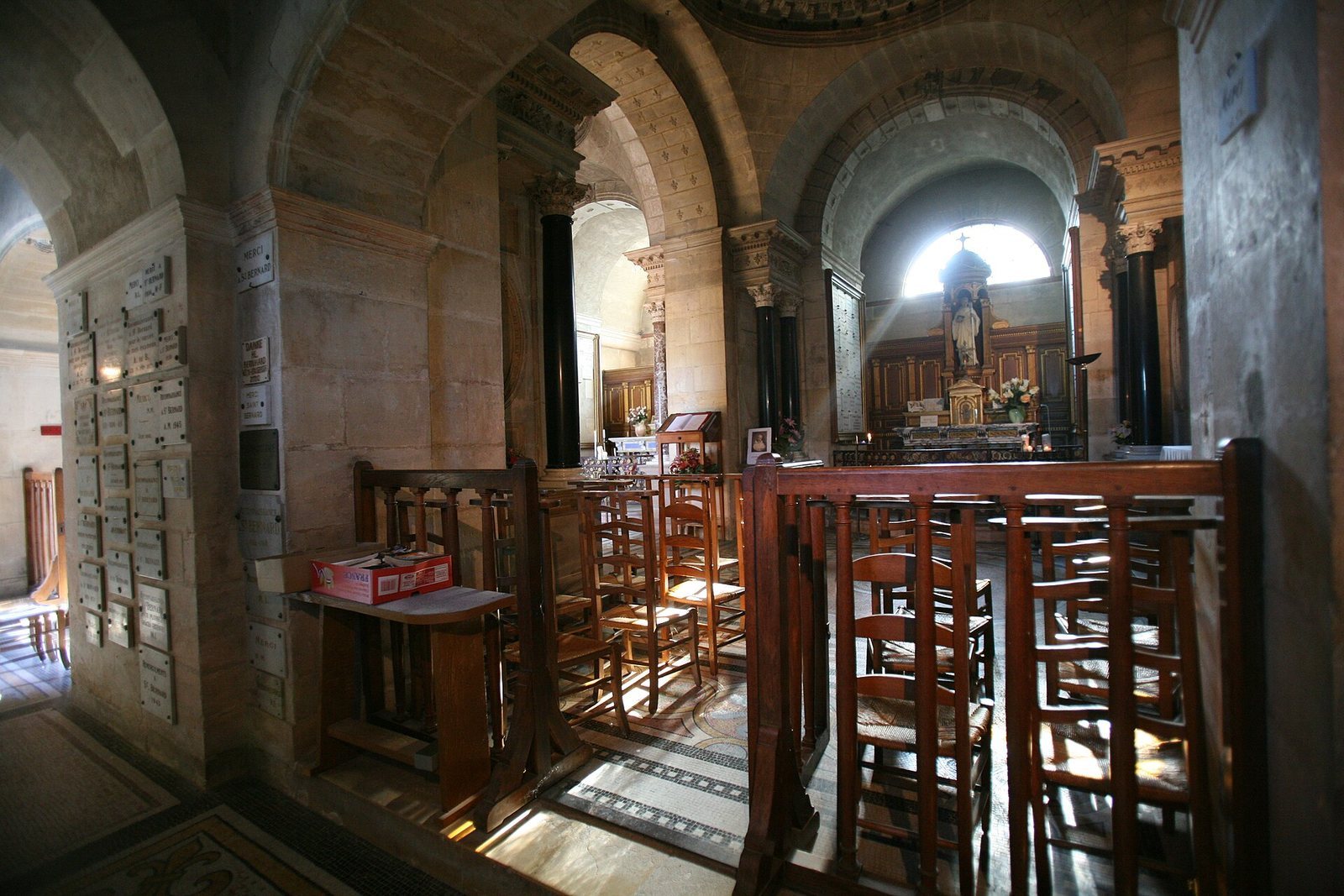
A connecting building between the old entrance tower and the basilica contains two 17th-century chapels and a 19th-century gallery. The chapels, dedicated to Saint Louis and Our Lady of All Graces, have Renaissance-style designs drawing on classical forms. They bear the arms of Louis XIII and Anne of Austria. A 17th-century door in the complex came from the former Feuillant convent in the park.
Park and commemorative features
Paths and grotto
The wooded park is crossed by paths, some of which run through the trees. They converge on an artificial Lourdes grotto, a shrine modeled on the grotto at the Catholic pilgrimage site of Lourdes and made using the shape of the terrain.
Plaques and memorials
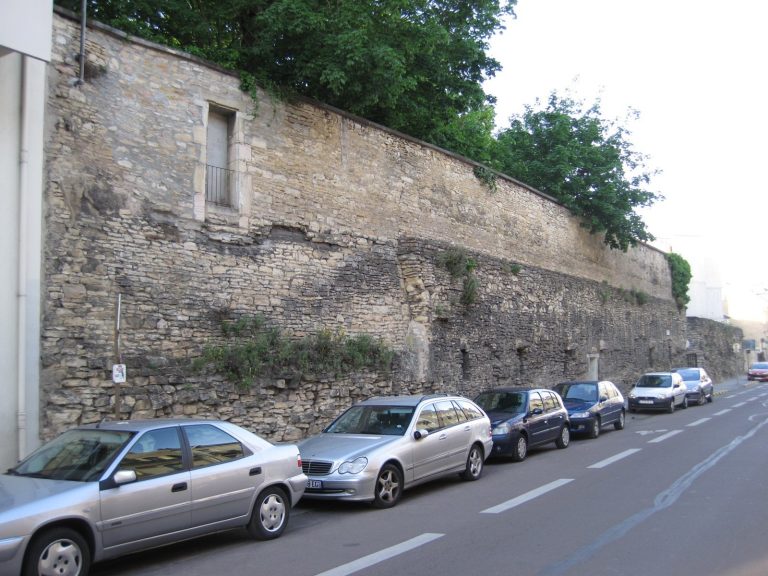
Two plaques bearing Latin text and numbered I and II commemorate Bernard, while another marks the 800th anniversary of his birth. A memorial to those who died in the First and Second World Wars was moved toward the monument to the Franco-Prussian War, the 1870–1871 conflict between France and Prussia. Demolition of an old reservoir and buildings along the former monastery garden wall opened a view toward Dijon and the plain before the Jura foothills.