Courthouse in Wodzisław Śląski: A Former Minorite Monastery
Site at a Glance
- Popularity
- Very Low
- Country
- Poland
- Primary era
- Medieval
- Eras represented
- Medieval
- Civilizations
- Holy Roman Empire, Kingdom of Bohemia
- Site type
- Religious
- Remains
- Monastery
On this page9 sections
History
The Courthouse in Wodzisław Śląski occupies the former monastery of the Minorites, a branch of the Franciscan order, in Poland. Duke Wladislaus I of Opole-Ratibor founded the convent in 1257. The town was then known as Loslau, and the monastery lay first in the Duchy of Ratibor and later the Duchy of Loslau. Since 1945, the town has been part of Poland’s Silesian Voivodeship.
Foundation and religious affiliations
Later scholars questioned the traditional foundation date, but a document discovered by historian Piotr Hojka in 2023 confirmed that Wladislaus founded the monastery in 1257. The convent is also securely mentioned around 1340 and in 1390.
In 1443 the monastery belonged to the Custody of Opole, an administrative group of convents within the Bohemian Franciscan province, a larger regional unit of the order. In 1515 Loslau, Cosel, and Oberglogau moved from that province to the Austrian province, where they formed its Moravian custody. The Loslau monastery remained part of the Austrian province in 1726.
Abandonment and return
The convent was abandoned during or after the Reformation, the 16th-century movement that led to Protestant churches and reshaped religious life across Europe. It stood empty by 1625. That year, the local parish priest Simon Cannabius took charge and planned to transfer it to Polish Minorites. Meinhardus, the head of the Minorite convent at Troppau, objected, arguing that Loslau belonged to the Austrian province as a branch of the Troppau convent. He sought the support of territorial ruler Karl Eusebius of Liechtenstein and reportedly Emperor Ferdinand II. Both ordered the transfer, but Cannabius did not carry it out. After his death, the monastery passed to Austrian Minorites and was occupied again by 1634.
The convent lent 1,000 talers, a historical European currency, to Andreas, Baron von Plawetzki, in 1634. In 1659 it lent 1,000 gulden, another historical currency, to his successor Gabriel, Count von Plawetzky. Guardian Matheus Paulinus Zatzkowitz, the convent’s head, certified the debt. He also recounted that during the Swedish occupation of his Olomouc monastery from 1642 to 1650, soldiers tried to burn religious images found in their quarters. An image of the Virgin Mary with the infant Jesus and John the Baptist reportedly resisted the fire. A woman took it and gave it to Zatzkowitz, who presented it to the Loslau church. A pilgrimage to the image developed there.
In 1661 Gabriel von Plawetzky granted the monastery firewood and building timber, pasture, permission to create a fishpond, and supplies of tallow, wax, wine, and bread. The terms were narrowed in 1690: the estate had to approve and mark timber, pasture was limited to ten cattle, and supplies of tallow, altar wine, and bread became cash payments. Those annual payments rose to 50 gulden in 1696. The monastery’s collection area covered lands later organized as the counties of Pless, Ratibor, and Rybnik.
Rebuilding and provincial change
In 1727 the Austrian provincial superior, the order’s regional leader, established a 520-gulden fund for masses, the central Catholic liturgical service, in memory of the monastery’s unknown founders. In 1732 Pope Clement XII created a Moravian Minorite province from nine convents separated from the Austrian province. Loslau, Cosel, and Oberglogau formed its Custody of St Louis.
Fire destroyed the monastery and church completely in 1738, and they were rebuilt soon afterward. That year the city magistrate also granted a garden to aid the work. The convent had eleven members in 1751. Its land and religious endowments were valued at 10,217 gulden in 1753. Earlier gifts included an orchard from Georg Firley in 1655 and a 570-gulden foundation from Johann and Catharina Skrzerowski in 1703 to fund masses and feed the poor. In 1740 Paul Peter Sluchal, parish priest at Tworkau, gave 100 gulden to support a member of a religious order serving that parish.
After Frederick II’s invasion of Silesia and the Peace of Berlin, the region came under Prussian rule in 1742. Frederick pressed for Silesian monasteries to leave their Austrian, Bohemian, and Moravian parent provinces. In 1754 the order’s general established a Silesian Minorite province under the patronage of St John of Nepomuk, a Bohemian priest and martyr, and St Hedwig, a medieval Silesian duchess venerated as a saint. The new province combined seven convents from the Bohemian province with three from the Moravian province, including Loslau. Loslau and its two fellow convents initially resisted the change but eventually accepted it.
Suppression and civic use
The convent had nine members in 1793. King Frederick William III’s edict of 30 October 1810 brought its suppression and the seizure of its property by the Prussian state. This form of secularization meant that the state closed a religious institution and took its assets. At the time, seven members lived there: a guardian, four brothers, and two lay brothers. Its land was valued at 2,400 gulden, and its total assets after liabilities amounted to 4,440 gulden.
The city bought the monastery buildings and church after the suppression. The buildings housed a municipal school and district court. On 8 February 1830, the city sold the church to Hyacinth, Count Strachwitz, for 500 talers. He adapted it for Lutheran worship, a Protestant tradition that emerged during the Reformation.
Remains
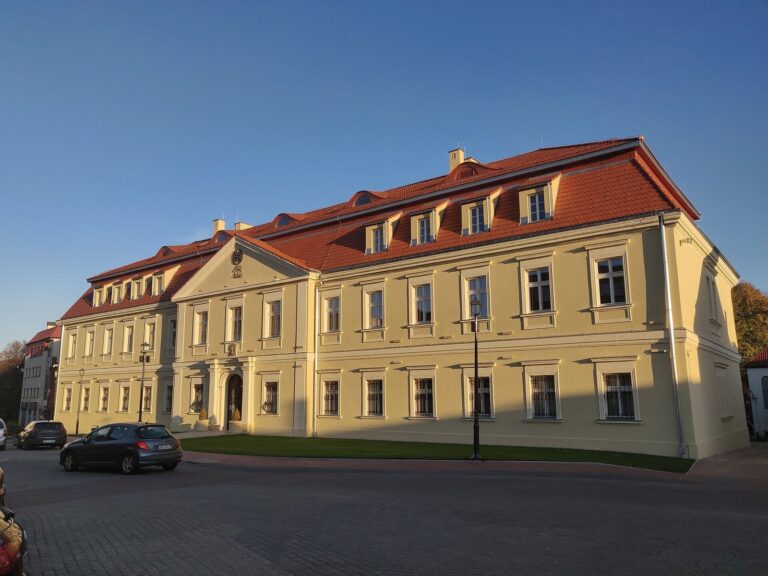
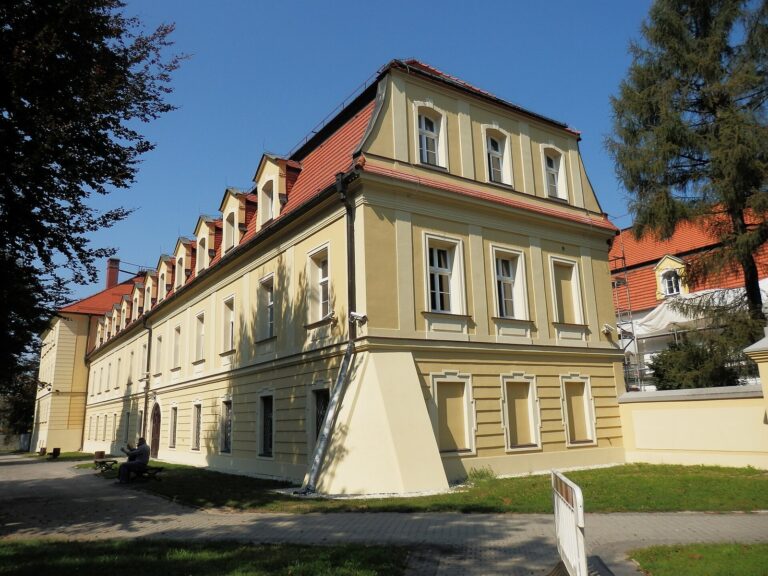
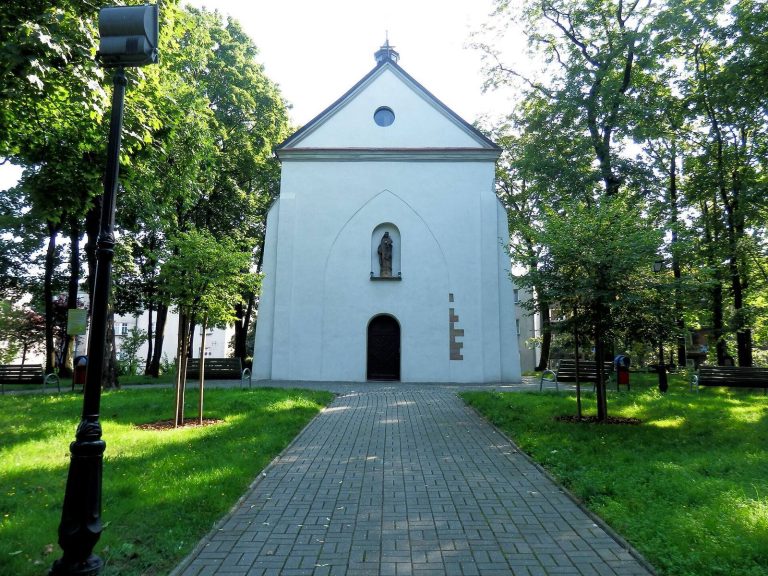
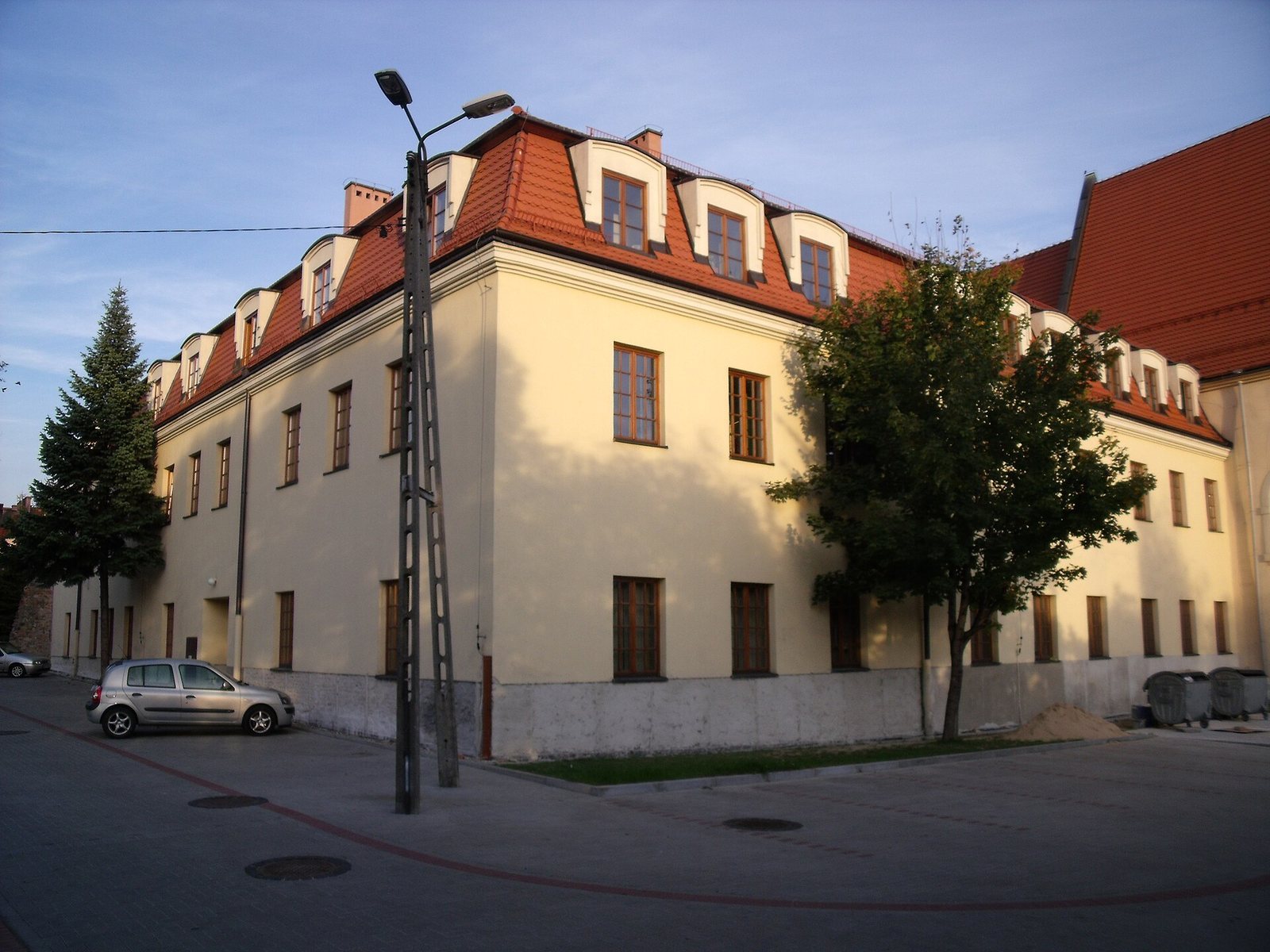
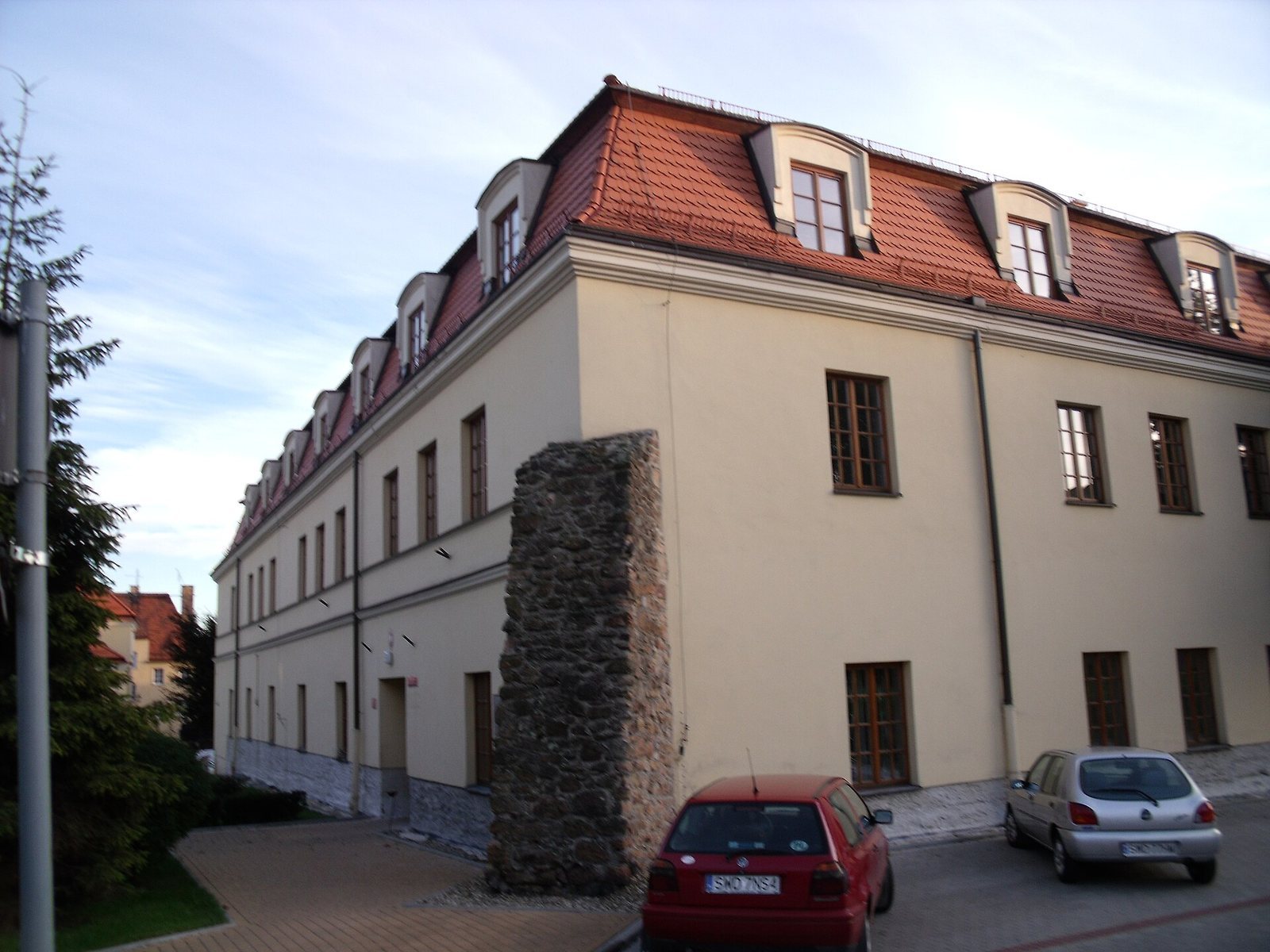
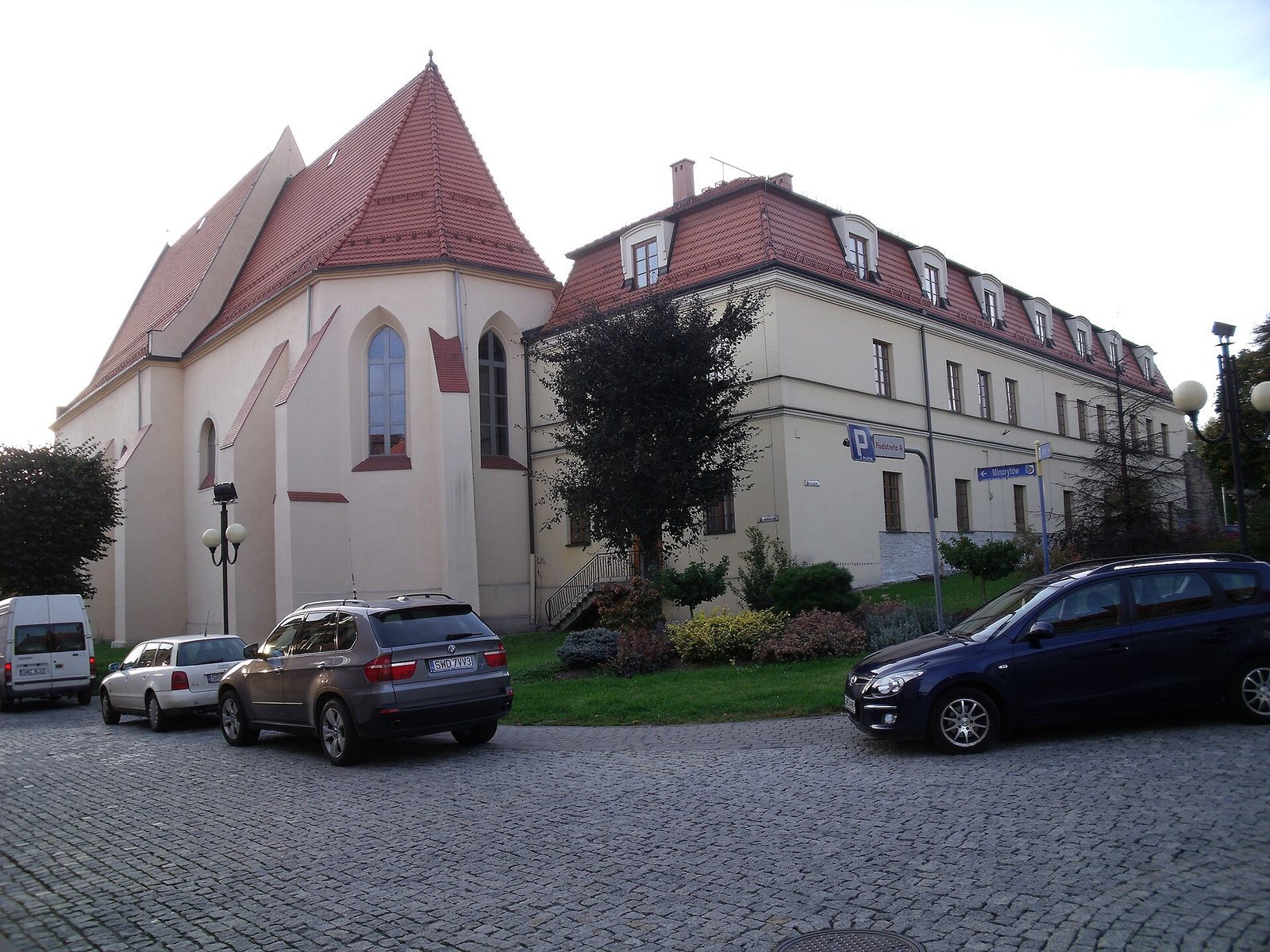
The former monastery stood in the western part of Loslau’s old town, near the town wall. The former convent building now houses the district court, while the former church serves as the Evangelical Lutheran Church of the Holy Trinity.
Surviving buildings
Former monastery building
The courthouse occupies the former convent building. Its surviving use as a district court preserves the building’s place in the town’s civic history following the monastery’s suppression.
Holy Trinity Church
The church is dedicated to the Holy Trinity, the Christian belief in one God in three persons. It is a Gothic building in the mendicant style, associated with preaching and reliance on donations. It was built on the foundations of an earlier oratory, a small chapel or place for prayer. The church itself dates to no later than the mid-14th century. Piotr Hojka has proposed that Constance, Duchess of Loslau, endowed it. The building is now the Evangelical Lutheran Church of the Holy Trinity.