Convent of Aracoeli: A Medieval Monastic Complex in Rome


Site at a Glance
- Rating
- 4.6
- Popularity
- Very Low
- Country
- Italy
- Primary era
- Early Modern
- Eras represented
- Early Modern
- Civilizations
- Papal States
- Site type
- Religious
- Remains
- Monastery
On this page12 sections
History
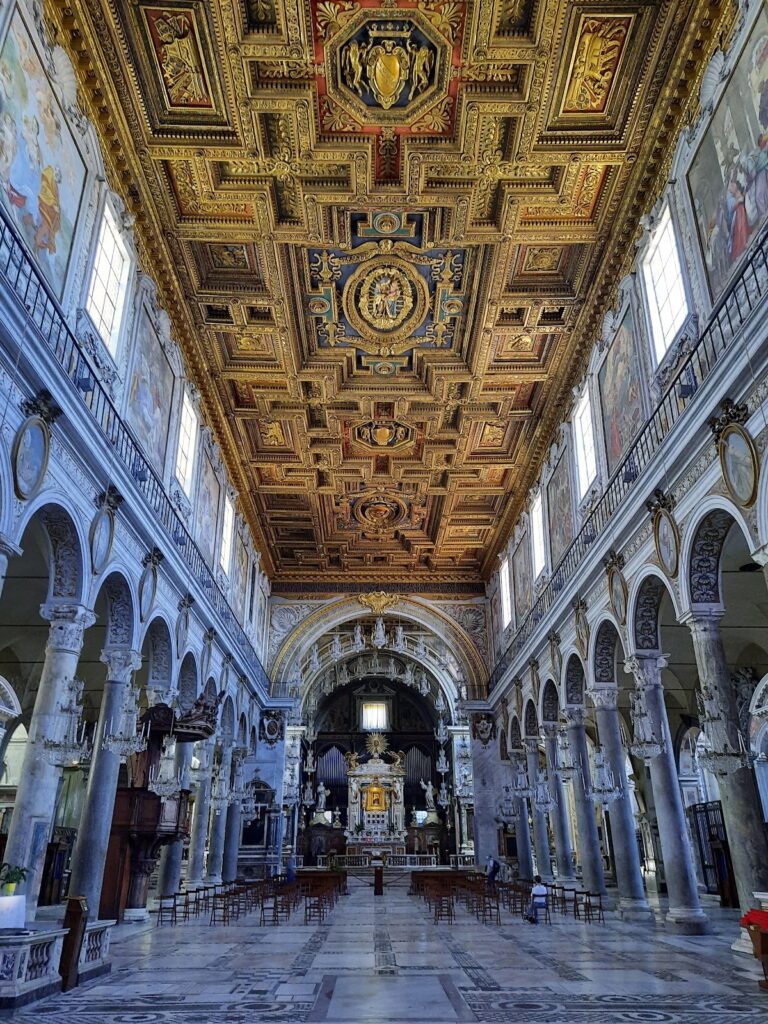
The Convent of Aracoeli, also known as the Convent of Santa Maria in Aracoeli, was a medieval monastic complex on Rome’s Capitoline Hill in Italy, beside the Basilica of Santa Maria in Aracoeli. Formerly called the Convent of Santa Maria in Capitolio, it probably originated in the sixth century within an area that had included the Temple of Jupiter Capitolinus. The complex developed during the medieval period under the dedication of Saint Mary and passed from Benedictine to Franciscan administration.
Early monastic origins
The convent grew among the ruins of an imposing ancient monumental complex destroyed by the Vandals in the fifth century. Some earlier building material was reused in the basilica and convent. The Rule of Saint Benedict, the code governing Benedictine monastic life, was observed there from the tenth century.
During the thirteenth century, Saint Francis of Assisi may have found refuge at the complex during his stays in Rome. A few years after his death, the convent became the principal Roman seat of the emerging Franciscan Order of Friars Minor, a mendicant order founded by Francis. Its association with Francis and its central position in the city helped establish this role.
Franciscan headquarters and centre of study
In 1250, Pope Innocent IV entrusted the convent and the adjoining basilica to the Franciscans. From that time, the complex worked increasingly closely with the Municipality of Rome, whose seat was in the adjacent Piazza del Campidoglio.
The Franciscans opened a studium, an institutional centre for advanced religious and academic study, in 1310. It operated as a university institute from 1421 to 1444. The convent also served as a seminary for novices, a hospice for scholars, and a place of hospitality and care for the sick. These functions made it an important centre of teaching and culture within the Franciscan presence in Rome.
Changes in administration and secular use
In 1444, during the pontificate of Pope Eugene IV, the convent passed from the Conventual Franciscans to the Observant Minors. The Observants formed a distinct branch that placed particular emphasis on stricter adherence to the original Franciscan rule. In 1517, Aracoeli became the Observant Minors’ generalate, or headquarters, a position it retained until its final demolition.
The convent’s religious function was interrupted during the first French invasion of Rome in 1798, when it was deconsecrated and converted into a stable. Under the Napoleonic government, from 1810 to 1815, the complex briefly housed the Accademia di San Luca.
After Italian unification and amid the suppression of religious orders and confiscation of ecclesiastical property, the Italian state expropriated the convent in 1873. It was then converted into offices for the traffic police. In 1886, after more than a millennium of history, the complex was almost completely demolished to make way for the Vittoriano, Rome’s national monument dedicated to Victor Emmanuel II, the first king of unified Italy. A much smaller Franciscan convent bearing the same name was built beside the staircase during the same period.
Remains
The historical convent stood immediately beside the Basilica of Santa Maria in Aracoeli on the Capitoline Hill. It was enlarged over time until the complex contained three cloisters, covered ambulatories surrounding open courtyards. Its buildings also formed part of a wider group of structures linked to the basilica, the Capitoline civic centre, and nearby papal and Venetian complexes.
Associated buildings and connections
Convent complex
The convent occupied the area beside the basilica and expanded gradually into a complex with three cloisters. Its physical growth accompanied its changing institutional functions, which included monastic life, teaching, hospitality, and care for the sick. Most of this built fabric disappeared in the demolition of 1886.
Tower of Paul III
In 1535, Pope Paul III ordered the construction of a papal villa beside the convent. Known as the Tower of Paul III, the building formed an adjacent element of the complex’s sixteenth-century setting.
Arco San Marco
An elevated passage called the Arco San Marco connected the convent complex with Palazzetto San Marco, now known as Palazzetto Venezia. That building formed part of Palazzo di San Marco, now Palazzo Venezia, creating a physical link between the convent and the neighbouring palace group.
Library and surviving fabric
Bibliotheca Aracoelitana
The convent possessed a large library from the Middle Ages. It was re-established in 1733 as the Bibliotheca Aracoelitana, also called the Evoriana after Évora, the city associated with its founder, the Franciscan José Ribeiro da Fonseca. By the nineteenth century, the library held more than 17,000 volumes, including manuscripts, and was open to the public.
Sixteenth-century loggia
The sixteenth-century loggia on the right side of the basilica, at the end of the staircase, is the only surviving remnant of the historical convent. Its portico provided access between the basilica and the convent, preserving a fragment of the connection between the two institutions after the wider complex was demolished.
Nearby sites