Clivus Capitolinus: Rome’s Ancient Road to the Capitoline Hill
Site at a Glance
- Popularity
- Medium
- Country
- Italy
- Primary era
- Classical
- Eras represented
- Classical
- Civilizations
- Roman
- Site type
- Infrastructure
- Remains
- Road
On this page8 sections
History
Early route and Roman monarchy
The Clivus Capitolinus was an ancient Roman road in Rome, Italy, generally dated to the eighth century BCE. It linked the Forum with the Capitoline Hill and became one of Rome’s oldest roads, connecting major temples with political, administrative, and judicial buildings. It was the hill’s only route for wheeled traffic.
The road’s earliest course is uncertain, since early records of Rome were lost when the city was sacked. It may have followed an older route toward Sabine territory, an ancient people of central Italy, before changes associated with the construction of the Temple of Saturn in the fifth century BCE. The original road ran from the Forum to Inter duos Lucos, the depression between the Capitoline’s two heights, then split, with one branch leading to the Capitolium, one of those heights. Toward the end of the Roman monarchy, Rome’s early period of rule by kings, the route and its branch were widened for wheeled traffic and became known as the Clivus Capitolinus.
Republican works
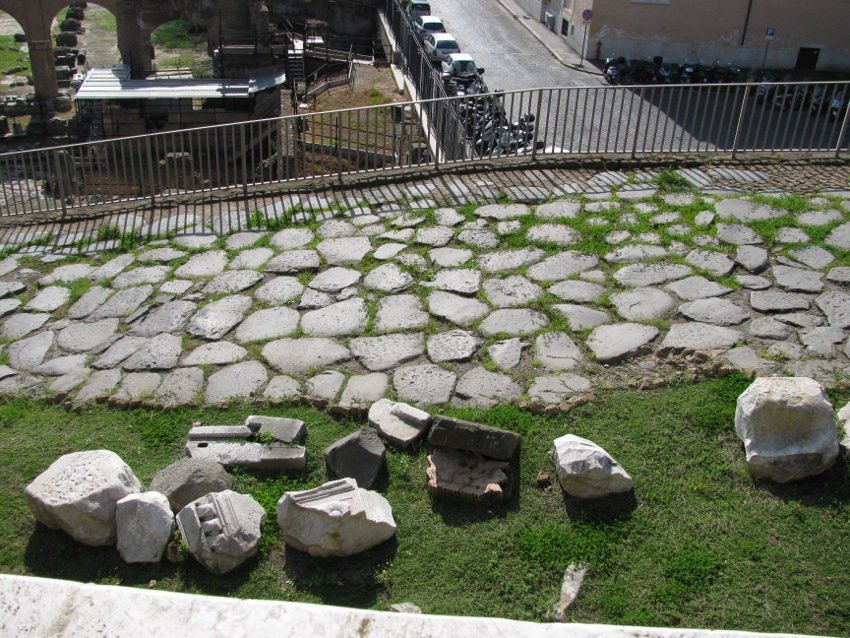
In 190 BCE, Publius Cornelius Scipio erected a decorative arch where the road reached the summit. In 174 BCE, the censors Quintus Fulvius Flaccus and Aulus Postumius Albinus had the road paved. Censors were senior Roman magistrates whose responsibilities included public works and civic administration. The pavement was later restored during the dictatorship of Sulla, a Roman general and politician. Some buildings along the route belonged to the Etruscan period, associated with an ancient central Italian civilization that preceded Roman dominance.
Triumphs and tradition
The Clivus traditionally formed the final ascent of Roman triumphs, formal processions celebrating military victories that culminated at the Capitoline. A tradition recounts that Julius Caesar’s chariot axle broke during one such procession, an ill omen. To avert it, Caesar is said to have completed the climb on his knees.
Remains
Route through the Forum
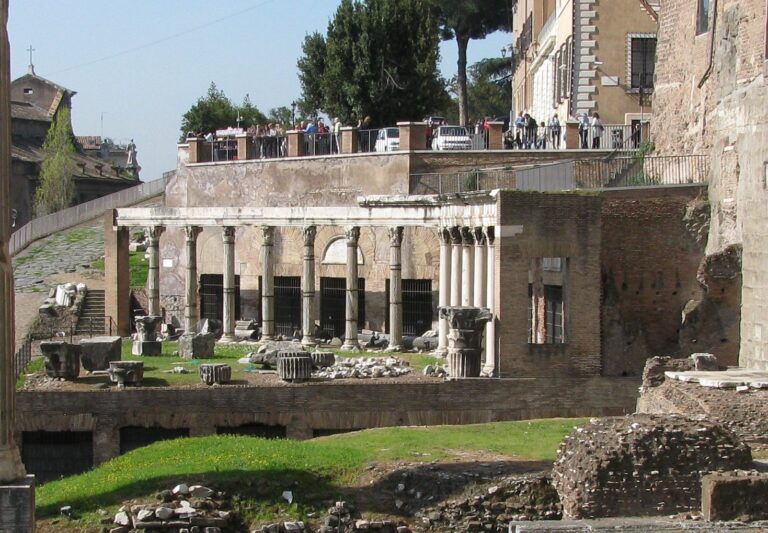
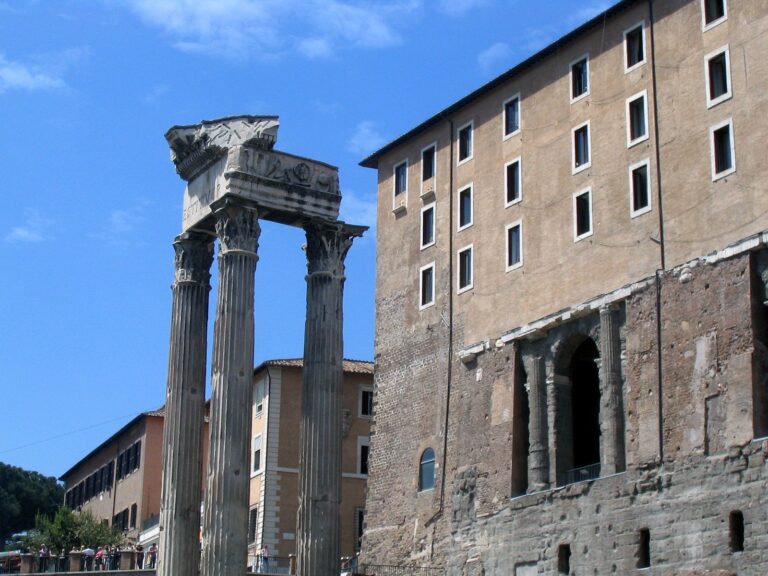
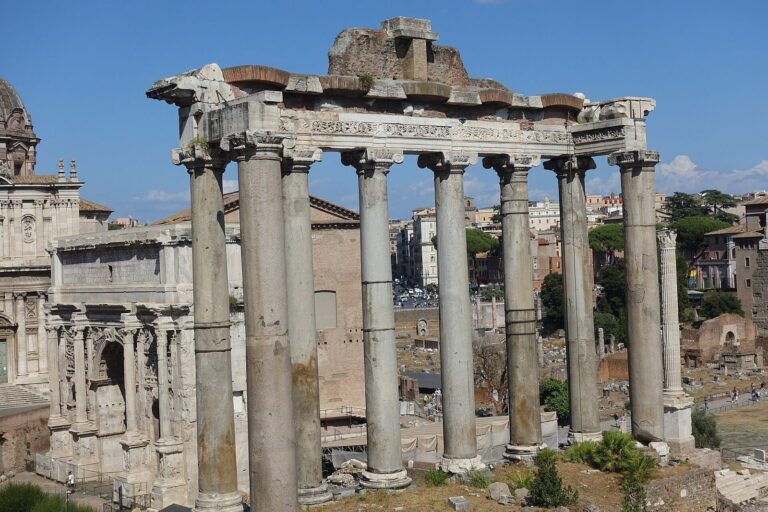
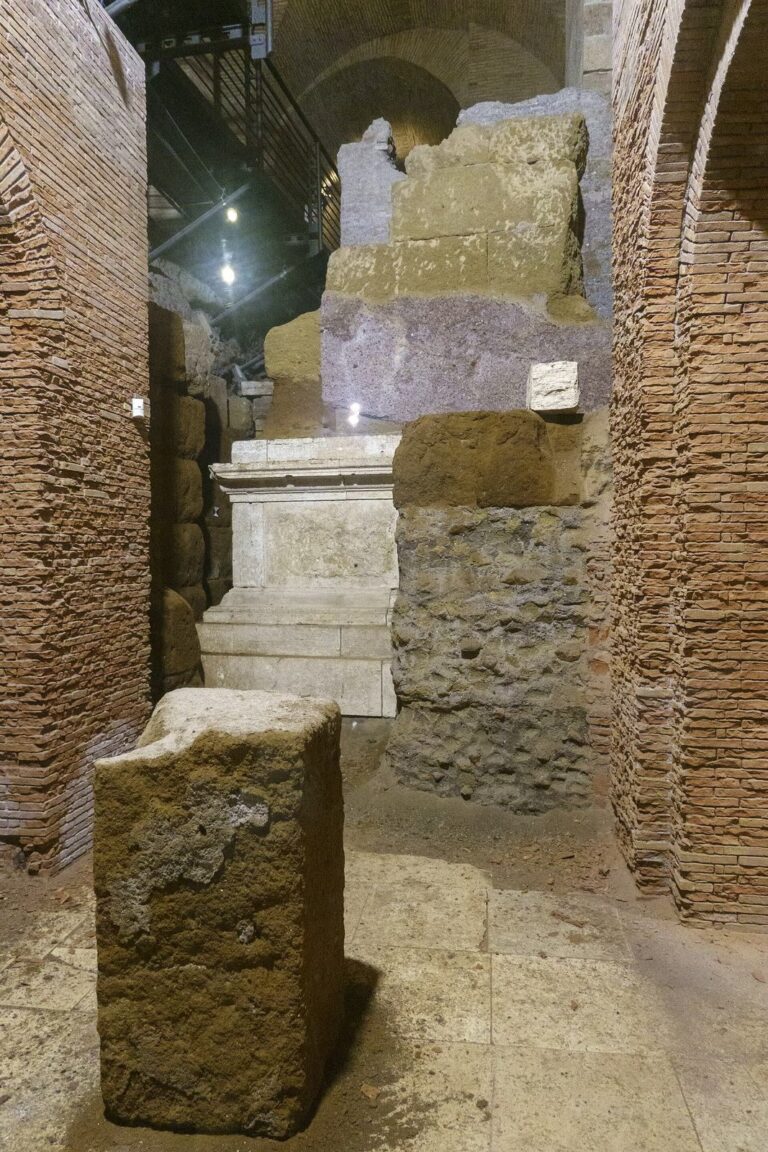
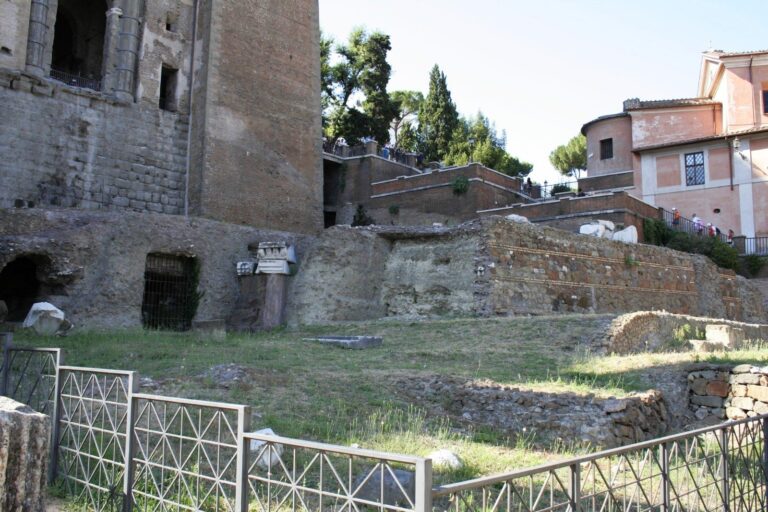
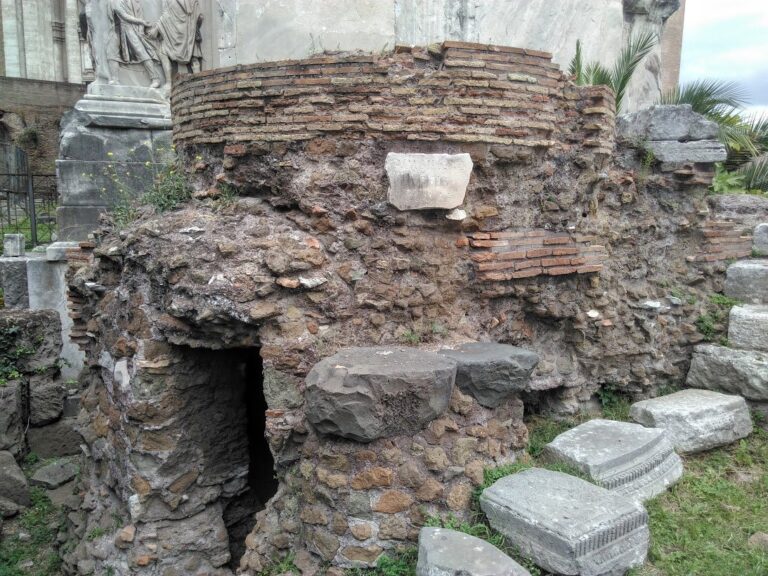
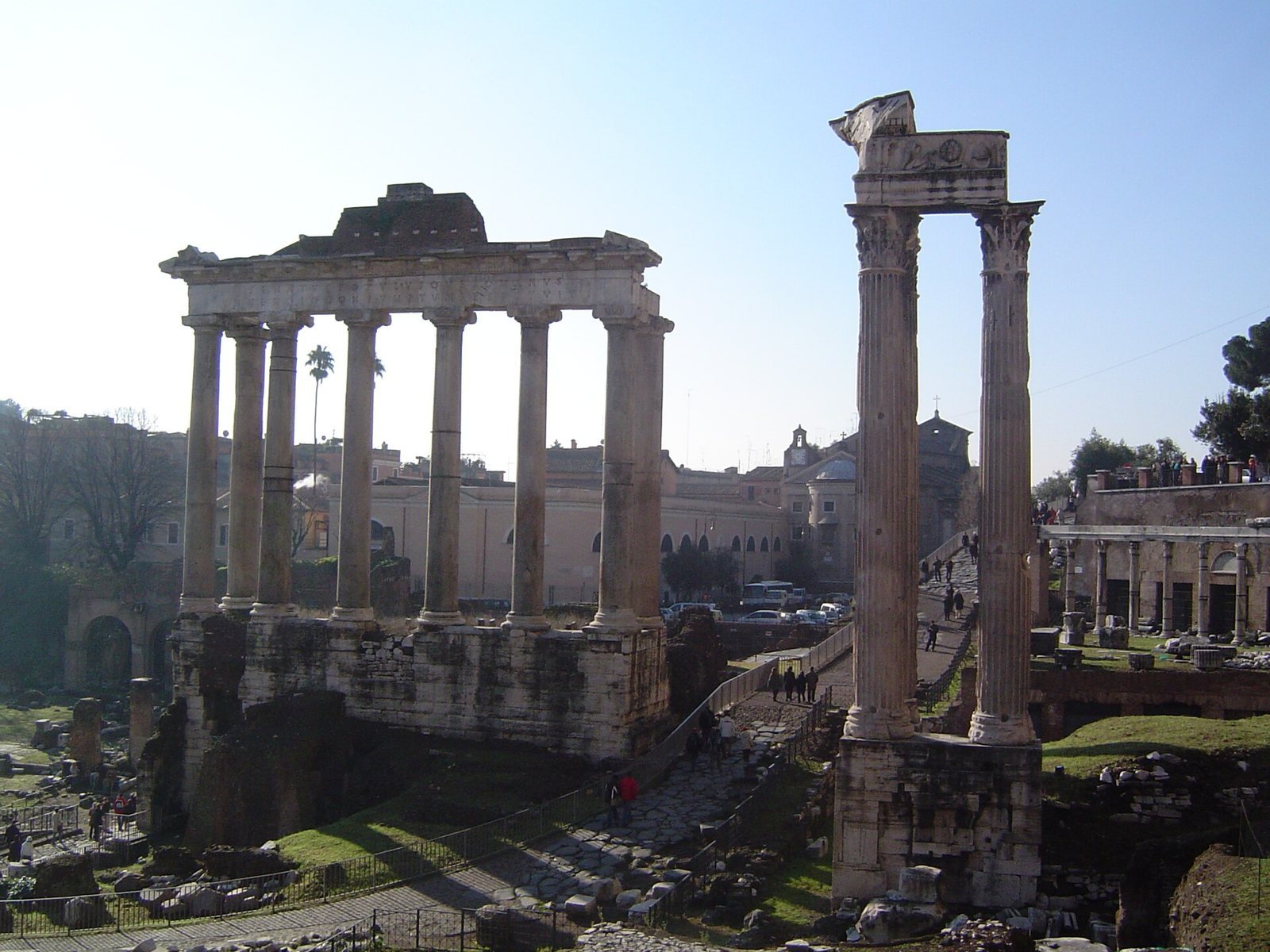
The paved road began at the Forum’s northern end as a continuation of the Via Sacra, a principal road through the Forum. It started near the Arch of Tiberius and behind the Arch of Septimius Severus; the Arch of Tiberius spanned the Vicus Iugarius, another street. The Clivus passed between the Temples of Saturn and Vespasian, went around the western side of Saturn’s temple, and turned toward the Portico of the Dii Consentes, the twelve principal Roman gods. It ran behind the portico, whose rear structure also supported the road, then alongside the Tabularium, Rome’s public records building, and the Temple of Veiovis, an archaic deity often understood as a youthful form of Jupiter. Etruscan stones are visible behind the portico’s surviving chambers.
Ascent to the Capitoline
From the Forum, the road climbed at an average gradient of 12.5 percent to Inter duos Lucos, also called the Asylum. There it divided toward the Arx, the hill’s other height, and the Capitolium. The upper course probably reached supporting structures on the Capitolium’s northeastern side, turned at a right angle, and climbed steeply along the eastern side of the sacred area before entering from the southeast. It reached the summit at the foot of the Temple of Jupiter Optimus Maximus, whose name means Jupiter “Best and Greatest,” a title of Rome’s chief god.
Lower supports and associated features
Some arches from the period of Sulla survive near the road’s lower course, where they supported it beside a branching way. Part of the final stretch has subsided along with the Capitoline slope. A portico, a roofed walkway supported by columns, is associated with the road works of 174 BCE and was described as running along the road’s right side from the Temple of Saturn toward the Capitolium. That alignment is uncertain: the slope and curve make it unusual, and the description may instead refer to a portico extending from Saturn’s temple toward the Comitium. Private buildings probably stood along part of the route, likely near Inter duos Lucos. The Porta Stercoraria, a gate associated with the ritual removal of refuse, probably lay not far from the Temple of Saturn. The Centum Gradus and Gradus Monetae were stairway approaches to the hill, distinct from the Clivus’s route for vehicles.