Citadelle de Sisteron: A Historic Fortress Above the Durance


Site at a Glance
- Rating
- 4.5
- Popularity
- Medium
- Country
- France
- Primary era
- Early Modern
- External website
- Open
- Eras represented
- Medieval, Early Modern, Modern
- Civilizations
- County of Provence, French
- Site type
- Military
- Remains
- Citadel
On this page18 sections
History
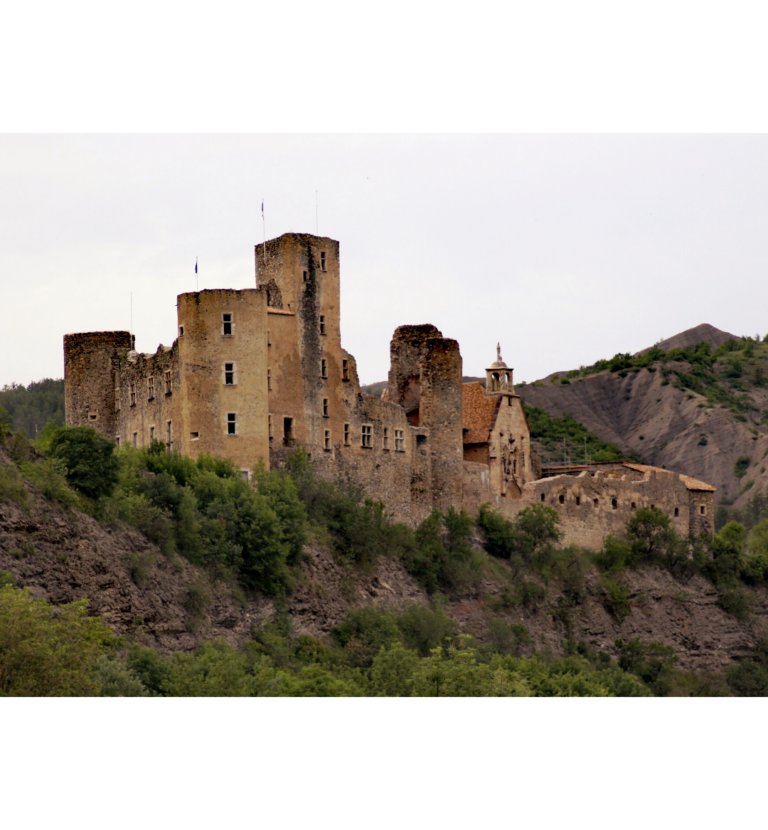
Citadelle de Sisteron is a historic fortress in France, rising above Sisteron and the Durance on a rocky height first fortified in antiquity by the Voconces, a Celtic people of southeastern Gaul. The site developed through Roman, medieval, early modern, and nineteenth-century phases, becoming a strategic stronghold on the passage between Dauphiné and Provence and along the route from the Alps to the Mediterranean.
Ancient and Medieval Foundations
The Voconces established an oppidum, a fortified settlement, on the height. It was destroyed during Augustus’ Roman invasion in 27 BC. Roman control brought the settlement of Segustero and a castrum, a military camp or fortified installation, to the area. The Roman presence is associated with a mausoleum and a settlement along the Via Domitia, the road that linked the Italian peninsula with Hispania.
The early medieval châtel consisted of towers and palisades. After the political disorder that followed Charlemagne’s death, Sisteron passed from local viscounts to the counts of Forcalquier and then to the counts of Provence. The town and its fortress were later incorporated into the French crown under Louis XI, who ruled from 1461 to 1483. Written records first mention Sisteron’s castle in the eleventh century.
A Strategic Fortress
From 1209, the castle guarded and controlled the route between Dauphiné and Provence. Its position was strengthened by the surrounding terrain, including the vertical rock strata of La Baume on the opposite bank of the Durance. The fortress also stood near the confluence of the Buëch and Durance rivers, giving the site control over an important mountain passage.
Sisteron became an important strategic site during the Wars of Religion, a series of conflicts in sixteenth-century France between Catholics and Protestants. Fighting caused major destruction, after which the fortress was extensively reorganized between 1590 and 1597. The works are attributed to Jean Errard, the military engineer serving Henry IV, although the defenses are more securely associated with the Italian engineer Jehan Sarrazin. The new arrangement created successive defensive enclosures to the north and south and connected them with the fourteenth-century rampart around the town. Its zigzag, or sawtooth, arrangement was later adopted and refined by Vauban.
Several royal and military figures are connected with the fortress. Francis I stopped at Sisteron in 1516 on his return from the Battle of Marignano and returned in 1524 and 1537. The knight Pierre Terrail, seigneur de Bayard, held a garrison there. In 1639, John Casimir Vasa, the future King John II Casimir of Poland, was imprisoned in the keep on Richelieu’s orders after being accused of conspiring with Spain. He remained there from 13 February to 16 August.
Vauban and Nineteenth-Century Adaptation
After Savoyard forces under Victor-Amadeus II invaded the upper Durance valley, Vauban prepared a comprehensive defensive plan for Sisteron in 1692. He proposed higher curtain walls, stronger entrances, and a powder magazine protected from plunging fire. Only the powder magazine and its well were initially completed.
Further changes took place between 1842 and 1860 as the citadel was adapted to contemporary military requirements and frontier defense. The works followed Vauban’s recommendations by raising the curtain walls, opening two carriage gates in the southern face, remodeling the second northern enclosure, constructing a cistern, and excavating an underground stairway between the citadel and the rebuilt northern gate of the town.
Napoleon and the Modern Military Era
On 5 March 1815, Napoleon I reached Sisteron during his return from exile to Grenoble and Paris, the movement that began the Hundred Days. General Cambronne arrived first to check that the passage was secure. The citadel’s commander, Machemin, and his garrison could not stop Napoleon’s force because they lacked cannon powder.
The fortress later served as a prison for German prisoners of war during the First World War. France demilitarized it in 1920, when the state abandoned the citadel as a military base. By decree of 18 November 1939, it became an internment camp and later a supervised-residence camp. Until May 1940, it held common-law detainees described as people without known means of support, while political prisoners were also interned thereafter. French prison staff guarded the camp, which became a supervised-residence camp in August 1940.
Political prisoners were transferred to Saint-Sulpice-la-Pointe in May 1941. The citadel then held mainly ordinary criminals and, from November 1942, prisoners convicted of black-market offenses. At the end of 1943, 165 political prisoners arrived from the Carrère camp. Victor Leduc and Robert Rossi escaped in January 1944.
German occupation authorities also used the citadel as a prison for political prisoners from 1942 to 1944. A collective escape took place on 8 June 1944. On 21 July, members of the Francs-Tireurs et Partisans, a communist-led French resistance organization, liberated the remaining internees. German reprisals followed, including the taking of about fifty local inhabitants as hostages and an attack on the Bayons maquis, a rural resistance group, on 26 July. Later in 1944 and in 1945, the citadel held black-market prisoners and then prisoners accused of collaboration.
Damage, Restoration, and Protection
Allied bombing on 15 August 1944 severely damaged the citadel, especially its chapel. The raid aimed to destroy the railway and road bridges over the Durance. The first attack failed to destroy the bridges, and bombs released during an evasive maneuver struck the town, killing more than 300 civilians. A second raid on 17 August destroyed the intended targets.
The Association Arts, Théâtre, Monuments was founded in 1956 to preserve and restore the citadel with admission revenue and municipal support. Restoration has continued since then, and the chapel was rebuilt between 1970 and 1980. Historic-monument protection was applied in stages: the upper rampart, clock tower, chapel, and stone Devil’s Sentry Box were classified on 11 February 1925; the remainder of the complex was registered in 2013; and the entire citadel was classified as a historic monument in 2015.
Remains
The present citadel is an accretive complex of defensive works built on a rocky spur approximately 500 to 550 metres above sea level. Its upper rampart forms a wall-walk and is dominated by a powerful twelfth-century keep. Bastioned defenses descend in successive levels toward the north and south, while the fortress occupies the height above Sisteron and the Durance near the meeting of the Buëch and Durance rivers.
Defensive Works
Upper Rampart and Keep
The upper rampart combines a defensive wall-walk with the keep, whose origins date to the twelfth century. Together they form the highest part of the surviving fortress and anchor the later defensive works arranged below them.
Bastioned Enclosures
The late-sixteenth-century defenses created two successive enclosures to the north and three to the south. These lines were attached to the fourteenth-century rampart surrounding the town. On the southern face, four enclosed defensive lines contain strongly protected gates, with some entrances equipped with drawbridges. The northern side has three defensive lines that were heavily remodeled in the nineteenth century.
Nineteenth-Century Works
The nineteenth-century alterations raised the curtain walls, opened two carriage gates in the southern face, and remodeled the second northern enclosure. They also added a cistern and a large underground staircase linking the citadel with the northern gate of the town.
Powder Magazine
The powder magazine was one of the works proposed by Vauban in 1692 and was positioned to shield it from plunging fire. Its well was completed with it, making this pair the part of Vauban’s plan that was initially carried out.
Chapel and Fortress Structures
Notre-Dame du Château Chapel
Notre-Dame du Château dates from the fourteenth century and stands on a terrace supported by powerful arcades. Its Gothic nave is built from golden sandstone from Bevons and gray limestone from Chambrancon, producing a deliberate two-color effect. The rebuilt chapel contains stained-glass windows by the glass artist Claude Courageux.
Towers and Sentry Posts
The complex includes a clock tower, the upper rampart, a stone sentry box known as the Devil’s Sentry Box, and a sentry turret. These structures form part of the fortress’s elevated defensive system and remain associated with the successive ramparts.
Casemates and Exhibitions
Casemates, fortified chambers used for protected storage, weapons, or shelter, form part of the fortress interior. One casemate contains an exhibition of sixty period documents concerning Napoleon’s return from Elba. A reconstructed dungeon cell represents the place where John Casimir Vasa was imprisoned, with period furnishings and a mannequin forming part of the reconstruction.
Cultural Use
Open-Air Stage
An open-air performance stage has occupied the northern slope within the fortress since the 1930s, adding a cultural use to the defensive complex while remaining within its historic enclosure.