Ajaccio Citadel: A Genoese Coastal Fortress in Corsica
Site at a Glance
- Rating
- 3.7
- Popularity
- High
- Country
- France
- Primary era
- Early Modern
- Eras represented
- Medieval, Early Modern
- Civilizations
- French, Genoese
- Site type
- Military
- Remains
- Citadel
On this page11 sections
History
Ajaccio Citadel is a Genoese coastal fortress on the Mediterranean shore of Ajaccio, France, begun in 1492 in a design described as close to medieval fortification. Genoa selected the site for a defensible position that could be supplied by sea, helping secure its control of Corsica.
Genoese foundation and early defenses
The Republic of Genoa entrusted Corsica’s administration to the Office of Saint George, a Genoese institution, in 1453; the Office recovered control of the island in 1483. In search of a protected, sea-supplied position, a commission led by Domenico de Negroni inspected the Gulf of Ajaccio in 1491–1492, with assistance from Lombard architect Cristofaro de Gandino, and chose the site for a new citadel. An earlier Genoese fort in the area, built during the thirteenth century, had been abandoned in the fourteenth.
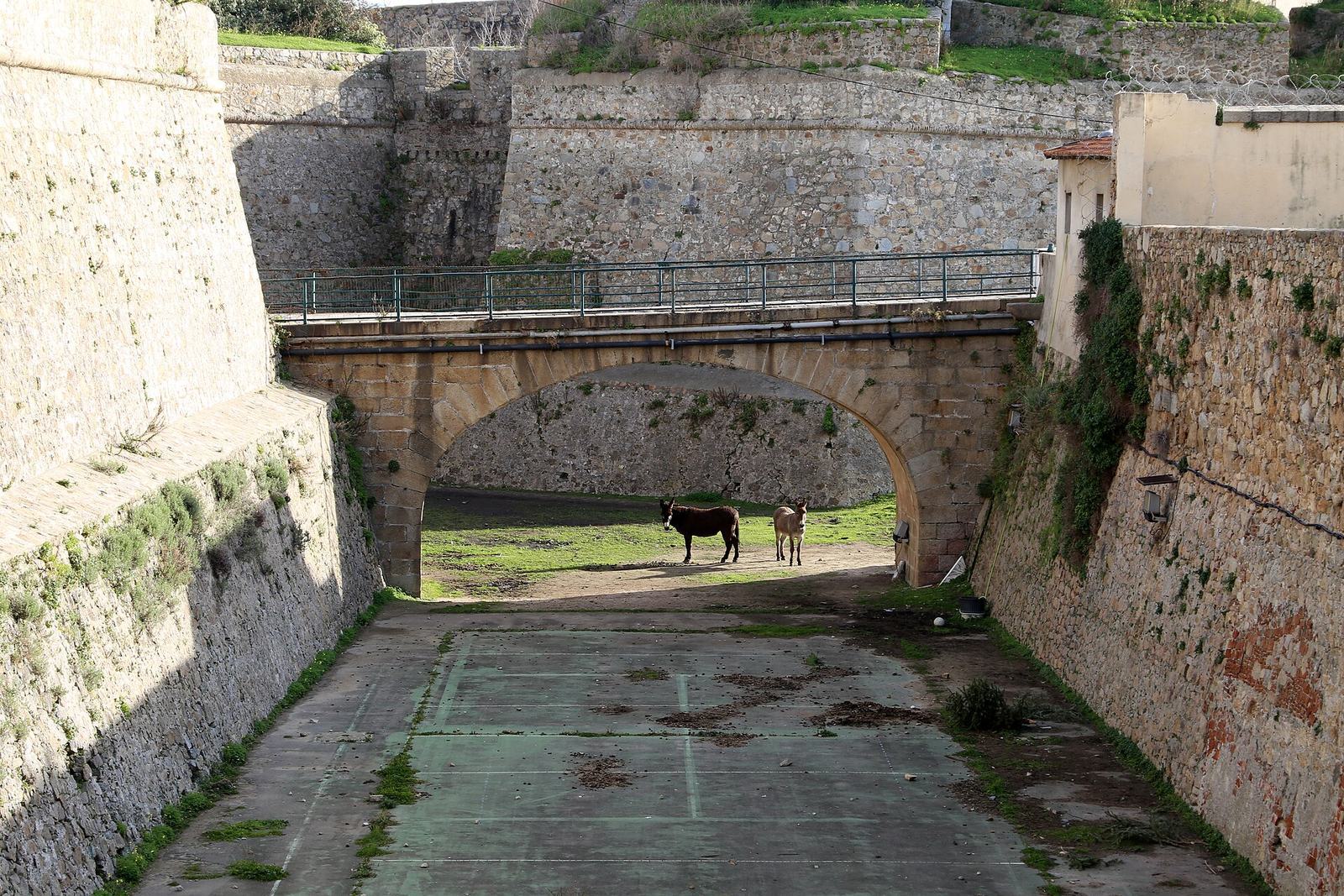
Construction began in 1492. Genoese workers arrived on 15 April, the first stone was laid on 30 April, and the first bastion, a projecting defensive work, was finished on 5 May. Building and successive alterations continued through 1775. Around 1502–1503, Genoa enclosed the new neighborhood with walls, cut a moat into the rock, and added a drawbridge. Corsican families loyal to Genoa, including the Ornano and Pozzo di Borgo, purchased nearby land for houses.
Occupation and expanded fortifications
French troops under Paul de La Barthe de Thermes occupied the citadel in 1553, and Giordano Orsini altered its defenses. The 1559 Treaty of Cateau-Cambrésis, a peace settlement ending the Italian Wars, accompanied Corsica’s return to Genoese control. The Office of Saint George resumed its authority that year, followed by the Genoese Senate in 1562.
From 1559, Genoa strengthened the fortifications in response to the danger of attacks by Turkish ships. Concern grew after Corsican military leader Sampiero Corso travelled as an ambassador to the Grand Turk, the Ottoman sultan, in 1562–1563. Genoa’s military engineer Giovan Giacomo Paleari Fratino arrived on 29 January 1563 with Colonel Giorgio Doria. Lent to Genoa by Philip II of Spain, Fratino redesigned defenses to separate the citadel from the town. The work required demolishing old walls, about twenty houses, and two churches, including Santa Croce, formerly Ajaccio’s cathedral. His coastal defense scheme also included a Martello tower, a fortified coastal tower, at Mortella Point.
The Rastello became the new city gate in the 1570s. In 1584, the Tower of the Diamond was converted into a bastion.
The 1792 Easter disturbances
Violence broke out in Ajaccio on 8 April 1792 after an argument during a game of skittles escalated when National Guards intervened. Napoleon Bonaparte, elected deputy lieutenant colonel of the city’s National Guard a few days earlier, encouraged the guards against civilians and said Pascal Paoli had ordered them to hold their positions. An officer was killed, and members of the 2nd Battalion took refuge in the seminary.
The next day, guards fired from Saint-Georges Tower, which was linked to the seminary, at people leaving Mass at the cathedral, killing five. Other guards took the Capuchin convent and the Genoese Tower, which commanded the road to Corte, while some tried to seize the citadel. Colonel François-Charles de Maillard, who commanded 500 men of the 42nd Line Regiment stationed there, gradually restored order with the help of commissioners sent by the Departmental Directory. Corsican deputies Pozzo di Borgo and Peraldi blamed Bonaparte for the events.
Wartime prison and transfer to the city
During the Second World War, the citadel served as a prison. Fred Scamaroni, a Corsican-born French Resistance agent working for Free France, was captured by Italy’s secret police, the OVRA, and imprisoned there. After severe torture, he killed himself on 20 March 1943 by cutting his throat with an iron wire. He left a message written in blood stating that he had revealed nothing and invoking France and de Gaulle.
The French armed forces continued to use the citadel until 2005. The state formally transferred it to the city of Ajaccio on 4 July 2014, and the state and city signed a transfer protocol on 17 April 2015. The entire citadel was classified as a French historic monument in 2012, after parts had received that protection in 1914, 1921, and 1934.
Remains
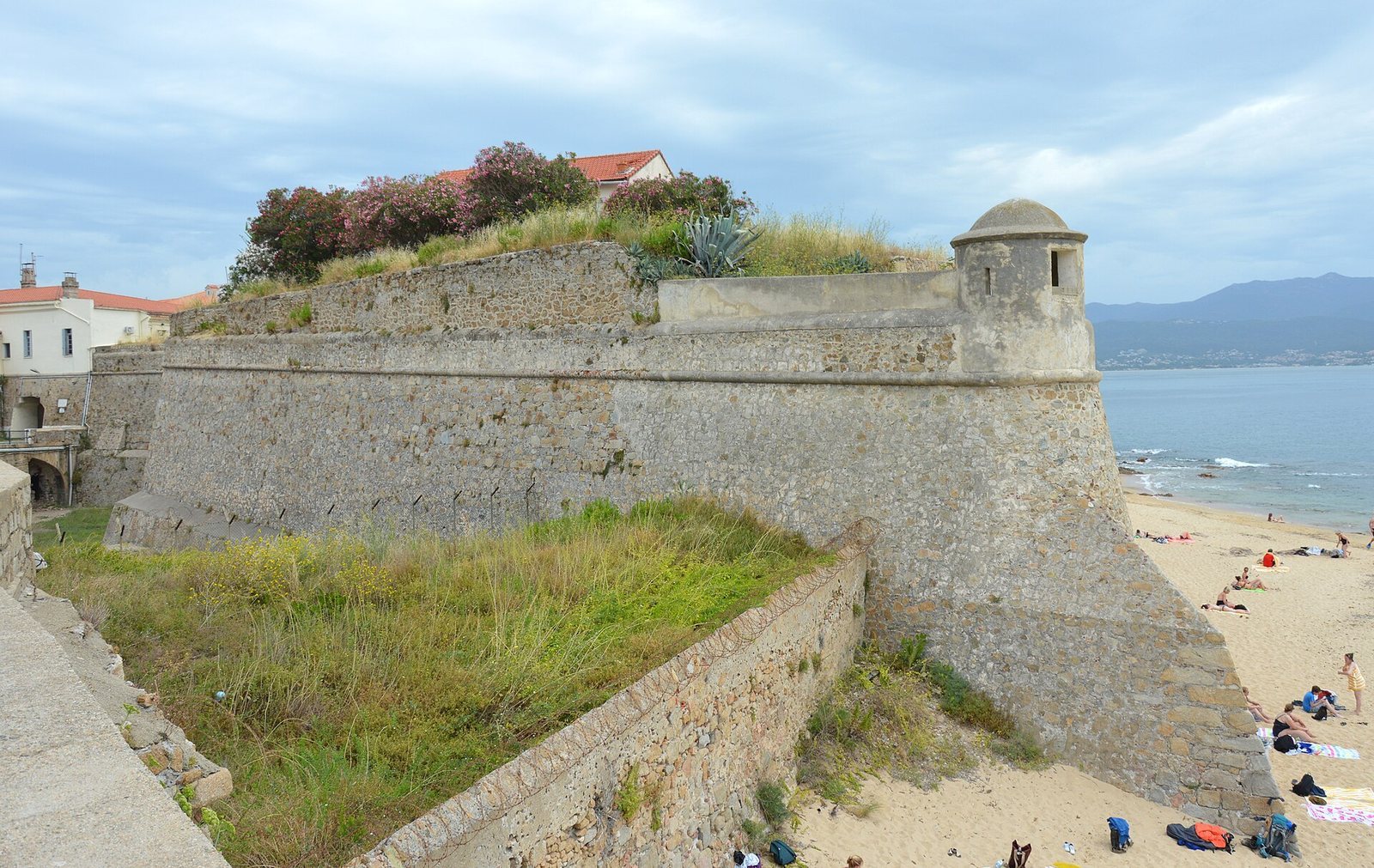
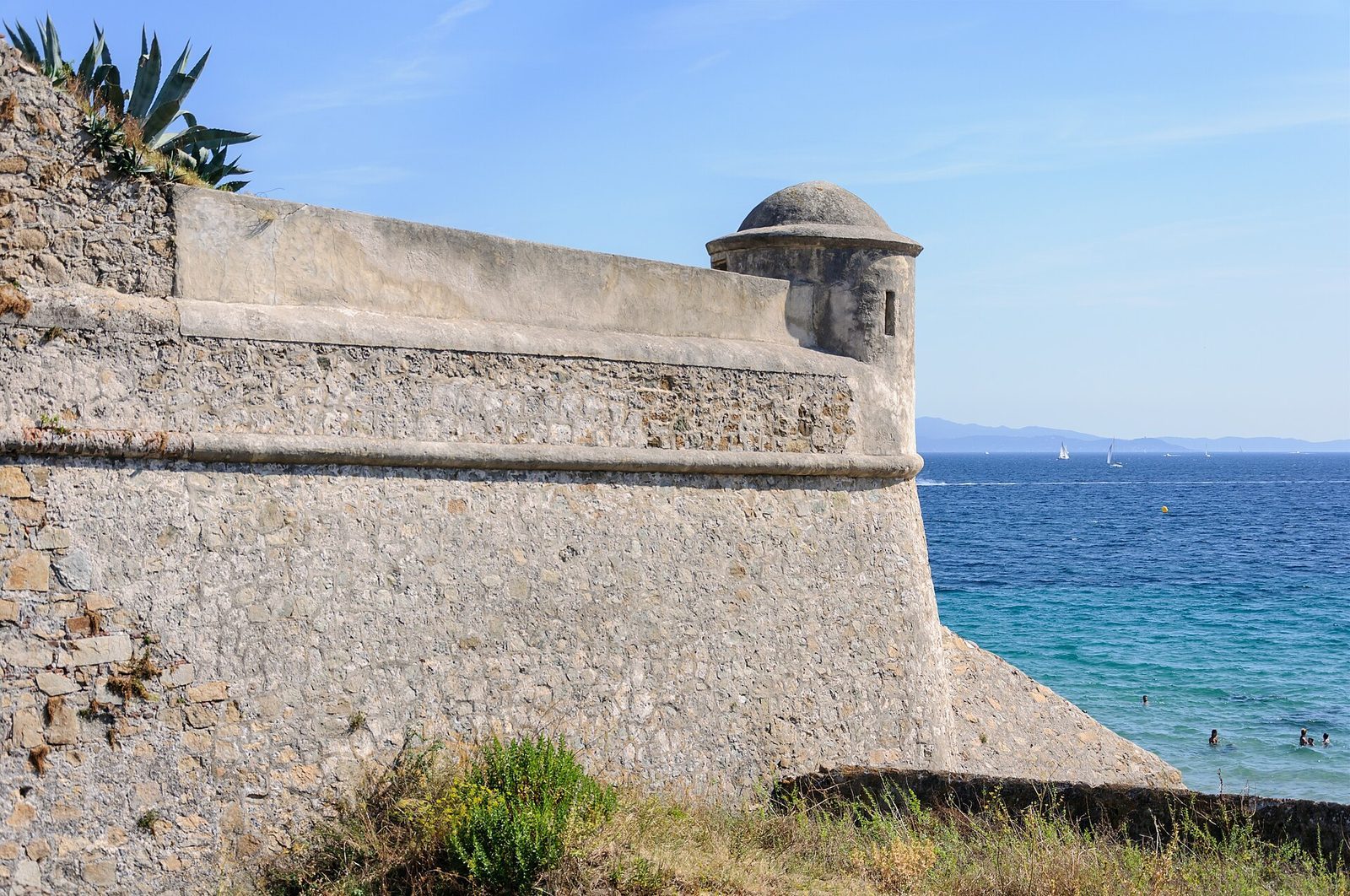
The citadel occupies Punta della Leccia beside Ajaccio’s harbor, south of the old town, with the Mediterranean on three sides. A nearby anchorage can accommodate large ships. The fortification developed from an early square plan to a hexagonal layout with six bastions.
Fortifications and access
Early fort and defenses
The first phase centered on a square tower about ten metres high, surrounded by troop barracks, ditches, connecting walls without flanking defenses, and a bastion. Its design was closer to a medieval fortification than to the later hexagonal arrangement.
Moat and city defenses
The moat was cut into rock, and the town’s defenses included a drawbridge. The Rastello, built in the 1570s, served as the new city gate.
Bastions and coastal defenses
The later citadel had a hexagonal plan with six bastions. The Tower of the Diamond was converted into a bastion in 1584. Fratino’s broader coastal defense design included a Martello tower at Mortella Point.
Lighthouse and entrance monument
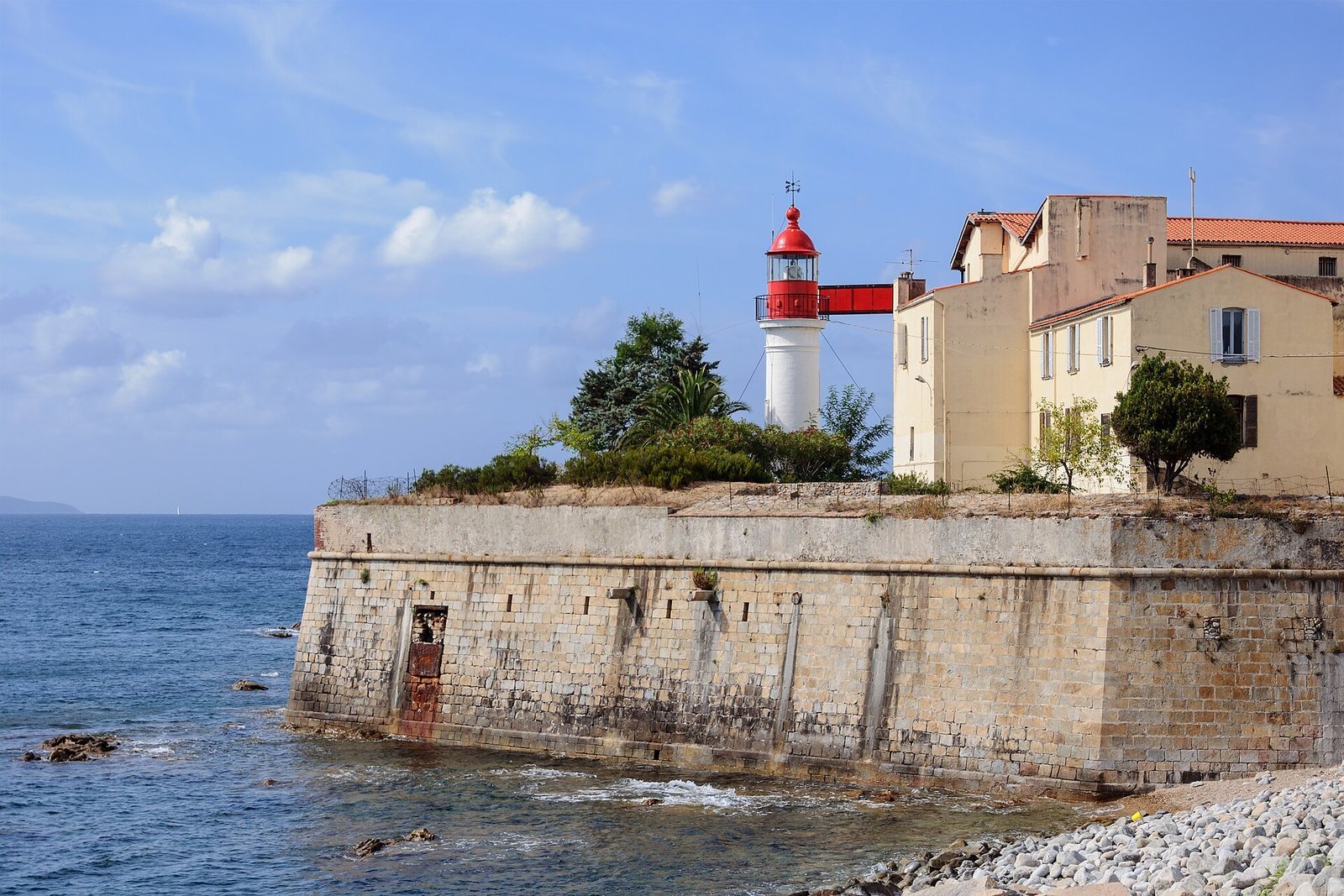
A lighthouse stands at the top of the citadel. A monument to French General Pierre Lelong is positioned at its western entrance.