Cihou Fort: A Qing Coastal Defense in Taiwan
Site at a Glance
- Country
- Taiwan
- Primary era
- Modern
- Eras represented
- Modern
- Civilizations
- Japanese, Qing
- Site type
- Military
- Remains
- Fort
On this page10 sections
History
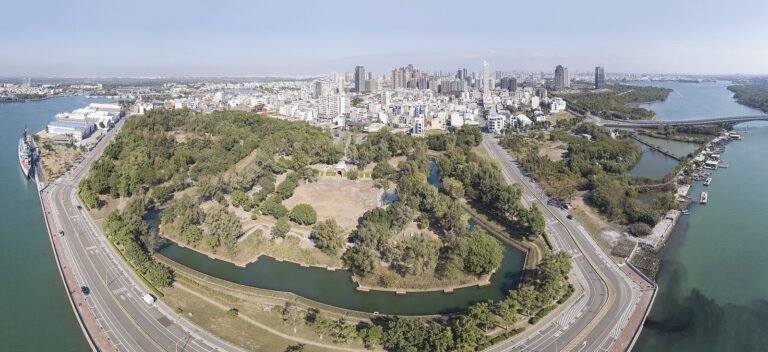
Cihou Fort is a coastal defense built by the Qing dynasty, which ruled China, on Cihou Hill above the northern entrance to Kaohsiung Harbor in Taiwan. Its modern construction dates to 1875, but defenses at Cihou were established earlier. The fort’s position at the harbor entrance, beside a fishing and commercial settlement, made it a strategic military site.
Early Qing defenses
After Qing forces defeated the Ming Zheng regime in 1683, they stationed a naval company commander and 100 troops at Cihou. The Ming Zheng regime was a Zheng-family government in Taiwan that remained loyal to the fallen Ming dynasty. A county gazetteer from 1719 describes a large fort with six Chinese-style cannon, while the earliest fortifications are dated to around 1720. After the Opium War began in 1840, Qing forces built another fort on a hill to strengthen local defenses.
Reinforcement and construction
Following the 1874 Mudan Incident, in which Japan used the killing of Ryukyuan castaways as a pretext for an expedition to southern Taiwan, Qing official Shen Baozhen organized stronger coastal defenses. He assigned a Huai Army commander and a deputy general to oversee construction. The Huai Army was a Qing military force. British engineer and instructor Harwood supervised work at Cihou and a second fort in the Takow area, the historical name for present-day Kaohsiung. A third fort was planned, and Huai Army troops based in Fengshan carried out the earthworks. The forts were intended to provide medium- and short-range artillery protection for the area, with their positions planned to suit the terrain.
Armstrong guns, a family of artillery pieces designed by British engineer William Armstrong, had been installed by 1880. By the outbreak of the First Sino-Japanese War in 1894, Cihou Fort had four British-made Armstrong guns. It did not engage in the Sino-French War, a separate conflict during which French forces blockaded Taiwan, because French ships did not approach the harbor.
The 1895 explosion and Japanese occupation
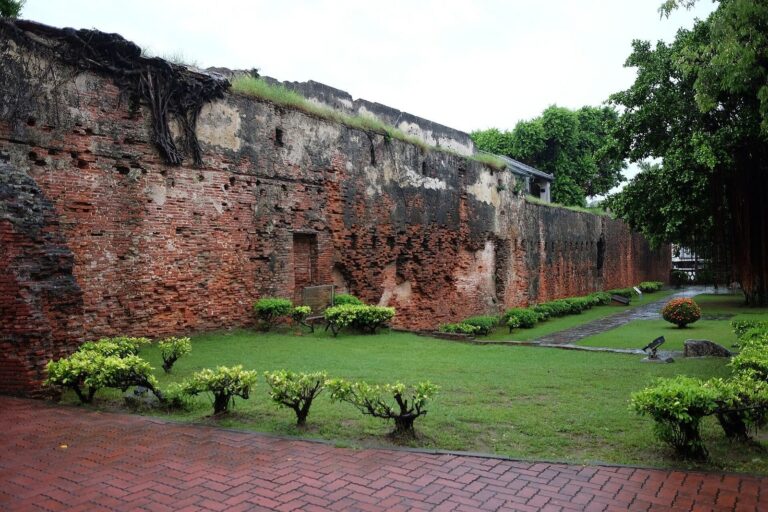
On 1 February 1895, about one metric ton of locally made gunpowder exploded as the fort’s commander was being promoted to deputy general and handing over command. The cause was unknown. The blast cracked several sections of the protective wall and killed about 100 soldiers. Liu Yongfu, a military leader associated with the Black Flag Army, brought charges against eight officers; four were beheaded, and the commander was dismissed. Liu’s adopted son then took charge of the defenses and directed repairs.
The Treaty of Shimonoseki ended the First Sino-Japanese War and transferred Taiwan from Qing rule to Japan, but local troops continued fighting. A Japanese squadron under Admiral Arichi Shinanojo arrived at Takow on 12 October 1895. It included the cruisers Yoshino, Naniwa, Akitsushima, Yaeyama, and Saien, formerly the captured Chinese cruiser Jiyuan, as well as the corvette Hiei. Before the fighting, foreign residents left aboard the British gunboat HMS Tweed and two tugboats, returning afterward.
In mid-October, Japanese ships bombarded the Takow forts from about 6,000 yards. Cihou’s commander had departed for Anping at about 4 a.m., and the fort fired only five rounds. One shot from an 8-inch Armstrong gun landed in the water about 500 yards from Naniwa. Japanese troops occupied the undefended fort at about 2:30 p.m. Four Chinese soldiers were killed; the Japanese suffered no casualties.
Military use and restoration
Under Japanese rule, the fort stopped serving its original purpose. In the late Japanese period, the military adapted the site for anti-aircraft defense, removed its original cannon, and added bunkers. After the Second World War, the Republic of China military again fortified the hill. Military control and changing warfare contributed to the fort’s decline.
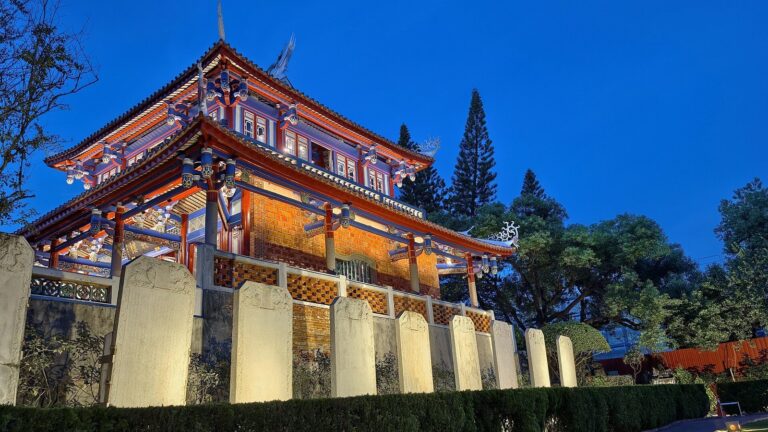
Cihou Fort became a municipal historic monument in 1985 and a national historic monument in 2019. In 1988, some military land and facilities on the hill passed to Kaohsiung City after military installations were removed. The city began restoration in 1991 and completed it in 1995, recovering most of the fort’s former appearance.
Remains
Plan and fortifications
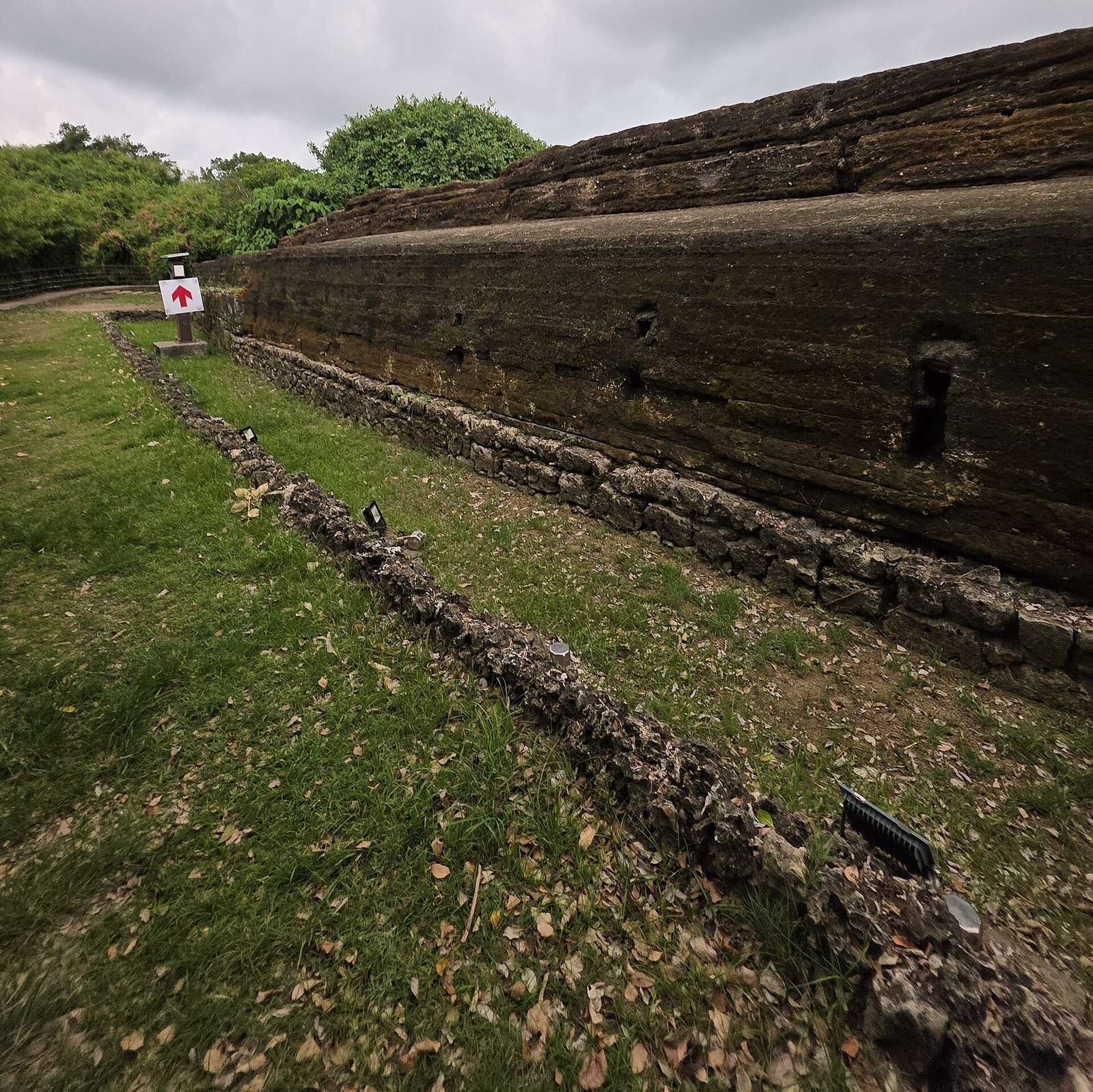
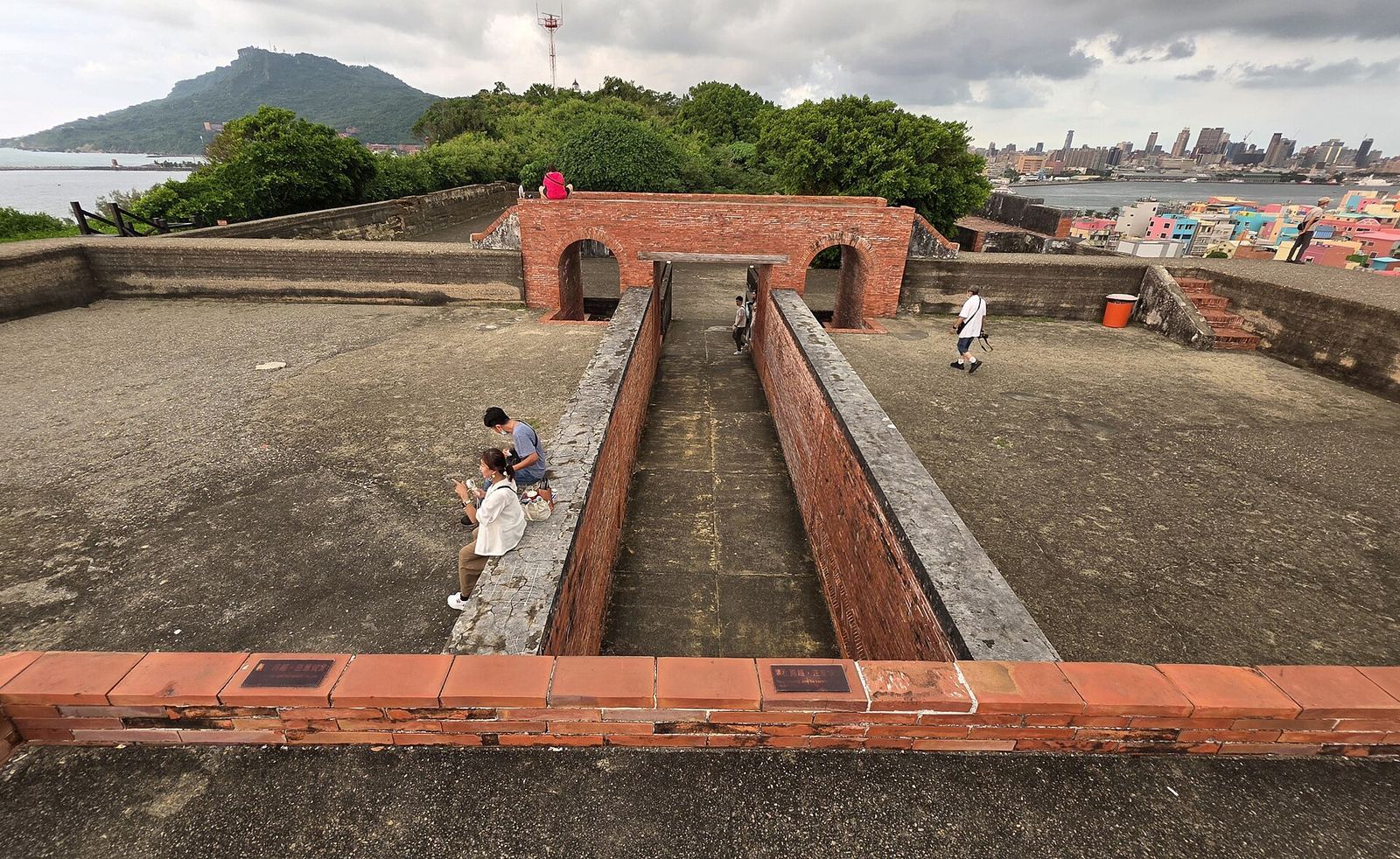
Cihou Fort occupies Cihou Hill above the harbor entrance. Its plan resembles the character meaning ‘eye’ and is arranged in three principal areas: a drill ground to the north, a command area in the center, and artillery defenses to the south. The hill’s steep slopes provided natural protection. Within the thick outer walls, fortified barracks enclose a rectangular courtyard and have a low protective wall along the roof. Their construction incorporates iron, cement, and red brick, with closely spaced timber beams and thick iron-and-cement layers.
Artillery defenses
The southern artillery area had four open gun positions, two facing west and one each facing north and south. Four additional gun platforms stood above the barracks. Tracks for wheeled guns, crew shelters, and ammunition stores at a lower level formed part of the defensive system.
Gates and courtyard features
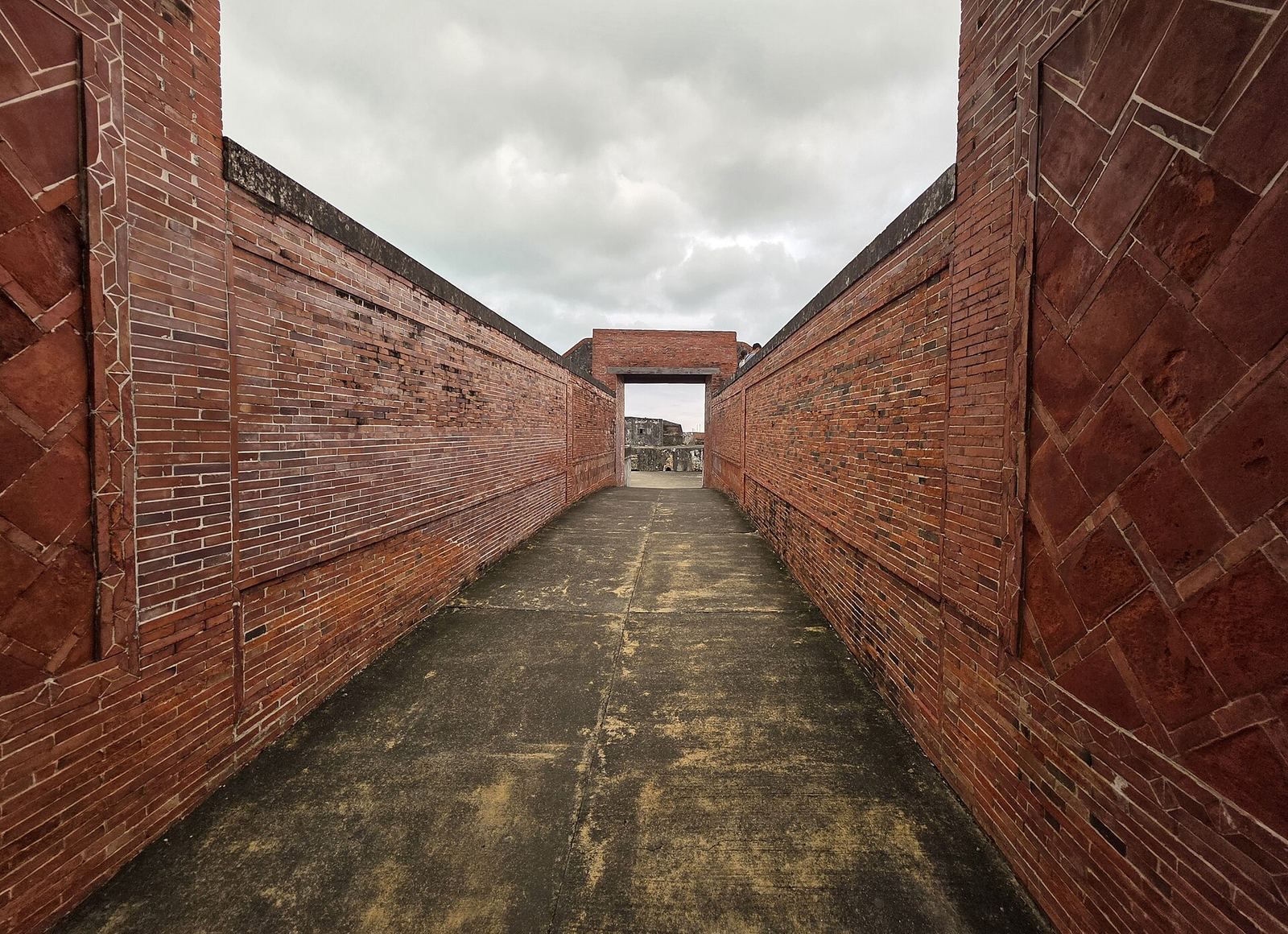
The compound has a principal entrance facing southeast and a smaller entrance on its west side. One gate led to the artillery area, while the other formerly served as the main southern gate. The Chinese-style entrance has side walls that flare outward. Its lintel bears an inscription translated as ‘Might Shakes the South’, with other readings including ‘Might Guards the South’ and ‘Pillar of the South’. The cruiser Yoshino struck the lintel during the 1895 attack, and damaged lettering was reconstructed from old photographs during restoration. Brickwork on the two gate walls forms double-happiness designs. Decorative patterns appear in the brick steps, and a plaster offering table used for worship stands west of the drill ground.
Other surviving defenses
Remains of a nineteenth-century fortification can still be seen at the foot of the hill. Rock-cut positions for light guns and machine guns, made during the postwar military occupation, also survive on the hill.