Church of St Botolph: A Medieval Parish Church in Cambridge
Site at a Glance
- Popularity
- Medium
- Country
- United Kingdom
- Primary era
- Medieval
- Eras represented
- Medieval, Early Modern, Modern
- Civilizations
- British, English
- Site type
- Religious
- Remains
- Church
On this page8 sections
History
Foundation beside the south gate
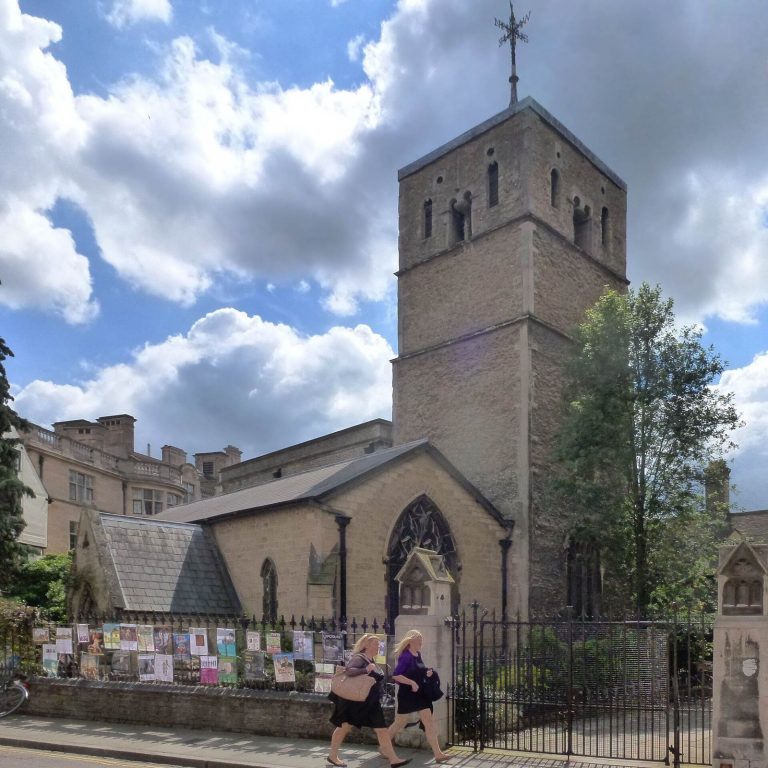
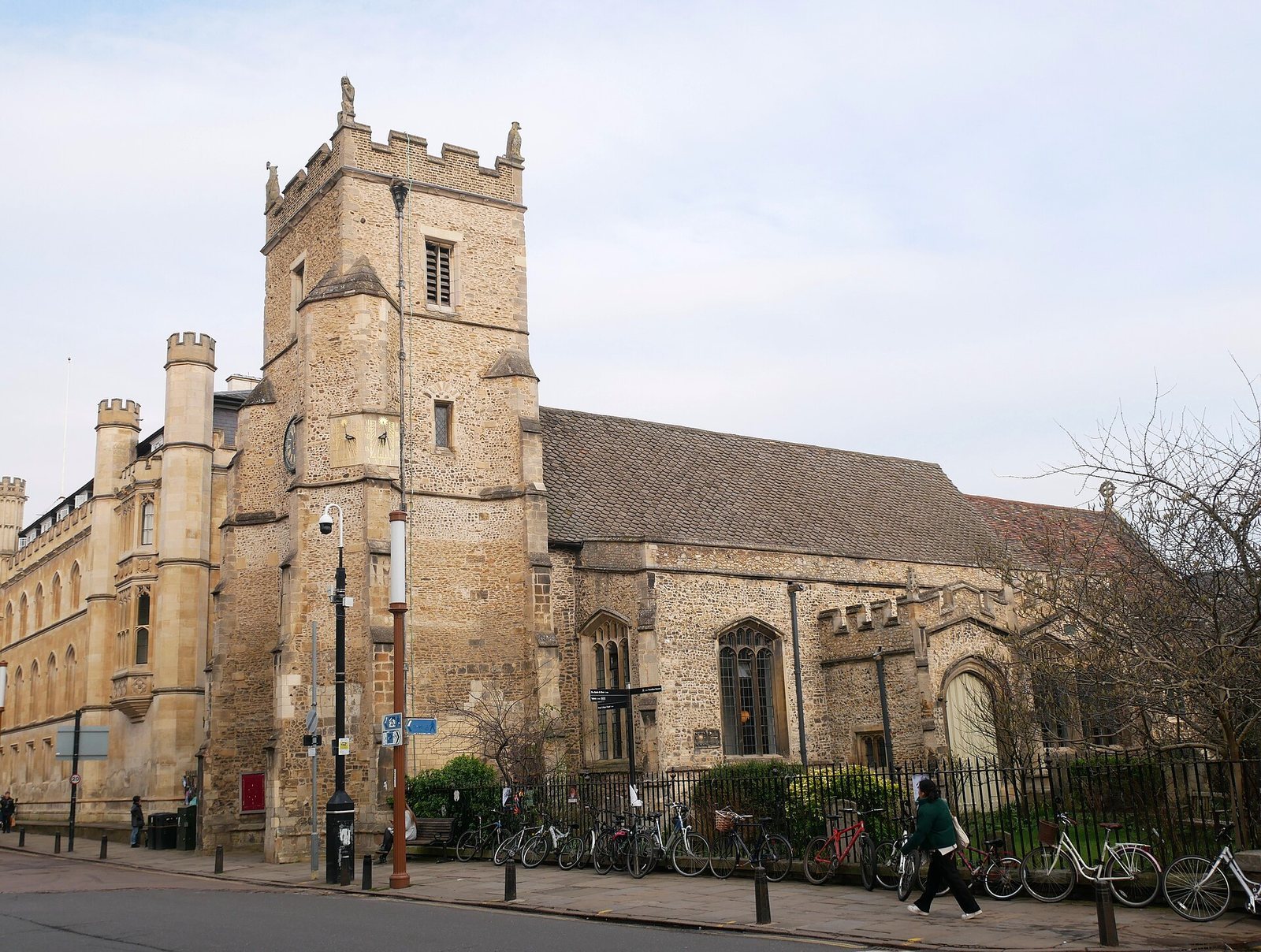
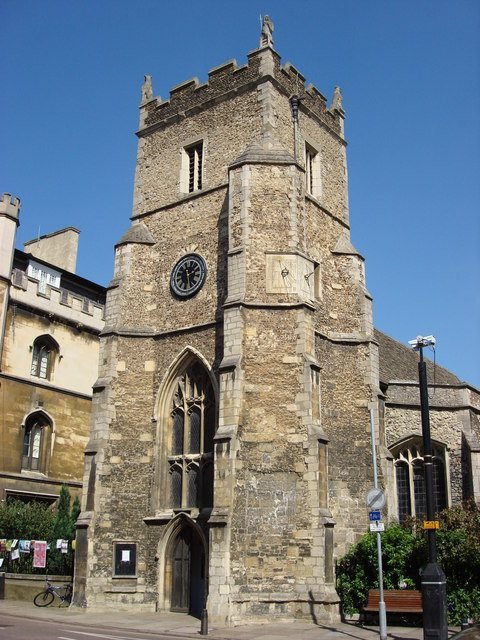
The Church of St Botolph is a parish church on Trumpington Street in Cambridge, United Kingdom, founded in 1350 beside the town’s medieval south gate. It is dedicated to Botolph, a seventh-century East Anglian abbot later venerated as the patron saint of travellers. People arriving from the south and west entered Cambridge through the gate beside the church.
Rebuilding and commemoration
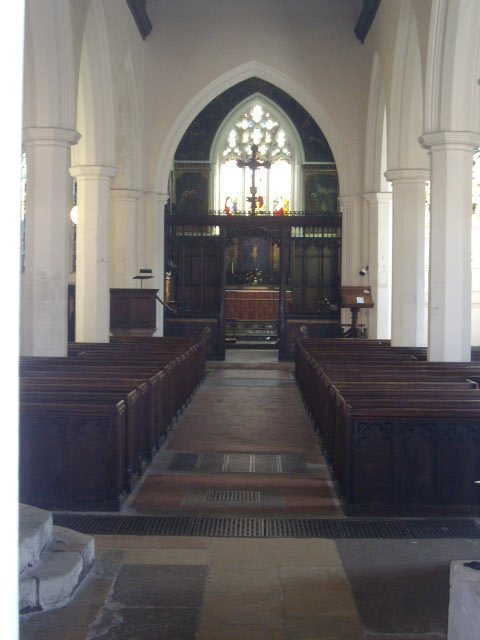
In 1872, architect George Frederick Bodley rebuilt the chancel, with work by local artists Frederick Leach and G. Gray. The South Chapel was later refurbished in memory of those who died in the First World War. It also commemorates the First Eastern General Hospital, established at the outbreak of the war on the site now occupied by Cambridge University Library.
Listing and recent events
The church received Grade I listing on 26 April 1950, England’s highest listed-building category. Its chancel was conserved and restored in 2008. Several months before a break-in in the early hours of 4 February 2020, thieves stripped lead from the church roof. During the break-in, an 1870 stained-glass window by Charles Kempe, showing Botolph and Margaret of Antioch, an early Christian martyr, was destroyed.
The church remains an active Church of England parish. Its stated churchmanship is the Book of Common Prayer, a historic Anglican collection of liturgies and services.
Remains
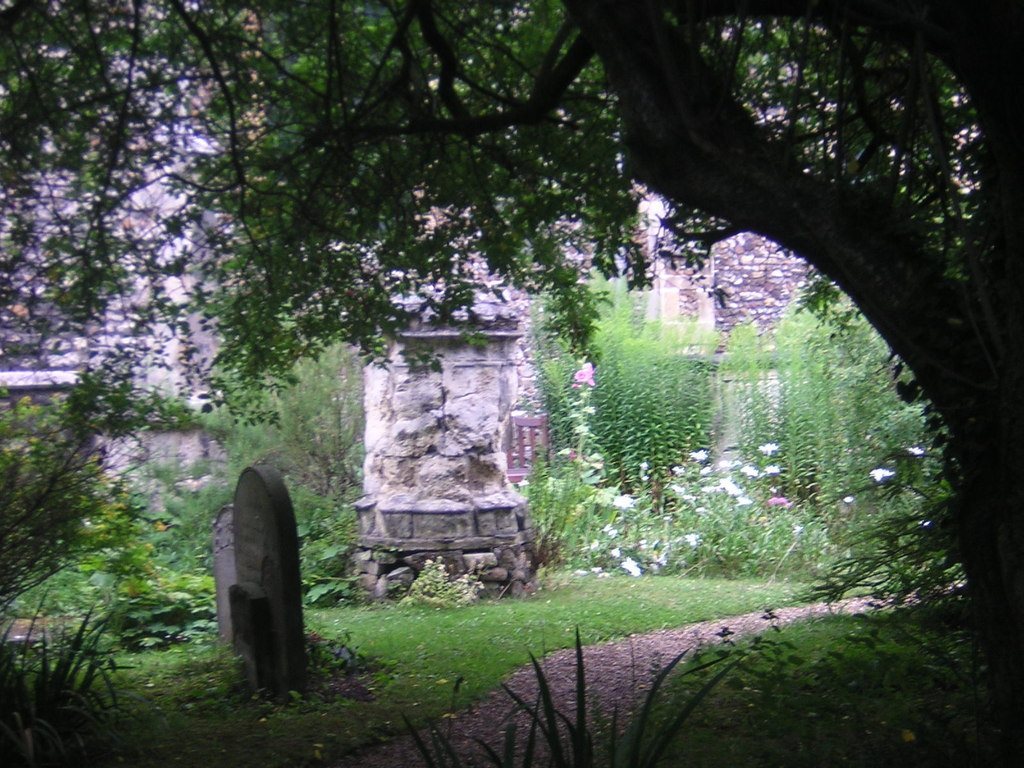
The church stands at the junction of Trumpington Street and Silver Street. Botolph Lane runs beside the churchyard to the south, while Corpus Christi College lies to the north. Most of the building dates from the fourteenth century and is made of flint and rubble, with finished Barnack stone forming architectural edges and details.
Tower and bells
The fifteenth-century tower is topped by stone figures representing the four evangelists; the figures were restored in 1971. A sundial is set into the tower’s south-west buttress. Its four bells were cast in 1460 and remain in use.
Chancel and interior furnishings
The chancel has elaborate High Victorian decoration, a Victorian design phase associated with rich ornament and strong colour. Bodley also designed the church’s lectern. The church retains the only medieval rood screen in a Cambridge parish church. This partition separates the main worship space from the chancel, and its paintings date from a late-nineteenth-century restoration. An octagonal font dated 1637 has a wooden Laudian cover, referring to ceremonial and liturgical traditions associated with Archbishop William Laud and his reforms of the Church of England.
South Chapel and memorials
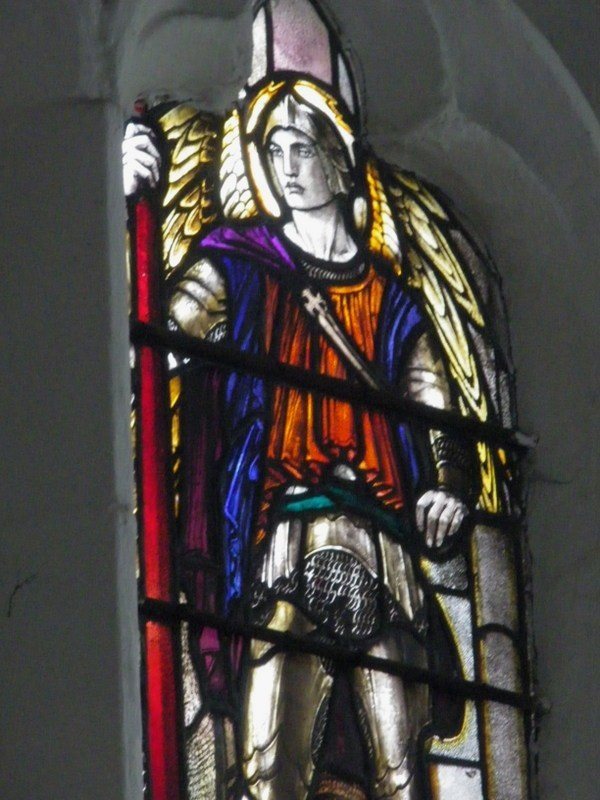
The South Chapel’s war memorial window was among the early commissions of Rachel Tancock, later known as Rachel de Montmorency. Divided into two main sections, it depicts the Christian saints George and Michael, the latter traditionally understood as an archangel. Other church memorials commemorate clergyman and theologian Thomas Playfere, associated with 1609, architect James Essex, members of the Darwin family, and political scientist and historian Sir Ernest Barker.