Church of St Archdeacon Stephen in Sremska Mitrovica: Serbian Orthodox Church
Site at a Glance
- Popularity
- Medium
- Country
- Serbia
- Primary era
- Early Modern
- Eras represented
- Classical, Early Modern
- Civilizations
- Habsburg, Habsburg Austria, Ottoman, Roman
- Site type
- Religious
- Remains
- Church
On this page14 sections
History
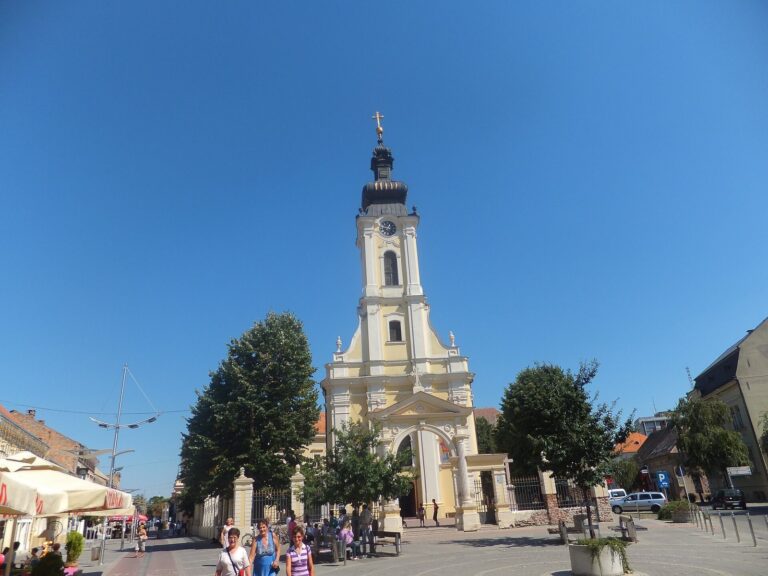
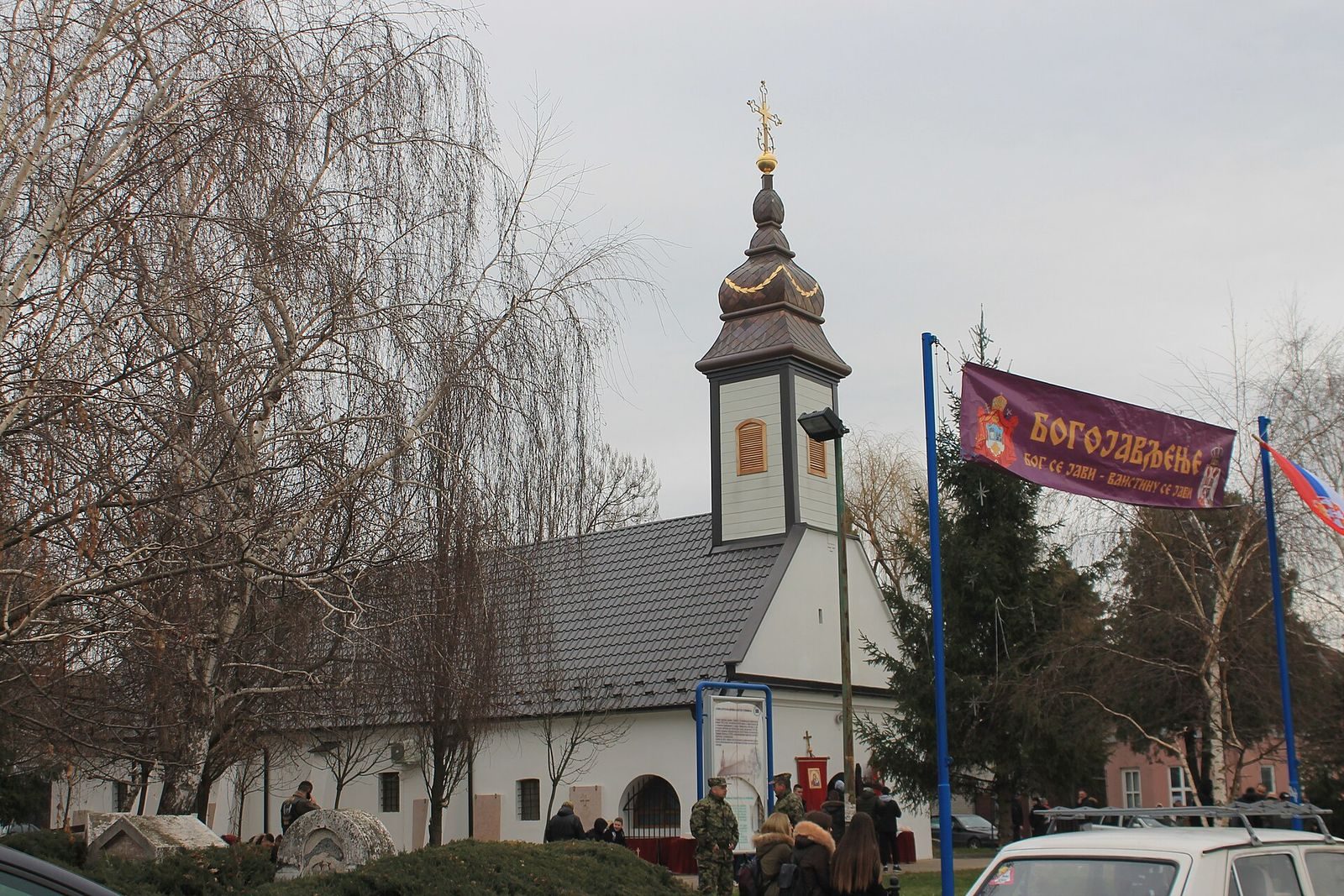
The Church of St Archdeacon Stephen in Sremska Mitrovica, Serbia, is an active Serbian Orthodox church built in the late sixteenth or early seventeenth century. Dedicated to Saint Stephen the Protomartyr and Archdeacon, regarded in Christianity as the first martyr, it belongs to the Serbian Orthodox Diocese of Srem. Also known as the Old Orthodox Church or Small Church, it is the oldest preserved place of worship in the city and the only preserved urban building in Syrmia from the Ottoman period.
Roman Sirmium and the early Christian site
In Roman times, Sremska Mitrovica was Sirmium, a major Roman city, and the site held importance for local Christians. The church stands on foundations thought most likely to have belonged to an early Christian basilica.
Ottoman-era church and later additions
The church was built while Syrmia was under Ottoman rule. A visitation entry from 1729 provides its first written reference, naming it the Abbey of St Demetrius on the Sava. The entry describes the church as imposing and solid and refers to its Serbian occupants as “schismatics.”
After Ottoman forces left, an apse, a projecting area often containing an altar, and a bell tower were added. These changes had given the church its present form and dimensions by the early 1780s. Macedonian craftsmen made a new icon-bearing screen, called an iconostasis, in the second half of the eighteenth century.
Conservation and status
Conservation work took place between 1980 and 1985, and the church was repaired in 2016. In 1993, Serbia designated it a cultural monument of exceptional importance, a classification it alone holds in Sremska Mitrovica.
Remains
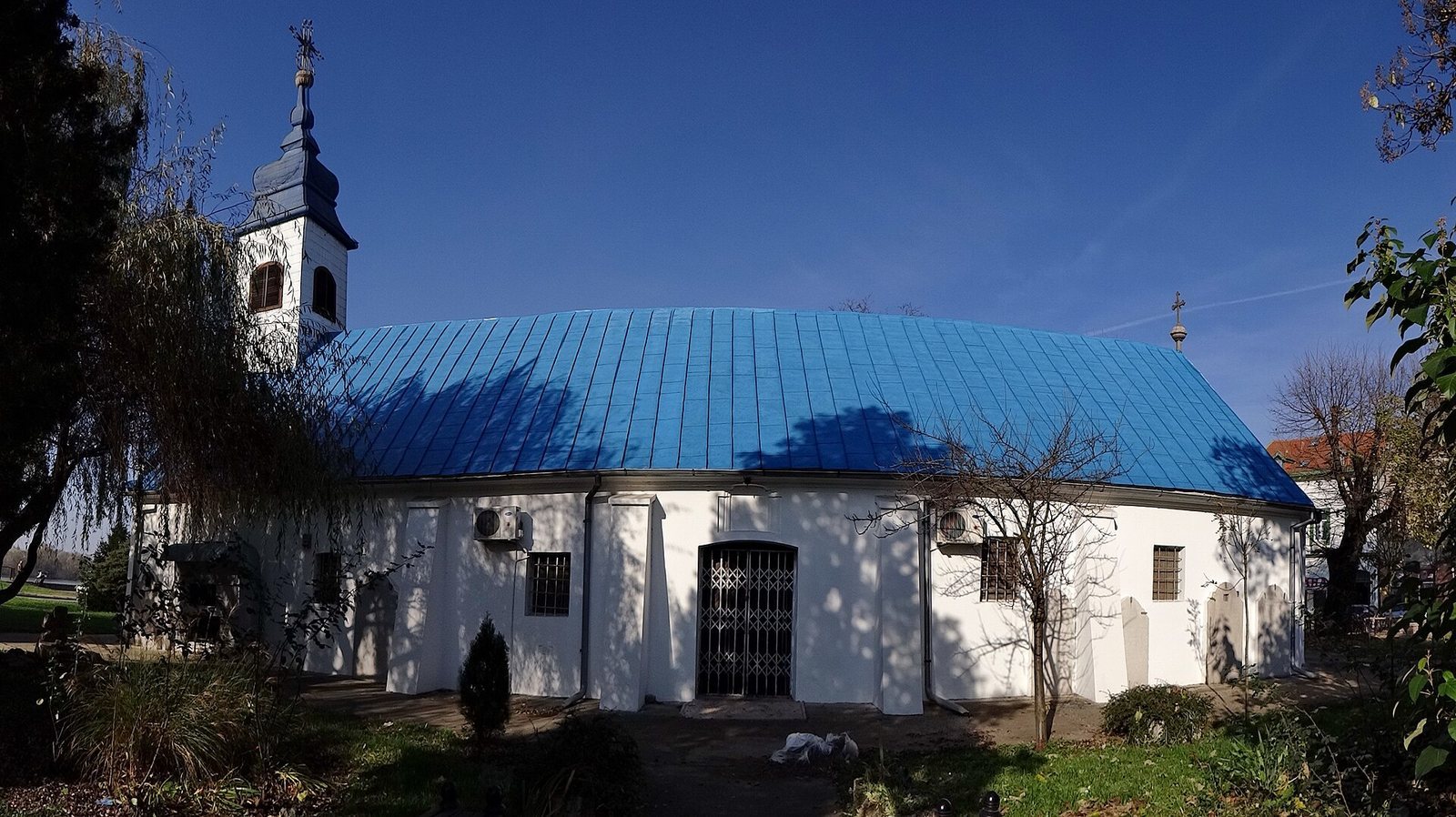
The surviving church has a rectangular plan with one main body, set on a diagonal axis. Its design has been compared with that of Serbian wooden churches.
Church building
Exterior
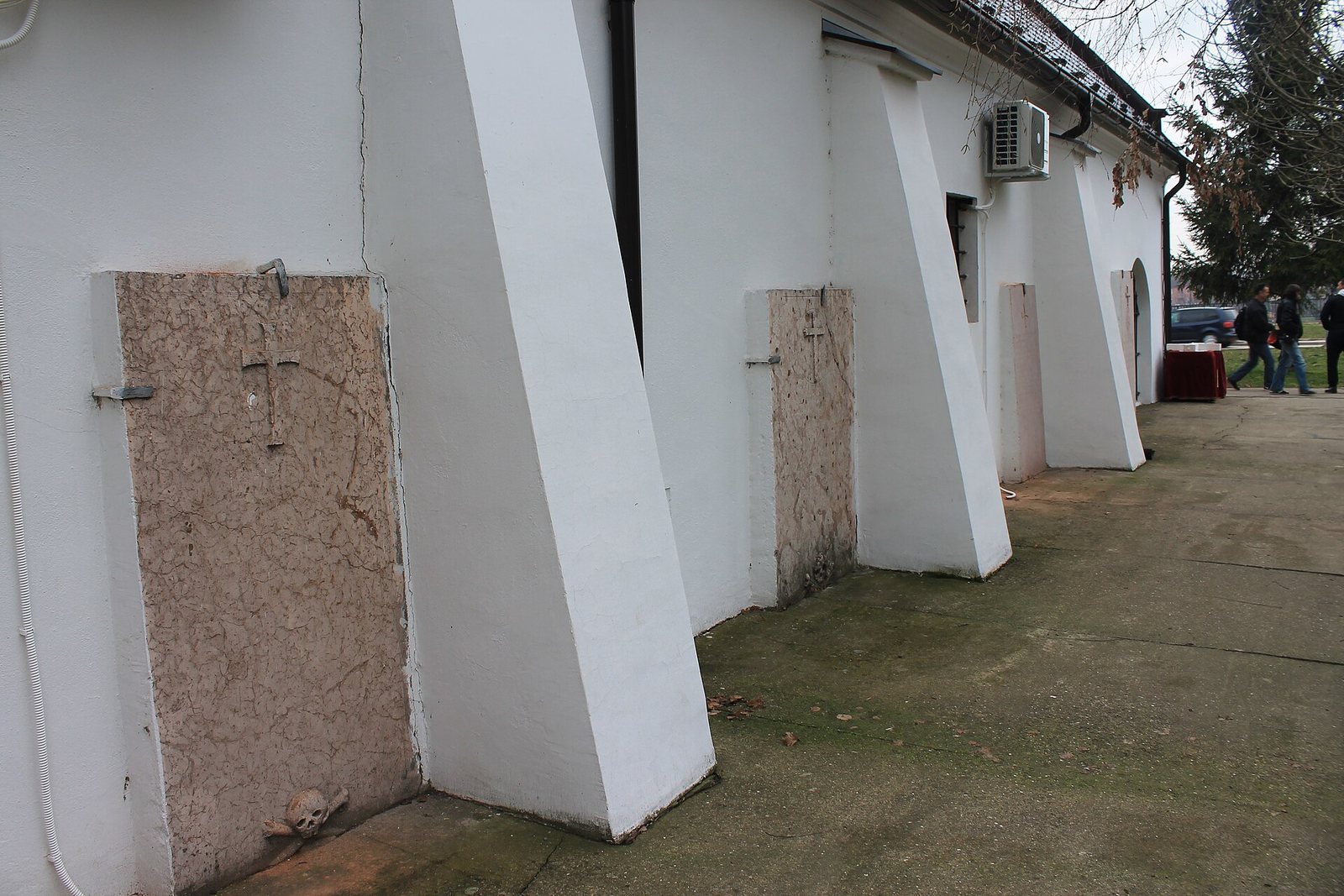
The façade is plain, with a semi-triangular projection supported by buttresses, or exterior supports. A tall bell tower in the Baroque style, a richly ornamented European style prominent in the seventeenth and eighteenth centuries, rises above the main entrance. The church also has an apse.
Interior and vaults
A barrel vault, a continuous arched ceiling, covers the interior. Intersecting vaults support the floor of the bell tower. A description from 1732 calls the building stone-built and notes a plank-made vault and a stone altar.
Iconostasis and icons
Eighteenth-century iconostasis
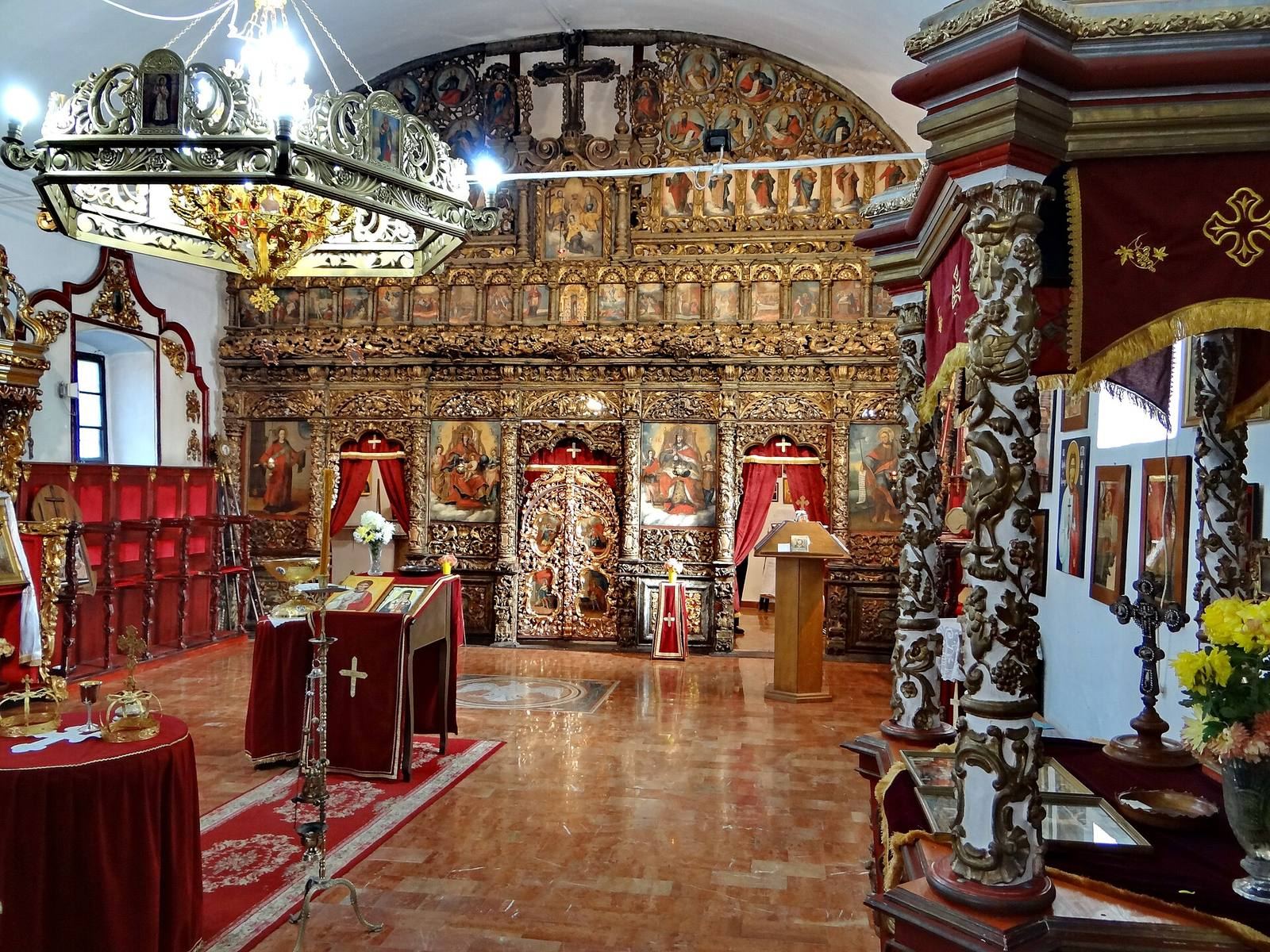
The multi-tiered iconostasis, an icon-bearing screen separating the sanctuary from the church’s main body, is intricately carved with animal and plant forms, including lions, cranes, snakes, vines, roses, and leaves. Its carving is associated with Macedonian craftsmen and southern woodcarving workshops, especially those connected with Mount Athos, a Greek peninsula with a long Orthodox monastic tradition. The craftsmen were influenced by Italian Baroque art and trained in Greek workshops.
Teodor Kračun, an eighteenth-century Serbian painter, painted the icons in the Serbian Baroque style. The figures have expressive faces, particularly John the Baptist. On the second tier, a Resurrection scene shows Christ holding a spade as Mary Magdalene kneels before him.
Earlier icons
Only the images of Christ and the Virgin from the earlier iconostasis, made in the first half of the eighteenth century, survive. They are now held by the Museum of Syrmia in Sremska Mitrovica. The paintings are attributed to an artist from Thessaloniki known as the Master of Milje and may be the work of Hristofor Žefarović, an eighteenth-century Serbian painter and engraver.
Archaeology and Sava Square
Roman remains
Excavations beneath the altar in 1980 uncovered a Roman-period cross made from red-marble mosaic. Further work in the area revealed remains of Roman baths. As Christianity spread, the bath structures were either demolished or adapted for Christian worship.
The surrounding square
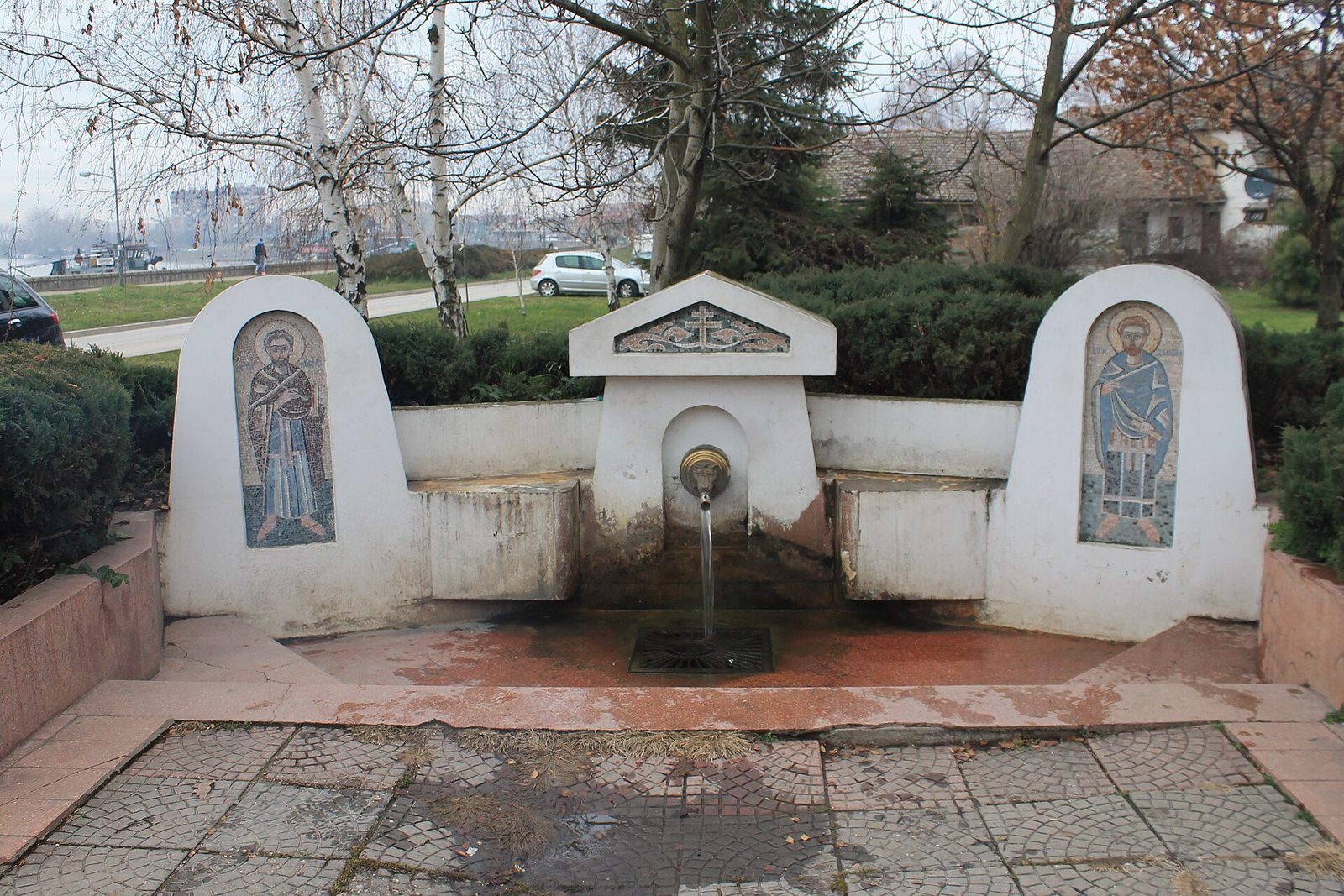
The area around the church has been landscaped as Sava Square. An artesian well more than 300 metres deep was sunk there and topped with a fountain.