Church of Saint-Étienne-le-Vieux: A Gothic Parish Church in Caen
Site at a Glance
- Rating
- 4.4
- Popularity
- Medium
- Country
- France
- Primary era
- Medieval
- Eras represented
- Medieval, Early Modern
- Civilizations
- English, French
- Site type
- Religious
- Remains
- Church
On this page9 sections
History
Foundation and medieval rebuilding
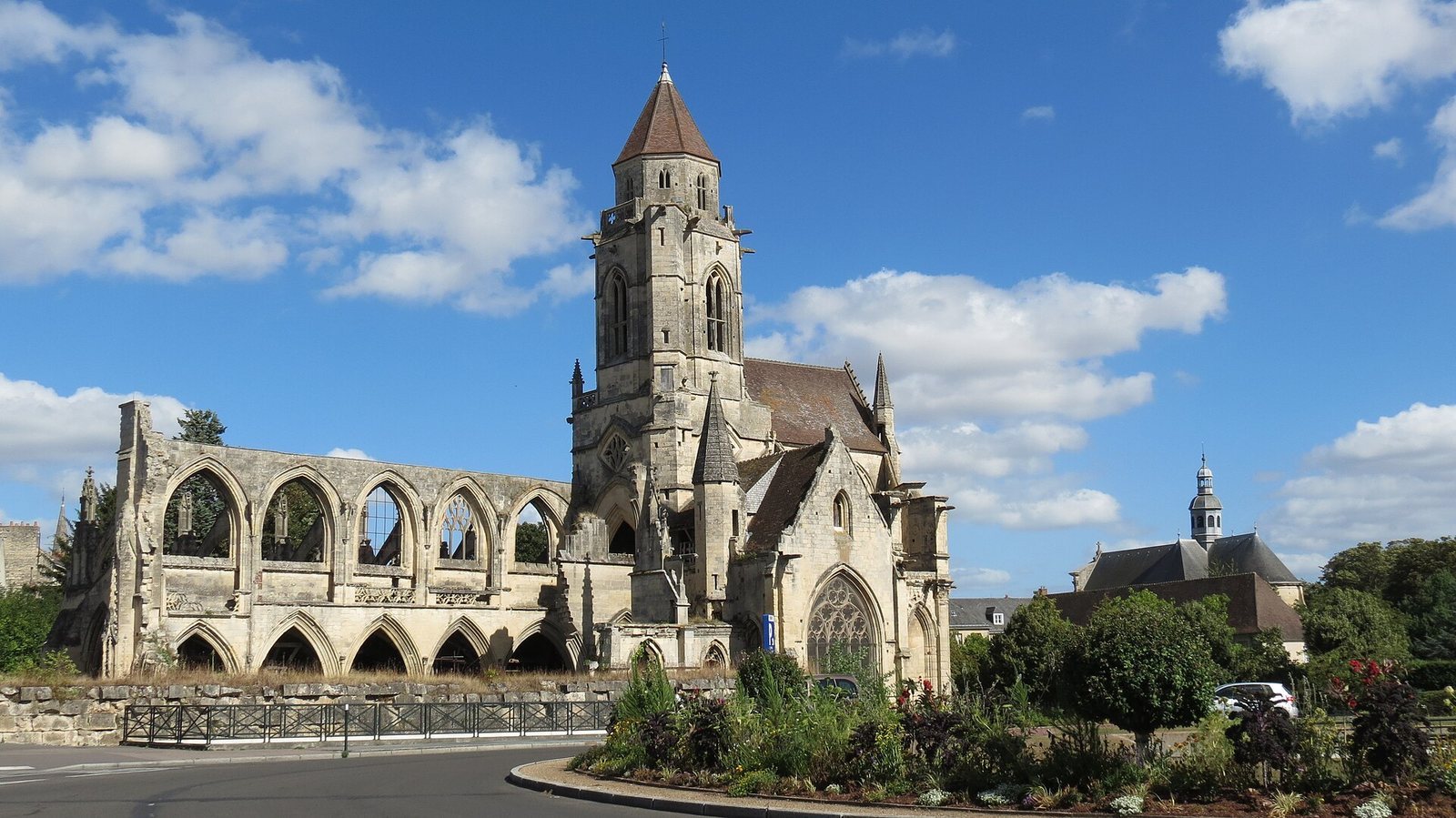
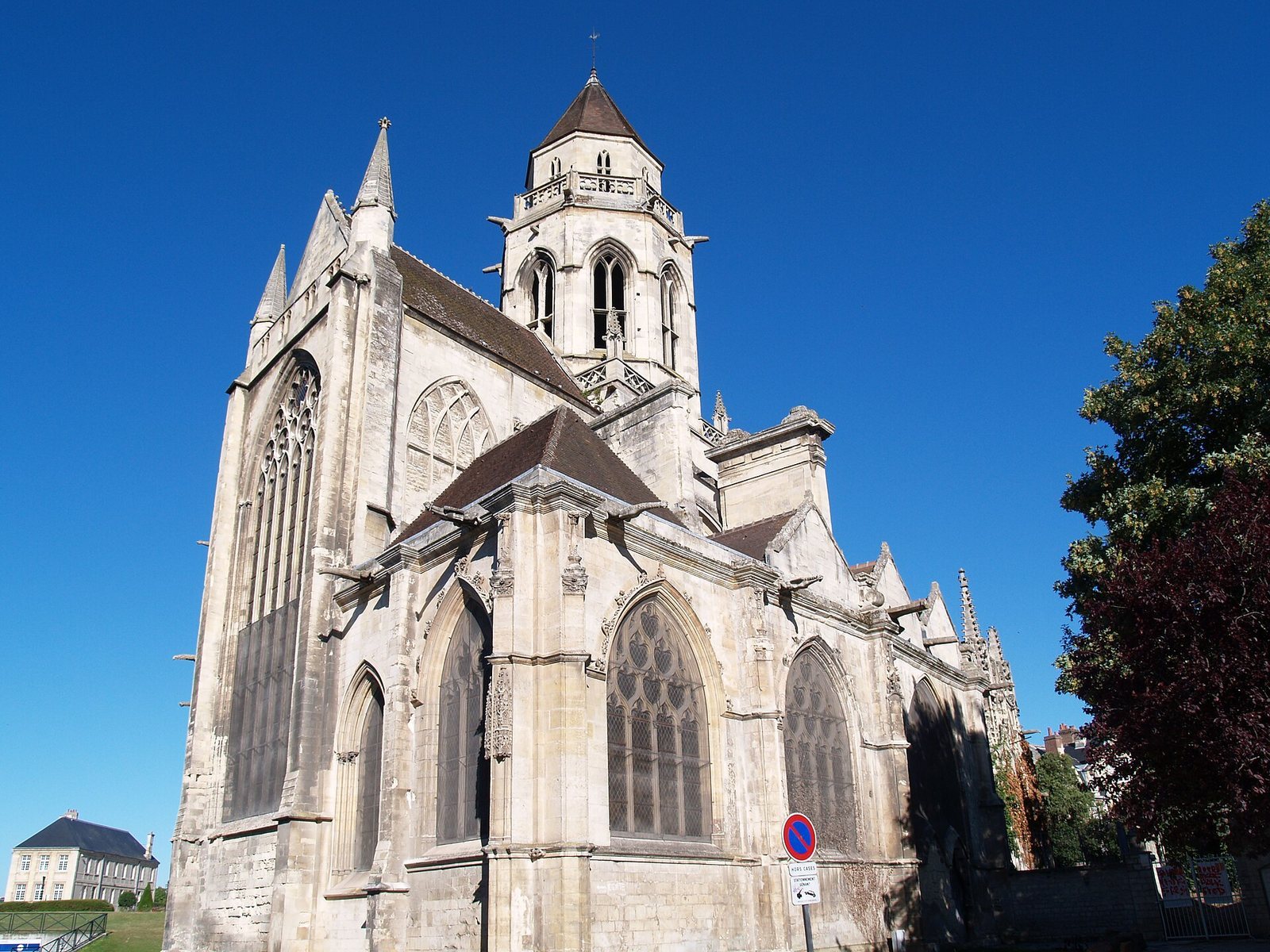
The Church of Saint-Étienne-le-Vieux is a former Roman Catholic parish church in Caen, France. It probably began in the tenth century, during an early period of growth in the city. Its Gothic architecture, a medieval architectural style, dates to construction that began in the fifteenth century and continued into the sixteenth.
The church is first mentioned around 1067, in charters granted by William the Conqueror, Duke of Normandy and king of England from 1066, to Caen’s two abbeys. The name “Old Saint-Étienne” distinguished it from the separate abbey church of Saint-Étienne, begun in the eleventh century. Saint-Étienne-le-Vieux served as a Roman Catholic parish church in the deanery of Caen, a local church district, within the Diocese of Bayeux, the territorial district overseen by a bishop.
Its position beside Caen’s ramparts exposed the church to damage during the Hundred Years’ War, a series of conflicts between the English and French crowns in the fourteenth and fifteenth centuries. It suffered especially during the 1417 siege of Caen. Rebuilding took place during and after the period of English control.
Parish use and decline
On 1 March 1780, the Parlement of Rouen, a regional high court, upheld an order directing that urban cemeteries be moved outside the city. The parish cemetery was transferred to the Cimetière des Quatre-Nations in 1784–1785.
The church was decommissioned in 1793. It did not return to religious use in 1802, when the former abbey church took over as the parish church. With little maintenance, Saint-Étienne-le-Vieux fell into increasing disrepair.
Preservation and wartime damage
The church appeared on the 1840 historic-monument list but was later removed from it. Its deteriorated state led to its closure to the public in 1844 and brought the building under threat of demolition. The efforts of Arcisse de Caumont, a French antiquarian and historian, and Antoine Charma, a philosopher and scholar, helped save it. It received historic-monument classification, a legal heritage-protection status, on 22 August 1903.
The Society of Antiquaries of Normandy, a learned group devoted to the region’s history and antiquities, considered housing its collections in the church. Instead, the Museum of the Antiquaries of Normandy was established in the nearby former Collège du Mont. The city used Saint-Étienne-le-Vieux to store architectural fragments until their transfer to the museum in 1926.
In 1944, a shell intended for a nearby column of German tanks struck the church and largely destroyed the nave. Consolidation work began in December 2025.
Remains
Plan and surviving fabric
The church’s Gothic remains follow a northwest-to-southeast plan, with the choir set slightly out of line with the nave. The nave has five bays, or structural divisions, and the choir has two. Aisles, passageways alongside the nave, continue as galleries beside the choir but do not form a passage around it. The church has a flat eastern end, which lies on Rue Arcisse-de-Caumont. The nave is largely ruined, while lower sections of the outer walls remain.
Architectural details
Lantern tower and principal features
An octagonal lantern tower, with openings that admit light, dates to the rebuilding during and after English control. The main portal and the transept, the crosswise part of the church plan, are also identified features. A former city wall is noted among the remains.
Sculpted details
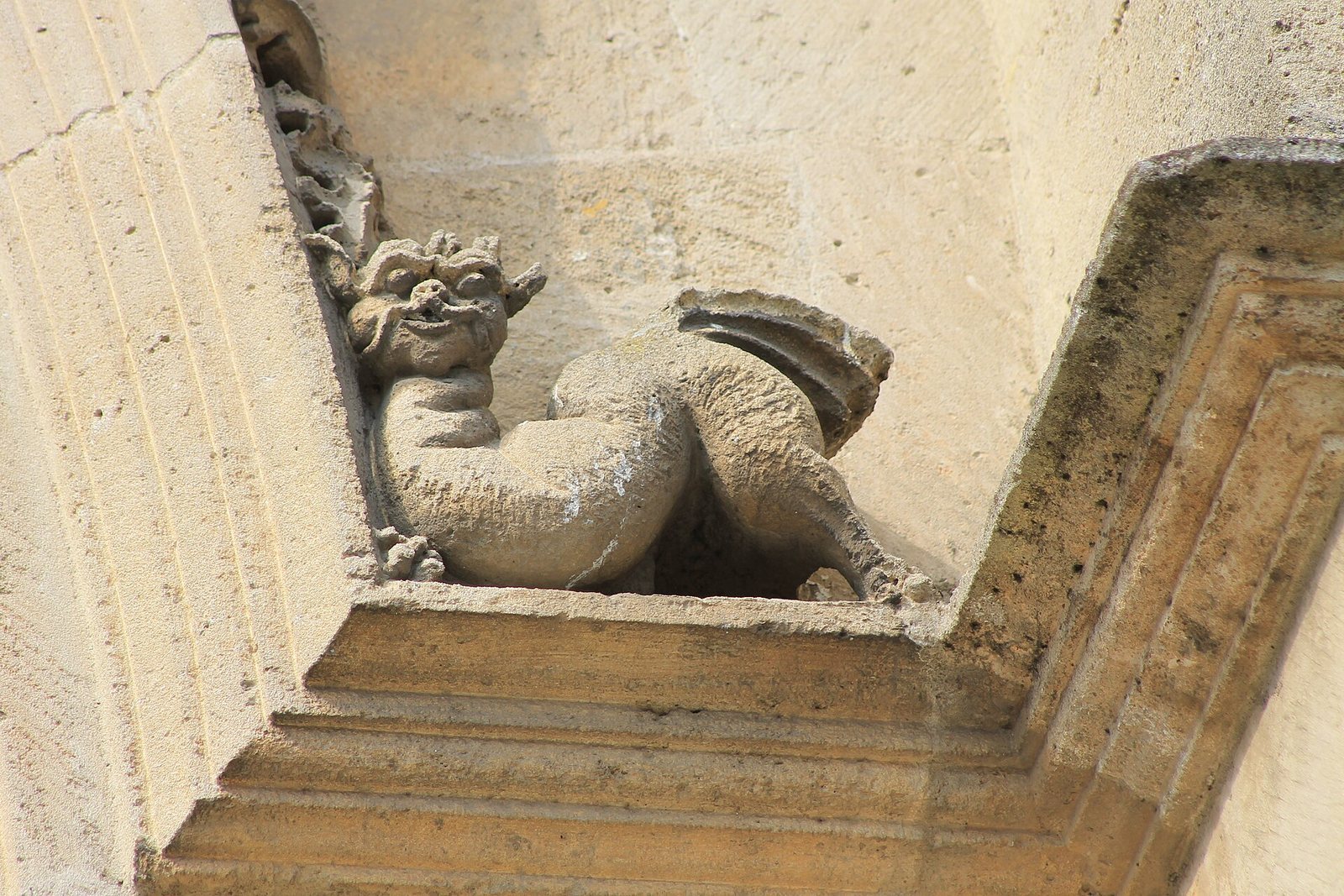
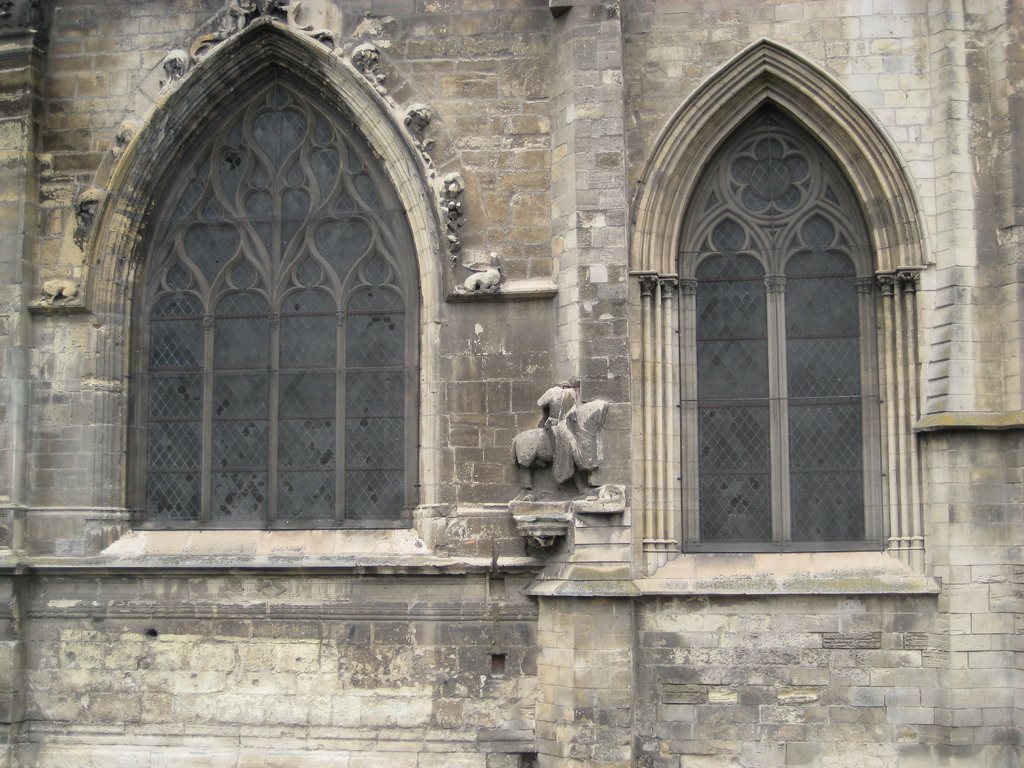
A shallow relief depicts a headless rider. Carved decoration also appears on an eastern buttress, a projecting support for a wall.