Church of Our Lady of Loreto: A Bernardine Church and Loreto Chapel in Praga
Site at a Glance
- Popularity
- Medium
- Country
- Poland
- Primary era
- Early Modern
- Eras represented
- Early Modern, Modern
- Civilizations
- Polish–Lithuanian Commonwealth, Russian
- Site type
- Religious
- Remains
- Chapel
On this page13 sections
History
Foundation and royal patronage
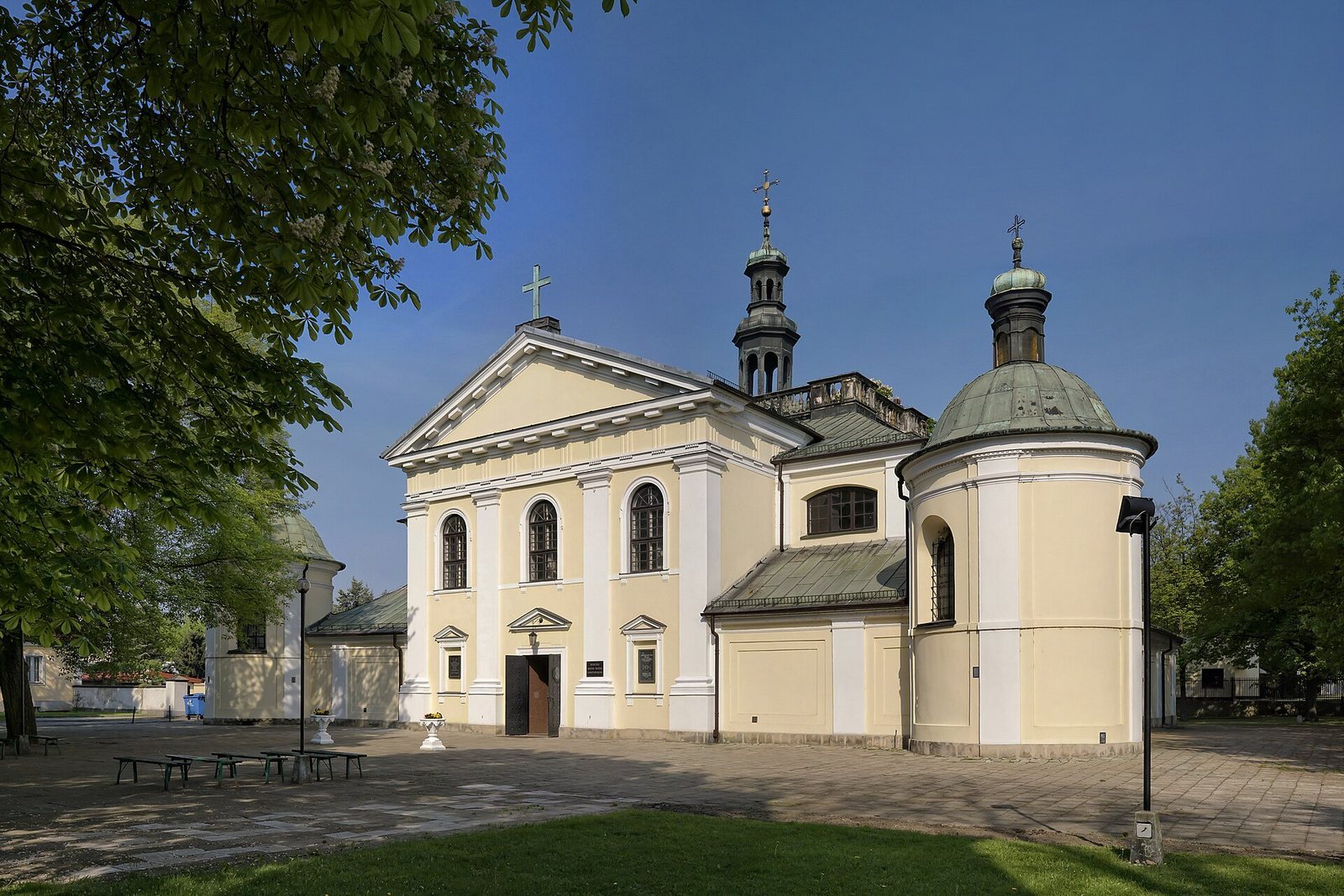
The Church of Our Lady of Loreto stands in Praga, Warsaw, Poland, and preserves the Loreto Chapel of an earlier Bernardine foundation. The brick church and monastery, dedicated to St Andrew, were built from 1628 to 1638. The church is described as Baroque, with Classicist elements. The foundation began in 1617, when Bernardine friars, members of the Observant branch of the Franciscan Order, came to Praga at the invitation of Zofia, wife of Crown Chancellor Feliks Kryski. On 4 October, King Sigismund III Vasa attended the laying of the foundation stone, and Bishop Henryk Firlej of Płock consecrated the site.
With support from Sigismund III and his successor, Władysław IV Vasa, the friars’ church and monastery took shape. Between 1640 and 1642, a Loreto Chapel was added against the church’s south wall. Father Wicenty Morawski, a former vicar of the Bernardines’ Lesser Poland province, inspired the project. Władysław IV, Queen Cecilia Renata, other members of the royal family, and private donors provided funding. The chapel was consecrated in 1642 and became a place of devotion to Mary, drawing people from Praga and Warsaw.
Devotion, destruction, and rebuilding
When Praga received town rights in 1648, its coat of arms showed the Madonna and Child above the Loreto Chapel, supported by angels. The Loreto House later became one of the district’s symbols. In July 1656, during the Swedish Deluge, a Swedish invasion of the Polish-Lithuanian Commonwealth, Swedish and Brandenburgian forces looted and destroyed the church, chapel, and monastery after the Battle of Warsaw. Donations from Stefan Warszycki, castellan of Kraków, and Michał Warszycki, voivode of Sandomierz, helped fund their rebuilding. A castellan was a senior territorial official, while a voivode governed a province.
The complex suffered severe damage in 1794 during the Kościuszko Uprising, a Polish insurrection against Russian and Prussian rule. Russian forces under General Alexander Suvorov stormed Praga after its defense. A cemetery around the church received victims of the fighting, including local people killed while defending the district.
Demolition and later parish use
Around 1811, the Bernardine church and monastery were demolished to make room for Praga’s fortifications. Local protest saved the Loreto Chapel, which remained Praga’s only church after the demolitions. In 1807, a Gothic Madonna and Child from Kamion had been brought to the chapel after the Skaryszew church that housed it was demolished. The figure had earlier been moved from a church at Kamion to Skaryszew in 1656. It eventually took the place of the Loreto Madonna at the main altar, while the Loreto Madonna was transferred to St Anne’s Church.
During the nineteenth century, the chapel served as a parish church until St Florian’s Church was built. A new parish was established there in 1941, and the chapel again became its parish church. Renovation work in the early twentieth century uncovered a fragment of the original furnishings in a hiding place beneath the stairs. The church was damaged in 1939 and again in 1944, when German artillery struck it during the Warsaw Uprising. It was rebuilt in 1953, and the north and east cloisters were restored in 1960. The church entered Warsaw’s register of historic monuments on 1 July 1965. It serves as a Roman Catholic parish church in the Diocese of Warsaw-Praga, a territorial church district administered by a bishop.
Remains
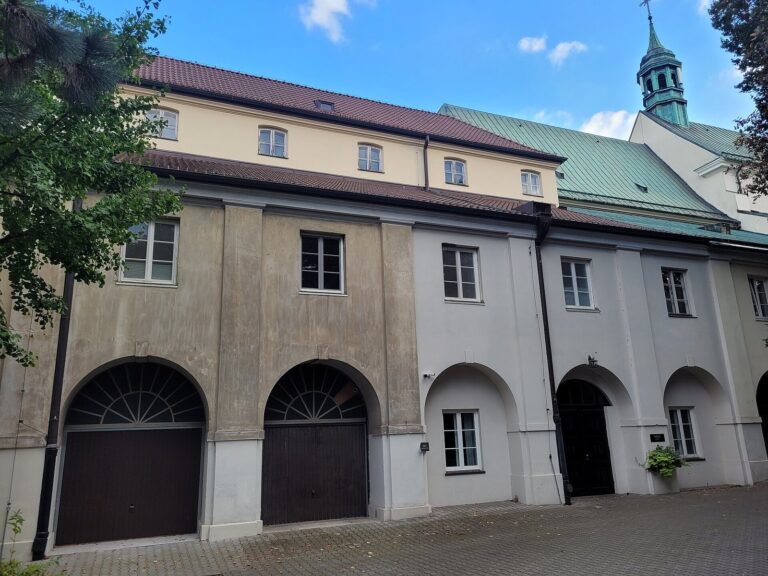
The surviving historic complex is centered on the Loreto Chapel, on the east bank of the Vistula. A freestanding Loreto House stands within a passage and covered walkways that surround it on all four sides. The earlier Bernardine church stood to the north. Brick is the specified building material. The chapel combines Renaissance design with Baroque forms, while the church is described as Baroque with Classicist elements.
The Loreto Chapel
House and surrounding passage
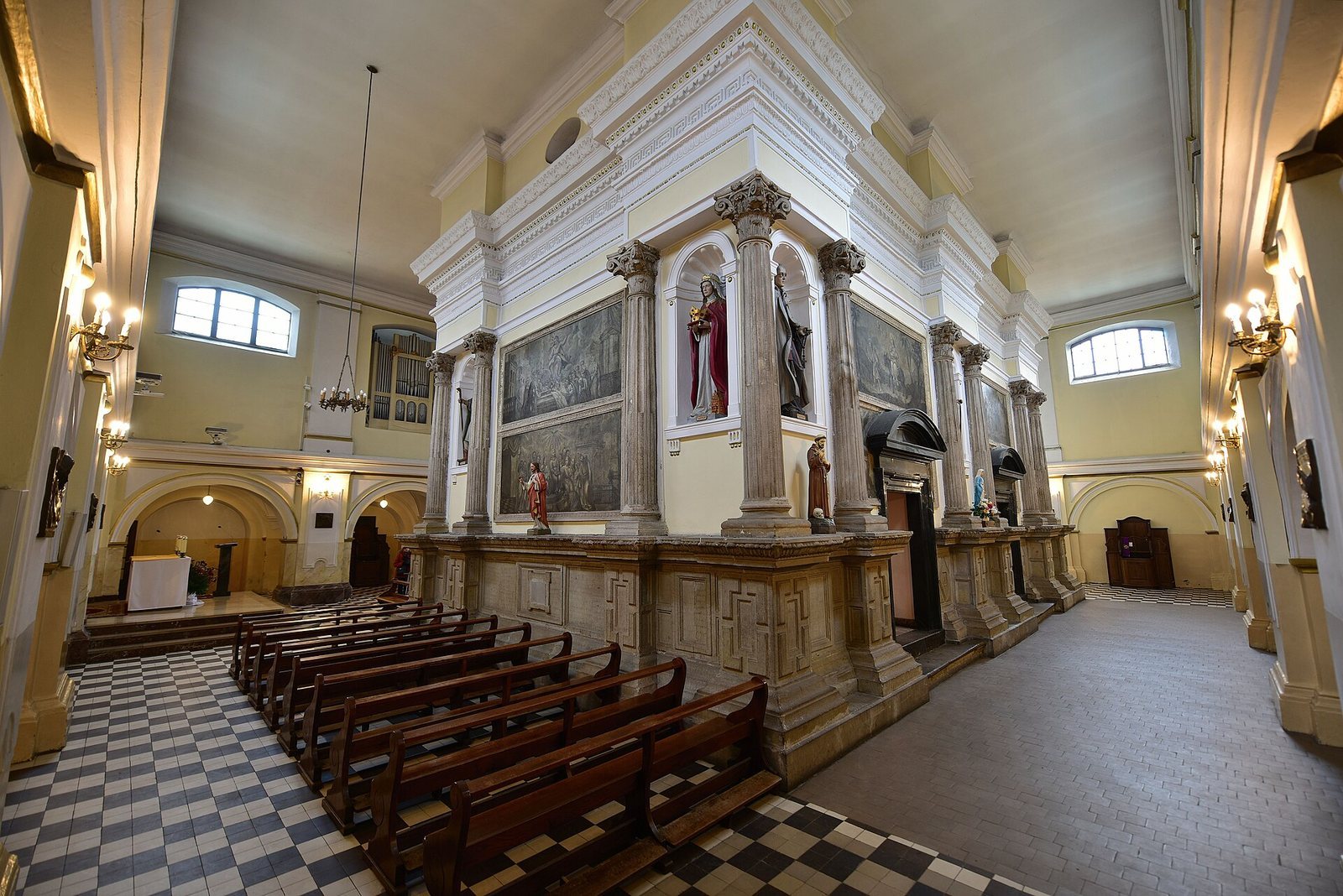
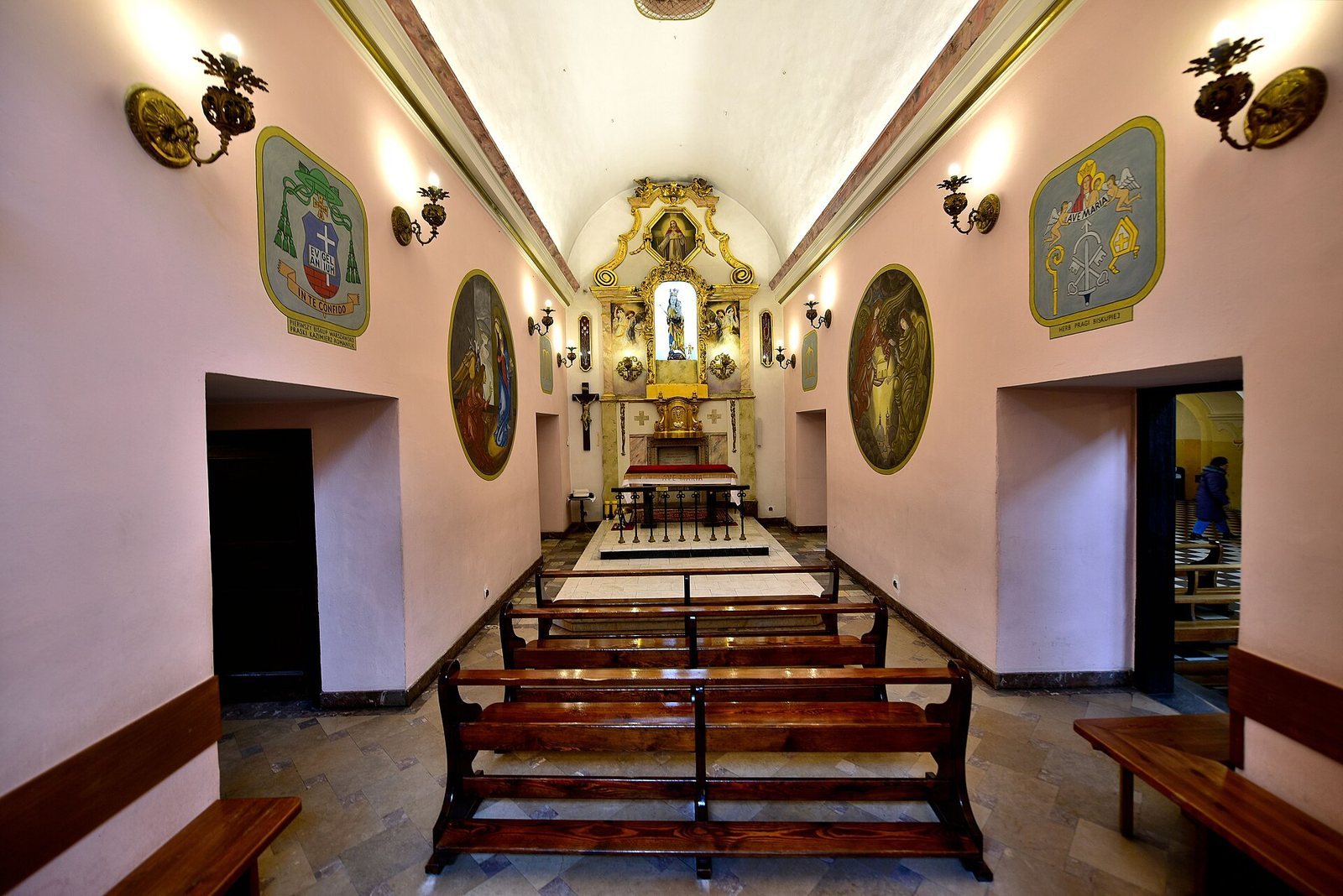
The chapel’s central structure is a copy of the Holy House of Loreto. This shrine is associated with a Christian tradition that angels carried Mary’s house from the Holy Land through Croatia to Loreto in Italy around 1294. The chapel’s design is attributed to royal architect Constantino Tencalla and modeled on the Basilica of the Holy House, associated with Renaissance architects Donato Bramante and Andrea Sansovino. The passage around the central structure and the covered walkways form the chapel’s surrounding enclosure.
Seventeenth-century furnishings
The Loreto Madonna, brought from Italy at the king’s initiative, was kept in a small room and initially screened from worshippers by a grille. It was dressed in costly fabrics and adorned with gold crowns; Cecilia Renata provided golden crowns in 1641. Fourteen gilded-silver lamps burned before the image. A description from 1643 also mentions marble engraved with histories, two doors facing one another, and an opening in the vault that let out lamp smoke and brought air to the crowd. The altar was described as made of gold and silver and decorated with jewels and precious stones given by monarchs, with small turrets at the corners. Behind it stood a fireplace with pots, clay bowls, and wooden spoons believed to have belonged to Mary; marble inscriptions noted the objects’ origins. The description attributed the Madonna image to Saint Luke, traditionally identified as an evangelist.
Sculpture and later features
Madonna and Child from Kamion
The cedarwood Madonna and Child from Kamion is a Gothic sculpture dating to the late fifteenth or early sixteenth century. It is described as the oldest surviving Gothic sculpture in Warsaw. The figure stands on an inverted crescent moon, with a human face emerging below it.
Redesigned entrance and cloisters
Alfons Kropiwnicki’s 1853 redesign gave the entrance a parapet, a low protective wall, and a two-storey portal, an entrance framed as an architectural feature. The Loreto House and cloisters were placed under a shared roof. Two of the original four corner towers were retained. The north and east cloisters form part of the surviving complex.
Organ and devotional decoration
An organ built by W. Kamiński was installed in 1931. It has 16 stops, which control sets of pipes, and two manuals, or keyboards. Ceramic Stations of the Cross by K. and J. Henisz are set into the church wall. These devotional images represent episodes from Jesus’s final journey to his crucifixion.
Memorials
A plaque placed on the church façade in 1994 commemorates victims of the 1794 Praga massacre. Beside the main avenue leading to the church, an inscribed stone serves as a symbolic grave for Roch Kowalski, a fictional character in Henryk Sienkiewicz’s historical novels known as the Trilogy.