Church of Sant’Antonio Abate: A Parish Church in Isola, Italy
Site at a Glance
- Popularity
- Very Low
- Country
- Italy
- Primary era
- Early Modern
- Eras represented
- Medieval, Early Modern, Modern
- Civilizations
- Holy Roman Empire, Italian
- Site type
- Religious
- Remains
- Church
On this page10 sections
History
The Church of Sant’Antonio Abate is a Roman Catholic parish church in Isola, a hamlet of Compiano, Italy. Dedicated to Saint Anthony Abbot, an Egyptian Christian ascetic traditionally regarded as a foundational figure in Christian monasticism, it is the seat of a parish in the Diocese of Piacenza-Bobbio, a territorial church jurisdiction. The parish belongs to the Val Taro and Val Ceno vicariate, a diocesan administrative subdivision. An earlier chapel probably dates to the fifteenth century and is first mentioned in a testament of 1472; the church is recorded as completed in the seventeenth century.
Changes to the church
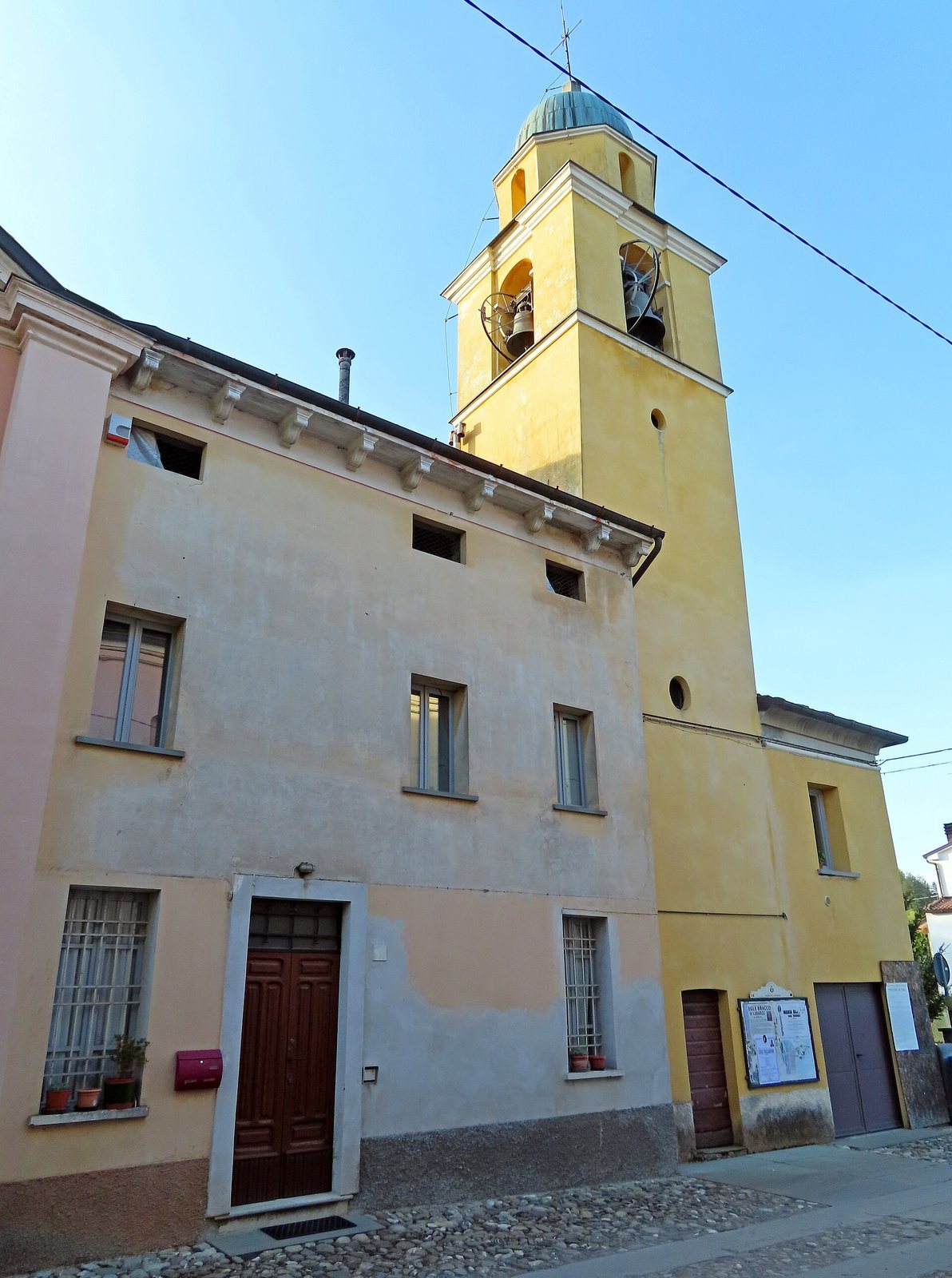
In the sixteenth century, the facade faced west, and the church had chapels dedicated to Saint Terenziano and the Virgin Mary. Extensive work in the early seventeenth century reversed the building’s orientation. The facade was rebuilt on the east, facing the road, and the presbytery was moved to the opposite end. Two more chapels, dedicated to Saint Mark and Our Lady of Caravaggio, and altars in the Baroque style were added later. A bell tower was subsequently built beside the rectory.
Decoration and restoration
In 1928, the painter Battistini decorated the church interior with frescoes. Restoration began in 1999 with work on the Chapel of Saint Terenziano. In 2001, attention turned to the Chapel of Our Lady of the Rosary and the bell tower. From 2002 to 2006, the remaining church and the rectory were restored and structurally strengthened.
Remains
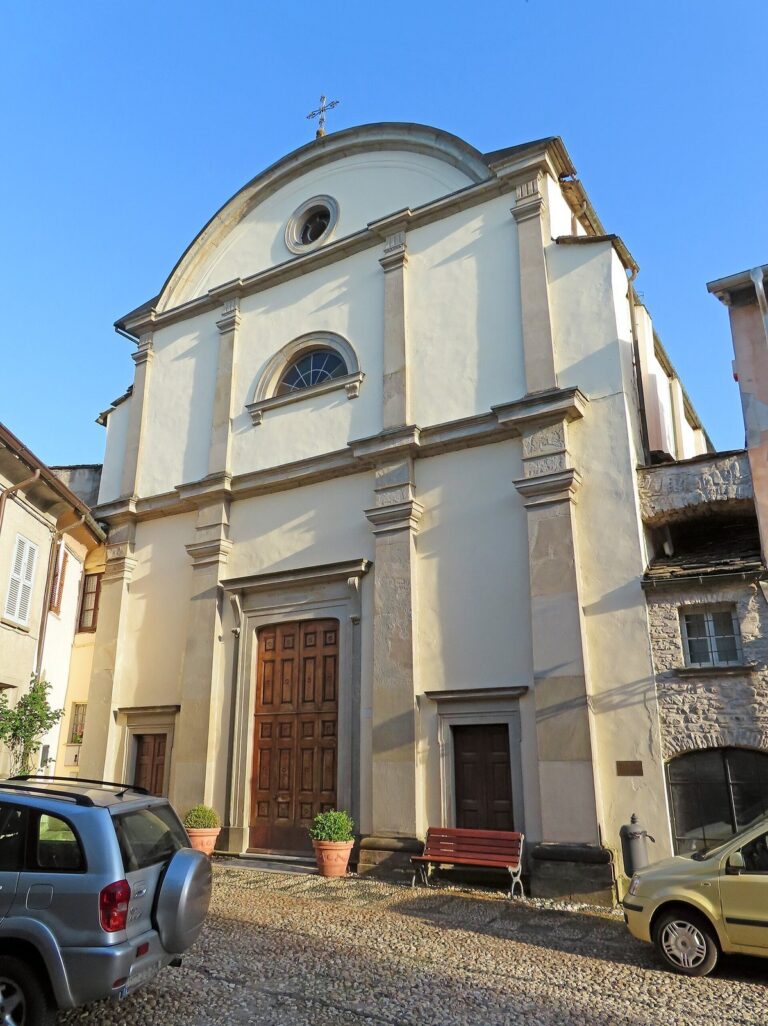
The church is a plastered, single-nave building arranged from east to west, with its entrance at the eastern end and the presbytery in a western apse. Chapels flank the nave, and other buildings adjoin the church on both sides.
Exterior
Facade
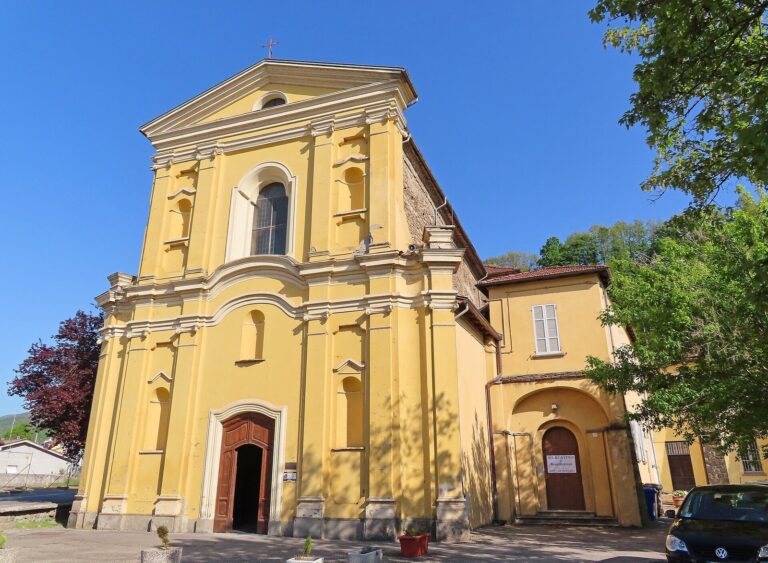
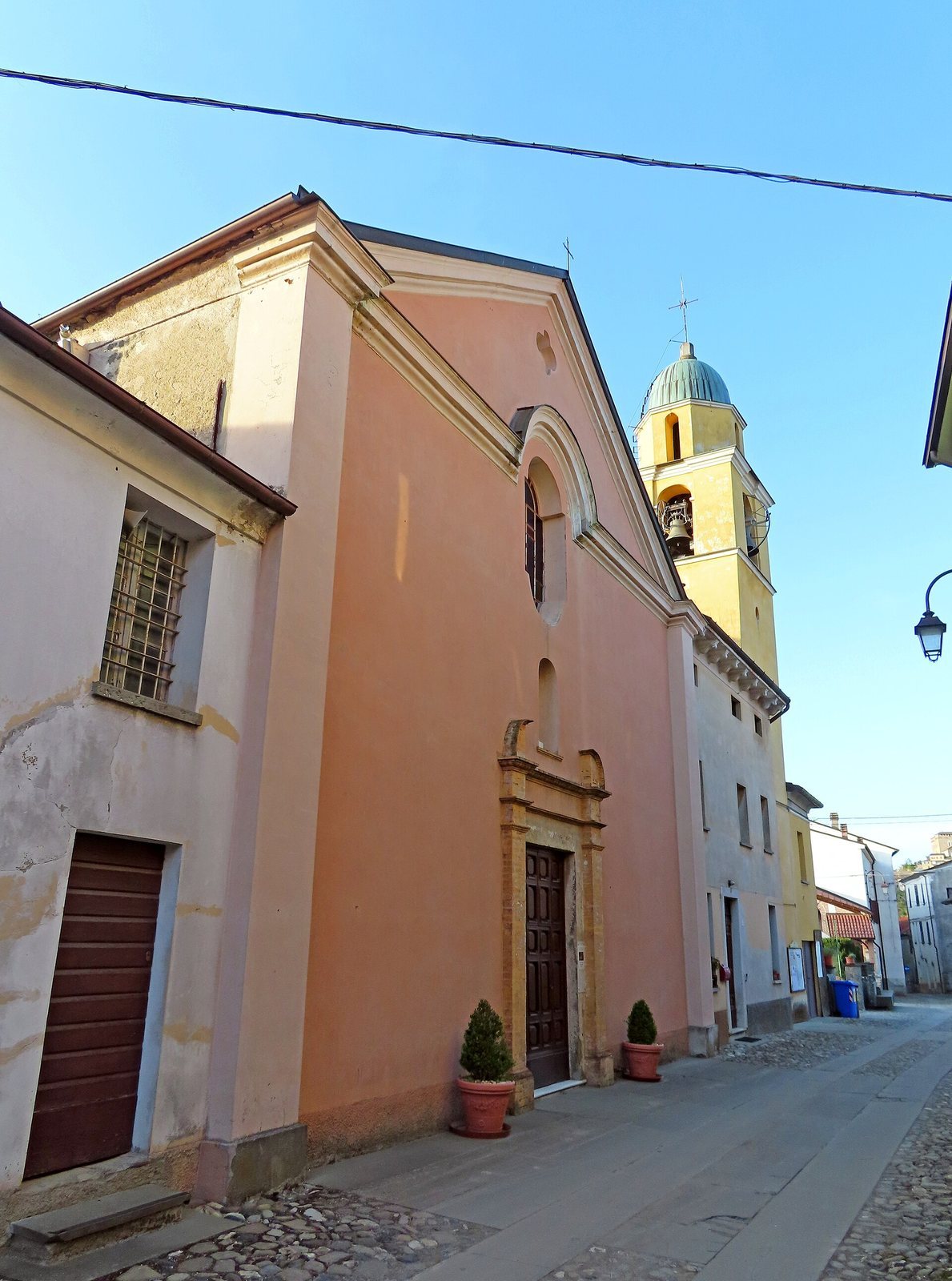
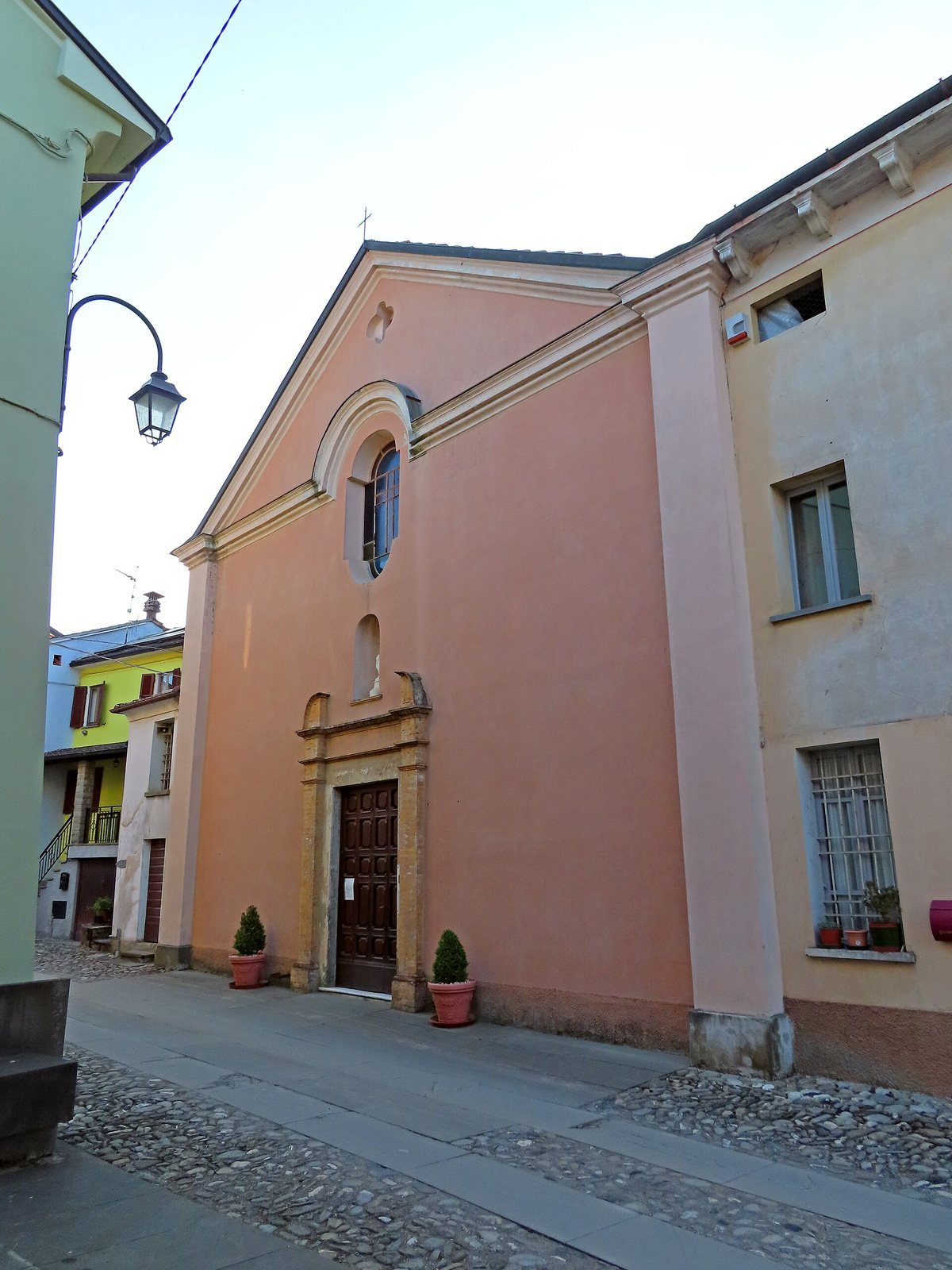
The symmetrical, plastered facade has a triangular gabled top and a shallow attached support, or pilaster, at each end, each finished with a Doric capital, the upper part of a support in the classical Doric style. Brick pilasters frame the broad entrance and support a projecting horizontal molding. Above it, a curved molding interrupted around a round-arched niche frames a marble statue of Saint Anthony Abbot. A large, flared window with a curved outline rises above, interrupting the molding beneath the triangular top; a small cross-shaped window sits at its peak.
Bell tower
The plastered bell tower stands to the north, beyond the rectory. Its bell chamber has a round-arched opening on each of its four sides, framed by substantial pilasters with Doric capitals. Above it, an eight-sided upper structure has four narrow windows, each with a single opening, and is capped by a small dome.
Interior
Nave and side chapels
The nave, or main body of the church, has a richly decorated barrel vault, a continuous arched ceiling, divided into two sections. Curved vault sections called lunettes form part of the ceiling, while broad round arches open into the side chapels. Pilasters with Doric capitals separate the chapels and support a projecting cornice that runs around the interior. The chapels have painted barrel-vaulted ceilings. Those on the right are dedicated to Saint Teresa and Saint Terenziano; those on the left honor Our Lady of Caravaggio and Our Lady of the Rosary.
Presbytery and apse
The slightly raised presbytery, the area around the altar, opens beneath a broad rounded arch carried by Doric pilasters. Its ceiling is a barrel vault with lunettes. The marble high altar is shaped like a table and rests on four small pilasters bearing carved reliefs of the Virgin Mary, Saint Anthony Abbot, Saint Terenziano, and Saint Lucy. In the apse, two windows flank a central altarpiece framed by marble pilasters. The altarpiece contains a round-arched niche with a statue of Saint Anthony Abbot; two rectangular windows also light the apse at the rear.