Church of San Matteo degli Armeni: A Medieval Catholic Church in Perugia
Site at a Glance
- Popularity
- Low
- Country
- Italy
- Primary era
- Medieval
- Eras represented
- Medieval, Early Modern
- Civilizations
- Papal States
- Site type
- Religious
- Remains
- Church
On this page10 sections
History
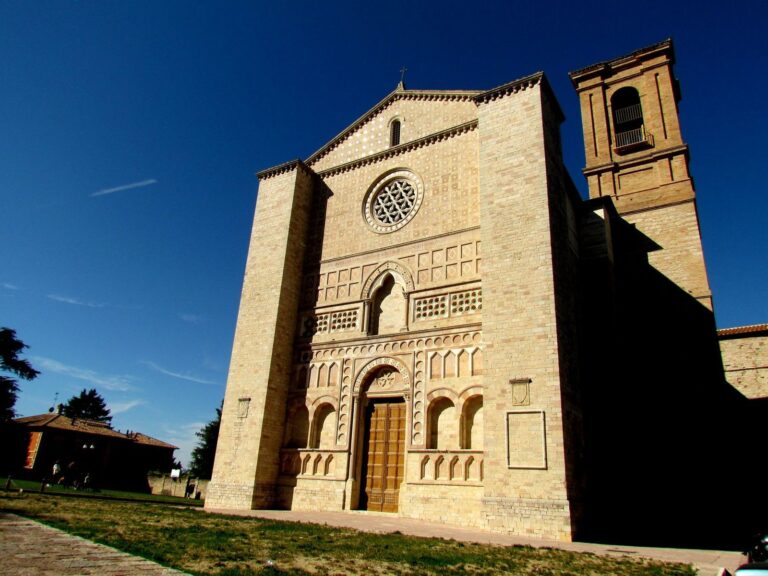
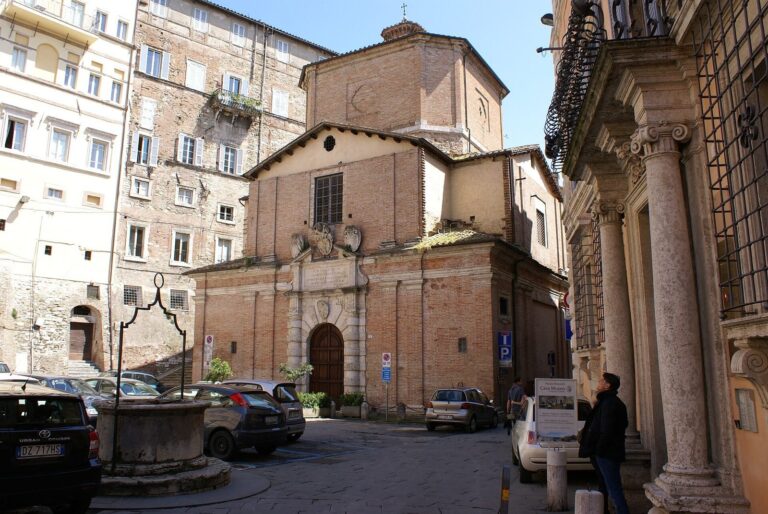
The Church of San Matteo degli Armeni is a Catholic church in Perugia, Italy, built in 1273 by Basilian monks who had arrived from the East. Basilian describes an Eastern Christian monastic tradition associated with the rules of Basil of Caesarea, not necessarily the monks’ ethnic origin. They may have fled persecution by peoples medieval Europeans broadly called Saracens. The church follows late-thirteenth-century Franciscan models and is dedicated to the apostle and evangelist Matthew. It belongs to the Archdiocese of Perugia-Città della Pieve, a major Catholic jurisdiction led by an archbishop.
Foundation and monastic use
The adjoining monastery became an important cultural center. In 1308, Pope Clement V granted an indulgence associated with it. In Catholic teaching, an indulgence remits temporal punishment for sins. The monastery also had a workshop where scribes copied and produced manuscripts, including several notable works.
Decline and renewed worship
During the sixteenth century, the monks left the Perugia complex as its buildings deteriorated and municipal financial support ended. After they dispersed, the site became a hospital for plague victims in 1528, with a cemetery. Its position near the city center but beyond the walls may have influenced this use.
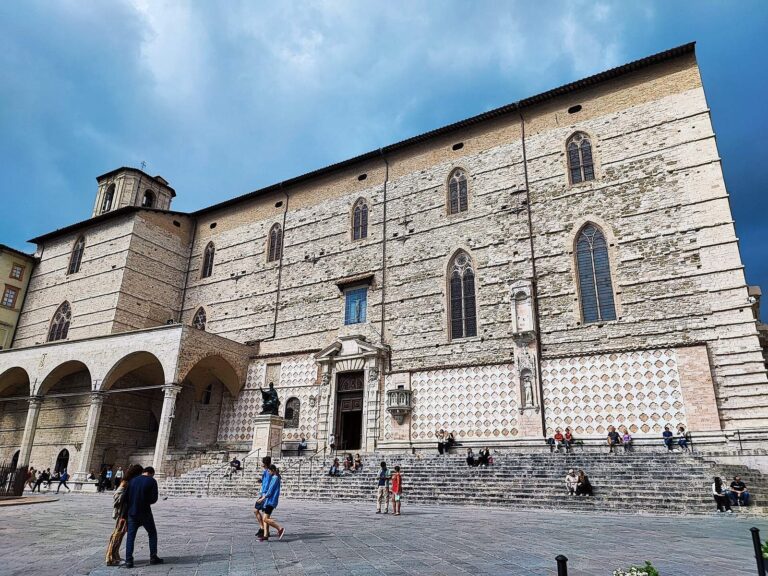
At the start of the seventeenth century, canon Giovanpaolo Sozj acquired the complex and made extensive improvements. After his death, it came under the cathedral chapter, the body of clergy responsible for cathedral administration. The chapter granted a long-term lease to Iacopo Oddi, the cathedral’s archdeacon, a senior cleric with delegated duties. Oddi restored the church and reopened it for worship in 1632. His family held the property until 1820, when it returned to the chapter. Roof problems and damp walls led the chapter to whitewash the interior, covering the frescoes, and leave the complex unused.
Restoration and present use
In 1953, work renewed the roof, windows, and floor, strengthened cracks in the church, and restored its paintings. A further programme of restoration and consolidation began in 2000. The first phase ended in 2009, with additional work that year and another phase from March to June 2012. Ownership of the surrounding buildings and land passed to a regional agency, while the church remained with the cathedral chapter.
Since 2012, the complex has housed the San Matteo degli Armeni Municipal Library, which specializes in peace, nonviolence, human rights, and intercultural and interreligious dialogue. One section holds the library of Aldo Capitini, an Italian philosopher and political activist associated with nonviolence.
Remains
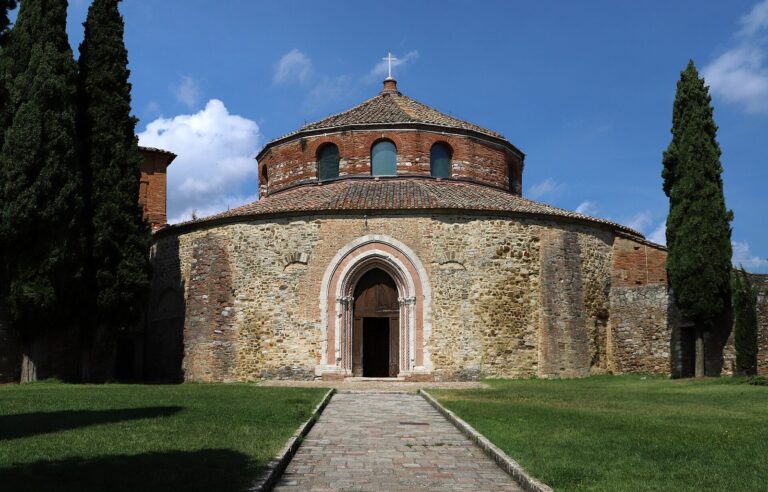
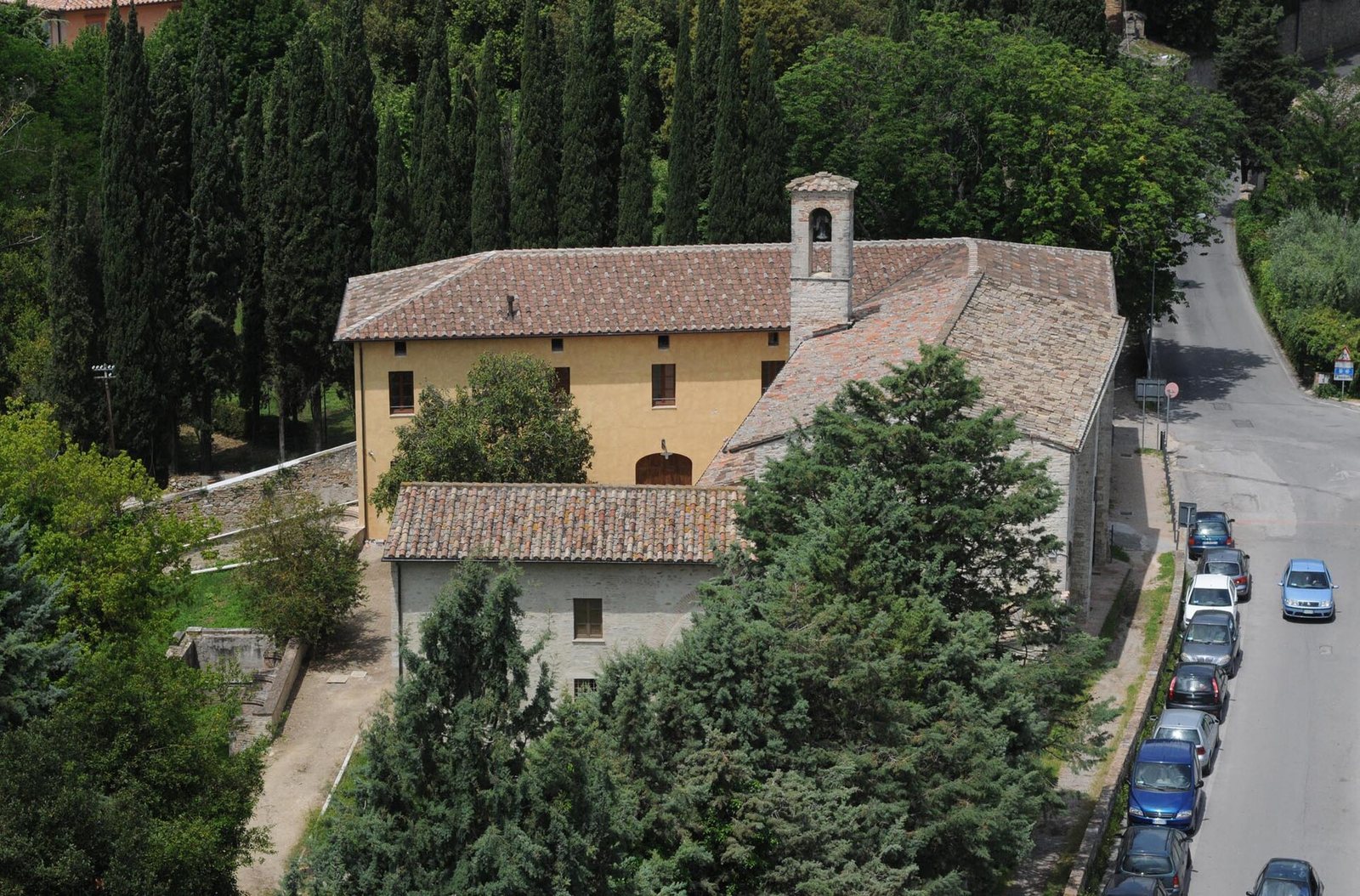
The church belongs to a group of interconnected buildings arranged in a U around a small courtyard that opens onto a garden of about 4,800 square metres. It stands roughly midway between Porta Sant’Angelo, including the Temple of Sant’Angelo, and the Franciscan convent of Monteripido. The church is a rare Umbrian example of a late-thirteenth-century Christian building with a single nave, the main space of a church. Its design draws on Franciscan models that spread through Umbria from building works at Assisi.
The church
Plan and interior
The vaulted hall measures about 17 metres long, just over 7 metres wide, and about 8 metres high. Its asymmetrical, diamond-shaped plan may reflect the incorporation of foundations and walls from an earlier building. Two cross vaults, formed by intersecting vaulted sections, follow the irregular plan, and small windows run along the walls.
Altar
The thirteenth-century altar is a shaped stone block resembling an inverted, cut-off pyramid. Traces of coloured paint remain on the capitals, the upper parts of columns or pilasters, and suggest that decoration may once have extended more widely through the church.
Fresco cycle
Thirteenth-century frescoes survive mainly on the wall behind the altar. Their scenes occupy three zones. At the top of the pointed arch, Christ the Redeemer blesses within an mandorla, an almond-shaped frame around a sacred figure, supported by angels. Below, the Apostles look toward the Ascension. The lowest zone contains the Madonna and Child, Saint Francis of Assisi giving a blessing, and Saint Matthew. The paintings are attributed to a follower of Jacopo Torriti, a Roman painter and mosaicist active in the late thirteenth century.
On the first half-column at the left, Pope Saint Sylvester is shown driving away a dragon with poisonous breath by using a basil leaf. The pairing of Francis and Matthew also appears on a side panel of the Marzolini Triptych, a three-panel artwork. The fresco cycle has been associated with the route of Armenian pilgrims who called at Ancona, stopped in Perugia, and continued to Rome. The pairing of the two saints has also been interpreted as possible evidence of closer relations between Armenia and the Friars Minor, the Franciscan religious order.
The garden
The seventeenth-century garden created for Iacopo Oddi included lemon and orange trees, Catalan jasmine, and several water features. Two water sources had jets, while four fountains stood in basins, with lead pipes returning the water to them. A large pond held fish, and the garden also contained statues, including one of a sea monster, and an iron aviary. It served as a place for recreation and meetings and now survives in fragmentary form.