Chiesa di San Lorenzo: A Catholic Church in Bergamo
Site at a Glance
- Popularity
- Low
- Country
- Italy
- Primary era
- Early Modern
- Eras represented
- Early Modern
- Civilizations
- Venetian
- Site type
- Religious
- Remains
- Church
On this page9 sections
History
Chiesa di San Lorenzo is a Catholic church in Bergamo’s upper town, Italy, dedicated to St Lawrence, an early Christian deacon and martyr. It follows the Roman rite, the Catholic Church’s principal liturgical tradition, and belongs to the Diocese of Bergamo, a church district under a bishop. Construction of a church dedicated to Lawrence is dated to 1044, when a deed names it. A diploma dated 20 July 755 may refer to an earlier basilica, meaning a church building, dedicated to Lawrence outside the walls of Bergamo’s castle. It records a donation by Aistulf, a king of the Lombards.
The early church
Historian Angelo Mazzi considered the early church one of Bergamo’s oldest and placed it within the city’s ancient Roman walls. Its name was also given to the San Lorenzo vicinia, a populous neighborhood district that covered a large area.
Demolition and rebuilding
Bergamo’s new city walls were built between 1561 and 1579. Around 1580, the earlier church was demolished to make way for the walls and a gate named after it. A replacement was built in the late sixteenth century at the small square of Piazza dell’Olmo and consecrated by Bishop Gerolamo Ragazzoni on 19 March 1591. About a century later, two side chapels were added. During the 1630 plague in northern Italy, a small oratory, or place of worship, was built beside the facade. The church also has a chapel dedicated to people afflicted by the epidemic.
Parish and later care
The church served as a parish until 1860, when it was joined to Sant’Agata nel Carmine and later to Sant’Alessandro. During the twentieth century, maintenance work and cleaning of the paintings took place.
Remains
Exterior
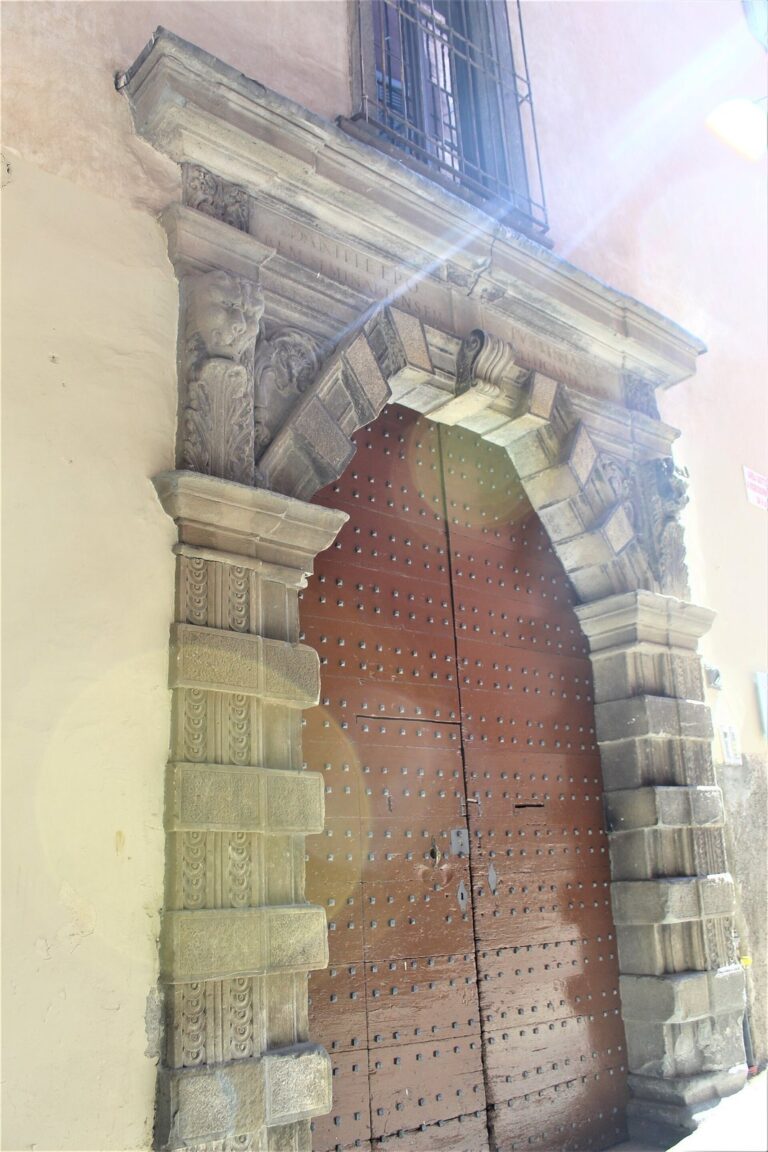
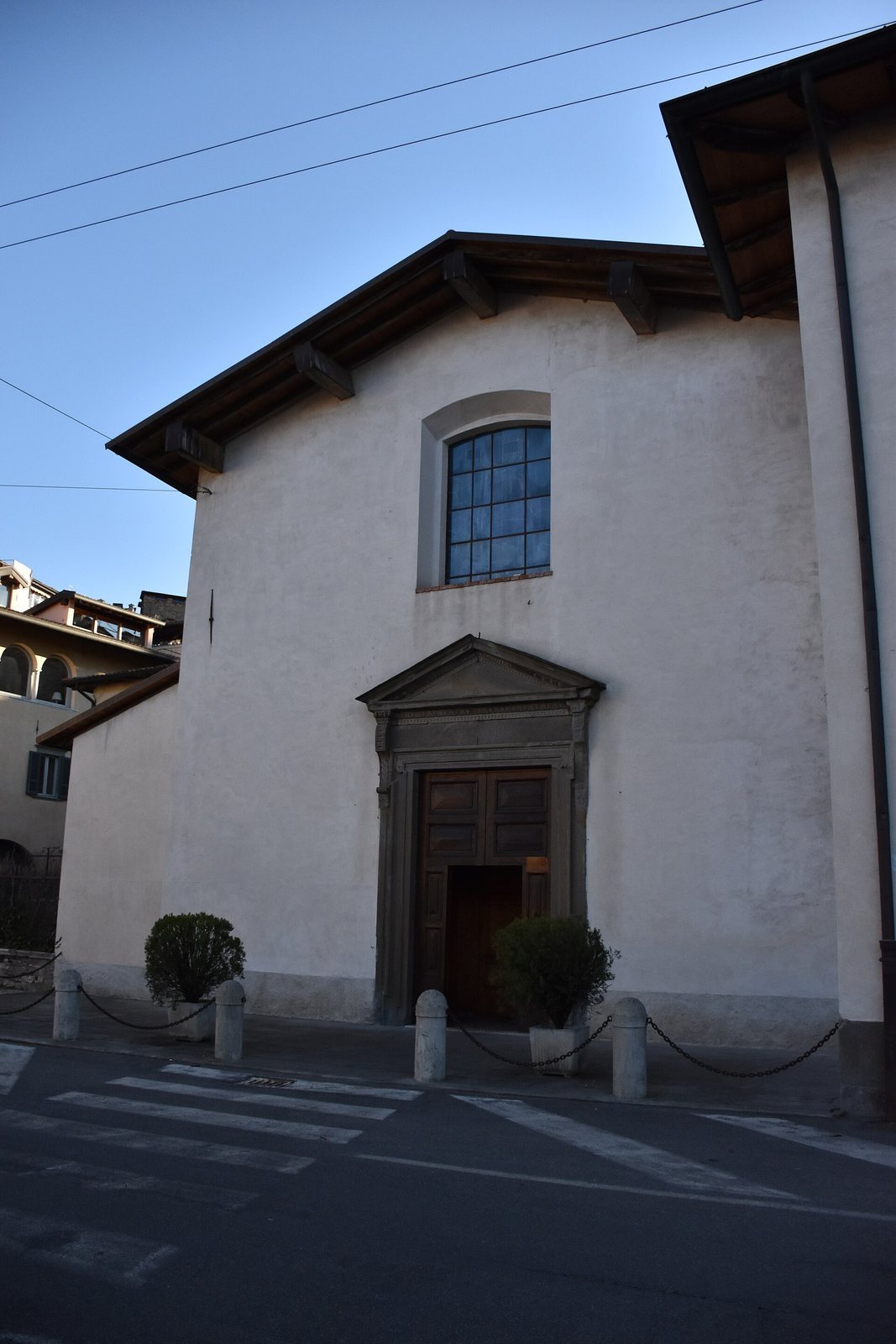
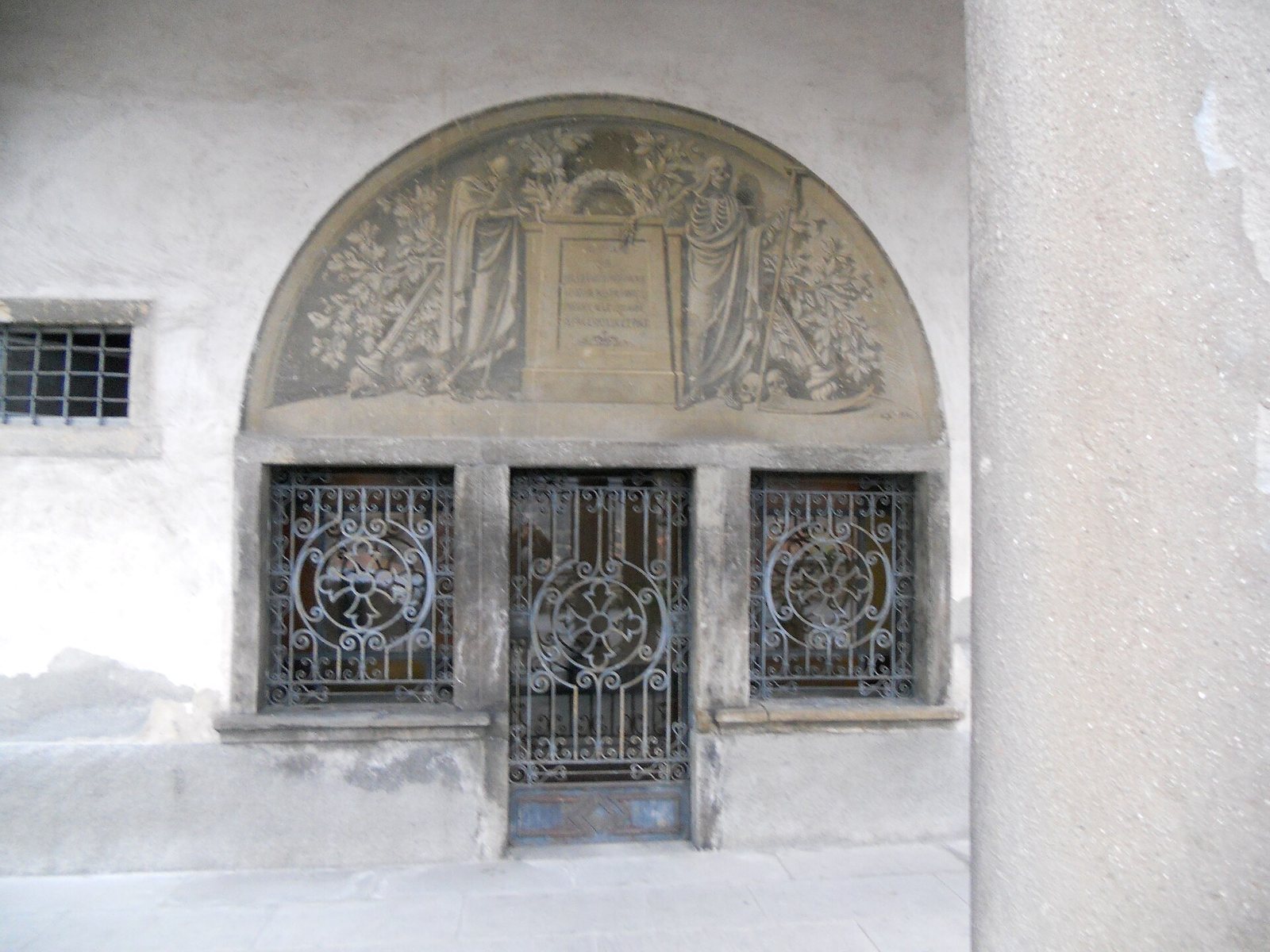
The church combines a simple plastered exterior with a rectangular, single-nave interior. It stands beside the Lantro fountain on the old Via Boccola; stone posts mark the forecourt, and a gate closes access to the fountain. The gabled facade has a two-pitched roof and adjoins the small oratory. Its central sandstone doorway is topped by a triangular pediment, a triangular feature above an entrance. A window with a sill and slightly flared arch sits above the doorway and lights the interior.
Nave and chapels
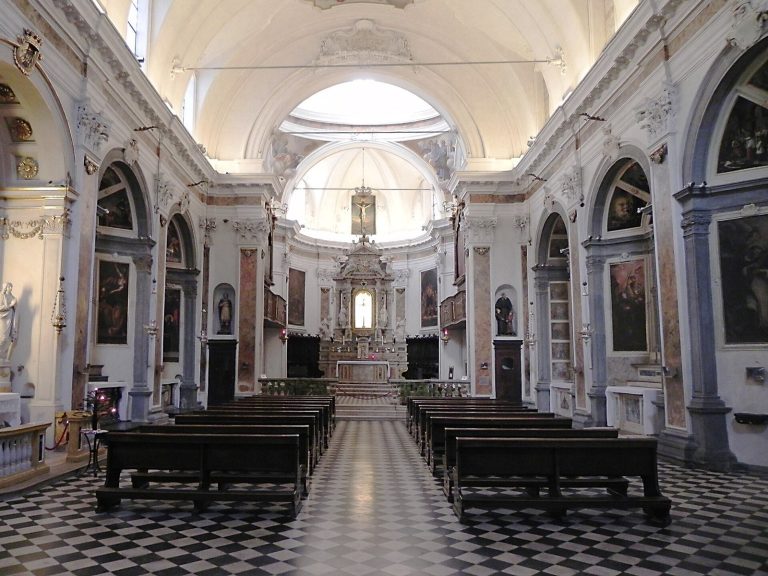
The nave, the church’s main interior space, is divided into four bays, or sections, by pilasters, shallow projections resembling columns. Their Corinthian capitals, ornamental tops in a classical style, rise to the upper wall trim. The ceiling has cross vaults formed by intersecting curved sections. On the right side of the first bay, a doorway leads to the plague chapel. In the second bay, the Chapel of Our Lady of the Annunciation is on the left and the Chapel of the Most Holy Crucifix on the right. The third bay contains altars to the Sacred Heart and Our Lady of Sorrows. Enea Salmeggia’s painting of the Annunciation is at the main altar. Francesco Zucco’s canvas at the altar of Our Lady of Sorrows shows Christ crucified with Mary Magdalene, St Lawrence, another saint and a donor.
Presbytery and furnishings
The organ stands on the left side of the fourth bay, opposite a wooden pulpit. Three stone steps lead to the presbytery, the area around the altar, which is narrower than the nave and has a barrel vault, a ceiling with a continuous curved profile. At the church’s end, the apse, a recess, contains a wooden choir beneath a semi-dome. The window opening widens through the wall, and a central window lights the presbytery.
Column and historic view
A column on the square stands on a pedestal and has a Tuscan-style shaft, a classical column form, topped by a Doric capital, a classical type of column top. Bishop Pietro Priuli blessed it, and it served as a reference point for calculations involving the Via Priula, a historic route associated with travel between Bergamo and Valtellina. Alvise Cima’s 1693 perspective view depicts the church in Bergamo before the later city walls were built.