Willkawayin: A Recuay Center and Wari-Era Archaeological Complex in Peru
Site at a Glance
- Popularity
- Medium
- Country
- Peru
- Primary era
- Classical
- Eras represented
- Classical, Medieval
- Civilizations
- Wari
- Site type
- Burial
- Remains
- Tomb
On this page8 sections
History
Willkawayin is an archaeological complex in Peru that began as a center of the Recuay, a pre-Inca Andean culture, several centuries before the Common Era. It was established before the expansion of the Wari, another pre-Inca Andean culture.
Recuay beginnings and Wari influence
Willkawayin may have been the last Recuay capital, although that identification is uncertain. Wari control may have followed military conquest, or it may have resulted from an alliance between Recuay and Wari elites sealed by royal marriages. During the Middle Horizon, a broad period in Andean archaeology, Willkawayin probably served as an economic and administrative center in the Wari network and may have been a regional capital.
Burial practices and the end of Wari control
As the region’s culture changed, Recuay underground gallery tombs gave way to monumental, multi-chambered mausoleums built on successive platforms. The principal building, traditionally called the Temple, is interpreted as a mausoleum for elite burials. Whether those buried there belonged to the Recuay or Wari ruling class remains uncertain. Willkawayin may also have functioned as a military observation post and storehouse.
Near the end of the eighth century, Wari efforts to control northern Peru collapsed, and major Wari centers in the region were abandoned. Willkawayin may have remained in use into the ninth century, but the timing of its final use is uncertain.
Archaeological investigation and the site’s name
In 1937, Peruvian archaeologist Julio C. Tello worked at Willkawayin, gave it its present name, and classified its red-and-black pottery as Marañón, a pottery type he distinguished from Huaylas pottery. Possible Quechua interpretations of the name include “house of grandchildren,” “house of the Andean tree Anadenanthera colubrina,” and “house of a deity.” The last reading understands willka as referring to a deity or powerful ruler.
In 1944, American archaeologist Wendell Clark Bennett continued investigations and found a cemetery assigned to the Tiahuanaco-Wari period, a label for a phase associated with the Tiahuanaco and Wari cultures. Later work was impeded when rubble covered the principal precincts. Willkawayin is recognized as a Cultural Heritage of the Nation in Peru.
Remains
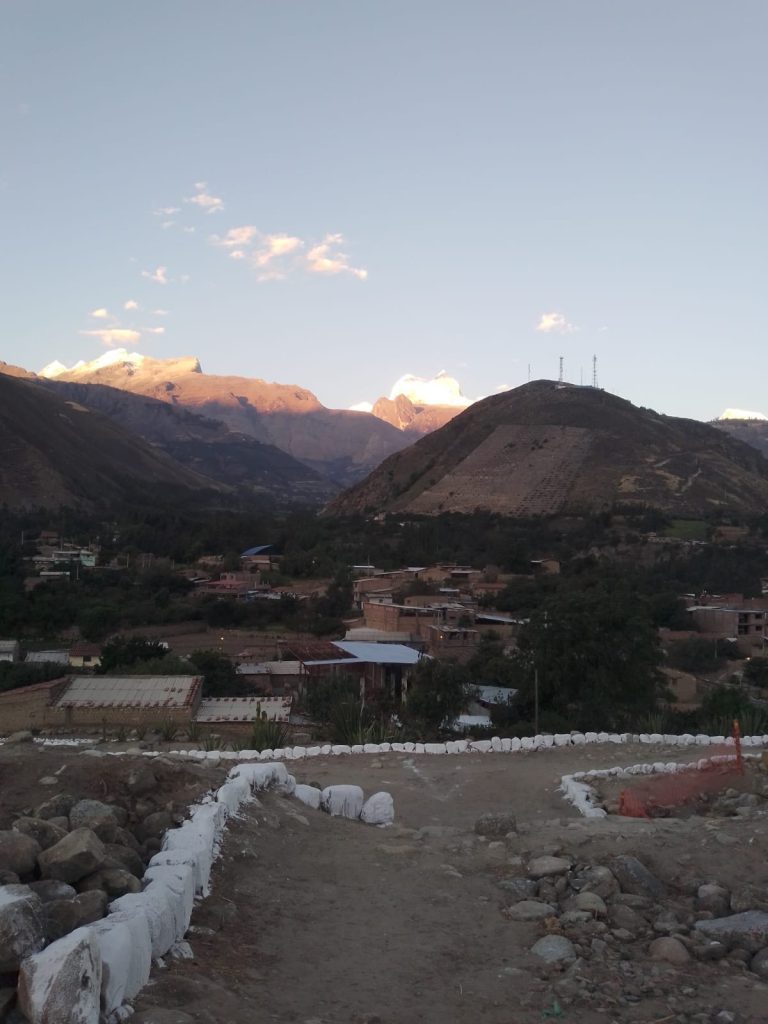
The complex stands at about 3,400 metres in the Callejón de Huaylas, between the White and Black Cordilleras, near the village of Paria and the Santa River. It lies roughly seven kilometres northeast of Huaraz, with the peaks of Vallunaraju and Ranrapalca rising nearby to about 5,500 and 6,000 metres. Willkawayin and Ichic together cover more than five square kilometres. At Willkawayin, upper and lower building groups are separated by about a ten-minute walk; the remains include a multi-level stone building and a separate lower temple.
The principal building
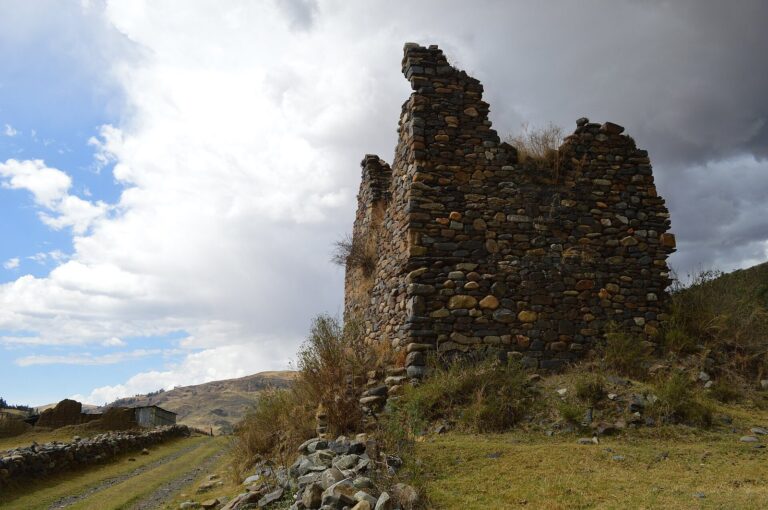
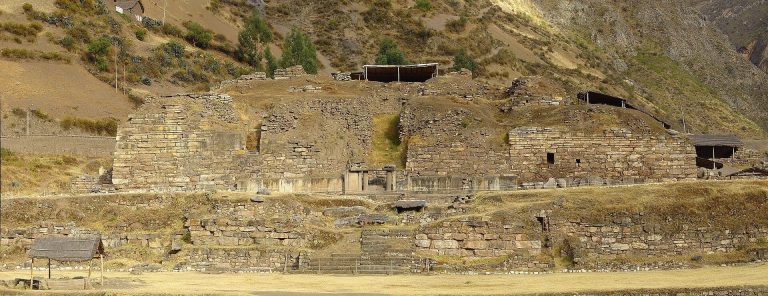
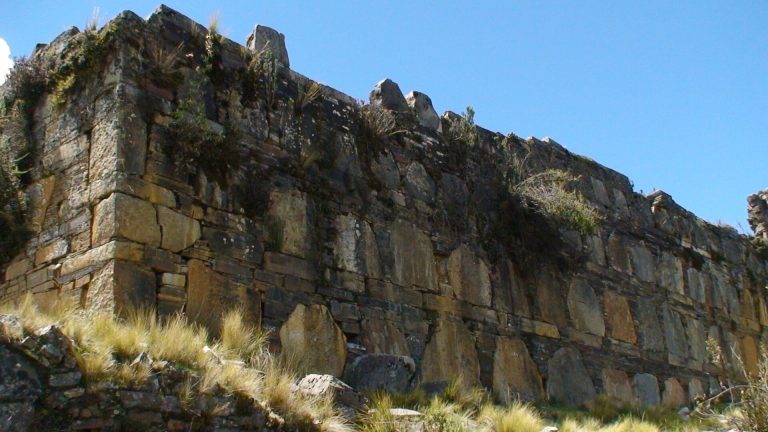
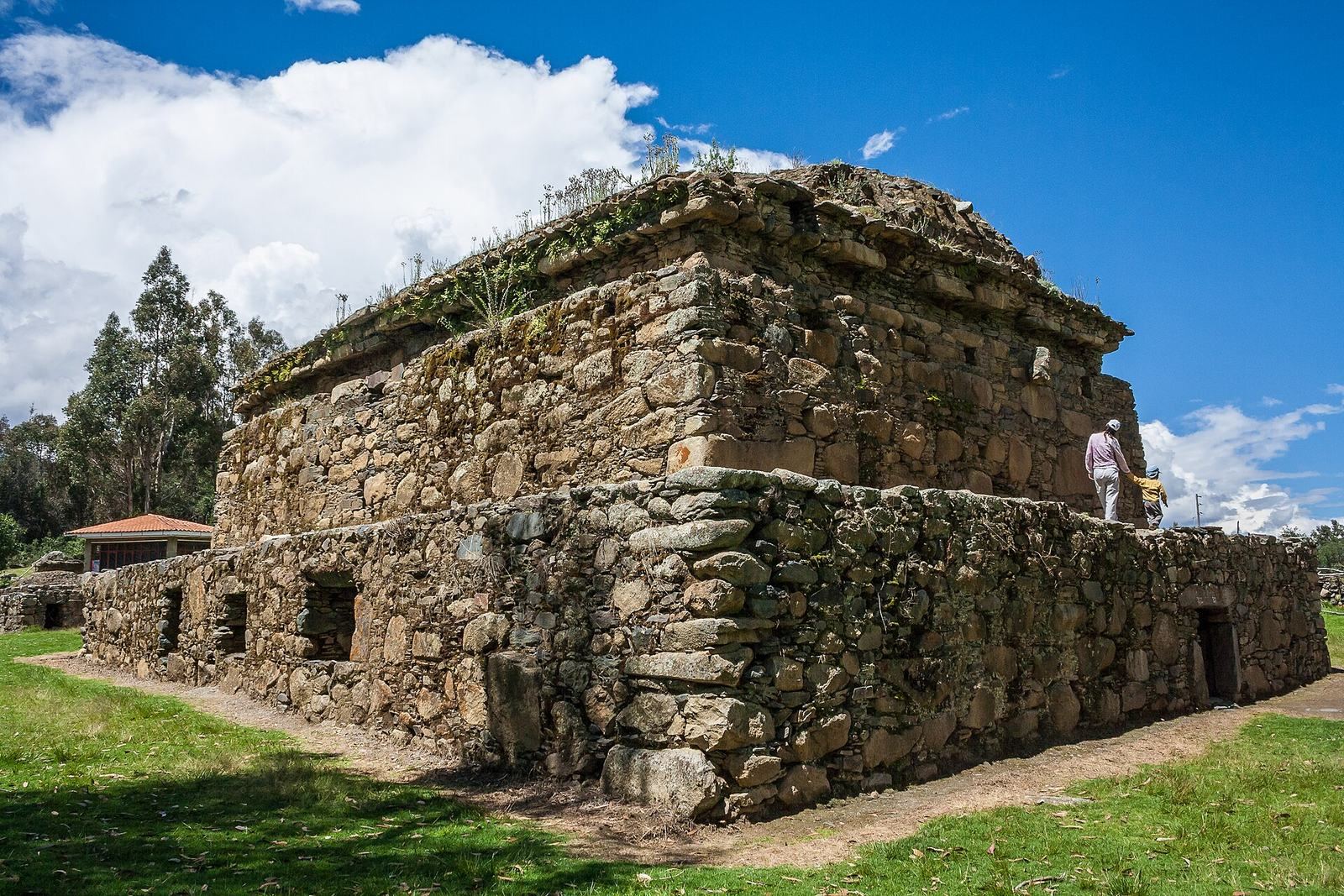
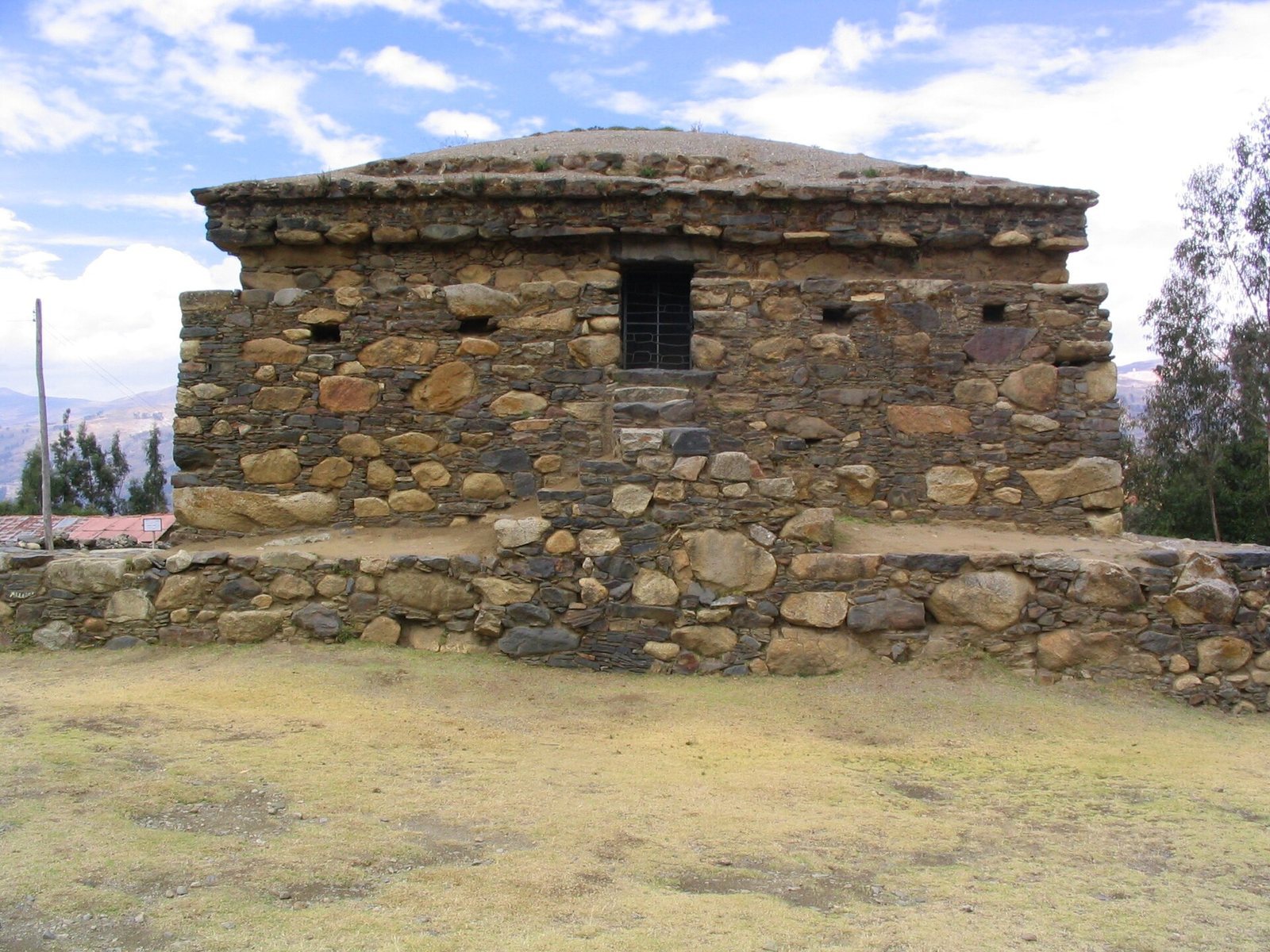
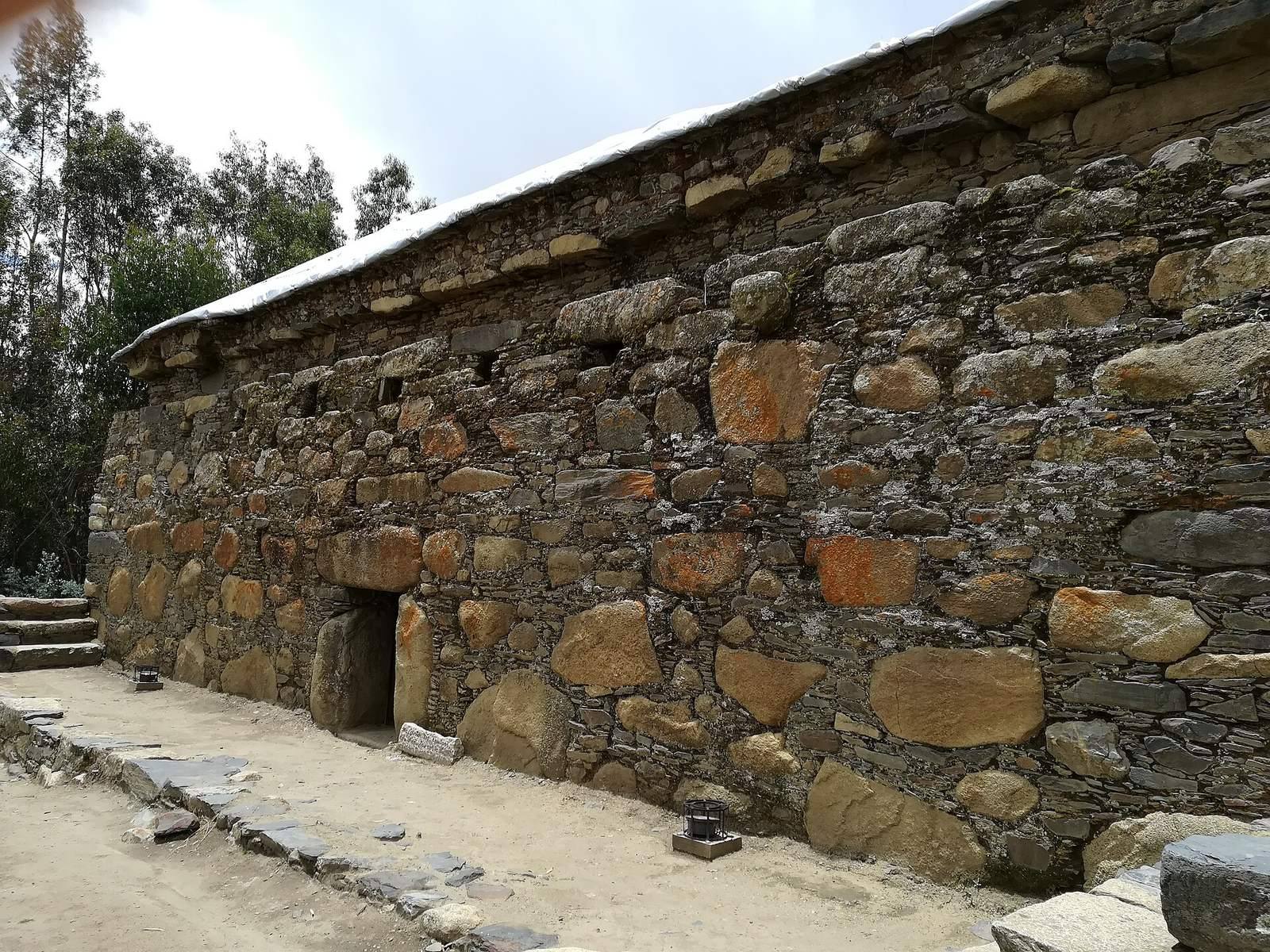
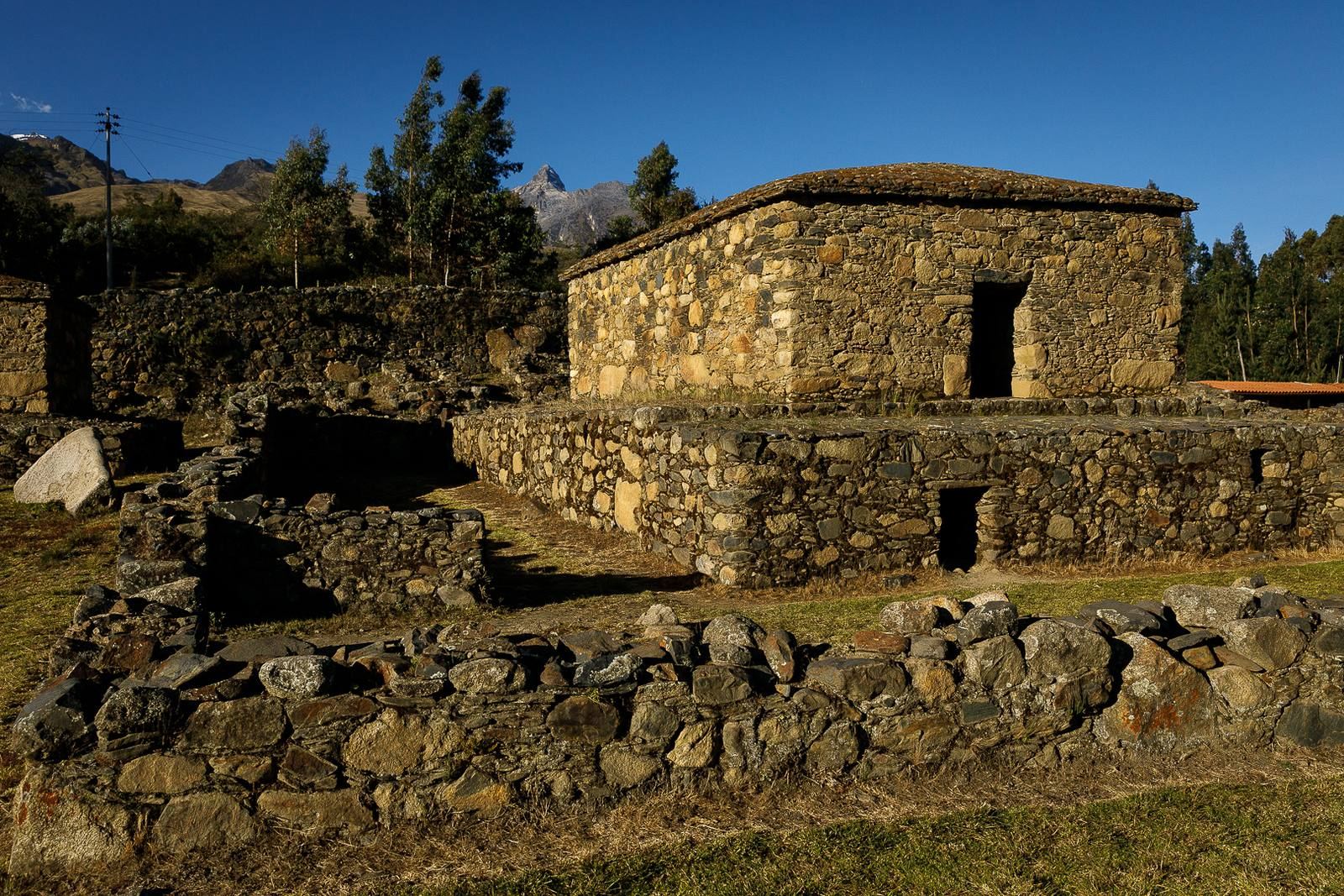
The principal building measures about 11 by 16 metres and stands roughly nine metres high on ground that was partly filled and levelled. Its three storeys contain 19 rooms: five on the first level and seven on each of the two levels above. Interior stairs and ramps connect the rooms and floors. Rough stone walls use small stones to fill gaps and mud mortar. Large slabs, some up to a metre long, form a roof that slopes in two directions. Air openings connect with galleries, shafts, and horizontal passages; long underground passages beneath the building are currently inaccessible. Rubble blocks most interior rooms, although some can be entered. The building has endured regional earthquakes without damage. Two stone images of wild cats remain beneath the roof edge. One shows a head with two hands covering its forehead, though its connection to the crossed-hands symbol at Kotosh is uncertain. The building is smaller than, but similar in form to, the principal structure at Chavín de Huántar.
The lower temple
The lower temple stands at the upper edge of a large cliff.
Ichic Willkahuaín’s funerary towers
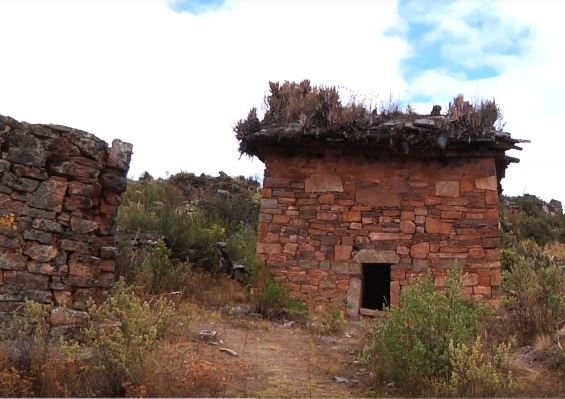
About 800 metres from Willkawayin, the nearby complex of Ichic Willkahuaín contains 15 Wari-influenced chullpas, funerary structures built as towers or platforms with burial chambers. These two- or three-storey towers contain several chambers and served as collective tombs for elites. Excavations from 2005 to 2007 dated the complex to around AD 700, during Wari expansion into the region. Finds included textiles, metal objects, ceramics used as offerings, and stone grinding tools. The tools were used to crush an unidentified substance, possibly for ritual purposes or human consumption.