San Giuliano dei Fiamminghi: Rome’s Church and Hospice for Flemish Pilgrims
Site at a Glance
- Popularity
- Medium
- Country
- Italy
- Primary era
- Early Modern
- Eras represented
- Early Modern, Modern
- Civilizations
- Papal States
- Site type
- Religious
- Remains
- Church
On this page9 sections
History
San Giuliano dei Fiamminghi is a Roman Catholic church in Rome, Italy, associated with a shelter that welcomed pilgrims and migrants from the Southern Netherlands, the historic southern Low Countries. The Baroque church, in a European style known for dramatic forms and ornament, was begun in 1675 and completed in the eighteenth century. Its foundation developed from a Flemish pilgrim institution into the national church first of the Southern Netherlands and later of Belgium.
Origins and medieval hospice
Tradition places the hospice’s beginnings in the eighth century, during the conversion of Flanders to Christianity under Pope Gregory II, who served from 715 to 731. The institution was probably established in the eleventh century by Flemish expatriates seeking to shelter pilgrims and other visitors from their homeland. Its chapel was dedicated to St Julian the Hospitaller, a Christian saint traditionally associated with hospitality.
Robert II, Count of Flanders, visited the hospice in 1096 while travelling to the Holy Land during the First Crusade. He may have overseen its restoration. The chapel’s earliest historical references date to the beginning of the fifteenth century, after the papal court returned to Rome from Avignon. A copy of the hospice’s statutes and rules for pilgrims, dated 1444, survives.
Confraternity and Flemish community
From the fifteenth to the seventeenth centuries, the hospice and its confraternity, a religious and charitable association, supported Flemish people living in Rome. Its members included shoemakers, carpenters, goldsmiths, tailors, and soldiers. The hospice also aided people in need, including former galley slaves, released slaves, and the poor. It served as a gathering place and a source of financial help for Flemings in the city.
The confraternity combined religious activity with practical assistance. Its governing board initially admitted people from the County of Flanders, then gradually opened to members from other parts of the Southern Netherlands, whose communities also contributed financially. Holy Roman Emperor Charles V joined in 1536, adding to the confraternity’s prestige. Between 1624 and 1790, the hospice provided shelter to 21,213 pilgrims. Most came from Flanders; others came from Artois, Namur, Hainaut, Tournai, and Cambrai.
Baroque church and Belgian foundation
The hospice underwent extensive renovation in 1681 and 1682. Construction of a new church had begun in 1675 and was completed in the eighteenth century. Nicholas Haringhe, a pharmacist from Ypres and a major benefactor, gave his entire fortune to the hospice late in the seventeenth century.
French control of the foundation between 1798 and 1814 brought its former organization to an end. The church was then officially transferred to the Kingdom of the Netherlands and subsequently to the Kingdom of Belgium. In 1830 it became Belgium’s national church in Rome. In 1844, the newly established Belgian Pontifical College was based in the home of Monsignor Aerts, rector of the Belgian national church.
Since 1979, the foundation’s official designation has been the Royal Belgian Church and Foundation of Saint Julian of the Flemings. It continues to offer hospitality and assistance to pilgrims and compatriots living in or visiting Rome. It also hosts the Lambert Darchis Foundation, which provides scholarships for young people from Liège Province pursuing artistic or religious training in Rome.
In 1994, San Giuliano became a titular church, an ecclesiastical church assigned symbolically to a cardinal. Jan Pieter Schotte became its first cardinal-deacon, a cardinal assigned to a diaconal title, on 26 November 1994; he held the position until 10 January 2005. The title was vacant from 2005 to 2010, when Cardinal Walter Brandmüller received it. In 2021, it became a cardinal-priest title for him, an arrangement known as pro hac vice, meaning that a title is assigned in a different rank for its holder.
Remains
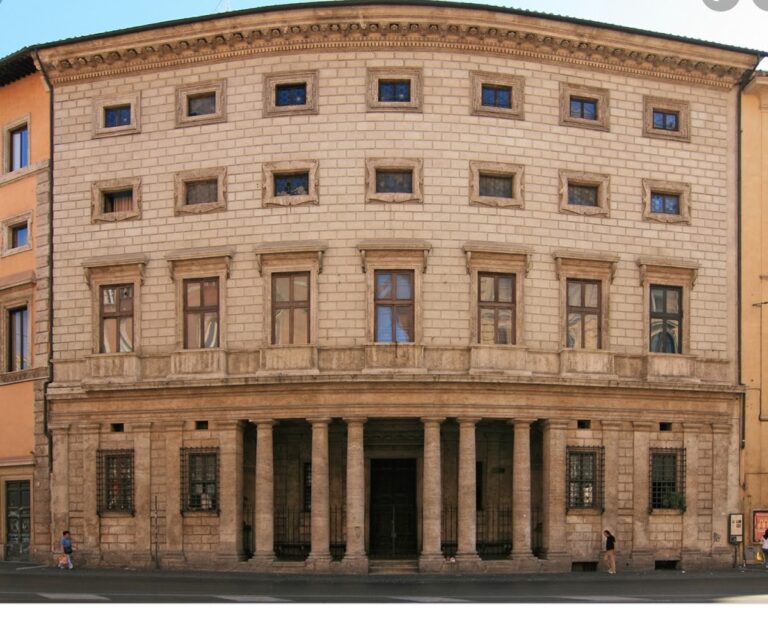
The church occupies part of a larger building that formerly housed the hospice. Its plan combines oval and octagonal forms, developed in the early eighteenth century with inspiration from Gian Lorenzo Bernini’s church of Sant’Andrea al Quirinale. Most of the church’s artworks also date from the early eighteenth century.
Facade and entrance
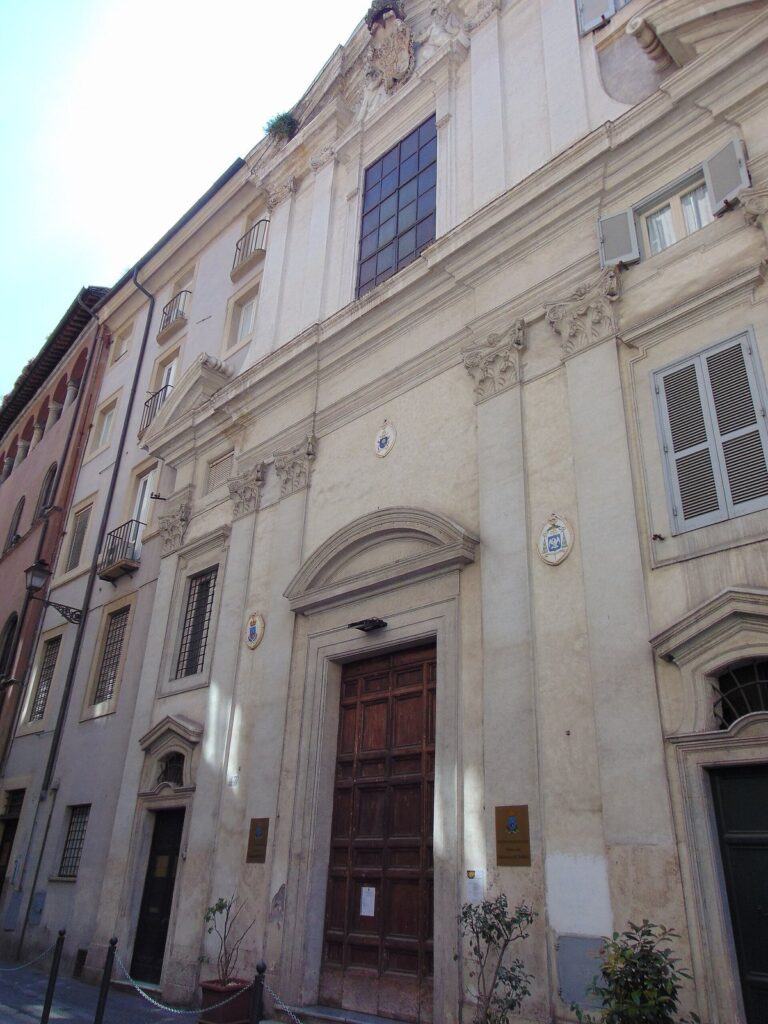
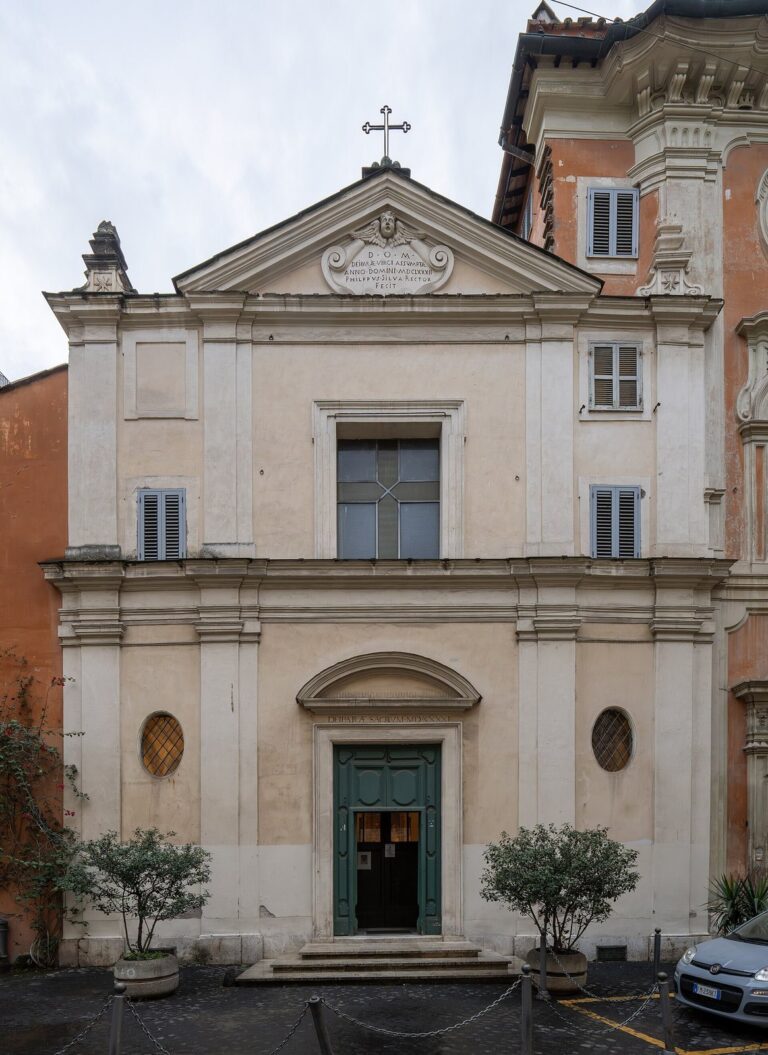
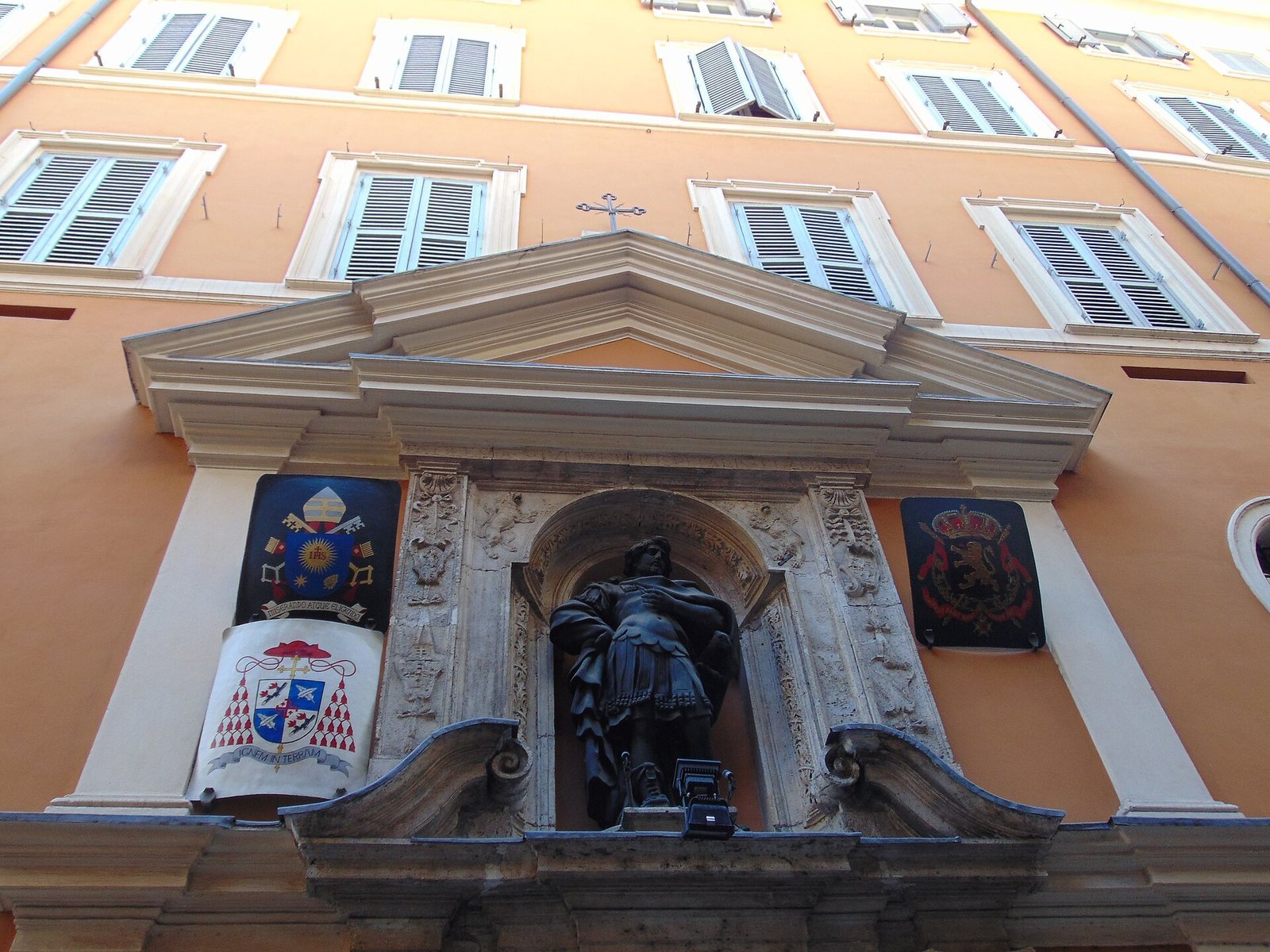
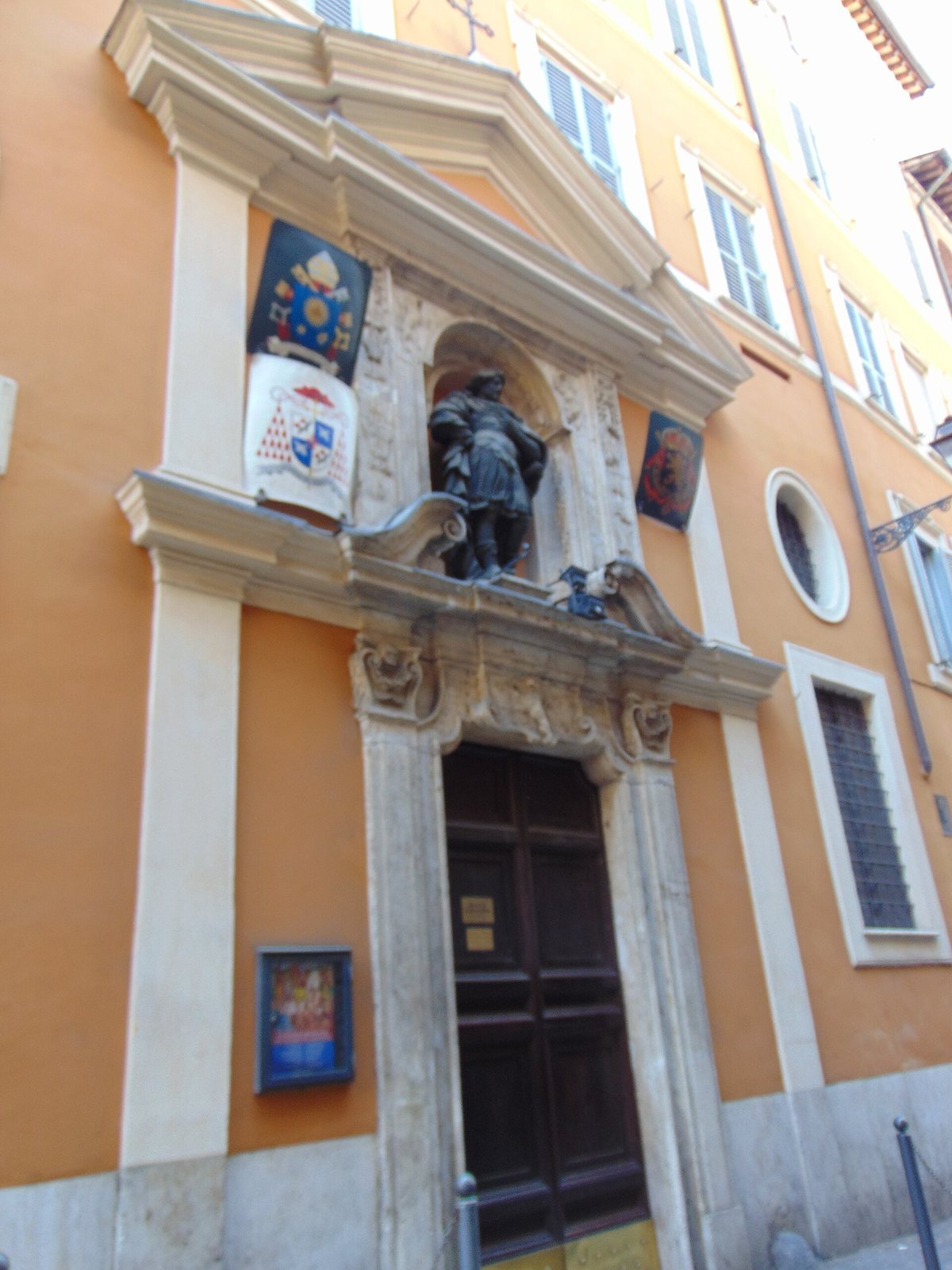
A statue of St Julian the Hospitaller stands above the main entrance. Four windows flank the doorway, with two circular openings above two rectangular ones. The facade’s shields represent Bruges, the Franc of Bruges, Ghent, and Ypres, the four historic Flemish constituencies known as the Four Members. An inscription above the entrance identifies the church and recounts its history through 1785. It dates an initial dedication to 713, credits a Count Robert of Flanders with a restoration and increased endowment in 1094, and refers to a solemn consecration under Pope Eugenius IV. The inscription also describes the building as renewed in more splendid form in 1681 and notes that the hospice’s administrators had a marble floor laid in 1785.
Interior decoration and memorial
Vault and altar paintings
A central medallion in the church’s vaulted ceiling depicts St Julian’s elevation to heavenly glory. William Kent painted the fresco in 1717. Four surrounding symbolic figures represent Bruges, the Franc of Bruges, Ghent, and Ypres. The main altar painting, commissioned by Nicholas Haringhe in 1695, is attributed to Dutch painter Theodor Helmbreker. Above a side altar, a 1743 painting by Flemish artist Maximilian De Haese portrays the apostles Peter and Paul, early leaders of Christianity.
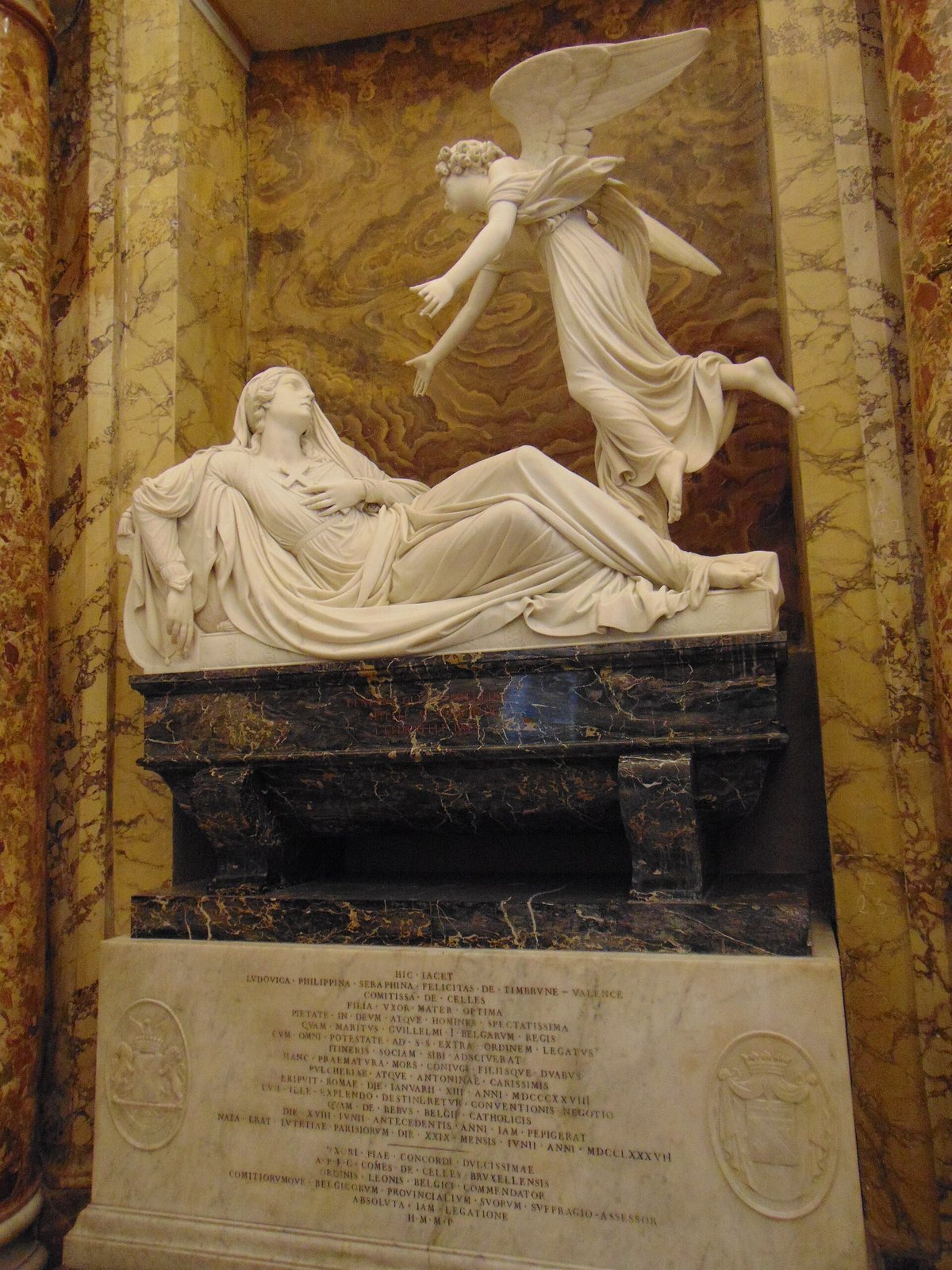
Monument to the Countess de Celles
Sculptor Mathieu Kessels made the monument to Ludovica de Timbrune-Valence, Countess de Celles, around 1830. The countess, wife of the Belgian ambassador at the time, is shown being welcomed into heaven by her daughter, who had died before her and is represented as an angel.