Church of Saint George (Lake Como): A Catholic Church in Mandello del Lario
Site at a Glance
- Popularity
- Low
- Country
- Italy
- Primary era
- Medieval
- Eras represented
- Medieval, Early Modern
- Civilizations
- Duchy of Milan, Holy Roman Empire
- Site type
- Religious
- Remains
- Church
On this page12 sections
History
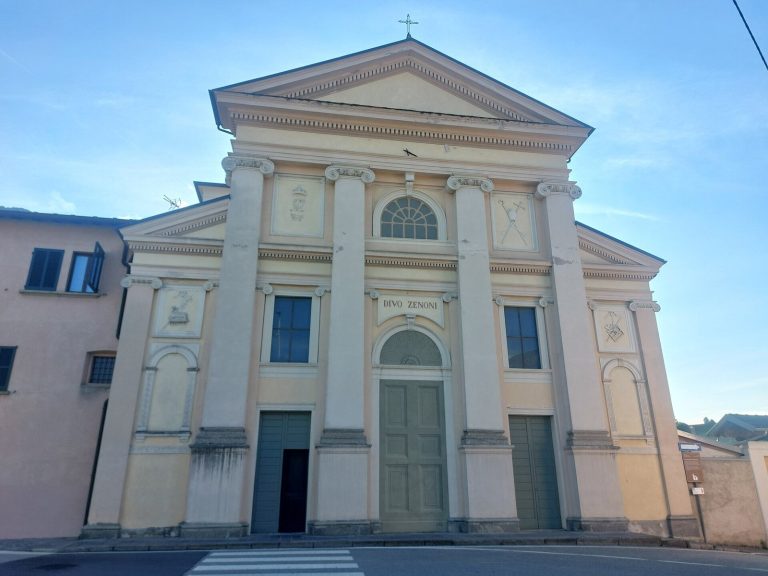
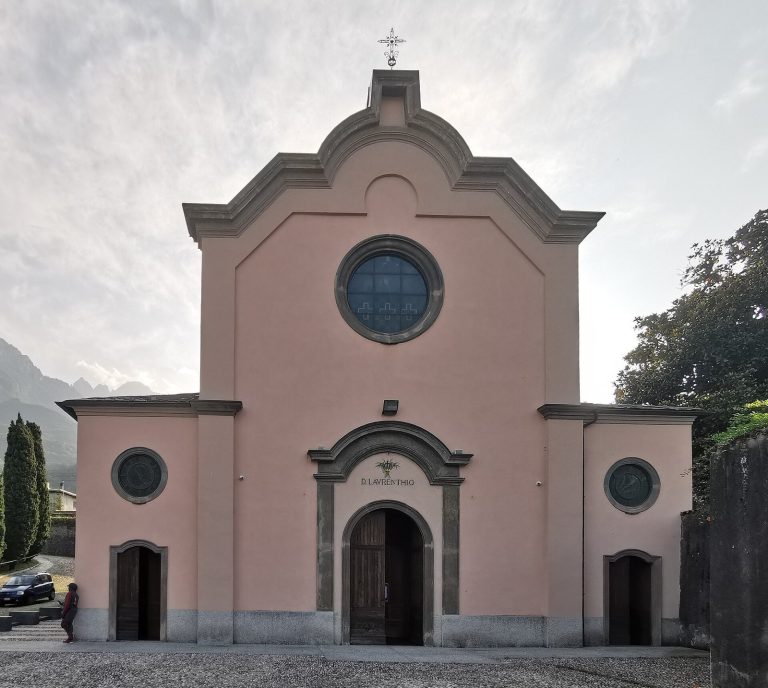
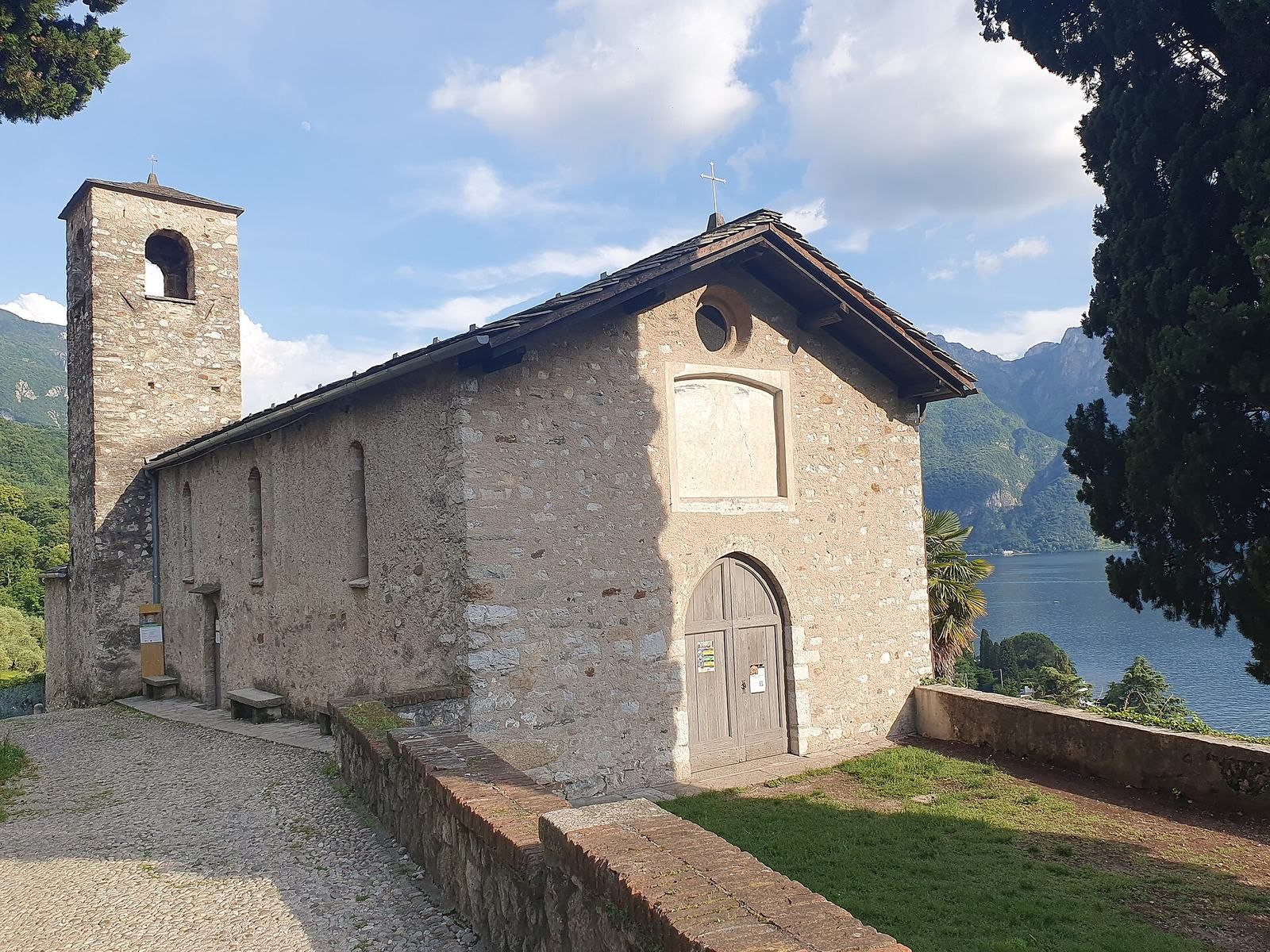
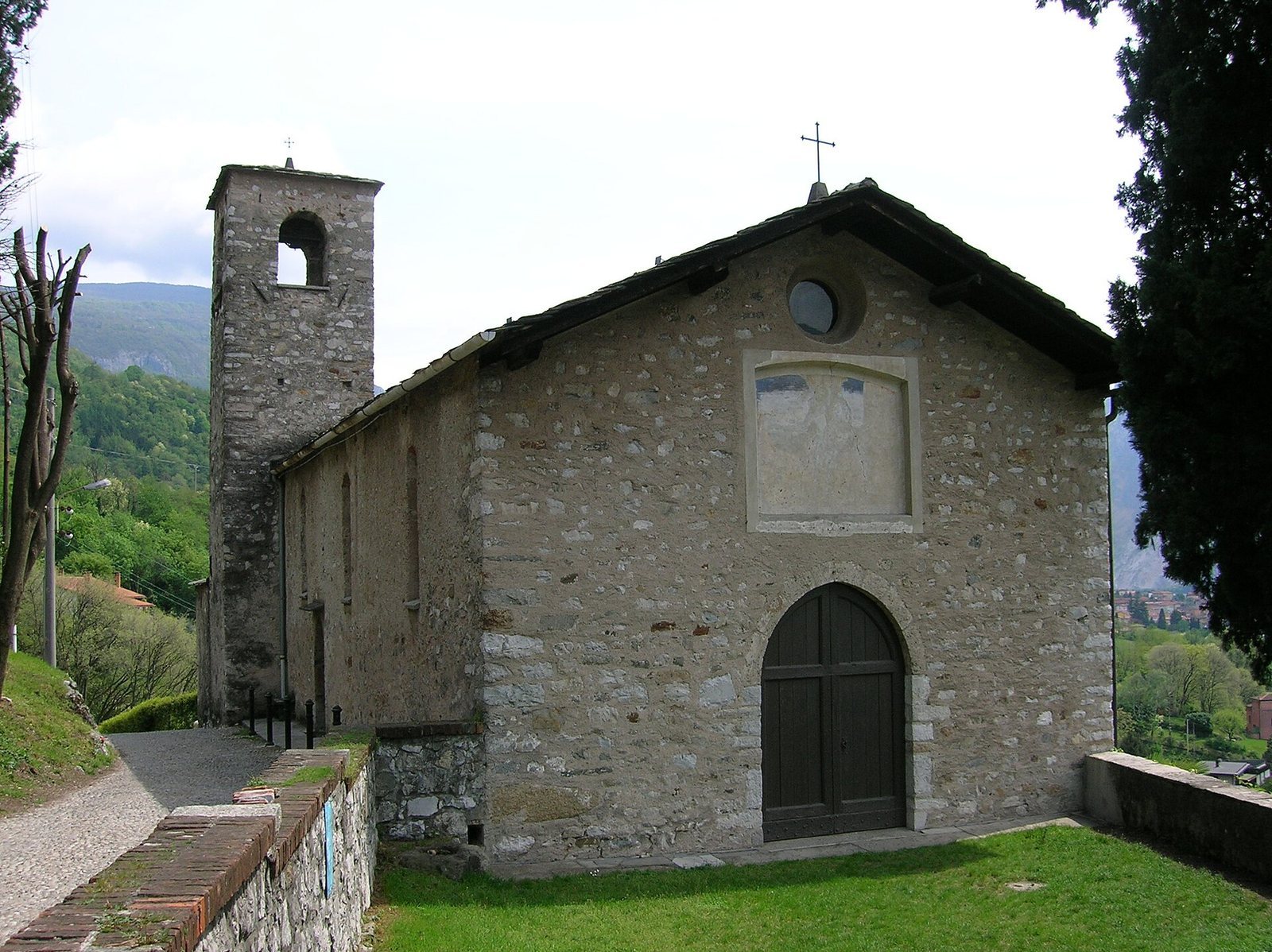
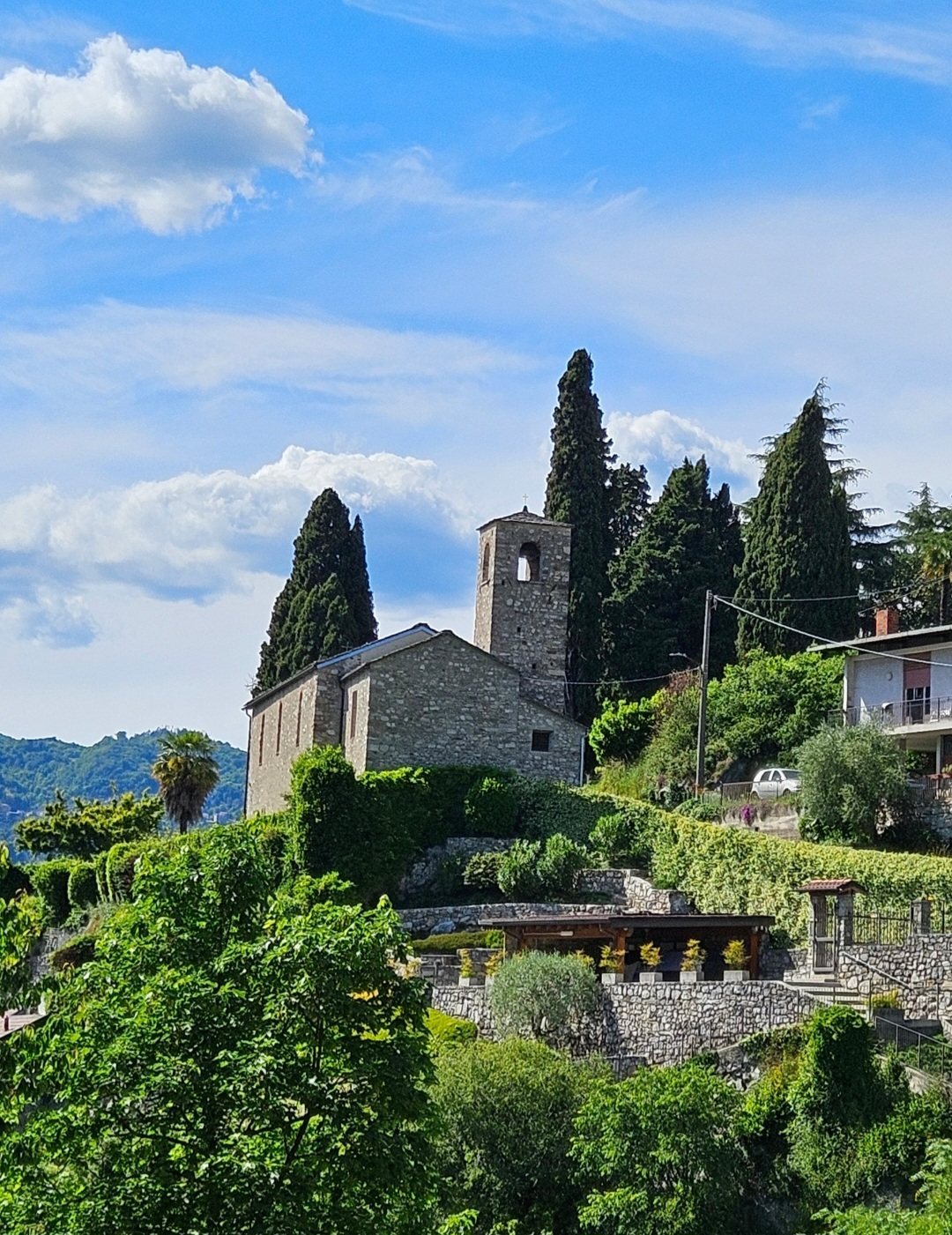
The Church of Saint George (Lake Como) is a Catholic church in Mandello del Lario, Italy, dedicated to Saint George. It is one of three churches in the parish of Saint Anthony Abbot in Crebbio and belongs to the Diocese of Como, a church district overseen by a bishop. Its construction date is uncertain. A building stood on the site in the 11th century, while restoration in the 14th century gave the church its present appearance.
Origins and medieval restoration
One tradition says a crusader, a participant in medieval Christian campaigns in the Holy Land, commissioned the church after returning in the 13th century. Another legend connects its beginnings with a refuge used by a monk belonging to the Knights Templar, a religious military order formed during the Crusades. Neither account establishes a definite construction date.
Goffredo da Bussero, a medieval compiler of church records, did not include the church in his 1288 list of churches in the ecclesiastical district. The list suggests that the church itself had not yet been established by that date. Restoration work began in the 14th century and shaped its present appearance.
Early modern and later use
In 1570, historian and physician Paolo Giovio described the church in his account of Lake Como and placed it east of Mandello. On 26 March 1594, Nicola Rosaspina stipulated that at least one Mass be celebrated there each week.
From the 17th through the 19th century, the church served as a shared burial place for the hamlets of Maggiana, Lombrino, and Crebbio. Its feast of Saint George is celebrated on 23 April, the date observed for the saint’s feast in the Catholic Church.
Remains
Layout and fittings
Nave and apse
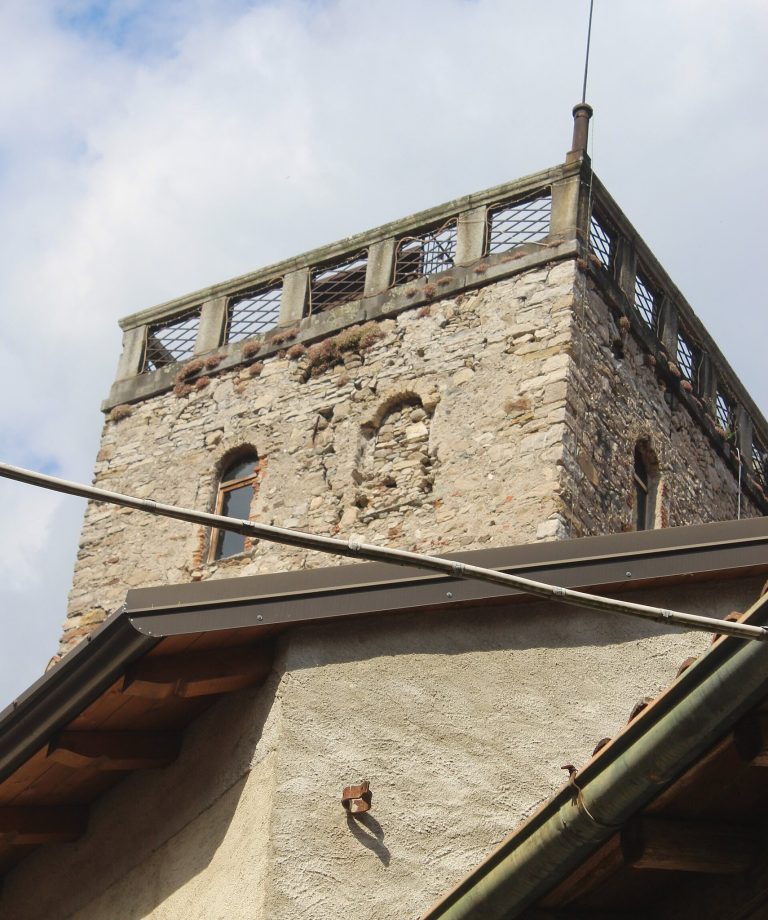
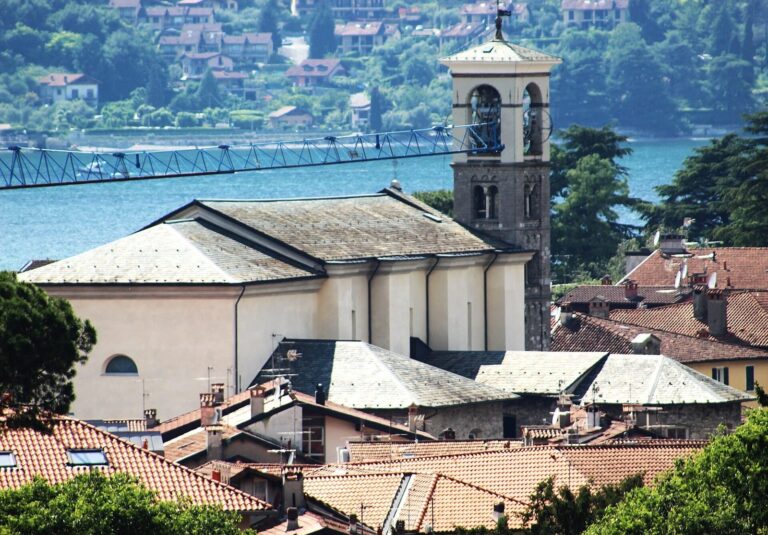
The church stands on level ground overlooking Sasso San Giorgio, along the Wayfarer’s Path. Its plan has a single nave, the main body of the church, with an exposed roof framework. At the eastern end, a quadrangular apse, the square-ended sanctuary area, is covered by a cross vault formed by intersecting vaulted sections. The eastward orientation follows early Christian practice, with the apse at the eastern end so worshippers face east.
Floor step
An edged step about 10 centimetres high crosses the church at its midpoint. Its purpose is uncertain. It may have served an older liturgical function, or raised the interior floor to guard against flooding, since the forecourt slopes slightly.
Bell tower
The square bell tower is associated with a bell installed by the Rosaspina family in 1530. The bell is named Nicolaus.
Holy-water font
A holy-water font from the original building has geometric and floral interlacing on its front and shallow-relief crosses on its sides. The interlacing motif was widespread in the Como area between the 6th and 11th centuries.
Wall paintings
Last Judgment cycle
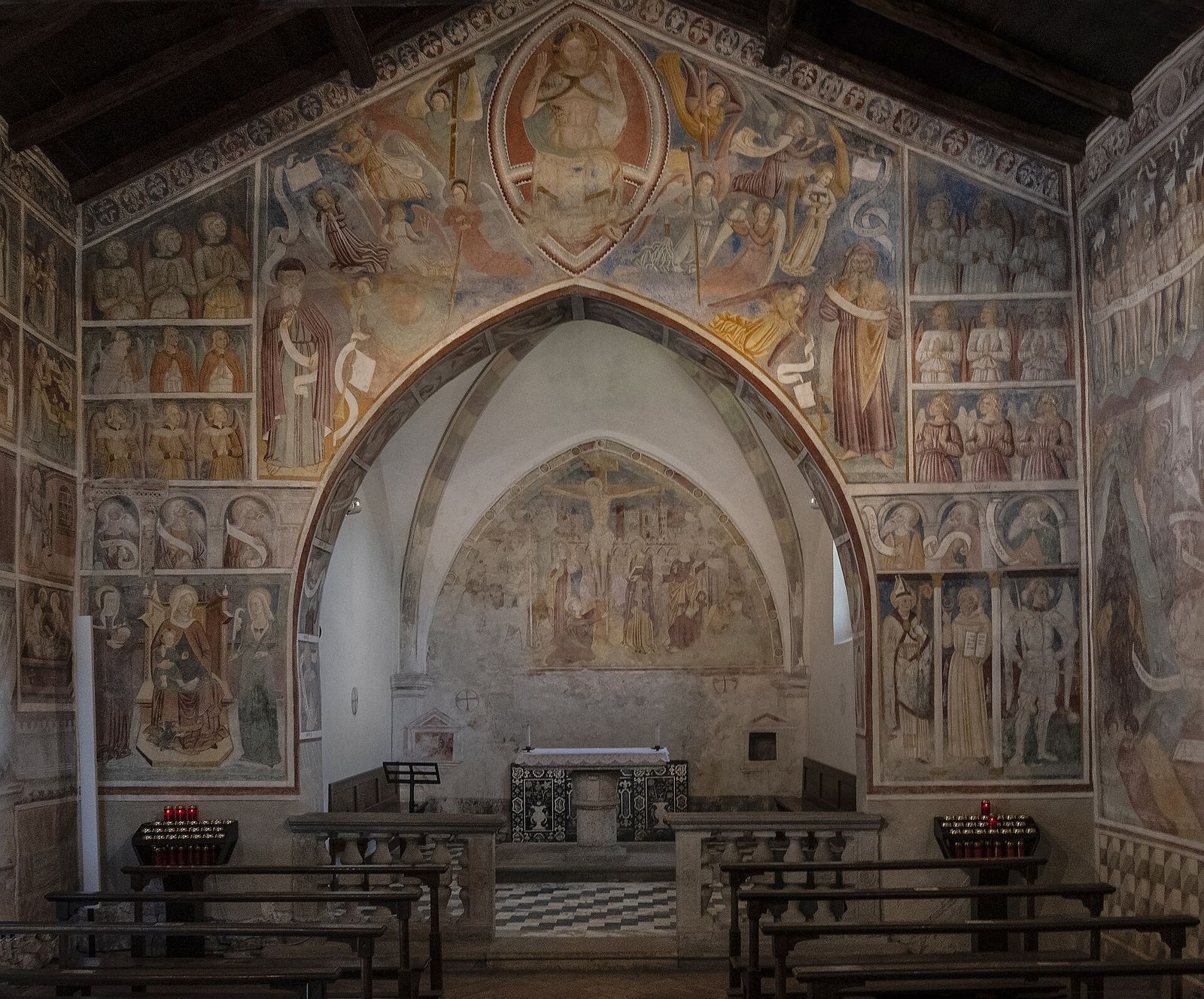
Devotional wall paintings from the 15th century cover the nave walls, the triumphal arch that marks the division between nave and sanctuary, and the presbytery, the area around the altar. They overlie earlier painted compositions. The cycle of the 1480s centers on Christ’s anticipated return at the Last Judgment. Its artistic connections remain disputed, with interpretations linking it either to the Ligurian-Piedmontese tradition or to local painting.
Christ appears among ordered groups of angels, prophets, and saints. Below him, the Virgin Mary is framed on one side by Saints Bridget and Agatha and on the other by Saints Blaise and Bernardino with the Archangel Michael. To the right of the apparition, the resurrected elect proceed in ranked order into a castle, where Mary, Peter, and Paul welcome them.
On the opposing side, Minos, the judge of the dead in Greek mythology, assigns punishments to the damned. Their penalties reflect their sins; they appear around Lucifer, a figure associated with Satan in Christian tradition, and are impaled on the branches of the tree of evil. Works of charity and mercy mark the way to Paradise, while the capital vices, the principal sins in Christian teaching, are chained to the opposite wall and identified on inscribed scrolls.
Crucifixion
A late-15th-century Crucifixion in the presbytery differs in style from the other paintings. Saint George in armor and Saint Peter appear with the damned before a walled city, probably intended as a medieval-style Jerusalem.