Church of Monteorsello: Roman Catholic Parish Church in Italy
Site at a Glance
- Popularity
- Very Low
- Country
- Italy
- Primary era
- Medieval
- Eras represented
- Medieval
- Civilizations
- Unclassified
- Site type
- Religious
- Remains
- Church
On this page7 sections
History
The Church of Monteorsello is a Roman Catholic parish church in Italy whose history of worship reaches back to the thirteenth century. A church dedicated to Mary appears in a notarial deed of 1271 as dependent on the parish church of Trebbio.
Medieval origins and sixteenth-century records
A separate church may have served the area before 1543. It had a baptismal font, with a cemetery beside it. Pastoral visits in the mid-sixteenth century found the church in good condition. From that century, Monteorsello belonged to the Congregation of Guiglia, a local Catholic ecclesiastical grouping.
Early modern changes
In the early seventeenth century, relics replaced others that had deteriorated. By the eighteenth century, the bell tower stood against the church wall, and the movement of its bells increasingly threatened the building’s stability.
Wartime destruction and rebuilding
The church suffered severe damage during the Second World War and was demolished. Rebuilding was completed in 1947. The parish is dedicated to the Assumption of Mary, the Catholic belief that Mary was taken into heaven. Between 1965 and 1975, the area around the altar reserved for clergy was adapted for liturgical use. The parish belongs to the Vicariate of Zocca, an administrative subdivision of the Archdiocese of Modena-Nonantola.
Remains
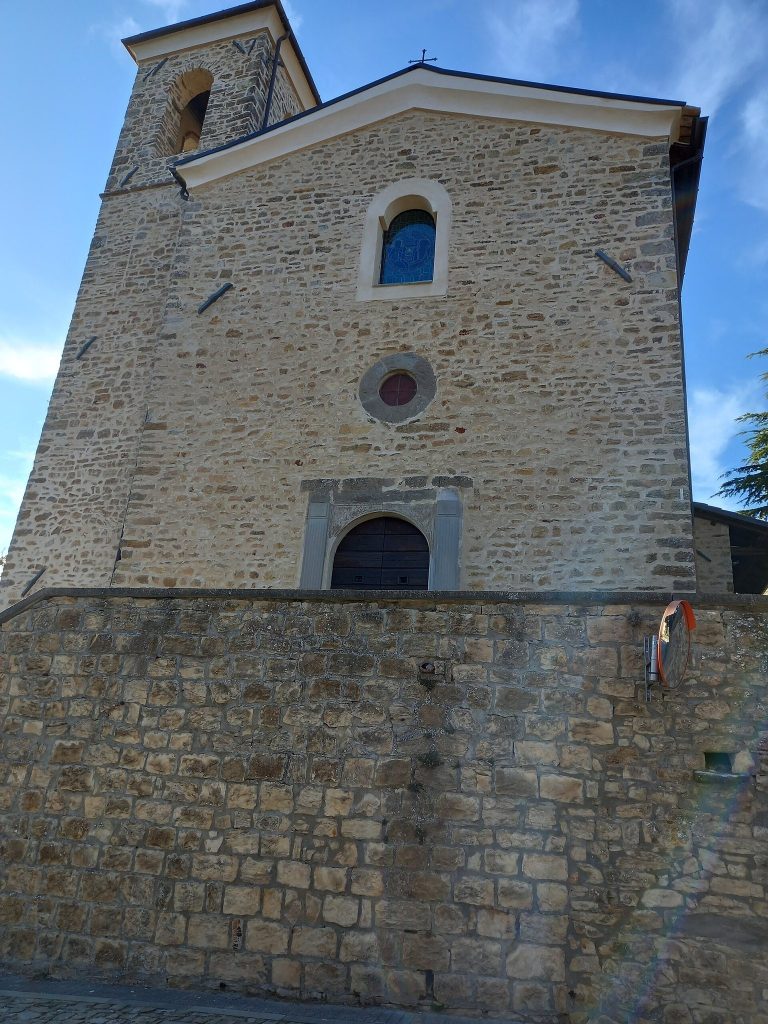
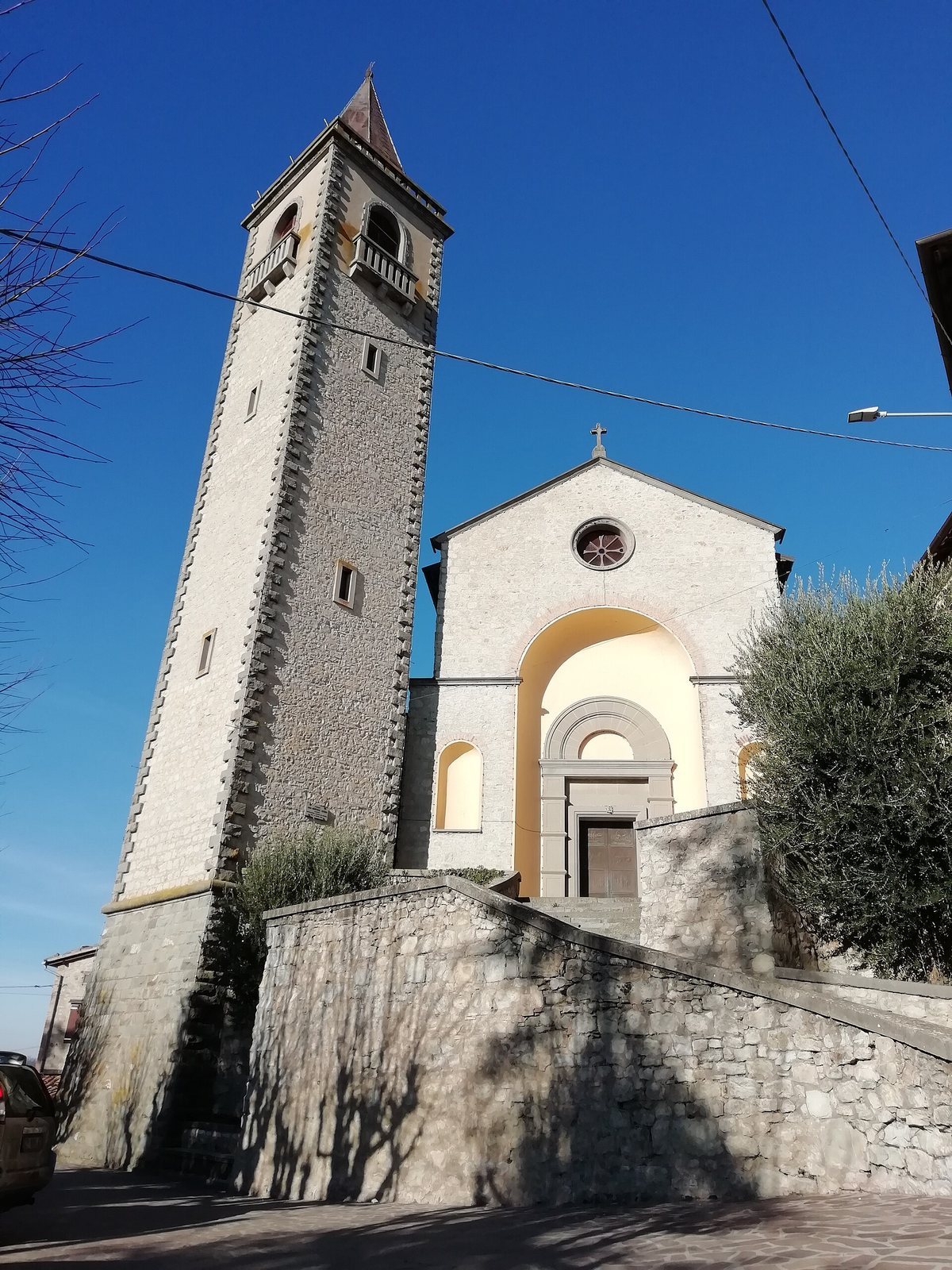
The church stands in a commanding position over the settlement. Its rebuilt structure combines a stone-faced exterior with a single nave extended by side chapels. The original bell tower remains detached from the church.
Exterior and bell tower
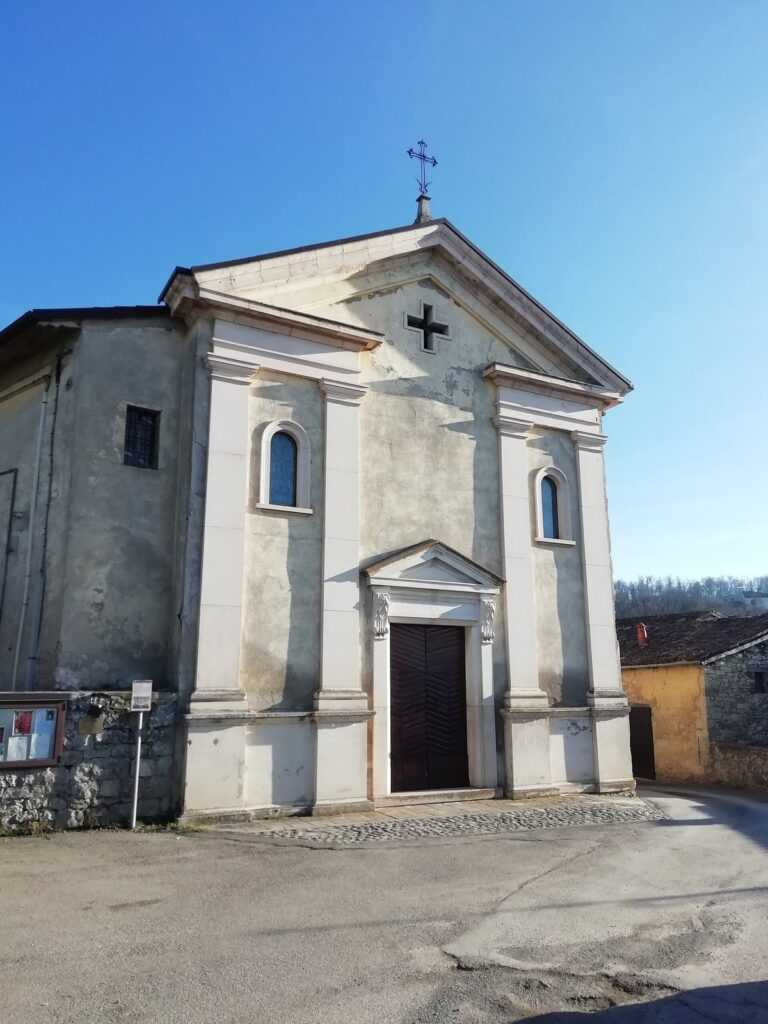
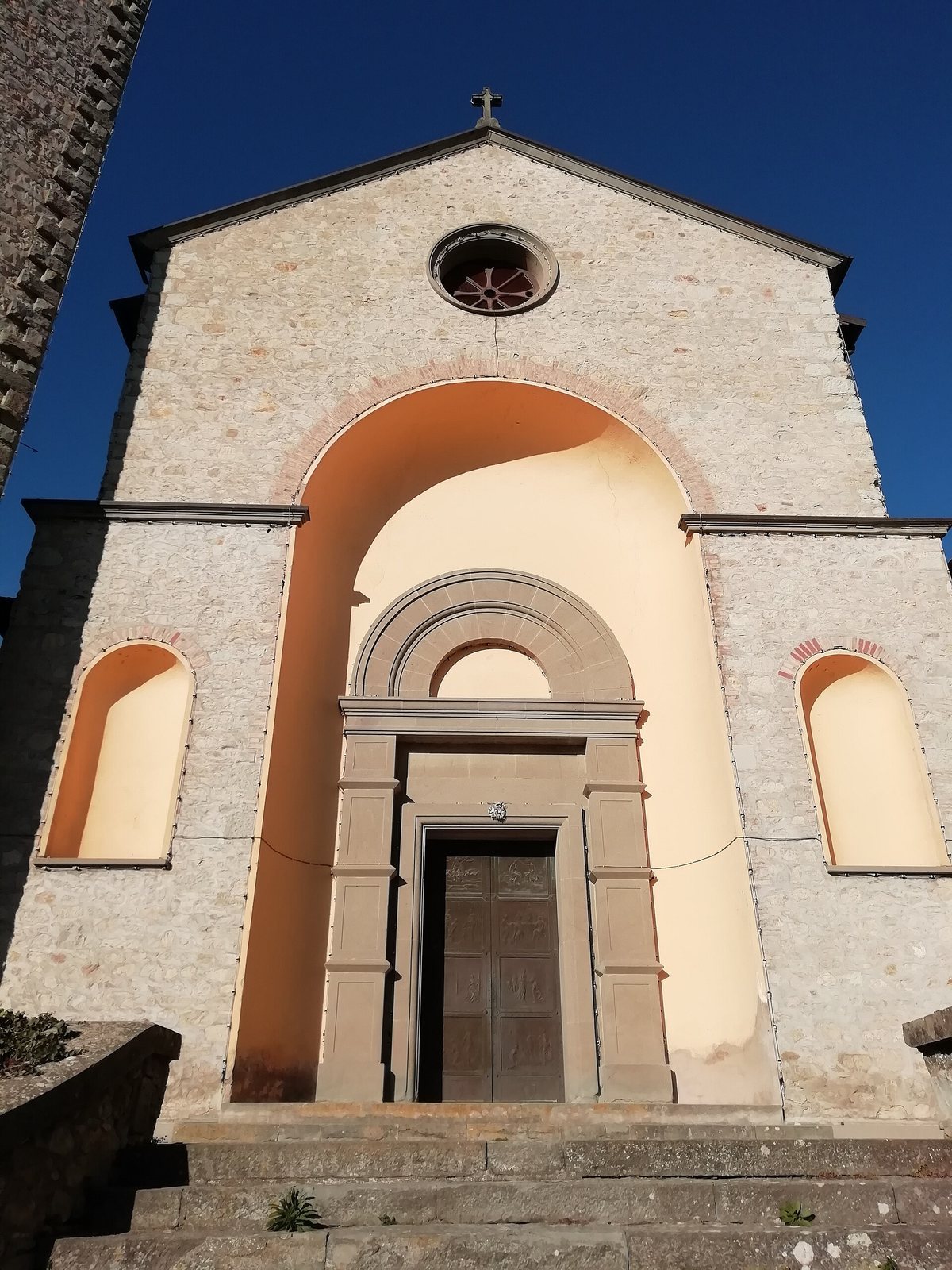
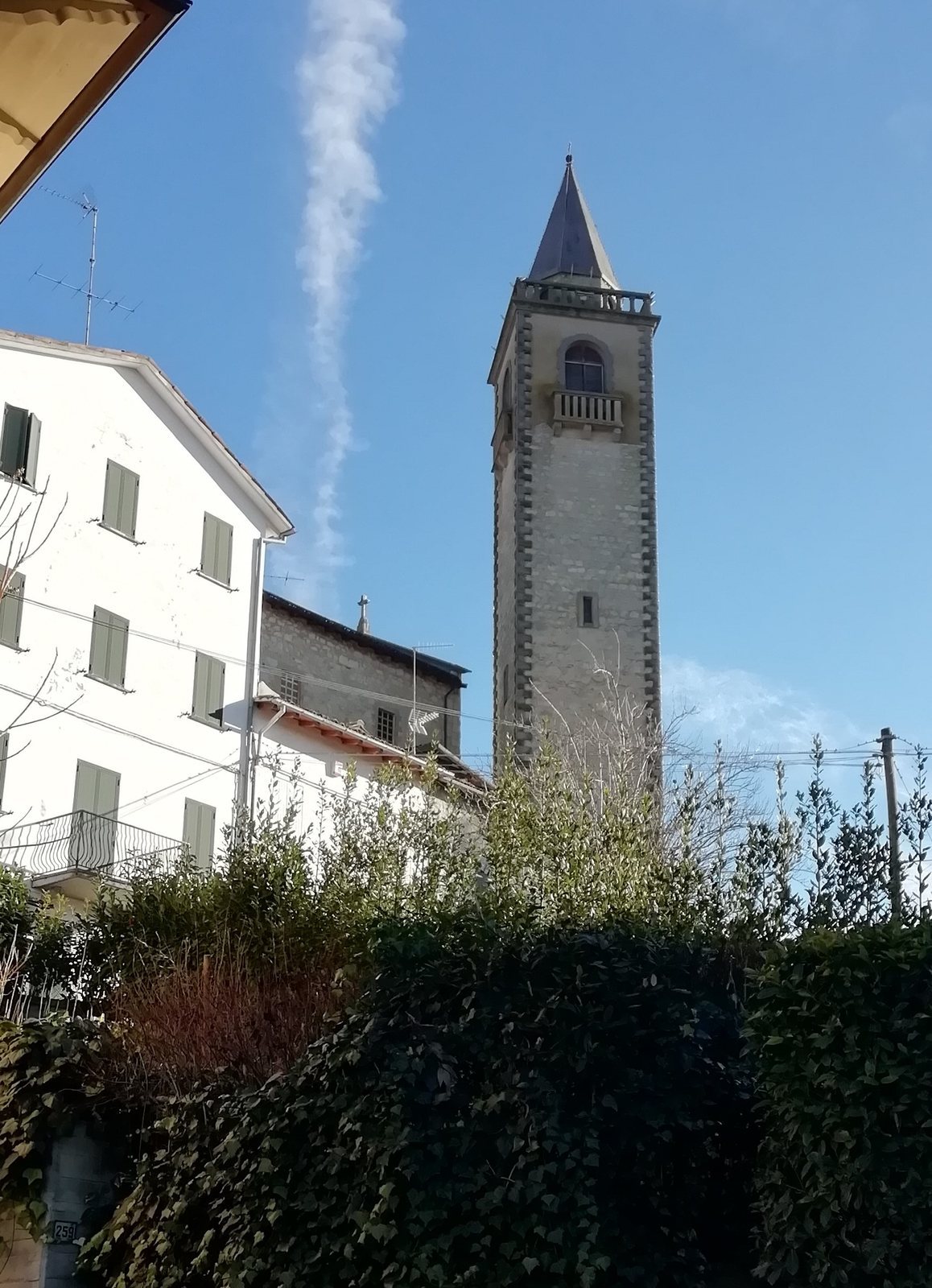
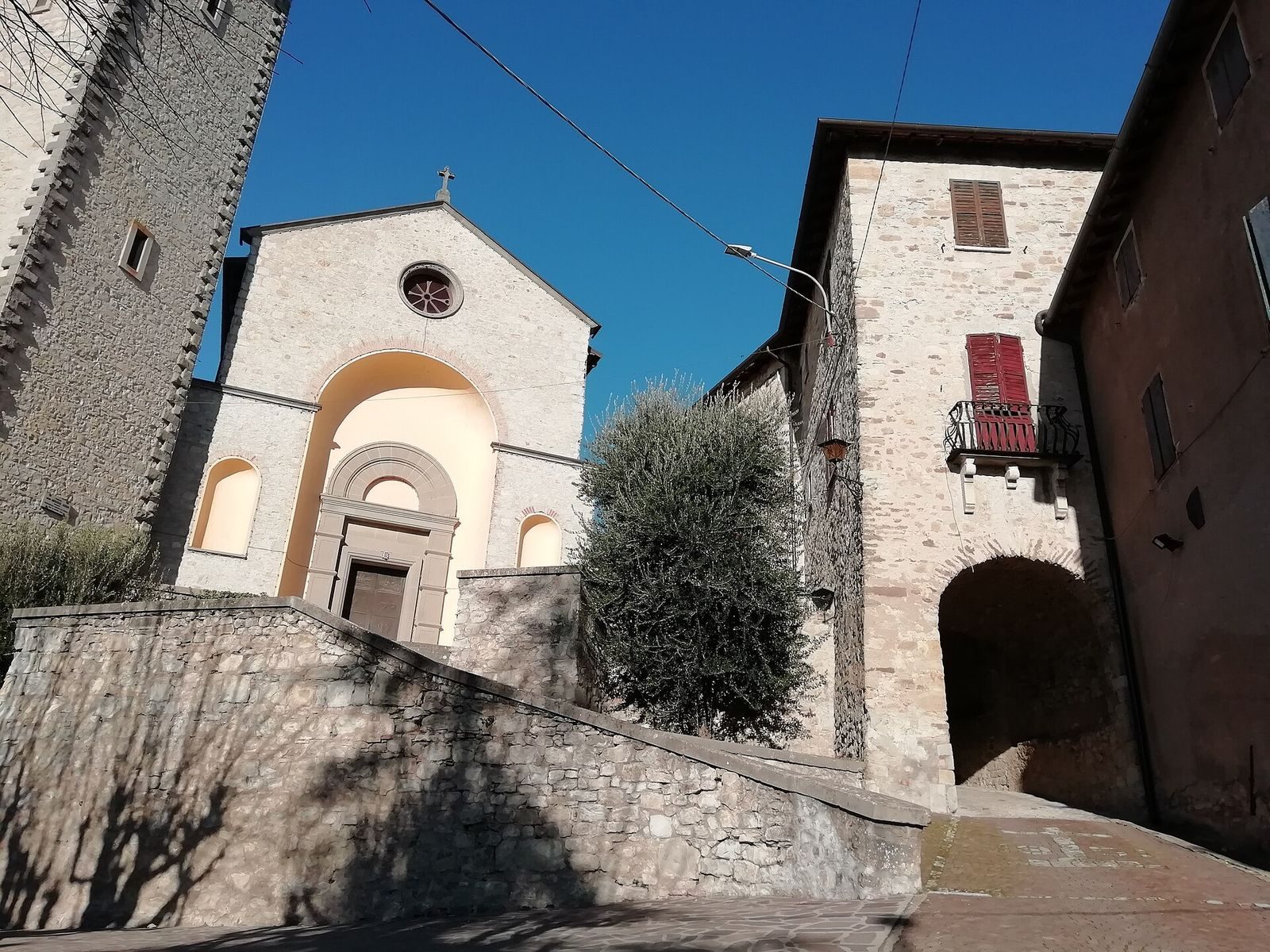
The facade is faced in exposed stone. A large arched niche frames the entrance, with a smaller empty niche on either side and a circular rose window above. Curved tiles cover the roof. To the left of the church, the detached bell tower has a bell chamber with four windows, each with a single opening, and a balcony.
Interior and furnishings
The nave opens into side chapels, while the slightly raised presbytery has a rectangular base and a barrel vault, a continuous semicircular ceiling. The original high altar remains in place. The church also preserves a fifteenth-century processional cross, carried in religious processions, and a terracotta Madonna and Child dated to 1545. The statue is attributed to Antonio Begarelli, a sixteenth-century sculptor from Modena associated with terracotta work.