Chiesa dei Santi Marciano e Nicandro: A Parish Church in L’Aquila
Site at a Glance
- Rating
- 4.5
- Popularity
- Very Low
- Country
- Italy
- Primary era
- Early Modern
- Eras represented
- Medieval, Early Modern, Modern
- Civilizations
- Italian, Kingdom of Naples, Kingdom of Sicily, Spanish
- Site type
- Religious
- Remains
- Church
On this page15 sections
History
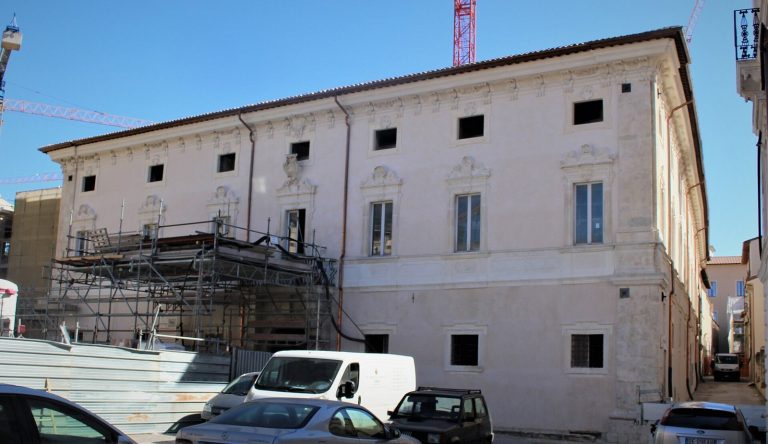
Chiesa dei Santi Marciano e Nicandro is a Roman Catholic church in the historic center of L’Aquila, Italy, at the heart of the San Giovanni quarter. Its origins date to the first half of the thirteenth century, when residents of Roio built it as L’Aquila was founded. After Manfred, king of Sicily and son of Emperor Frederick II, destroyed the city in 1259, Roio residents rebuilt the church from 1266. In 1276, as the church of San Giovanni in the Lucoli district lost importance, city captain Lucchesino da Firenze, a civic official who could shape urban divisions, made this church the principal church of a quarter under a new city plan. It became an architectural and practical focus for the area and one of L’Aquila’s important parishes, known for its architecture and financial resources. The church belongs to the Roman Catholic Archdiocese of L’Aquila.
Medieval and early modern development
The church was embellished during the fourteenth century and later had a square-plan bell tower, which has since been lost. In the sixteenth century it was regarded as one of L’Aquila’s most beautiful churches.
Rebuilding after the 1703 earthquake
The earthquake of 1703 devastated the church. It was rebuilt on a reduced scale in Baroque style, a later ornate European artistic style, and its original Romanesque portal, from a medieval architectural tradition, was reused. The Agnifili Monument, made by the Renaissance sculptor Silvestro dell’Aquila for L’Aquila Cathedral’s presbytery, was damaged in the earthquake, removed, and dismantled. A lunette from the monument was later installed in this church.
Earthquake damage and restoration
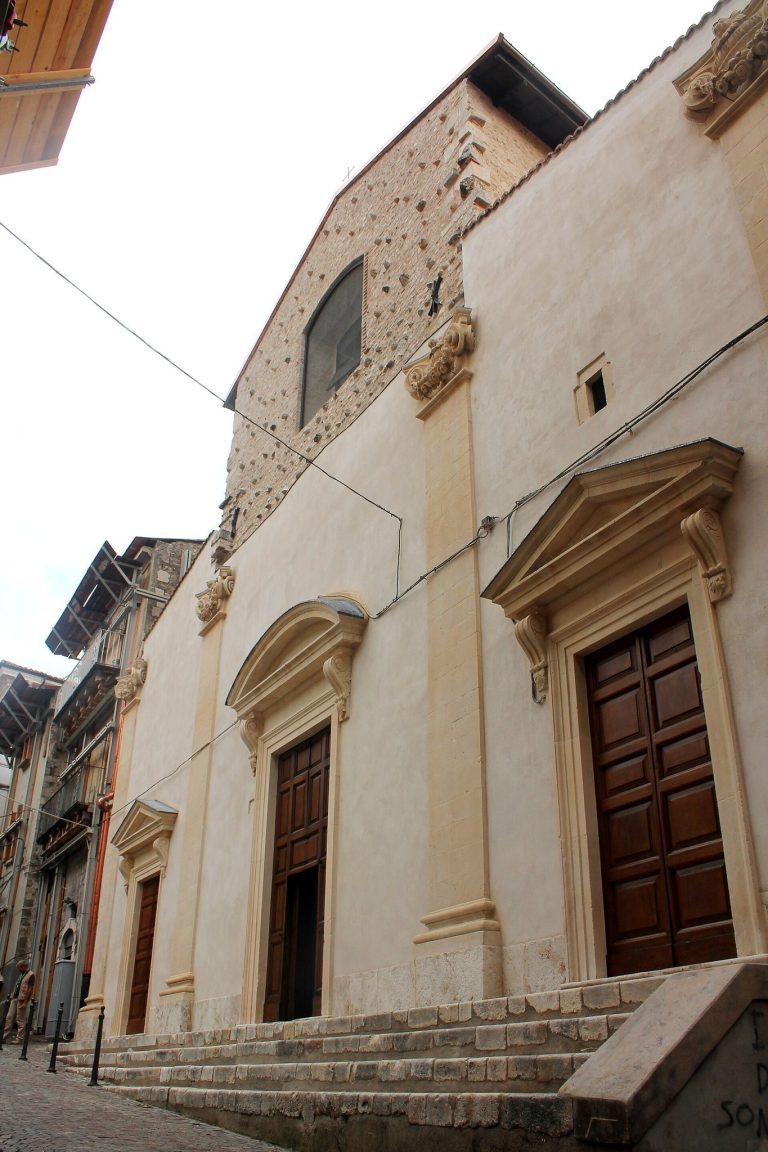
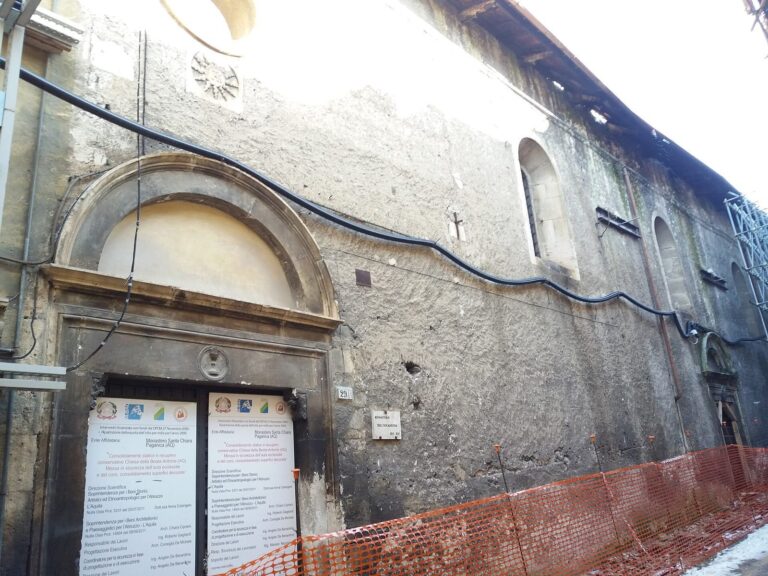
The 1915 earthquake led to the replacement of the original rose window. The tiled floor and marble balustrade were renewed in the wake of the earthquake and a military occupation. In 1940, the facade underwent major restoration using a conjectural design modeled on other Romanesque facades in L’Aquila; before this work, its portal was the facade’s only Romanesque element. The 2009 earthquake caused severe damage, including major cracks in the facade and side walls, and restoration work followed.
Remains
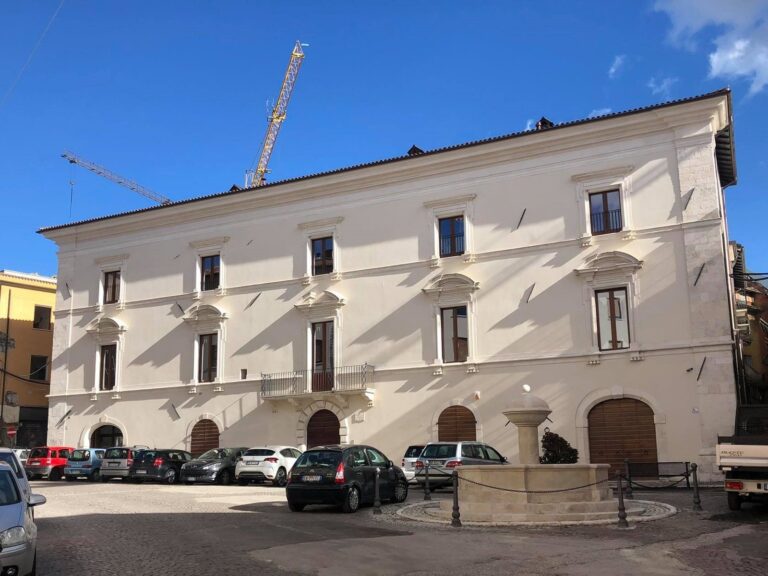
The church stands at the heart of the San Giovanni quarter, near Piazza del Duomo and at the head of a triangular square with a fountain. Its interior centers on a single hall with four niches and corresponding altars. A screen containing the high altar conceals a broad transept, the crosswise part of a church, and an earlier apse, the sanctuary end, divided into three parts. The earlier building remains recognizable in the apse, presbytery, the area around the main altar, and the clergy house behind the high altar.
Facade and portals
Facade
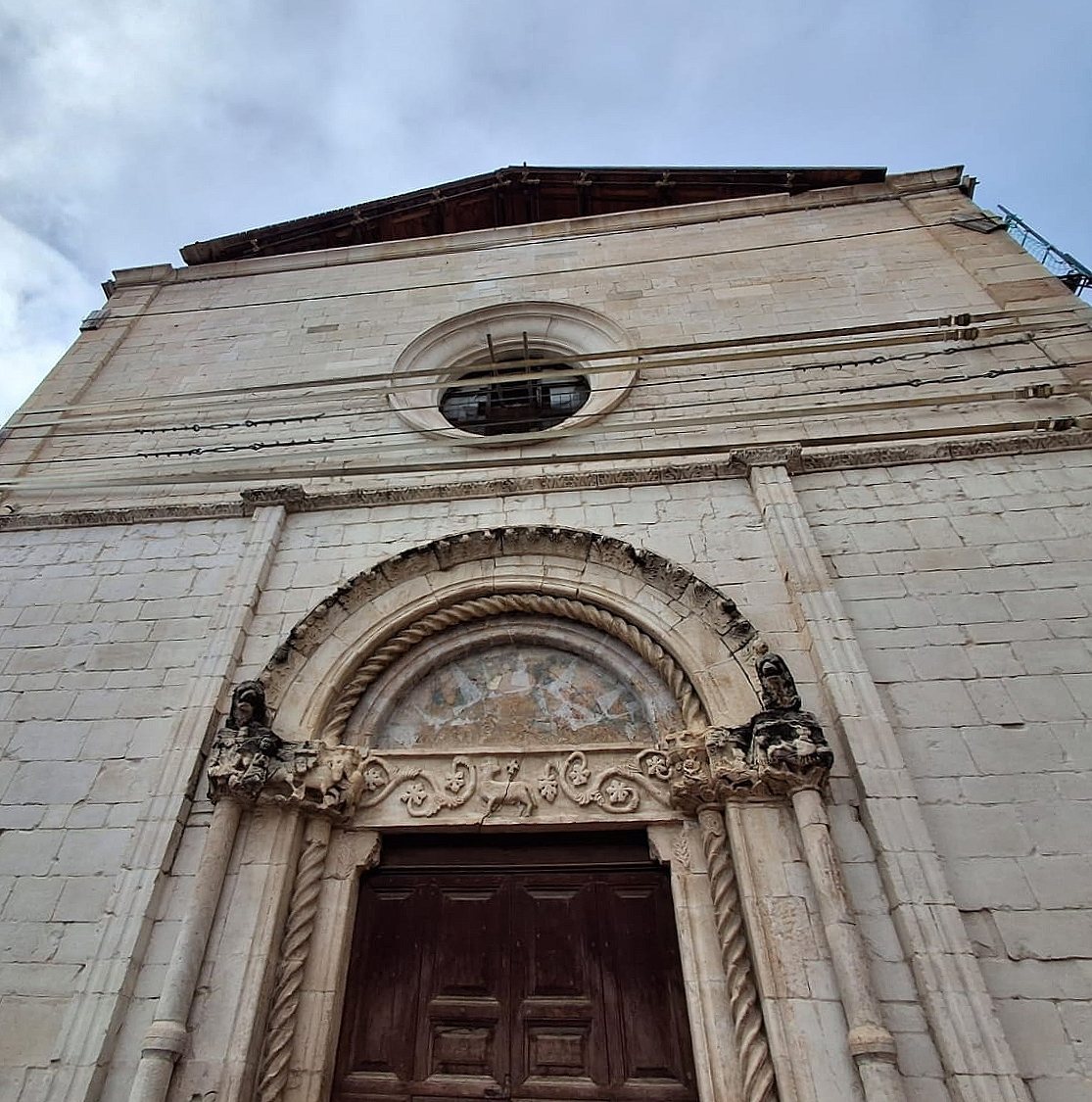
The facade is faced in white stone and arranged in two horizontal levels, separated by a projecting band decorated with plant forms. Two fluted pilasters, flat wall supports with vertical grooves, divide the lower level into three sections and frame the central portal. A circular opening occupies the center of the upper level.
Central portal
The portal’s carved capitals show symbols of the Four Evangelists on the left and apparently the Adoration of the Magi on the right. Two lions above them were intended to ward off harm. Slender twisted columns beside the doorposts continue above the semicircular panel into the arch molding, creating contrasts of light and shadow. Plant carvings and a Lamb of God, a Christian symbol for Christ, decorate the lintel. The lamb has a halo marked with a cross and holds in its right forepaw a staff topped by a cross with expanded arms. The faded panel above depicts the Annunciation and is dated to between the late fifteenth and early sixteenth centuries.
Side portal
The side portal’s semicircular panel depicts the Madonna and Child between two cherubs. The standing Child raises a hand in blessing and wears a light garment over his left shoulder and chest, leaving much of his body uncovered. The Virgin wears a high-waisted dress and a brooch shaped like a cherub; with her right hand, she holds part of Christ’s garment.
Interior and artworks
Hall and ceiling
Pairs of ornate Corinthian pilasters, flat wall supports attached to a surface, divide the long walls into bays. The spaces between them contain Baroque altars with distinctive curved, trapezoidal upper sections. A flat wooden ceiling spans the hall and carries an oil painting by Gaetano Sogliaceroni of the Madonna with Saints Marcian and Nicander.
Wall paintings
Paintings in the Renaissance style, a revival of classical forms in European art, on the interior face of the facade depict Saints Marcian and Nicander and episodes from their lives. Near them, to the left of the entrance, a fragment shows Saint Catherine in the late Gothic style, a later medieval artistic tradition.
High altar and Death of Saint Joseph
A column of fine white marble excavated at Amiternum, an ancient Sabine and Roman settlement in Abruzzo, supported the high altar. Above it is a painting of the Death of Saint Joseph. Two small brackets beside the painting hold statues of Saint Peter and Saint Marcian, made by local sculptors associated with the circle of Pompeo Cesura, a sixteenth-century Italian painter and sculptor.
The painting shows the dying Joseph attended by Christ and Mary, with angels behind them. One angel points toward a dove representing the Holy Spirit. Above, God the Father receives Joseph’s soul among clouds and cherubs. An inscription panel below reads, “Protector and refuge of those who struggle.” The scene draws on the apocryphal History of Joseph the Carpenter, a Christian text outside the biblical canon. It gives Joseph’s age at death as 111 and tells how an angel warned him that death was near. Joseph went to Jerusalem, fell ill on his return, and found comfort only in Jesus’s presence.
Madonna and Child with Saint Cajetan
A painting of the Madonna and Child with Saint Cajetan was originally placed on the presbytery’s right wall. Its date is uncertain, and it is attributed to an unknown painter from a central Italian workshop. The Virgin appears above among clouds and cherubs, while Cajetan kneels among angels and receives the Child. Two angels hold a lily, an attribute shared by Cajetan and the Virgin; another carries a Gospel book inscribed with the words “Observe and act,” a phrase from Matthew’s Gospel. The image relates to an episode Cajetan recounted in a letter to Sister Laura Mignani, his spiritual confidante: during his first Mass, the Virgin appeared and placed the Child in his arms.
Sacristy works
The sacristy preserves a Pietà by Pietro Bugni, dated 1751, depicting Mary mourning the dead Christ. It also holds a silver processional cross decorated by working the metal surface with tools, made by Gianfrancesco Fuschi.