Chester City Walls: Roman and Medieval Defenses
Site at a Glance
- Country
- United Kingdom
- Primary era
- Medieval
- Eras represented
- Classical, Medieval, Early Modern, Modern
- Civilizations
- Anglo-Saxon, British, English, Roman
- Site type
- Military
- Remains
- Wall
On this page16 sections
History
Roman fortress defenses
Chester city walls are a defensive circuit in the United Kingdom, first built for the Roman fortress of Deva Victrix. Work on the fortress’s defenses began between AD 70 and 80, after Legio II Adiutrix established the fortress around AD 74 or 75. From about AD 90, Legio XX Valeria Victrix carried out a rebuilding programme that included the walls. Stone construction began around AD 100, but stopped in the early second century, perhaps before the work was complete. The stone defenses were finished more than a century later, and major repairs followed in the fourth century.
Saxon and medieval city
In 907, Æthelflæd, an Anglo-Saxon ruler of Mercia, refounded Chester as a burgh, or fortified settlement, during the kingdom’s reconquest of Mercia. The defenses were strengthened, including repairs to Roman wall sections on the north and east. Roman stones, among them tombstones, were reused in the walls at an uncertain date. The Domesday Survey, a major survey of England commissioned by William the Conqueror, also refers to repairs.
After the Norman Conquest of England in 1066, William’s army reached Chester in 1069–70, and the king ordered a castle to be built. The walls were extended west and south to enclose it, creating the circuit around the medieval city. Watergate, Shipgate, and Bridgegate formed part of the expanded defenses. Shipgate and Bridgegate were in place by the 1120s, and the complete medieval circuit is thought to have been finished by 1162.
The Saxon ditch was filled and new ditches dug farther from the walls. Following the 1265 siege of Chester Castle during the Second Barons’ War, a conflict between King Henry III and a group of barons, the city excavated a larger ditch. Wall upkeep depended largely on murage, a royal grant allowing tolls on goods entering and leaving the city. Hereditary sergeants controlled the main gates, collected the tolls, and organized watches. In the fifteenth century, responsibility for murage passed to city officials, but maintaining the defenses remained difficult. Breaches occurred in 1569, 1608, and 1629, and the walls were called ruinous in 1589 and 1641.
Siege and the end of the walls’ defensive role
In the early 1640s, as the English Civil War between royalist and Parliamentarian forces approached, repairs were made and further fortifications built along the walls and in the outer suburbs. Parliamentarian forces caused heavy damage during their 1645 siege of Chester, opening two major breaches. After the war, the walls ceased to serve as defenses and increasingly became a recreational route.
Walkway, transport, and conservation
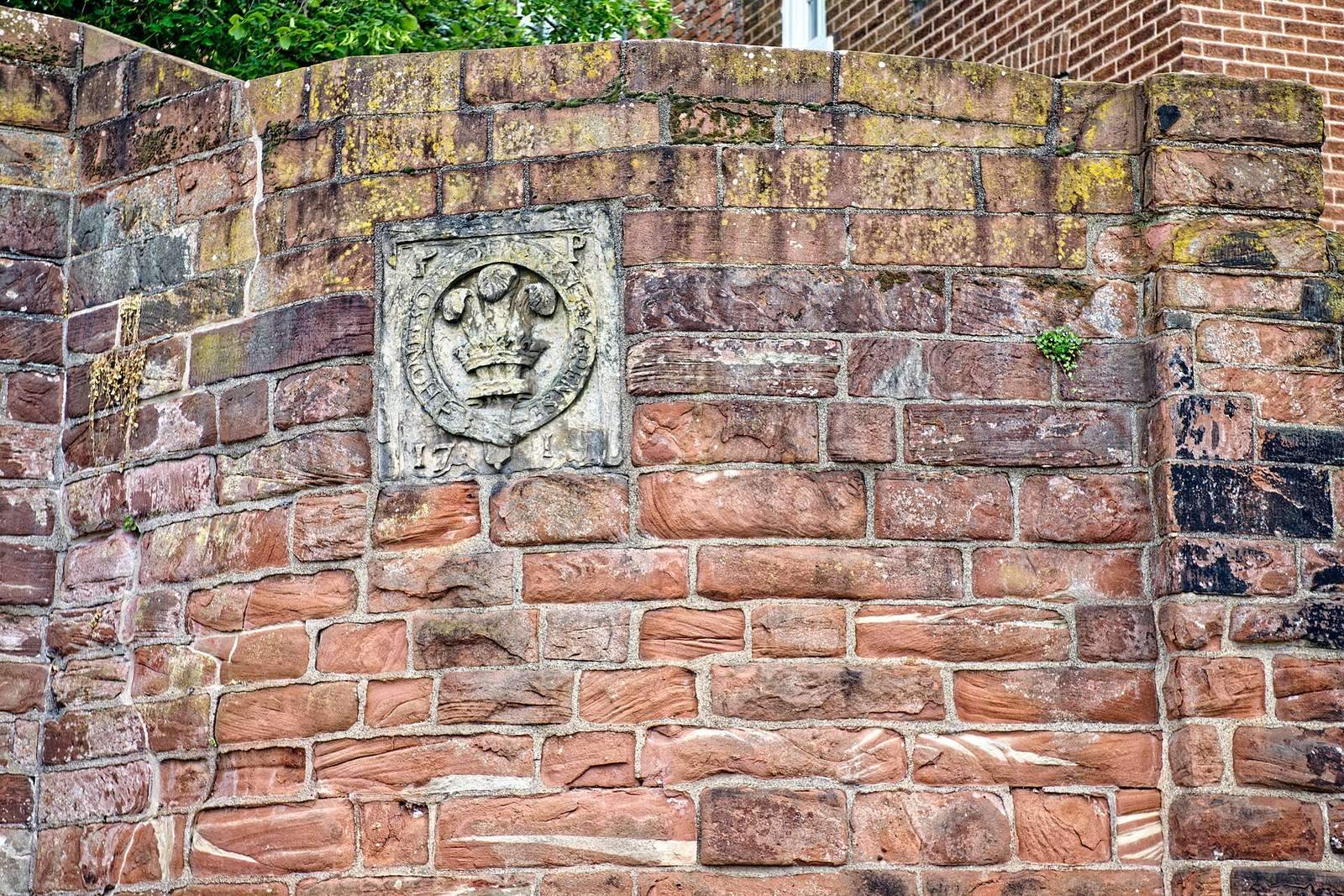
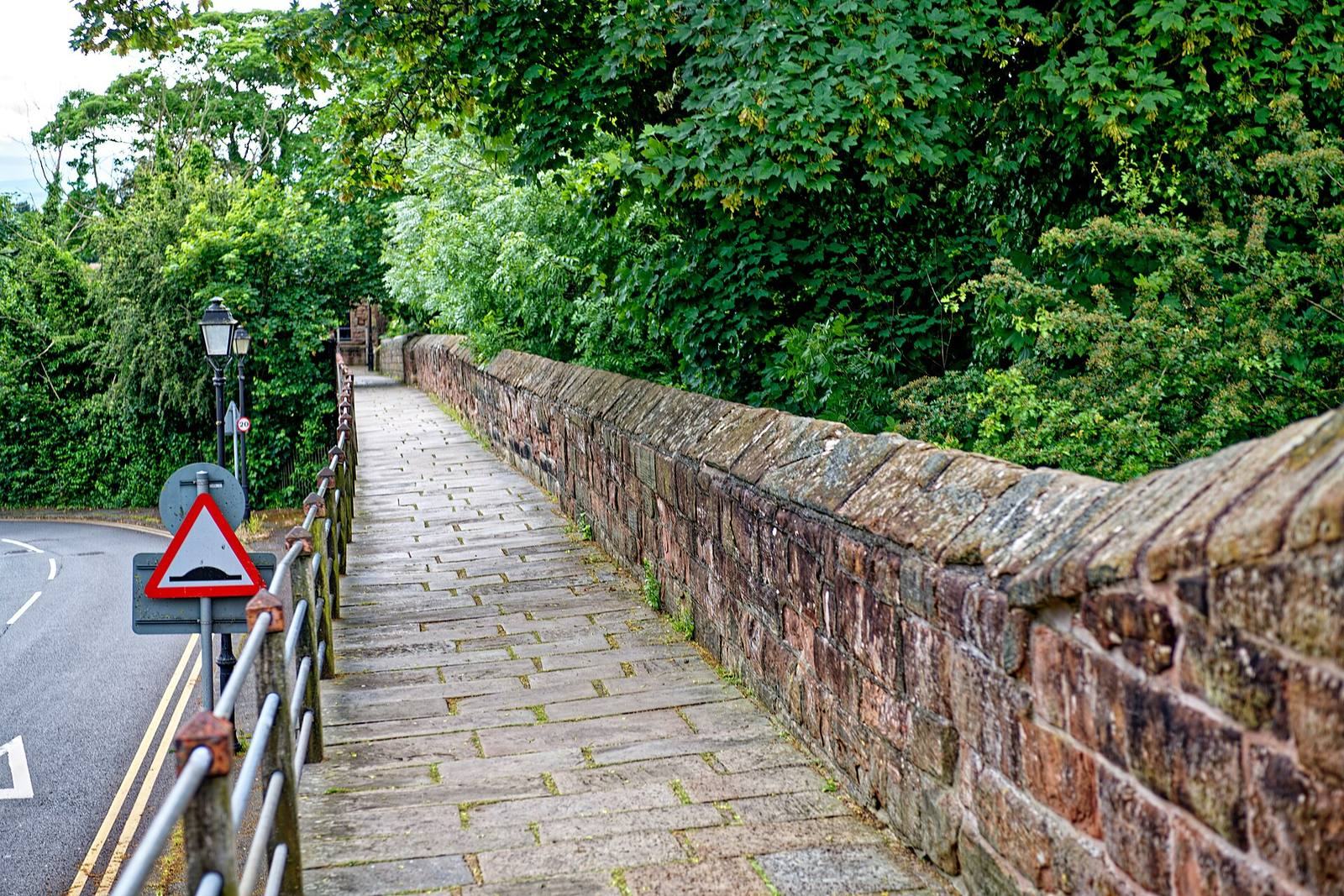
In 1707, the City Assembly paid for repairs and new paving to create a walkway, with a parapet no longer intended for defense. Recorder’s Steps, built on the southern wall in 1720, improved access for walkers; the Wishing Steps followed in 1785 on a steep stretch to their east. As traffic grew, Eastgate, Bridgegate, and Watergate were rebuilt with wider arches and the walkway carried over them, in 1768, 1781, and 1788 respectively. Northgate was rebuilt between 1808 and 1810. Because the gate had housed the city jail, a new jail was established south of the city. Its yard extended toward the river, prompting the removal of Shipgate and leaving a permanent gap in the walls.
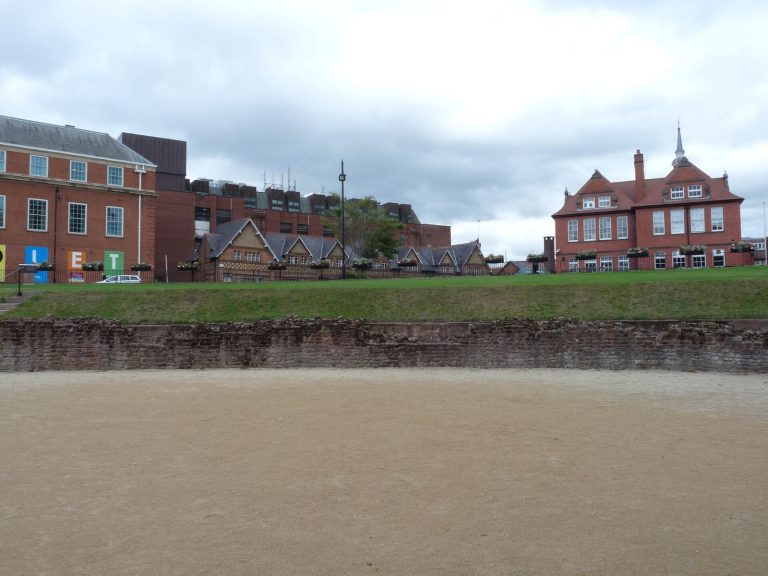
Transport construction made further openings in the circuit. Grosvenor Bridge passed through the southwest corner in the 1820s, while the Chester and Holyhead Railway cut through the northwest walls in 1846. To ease traffic near Chester Cross, a road south of the city centre breached the eastern wall west of the Amphitheatre. Newgate, carrying both the road and the walkway, opened in 1938. In the 1960s, the Inner Ring Road created a substantial breach on the west side of the city centre; St Martin’s Gate, a concrete footbridge over a breach in the northern wall, opened in 1966.
Repairs and conservation continue. A section near Eastgate collapsed in 2008 and reopened after repairs in 2010. The stretch between Morgan’s Mount and Northgate Bridge has been closed and supported since 2011 because it was moving. A southeastern section collapsed in January 2020 during nearby development work. The walls are a Scheduled Monument, a legally protected site of national archaeological or historic importance. Almost all sections are listed Grade I, indicating exceptional interest; the section between Bridgegate and County Hall is Grade II*. They are Britain’s most complete Roman and medieval defensive town walls.
Remains
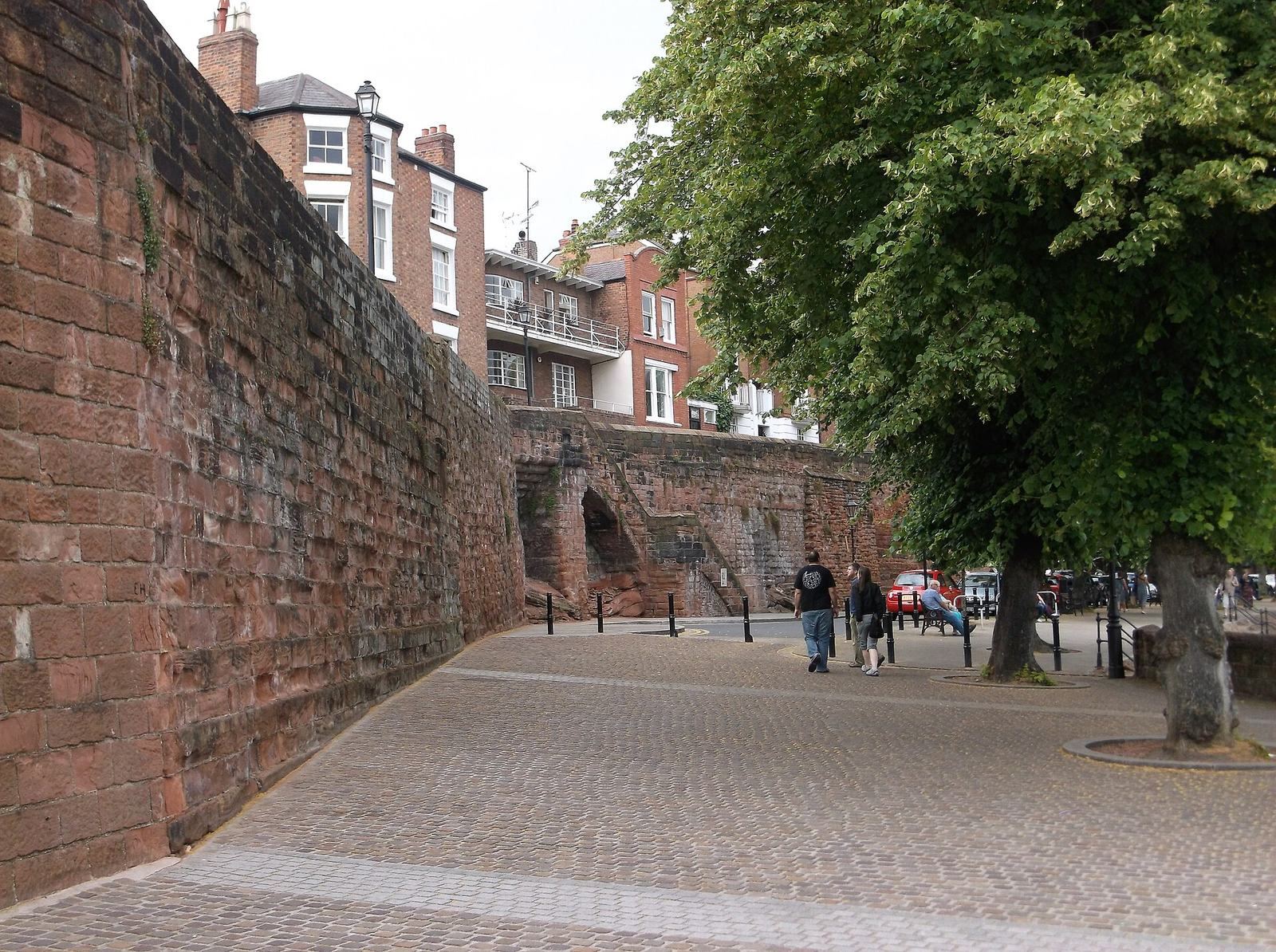
The almost rectangular circuit encloses the former medieval city. Its raised walkway is about 2.95 km long, and the circuit is also described as nearly 2 miles (3.2 km) around. The path is continuous apart from a short stretch in the south. Roman defensive remains and medieval extensions form its core, with later gates and crossings accommodating roads and railway lines.
Roman defenses
Rampart, ditch, and towers
The earliest defenses consisted of an earth-and-turf rampart topped by a wooden palisade and protected by a sharply V-shaped ditch. The rampart was probably about 3 m high and 6 m wide at its base. Builders laid earth from the ditch over logs, then bound it with branches and brushwood. Wooden towers, probably about 7.5 m high with square bases roughly 4.5 m across, stood at intervals of about 160 m. A main gate on each side was flanked by wooden towers. The northern and eastern Roman gates occupied the sites of today’s Northgate and Eastgate.
Sandstone walls and gates
From around AD 100, a sandstone wall was added to the earthen rampart. Large square blocks rested on a sloping base and rose to a walkway about 4.9 m above the bottom of the wall. Above it were a carved cornice and a parapet capped with stone. The sandstone came from local quarries, and the gates and towers were also rebuilt in stone. The north gate is thought to have had one arch, while the other gates had two openings. The east gate, the fortress’s main entrance, may have risen three storeys.
Saxon and medieval circuit
Saxon defensive line
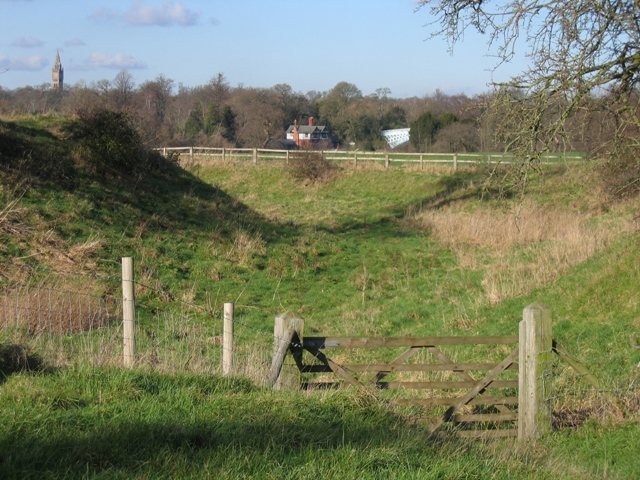
Roman wall sections on the north and east include repairs associated with the Saxon refortification of Chester. A U-shaped Saxon ditch found near the southeast corner of the Roman wall indicates a defensive extension toward the river, forming an L-shaped line. Whether this extension was built of stone or earth is uncertain. Roman stones, including tombstones, were also reused in repairs, although the date of their reuse is unclear.
Medieval walls, gates, and ditch
The medieval circuit comprised a curtain wall, meaning a defensive wall linking fortifications such as towers, together with gates and a ditch. The earlier medieval ditch was probably no more than 1 m deep; the larger ditch dug after the 1265 siege was over 2 m deep. Northgate, Eastgate, Bridgegate, and Watergate were the four principal medieval gates. The route crosses roads at these gates and at the later Newgate and St Martin’s Gate. Kaleyard Gate lies on the eastern section, while the removal of Shipgate left a lasting break in the wall.
Towers and steps
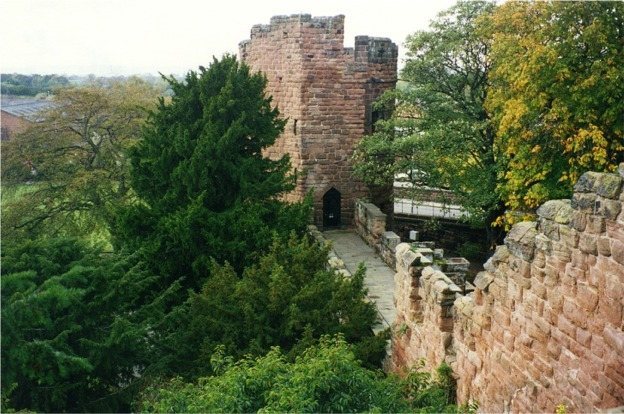
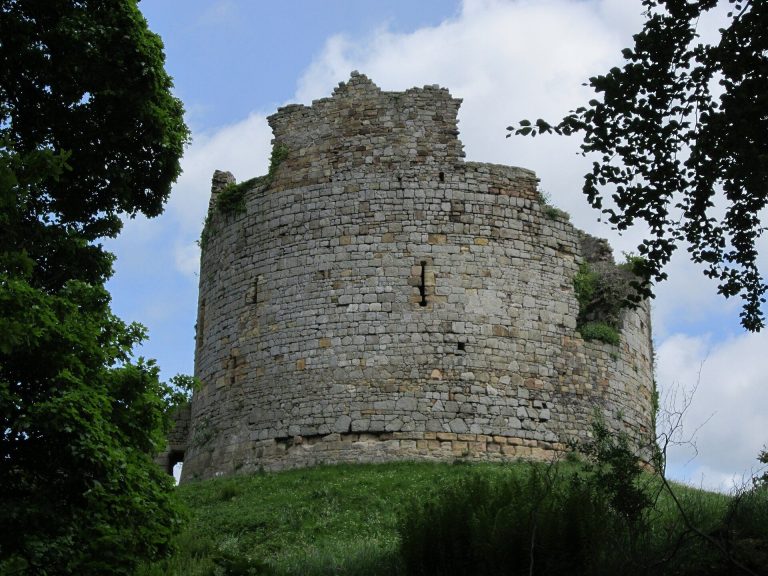
At the northwest corner, Bonewaldesthorne’s Tower is attached to the Water Tower. Pemberton’s Parlour and Morgan’s Mount stand along the northern stretch; Phoenix Tower, Thimbleby’s Tower, and Barnaby’s Tower are on the eastern section. The southern wall includes the base of a drum tower. Recorder’s Steps cross the southern stretch, and the Wishing Steps lie on a steeply inclined section east of them.
Later crossings and present condition
Road and railway openings
The circuit accommodates later transport routes in several places. Grosvenor Bridge passes through the wall at its southwest corner, while the railway runs through arches beneath the northwest corner. Newgate carries traffic below the walkway across the eastern breach. St Martin’s Gate is a concrete footbridge across the northern breach. At Eastgate, Bridgegate, and Watergate, widened arches carry the walkway above the roads.
Surviving fabric
The circuit remains almost complete, incorporating medieval structures and later alterations. The section near Eastgate has been repaired. Between Morgan’s Mount and Northgate Bridge, the wall is supported by props, and the southeastern section has a substantial break following its collapse.