Chervonyi Mayak: A Late Scythian Settlement and Cemetery
Site at a Glance
- Popularity
- Very Low
- Country
- Ukraine
- Primary era
- Classical
- Eras represented
- Classical
- Civilizations
- Scythian
- Site type
- Military
- Remains
- Fortified Town
On this page8 sections
History
Chervonyi Mayak is a Late Scythian fortified settlement and cemetery in Ukraine’s Lower Dnieper region. Built by Late Scythian communities, it dates broadly from the second century BCE to the fourth century CE. Late Scythian culture developed around the northern Black Sea during this period, and Little Scythia was a regional name for part of the ancient Scythian world.
Late Scythian settlement
Chervonyi Mayak belonged to a chain of 15 fortified settlements distributed along both banks of the Dnieper. Most residents lived in a suburb around the fortified core. The settlement may be the city of Amadoca mentioned by Claudius Ptolemy, a second-century CE Greco-Roman geographer and astronomer, in his geographical writing.
Discovery and investigation
Monks from a nearby monastery found the cemetery by chance in the mid-nineteenth century and excavated 136 graves. Scientific investigation began in 1975, when archaeologist Alexander Bodiansky encountered the site during construction in the village. Moscow archaeologist E. Simonovich excavated the cemetery in 1976–1977, and a colleague continued the work in 1986–1988. Investigators studied 108 burials during the Soviet period. In the following decade and a half, nearly 200 graves were looted and damaged.
Ukraine’s Institute of Archaeology resumed research in 2011 with an expedition led by archaeologist Alexander Simonenko. The settlement and cemetery had entered Ukraine’s national register of immovable monuments of national significance in 2009.
Remains
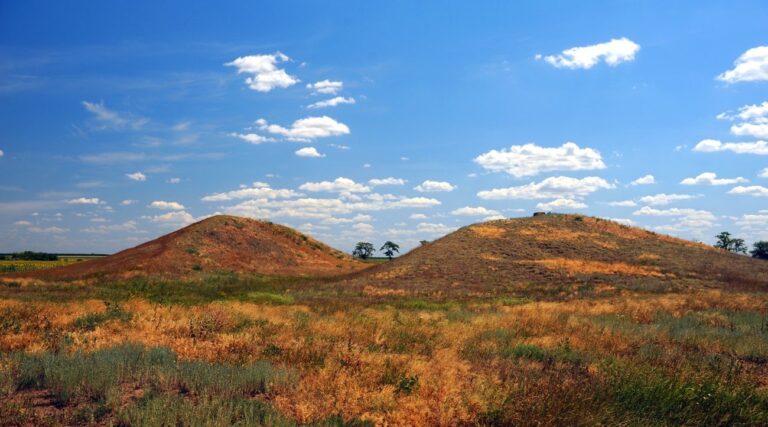
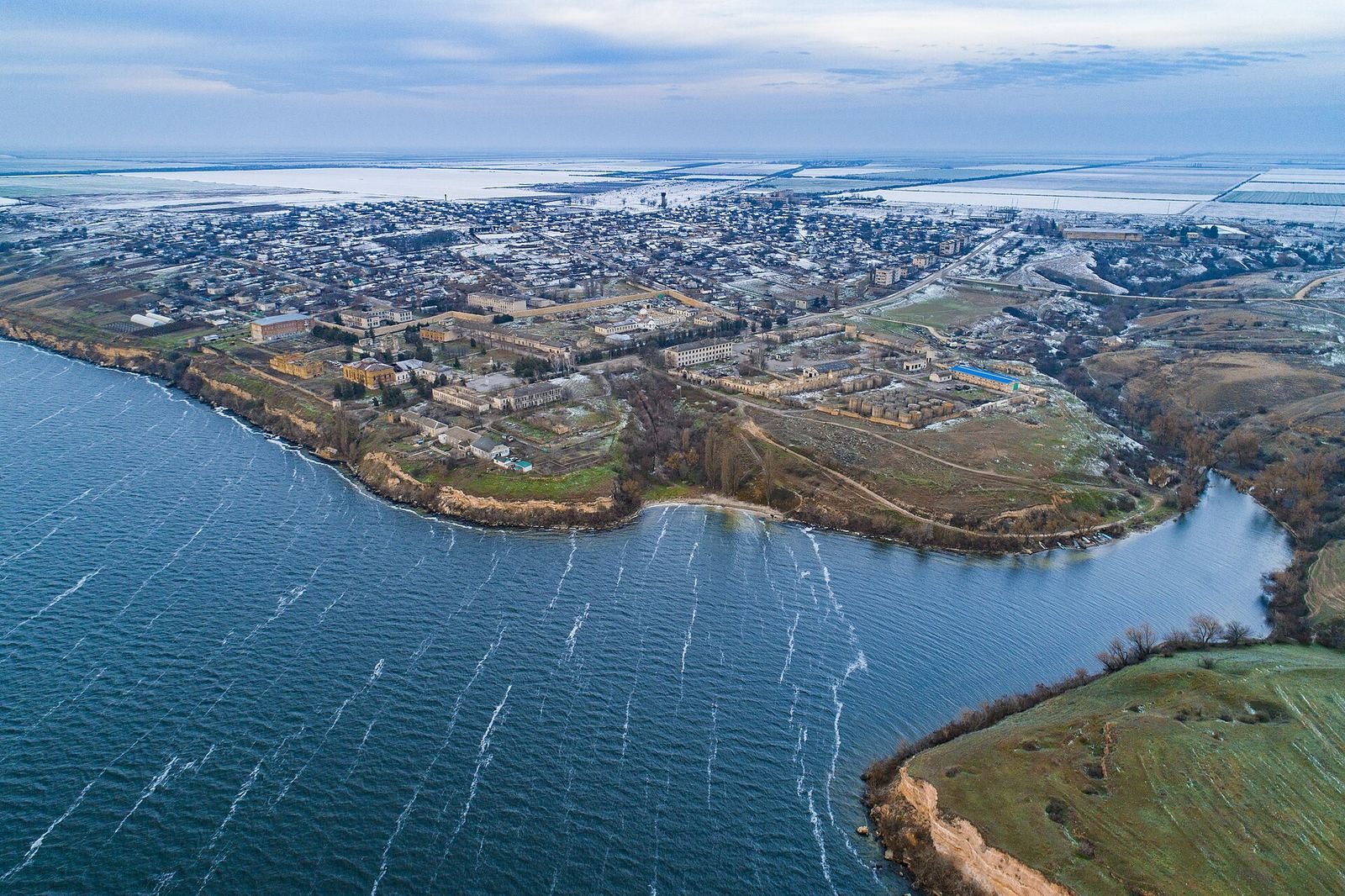
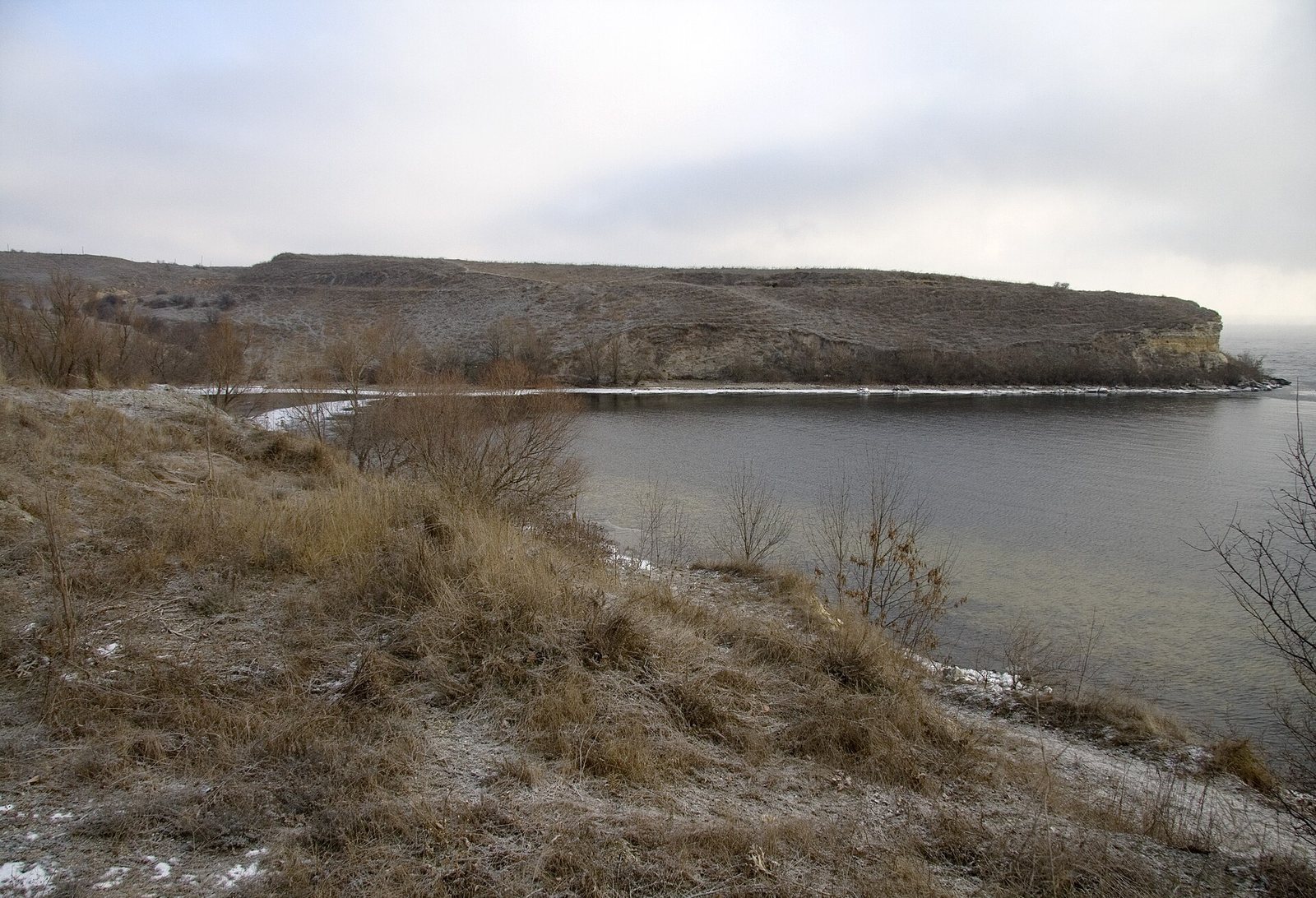
The complex lies within Chervonyi Mayak village, on the left bank of the Propasna ravine beside the Kakhovka Reservoir. It includes a fortified settlement and acropolis, a suburb, and cemeteries. Stone survives from the settlement’s defensive enclosure.
Settlement and suburb
The fortified area covers about three hectares. Its rooms were rectangular and aligned east to west. Their wall bases, built of stone, measure 0.5 to 1 metre wide and survive 0.5 to 0.7 metres high, in places with as many as four courses. Household yards lay north of the rooms.
Cemeteries and burials
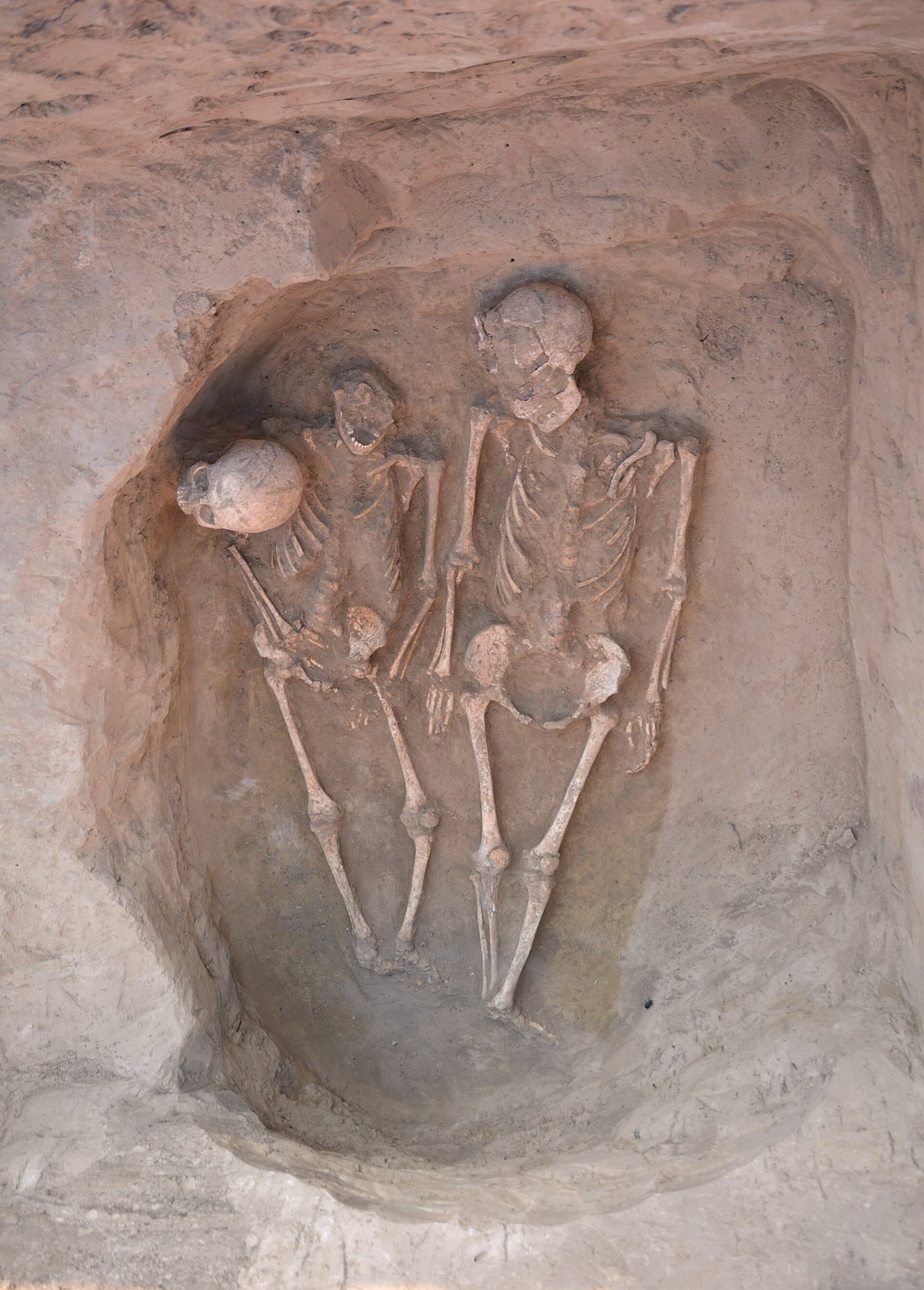
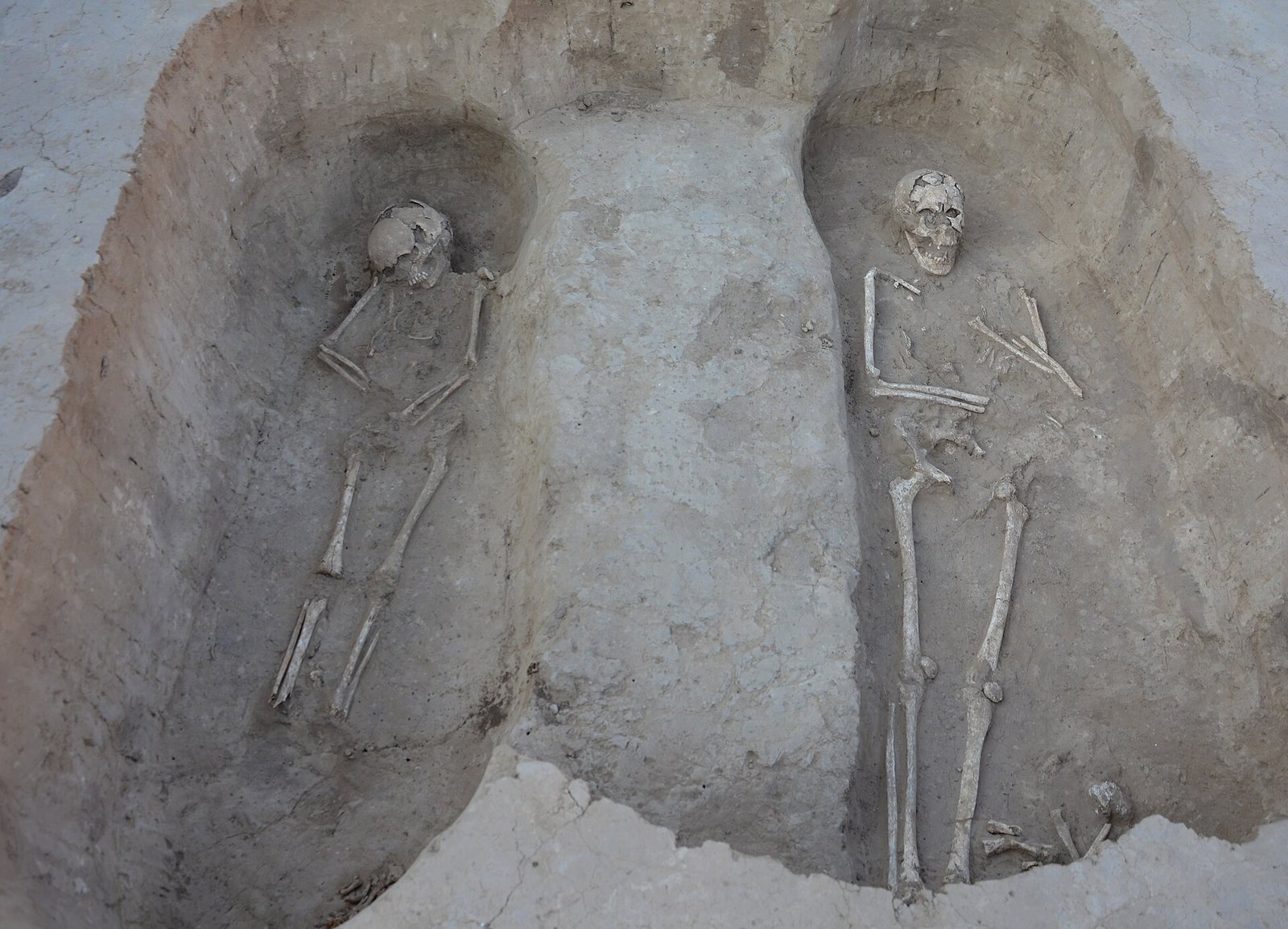
Two nearby flat-grave cemeteries, meaning burial grounds without mounds, have been identified. One dates to the first through third centuries CE; the other is 300 metres northwest of the settlement and dates to around the transition from the second to the first century BCE. Investigated graves include simple pits, earth-built tombs, and undercut graves with chambers cut laterally into the ground. Burial practices and grave goods place most burials between the late second century BCE and the first half of the third century CE, while some burial complexes may date to the fourth or fifth century CE. A double burial of a man and a woman contained an iron knife, whetstone, flint, and buckle, as well as three large beads found around the woman’s neck.
Finds
Objects associated with the settlement and cemetery include iron swords, arrowheads, spearheads, and horse bits. Pottery comprises handmade and wheel-thrown vessels, including red-clay wares and pieces with a glossy red coating. Other finds include bronze mirrors, clothing brooches, bracelets, earrings, glass and semiprecious-stone beads, ornaments, and fragments of handmade Late Scythian pottery.
Finds from other periods
Stone axes from the Bronze Age were found near the village, while the Propasna ravine yielded a flint arrowhead and part of a drilled stone axe. Three coins associated with the ancient Greek city of Olbia came from near the village; a gold Olbian coin and a fourth-century CE Roman copper coin of Theodosius the Great, a late-fourth-century emperor, were found at the settlement. Pottery fragments from the period of Rus, the medieval East Slavic polity and cultural sphere, also came from the settlement. Excavated material is held at the Kherson Historical and Archaeological Museum.