Château Pape Clément: A Historic Wine Estate in Pessac, France


Site at a Glance
- Rating
- 4.5
- Popularity
- Medium
- Country
- France
- Primary era
- Modern
- External website
- Open
- Eras represented
- Medieval, Modern
- Civilizations
- French
- Site type
- Economic
- Remains
- Production Complex
On this page13 sections
History
Château Pape Clément is a historic wine estate in Pessac, France, in the Pessac-Léognan appellation of the Graves wine region near Bordeaux. Its foundation is dated to 1252, while its medieval vineyard history is linked to Bertrand de Goth, the archbishop of Bordeaux who became Pope Clement V.
Medieval origins and the papal vineyard
In 1299, Bertrand de Goth received a vineyard property at Pessac from his brother Béraud de Goth. The estate was then called the Domaine de la Mothe. When Bertrand became pope in 1305, taking the name Clement V, the property came to be known as Pape Clément.
From 1305 to 1309, Clement V personally directed the vineyard and oversaw the development of its equipment and wine-making facilities. In 1309, he donated the Pessac property to the archbishop of Bordeaux. The archbishops and their successors retained the estate until the French Revolution. Its wines became known at the papal residence in Avignon, and the French Renaissance writer and physician François Rabelais referred to “Clémentine wine” in the early sixteenth century.
Château Pape Clément is Bordeaux’s oldest wine estate and the oldest continuously cultivated vineyard in the surrounding region. The original vineyard was planted with red-wine grapes, while white-wine grapes were planted separately across the river near Lormont.
Revolutionary confiscation and nineteenth-century expansion
During the French Revolution, the estate was confiscated as national property and auctioned in 1791 to the Bordeaux banker Samuel Peixotto. Ownership then passed through several hands. Monsieur Jarrige, formerly mayor of Pessac, acquired the property in 1824. Monsieur de Fortmanoir, also recorded as Dufort-Manoir, became its owner in 1840, followed a few years later by Monsieur Clouzel.
The Bordeaux shipowner Jean-Baptiste Clerc purchased the estate in 1858. He joined it to the adjoining Sainte-Marie-de-Bel-Air vineyard, considerably enlarged the property, and carried out major improvements to its buildings and vineyards. The present château was built in 1861. After Clerc’s death, the Bordeaux stockbroker and wine merchant Juan Cinto acquired the estate, renovating and enlarging the château.
Twentieth-century decline and rebuilding
Jeanne Marie Chédor, Cinto’s granddaughter, married André Bordes at the property in September 1929. After the First World War, the heirs reportedly sold the estate to a British owner named Maxwell. During this period, the property declined. A hailstorm on 8 July 1937 almost completely devastated the vineyard, while the estate also endured the effects of the Second World War and the expansion of Bordeaux’s suburbs.
Paul Montagne, a Bordeaux agricultural engineer who later became mayor of Pessac, purchased Château Pape Clément in 1939. With the assistance of the Bordeaux oenologist Émile Peynaud from 1949 to 1984, he began rebuilding the vineyard. Replanting started in 1950 and continued as part of the estate’s recovery.
The estate’s progress was recognized in the 1959 classification of Graves wines, which included Château Pape Clément as a Cru Classé de Graves for red wine. Its omission from the initial 1953 classification had caused controversy. The classification recognizes selected estates in the Graves region, and in this case applies to the red wine rather than the white wine.
Bernard Magrez and the modern estate
After Paul Montagne’s death, his son Léo Montagne shared ownership with Bernard Magrez. Magrez assumed the direction of Château Pape Clément in 1983, renovated the château, and gradually acquired the remaining capital over approximately a decade. He is the owner and head of the estate within the Magrez group.
Château Pape Clément now produces red and dry white wines under the Pessac-Léognan appellation. Its second wines are Le Clémentin du Pape Clément and Le Prélat du Pape Clément. Introduced in the 1980s, the second wine allowed stricter grape selection for the grand vin. Depending on the vintage, approximately 25 to 35 percent of the harvest may be marketed as second wine.
The estate produces approximately 180,000 bottles each year. Grand vin production is approximately 7,000 cases of red wine and 350 cases of dry white wine. Consultant oenologist Michel Rolland participates in the wine-making.
Remains
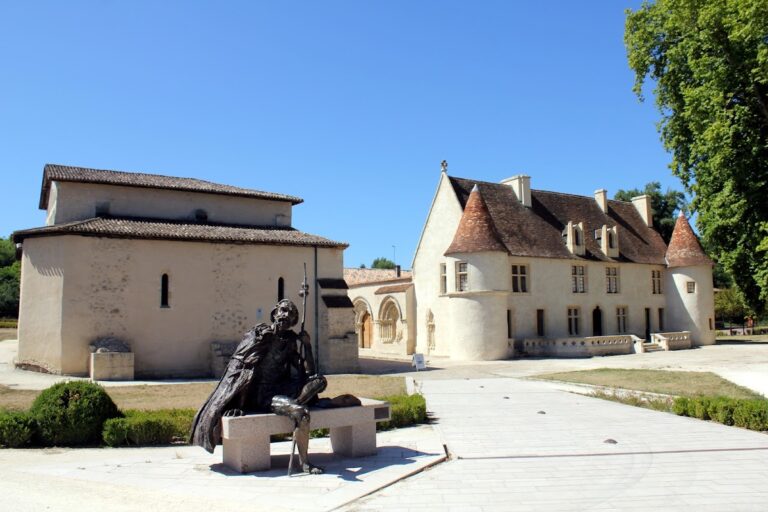
The surviving estate combines the remains of a medieval fortified earthwork, a nineteenth-century château, and a cultivated vineyard. The original property included a motte castrale, a medieval artificial mound that supported a defensive structure, positioned in the middle of the vineyard. Clement V built a residence at the foot of the mound.
Château and medieval earthwork
Motte castrale and papal residence
The motte castrale formed the medieval physical core of the property. Its position within the vineyard placed the defensive earthwork among the cultivated land, while Clement V’s residence stood at its foot. The residence expressed the estate’s connection with the pope’s personal management of the vineyard between 1305 and 1309.
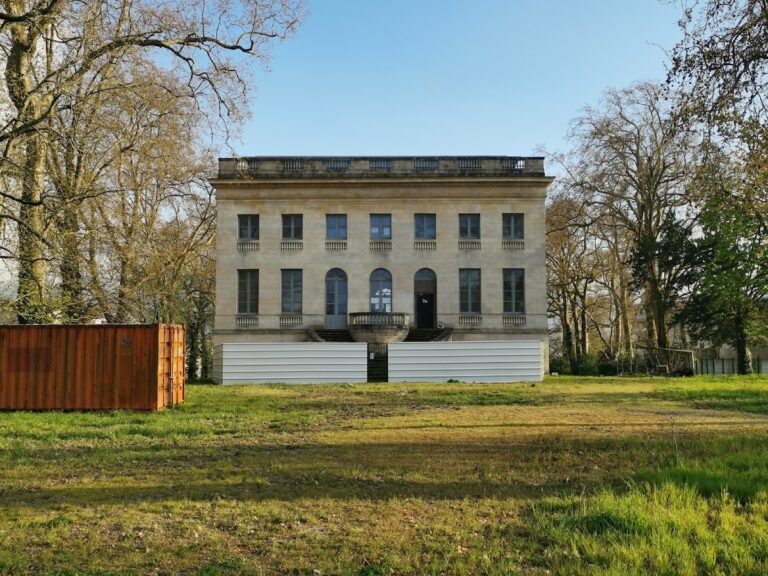
Nineteenth-century château
The present château dates from 1861, when Jean-Baptiste Clerc undertook major building work after purchasing and enlarging the estate. Juan Cinto later renovated and extended the building. Bernard Magrez carried out another renovation after taking direction of the property in 1983, giving the château its further modern phase of alteration.
Vineyard and wine-making facilities
Vineyard layout and soils
The planted vineyard covers 57.2 hectares on soils made up of pebbles embedded in sand and clay. Of this area, 50 hectares are devoted to red grape varieties and 7.2 hectares to white varieties. Approximately 62 percent of the vines are more than 25 years old, and many are more than 45 years old. Younger vines are used for Le Clémentin du Château Pape Clément.
Grape varieties
The red planting consists of 50 percent Cabernet Sauvignon, 47 percent Merlot, 2 percent Petit Verdot, and 1 percent Cabernet Franc. The white vineyard contains 48 percent Sémillon, 44 percent Sauvignon blanc, 5 percent Sauvignon gris, and 1 percent Muscadelle. The grand vin is typically composed of about two-thirds Cabernet Sauvignon and one-third Merlot, while the dry white wine generally uses roughly equal proportions of Sauvignon blanc and Sémillon, with the exact balance varying by vintage.
Processing and maturation
Grapes are destemmed by hand by two teams of 200 people working in six-hour shifts. The wines mature in oak barrels for at least fourteen months, with nearly half of the barrels being new. These facilities and practices form part of the estate’s continuing wine-making operation, alongside the vineyard and the historic buildings.