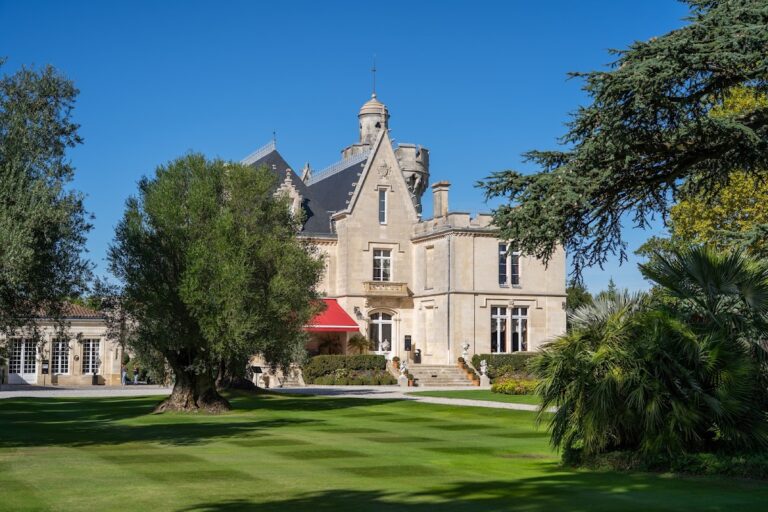
Château La Mission Haut-Brion: A Historic Wine Estate in Talence, France


Site at a Glance
- Rating
- 4.7
- Popularity
- Very Low
- Country
- France
- Primary era
- Early Modern
- External website
- Open
- Eras represented
- Early Modern, Modern
- Civilizations
- French
- Site type
- Economic
- Remains
- Production Complex
On this page13 sections
History
Château La Mission Haut-Brion is a historic wine estate in Talence, France, whose vineyard and wine-producing buildings developed from the sixteenth century onward. Its history is closely linked to the neighboring Château Haut-Brion and to the religious community that shaped the estate for nearly 130 years.
Sixteenth-century origins
The estate’s vineyard history reaches back to the Arregedhuys parcel, held by Louis de Roustaing, seigneur of La Tour d’Esquivens. In 1540, the Bordeaux merchant Arnaud de Lestonnac acquired the land and married Marie de Pontac, whose family owned Château Haut-Brion. His fourth son, Pierre de Lestonnac, began a wine-producing building in 1572, surrounding it with nine hectares of vines.
The Lazarist estate
In 1650, Olive de Lestonnac left an annuity to religious workers carrying out Christian charity in the countryside around Bordeaux. Her daughter-in-law and executor, Catherine de Mullet, first assigned the income to the Congregation for the Clergy and transferred it in 1682 to the Mission Fathers, also known as Lazarists. The Lazarists belonged to the Congregation of the Mission, a Catholic order devoted to preaching and charitable work.
The Lazarists cleared woodland, enlarged the vineyards, and improved the quality of the wines. Their administration gave La Mission a combined religious and agricultural character. They cultivated grapes for almost 130 years, until the French Revolution brought the estate’s ecclesiastical ownership to an end. They built the chapel of Notre-Dame d’Aubrion in 1698, while modernization of the older buildings and construction of a substantial residence began in 1713.
Revolutionary confiscation and nineteenth-century growth
In 1792, during the French Revolution, La Mission was confiscated as national property and sold at auction to Martial-Victor Vaillant for 302,000 livres. His daughter, Adélaïde-Marie Fleury, later sold the neglected property at auction to Célestin Chiapella in 1821.
The Chiapella family strengthened the estate’s commercial connections with the United States through family ties in Louisiana. Château La Mission Haut-Brion received a gold medal at the 1862 Universal Exhibition in London, and its wines commanded high prices in the early twentieth century. Between 1884 and 1919, ownership passed from the Société anonyme des établissements Duval of Paris to the Bordeaux merchant Ferdinand de Constans, then to Victor Coustau, and finally to the Woltner family in 1919.
The Woltner period and modern ownership
The Woltner family modernized the vineyard and winemaking facilities for more than six decades. Henri Woltner became estate manager in 1921 and pioneered the use of glass-lined fermentation tanks in 1926. Fernand, Henri, and Madeleine Woltner inherited the property in 1933. During the Second World War, German officers were lodged in the château, while the wine cellars were not looted.
After Henri Woltner died in 1974, Françoise Woltner and Francis DeWavrin managed the estate. DeWavrin helped extend the wines’ success in the United States. In 1983, the Woltner heirs sold La Mission Haut-Brion, together with Château La Tour Haut-Brion and Château Laville Haut-Brion, to Domaine Clarence Dillon, which had owned neighboring Château Haut-Brion since 1935. Jean-Bernard Delmas became manager and was later succeeded by his son, Jean-Philippe Delmas.
Under Joan Dillon, Duchess of Mouchy, extensive renovation began. A technologically advanced cuvier, the winery area containing fermentation vessels, was inaugurated for the 1987 vintage. A bottling line was installed in 1996, and a tasting room opened in the former monastic oratory. Robert de Luxembourg continued the work after joining the Domaine Clarence Dillon board in 1997. New cellars, a bottling center, storage areas, a tasting room, a cloister, and redesigned gardens followed, alongside improvements to the vineyards.
Classification and present production
Château La Mission Haut-Brion was included among the Crus Classés, the classified estates of the Graves region, in the 1953 Graves classification. In 2009, the Liv-ex Bordeaux Classification proposed it as a potential First Growth alongside Château Haut-Brion, Château Margaux, Château Latour, Château Mouton Rothschild, and Château Lafite-Rothschild. The estate belongs to Domaine Clarence Dillon, became a member of Primum Familiae Vini in October 2018, and remains the sister property of Château Haut-Brion.
The estate produces the grand vin Château La Mission Haut-Brion, the second wine La Chapelle de La Mission Haut-Brion, the white Château La Mission Haut-Brion Blanc, and La Clarté de Haut-Brion. From the 2006 vintage, grapes from Château La Tour Haut-Brion were incorporated into La Chapelle, with older vines intended eventually for the grand vin. Château La Tour Haut-Brion ceased production after the 2005 vintage. Château Laville Haut-Brion resumed the name Château La Mission Haut-Brion Blanc from the 2009 vintage, while its former second white wine became La Clarté de Haut-Brion, made from grapes of both La Mission Haut-Brion and Château Haut-Brion.
Remains
Vineyard and landscape
Château La Mission Haut-Brion occupies approximately 29 hectares in Talence, within the Pessac-Léognan appellation and the Graves wine region, with additional land in Pessac. About 25.44 hectares are planted with red grape varieties and 3.74 hectares with white varieties, at roughly 10,000 plants per hectare.
The vineyard shares the large Haut-Brion gravel terrace with Château Haut-Brion. Enclosed by the Peugue and Serpent streams, the terrace contains varied quartz gravels over argillaceous-sandy subsoil. The vines occupy the same slope as those of Château Haut-Brion, although the proportions of gravel, sand, and clay vary. Red plantings consist of approximately 48 percent Cabernet Sauvignon, 45 percent Merlot, and 7 percent Cabernet Franc. The white vines are dominated by Sémillon, with Sauvignon Blanc also planted.
Historic buildings and grounds
Chapel of Notre-Dame d’Aubrion
The chapel of Notre-Dame d’Aubrion was built in 1698 during the Lazarist period. Its vault preserves the Woltner practice of recording the finest Château La Mission Haut-Brion vintages in gold letters at the foot of the chapel vault.
Residence and older wine buildings
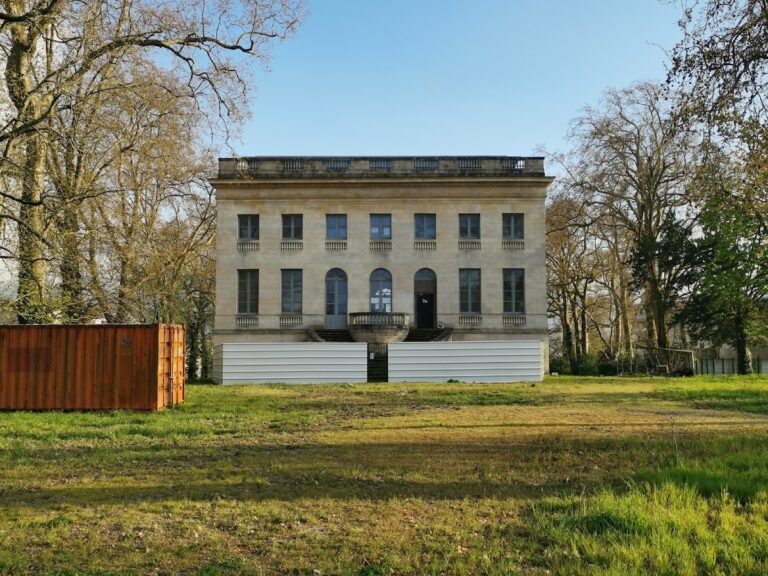
The estate retains older wine-producing buildings and the substantial residence begun in 1713. The Chiapella family added a wrought-iron entrance gate and enclosed the vineyard. A small boat used as a roof weathervane expressed the estate’s connections between France and the United States, and a model of the boat remains visible in the chapter room.
Arcades, cloister, and gardens
The Woltner family installed metal arcades manufactured in Toledo along the château façade. French-style gardens surround the buildings; their layout was simplified during the Dillon renovations, while the arcades and entrance gate were restored. A cloister and additional gardens were later constructed or designed during Robert de Luxembourg’s redevelopment.
Winemaking facilities
Modern production facilities include enamelled steel tanks with vitrified internal linings, which improved temperature control, as well as the high-technology cuvier inaugurated for the 1987 vintage. New cellars, a bottling center, storage areas, and tasting rooms were also added. One tasting room occupies the former monastic oratory, while another has wood panels carved by Italian cabinetmakers.
The red grand vin is made from manually harvested grapes sorted on trailers. Fermentation takes place in thermoregulated stainless-steel tanks holding 180 hectolitres, followed by 18 to 22 months of ageing in barrels, approximately 80 percent of them new. Annual production is about 6,000 to 7,000 cases of the grand vin, around 4,000 cases of La Chapelle, and roughly 650 to 850 cases of the white wine.