Château de Thoury: A Former Fortified Château in France


Site at a Glance
- Rating
- 4.3
- Popularity
- Very Low
- Country
- France
- Primary era
- Medieval
- Eras represented
- Medieval, Early Modern, Modern
- Civilizations
- French
- Site type
- Military
- Remains
- Castle
On this page7 sections
History
Château de Thoury is a former fortified château in Saint-Pourçain-sur-Besbre, France, established by the lords of Thoury during the medieval period and developed substantially by the fifteenth century. It formed the seigneurie of Thoury-sur-Besbre, a territorial lordship held by a local lord, and helped control movement along the Besbre River.
Medieval origins and warfare
The site began with a motte, a raised fortified mound, followed by a stone fortification by the twelfth century. Rodolphe de Thoury, a knight and the earliest known lord of Thoury, appears in a papal document of 1164 concerning a donation to Sept-Fons Abbey. An unproven tradition identifies him as one of the early Bourbonnais lords who joined a crusade.
In 1336, Goussaut de Thoury imprisoned his personal enemy, Renaud de la Motte, at the château. Around 1360, English forces occupied Château de Thoury, as they also occupied Château de Beauvoir. During the Hundred Years’ War, the prolonged conflict between the English and French crowns from the fourteenth into the fifteenth century, the château’s substantial walls were said to deter many soldiers and marauders.
Changes of lordship and rebuilding
At the beginning of the fifteenth century, Guicharde de Thoury, lady of the estate, brought the château by marriage to Jean de l’Espinasse. The property then underwent extensive architectural remodeling. Jean de l’Espinasse sold Thoury in 1501 to Charles Sorel, also known as Charles Soreau, lord of Saint-Gérand-de-Vaux and nephew of Agnès Sorel, the favored mistress of King Charles VII of France. A co-seigneurie, or shared lordship, continued until 1503.
Marguerite Sorel brought the estate to her husband Bertrand de Rollat in 1542. Sixteenth-century work included the installation of an Italian-style gallery, a Renaissance feature generally designed as a long, light-filled passage influenced by Italian architecture. Pierre Roussaut, lord of La Chasseigne, acquired Thoury in 1636. Through marriage, it passed to Philippe de Brinon in 1653 and then to his son.
Later ownership and protection
In 1715, Marie Madeleine de Brinon’s marriage transferred ownership to Jean-François Valette de Rochevert, president-treasurer of France in the financial office of the généralité of Riom. A généralité was a royal administrative and fiscal district, while its financial office handled aspects of taxation and finance. Valette de Rochevert sold the château in 1751 to Clément Conny, sieur de La Motte and de La Fay, chief clerk of the Parlement of Dombes, a sovereign judicial court for the former principality of Dombes.
Château de Thoury has remained the residence of the Conny de Lafay family into the twenty-first century. The château and its fortified enclosure were listed as historic monuments by an order dated 13 February 1928.
Remains
Fortified enclosure and entrance
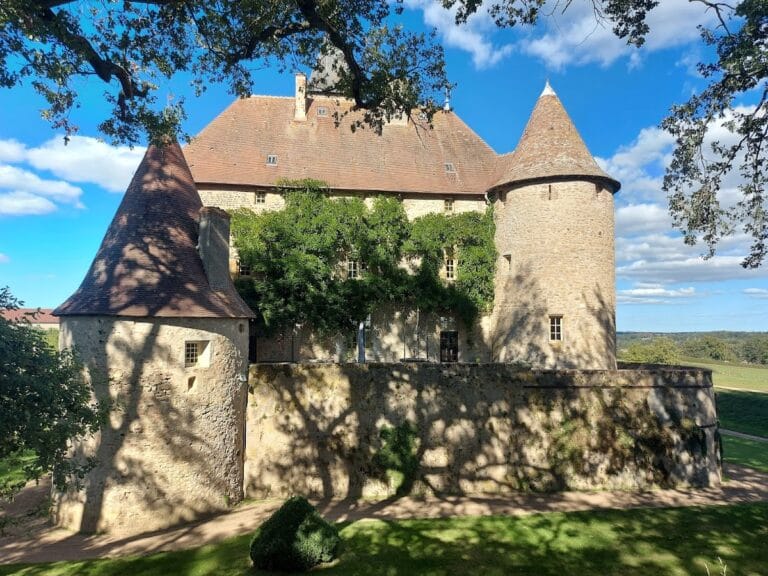
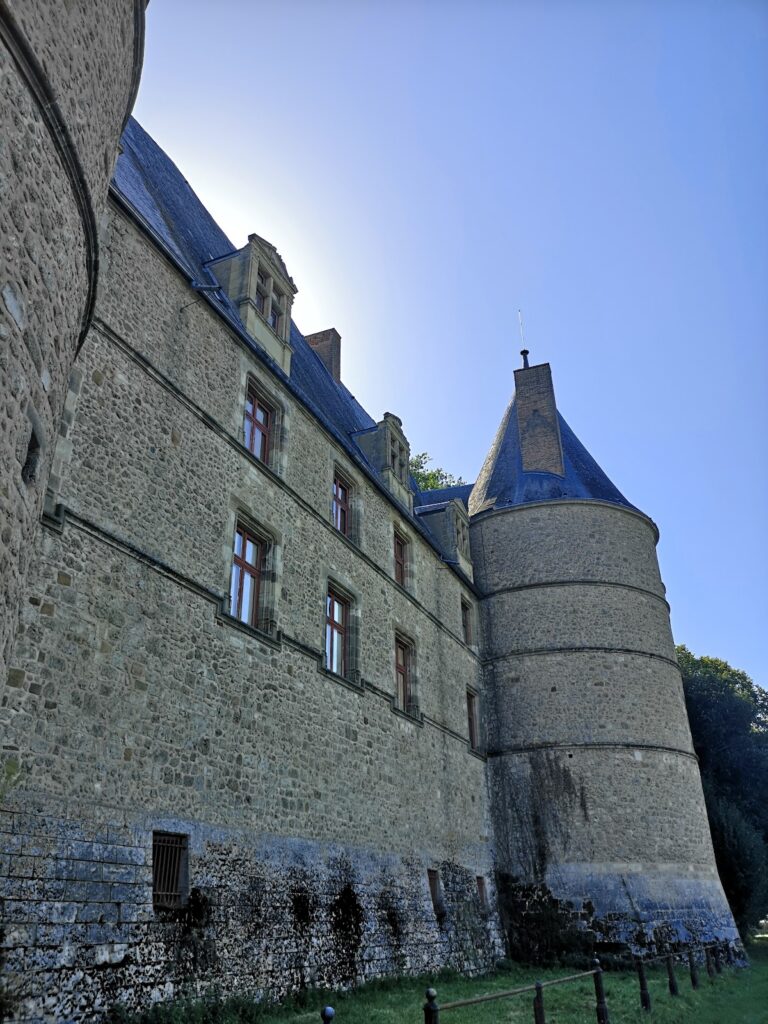
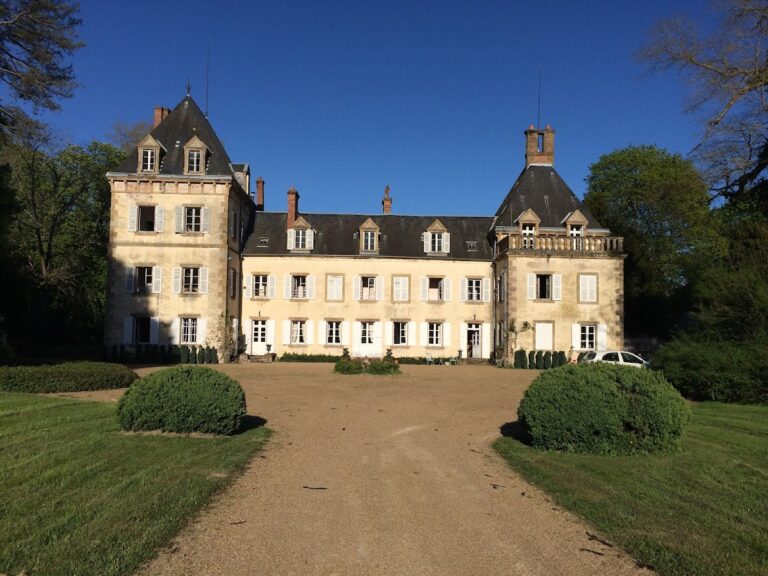
Château de Thoury is a feudal fortified enclosure set in a park, with two residential buildings joined by high curtain walls. Its plan retains the form of a feudal motte. Early palisades were replaced by masonry walls, and the residential and service buildings were later constructed against them. The principal entrance has machicolations, projecting defensive structures with openings for attacking assailants at the base of the gate or wall, together with two towers crowned by pepperpot-shaped roofs.
Courtyard and later adaptations
The enclosure contains a courtyard, the sixteenth-century Italian-style gallery, a guard tower adapted as a small hunting museum, and a watchtower containing family memorabilia. The memorabilia includes material connected with the family of which Admiral de Kerguelen was a member; an admiral is a senior naval officer.
The defensive layout also preserves evidence of later change. A drawbridge was replaced by a fixed bridge during the seventeenth century, and the surrounding ditches were filled in 1870.
Nearby sites