Semblançay Castle: A Medieval Fortress in France
Site at a Glance
- Popularity
- Medium
- Country
- France
- Primary era
- Medieval
- Eras represented
- Medieval, Early Modern
- Civilizations
- French
- Site type
- Military
- Remains
- Castle
On this page9 sections
History
Semblançay Castle is a medieval fortress in France, built by Foulques Nerra, Count of Anjou, at the end of the tenth century.
The fortress and its medieval lords
The succession of lords begins with Aleaume I, active around 1070. His son Robert, active in 1102–1103, became a monk at Marmoutier, a Benedictine abbey near Tours, and left Semblançay to his son Aleaume II, active around 1130. Aleaume II’s son Guillaume was active in 1159. Guillaume’s daughter Adeline married Robert de Perrenay, named in a 1195 charter, and their son Robert made a donation to Marmoutier in 1215. Robert’s daughter Isabelle married Hubert, also called Herbert, Turpin de Crissé, but the succession passed to her second husband, Rotrou de Montfort, who died around 1240–1241.
Rotrou’s daughter Jeanne, whose mother was Marguerite d’Alluyes, inherited Semblançay. In 1275 she married Guillaume VI l’Archevêque of Parthenay, and their son Jean I succeeded her. The English captured Jean I in 1356, possibly at Poitiers. The subsequent succession involved Isabeau l’Archevêque, her husband Jean IV, Count of Harcourt, their descendants Jean V and Jean VI d’Harcourt, and Isabeau’s half-brother Guillaume VII l’Archevêque, who died around 1401–1407. Guillaume VII’s daughter Jeanne married Guillaume IV de Melun in 1390. Their daughter Marguerite married Jacques II d’Harcourt-Montgomery. Around 1405, Guillaume de Melun ceded Semblançay to Jean d’Alençon.
The Alençon and Beaune families
Jean d’Alençon (1385–1415) was succeeded by his son Jean II (1409–1476). After Jean II was seized in 1458 for conspiracy, Charles VII granted Semblançay to Antoine d’Aubusson du Monteil on 20 November that year. Louis XI restored the estate to Jean II in 1471, then seized it again in 1474 over a new act of treason. Jean II’s son René recovered Semblançay under Charles VIII. René’s son Charles later ceded it to Louis IV de Rohan-Guémené de Montbazon, who sold it to Jacques I de Beaune on 12 October 1516.
Jacques de Beaune served Francis I as superintendent of finances and was also mayor of Tours, bailiff and governor of Touraine. A bailiff was a royal official with administrative and judicial duties in a district. Jacques was executed on 12 August 1527. The estate passed to his descendants Guillaume, Jacques III and Jean. Jean died around 1590 without children, and his sister Charlotte de Beaune (1551–1617) became his heir. She married François II de La Trémoille in 1584. Their son Louis I (1586–1613) was followed by Louis II (1612–1666).
Later owners and modern status
Louis II sold Semblançay in 1648 to Claude Housset, secretary to the king. Around 1660, Housset transferred the estate to Louis-Charles d’Albert, Duke of Luynes. It then passed through Charles-Honoré d’Albert and Charles-Philippe d’Albert to Marie-Charles-Louis d’Albert, who also acquired Langeais in 1766 and Cinq-Mars in 1768. His son, Louis-Joseph-Charles-Amable d’Albert de Luynes (1748–1807), was the last lord of Semblançay. The castle remains were listed as historic monuments by an order dated 6 March 1947.
Remains
Layout and structures
Rocky setting and enclosures
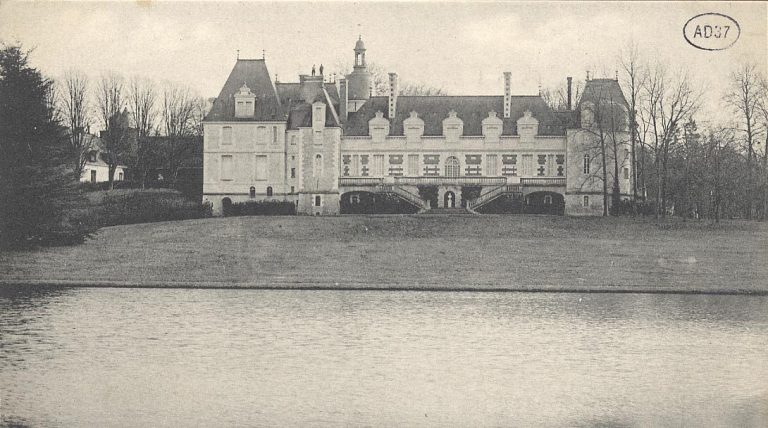
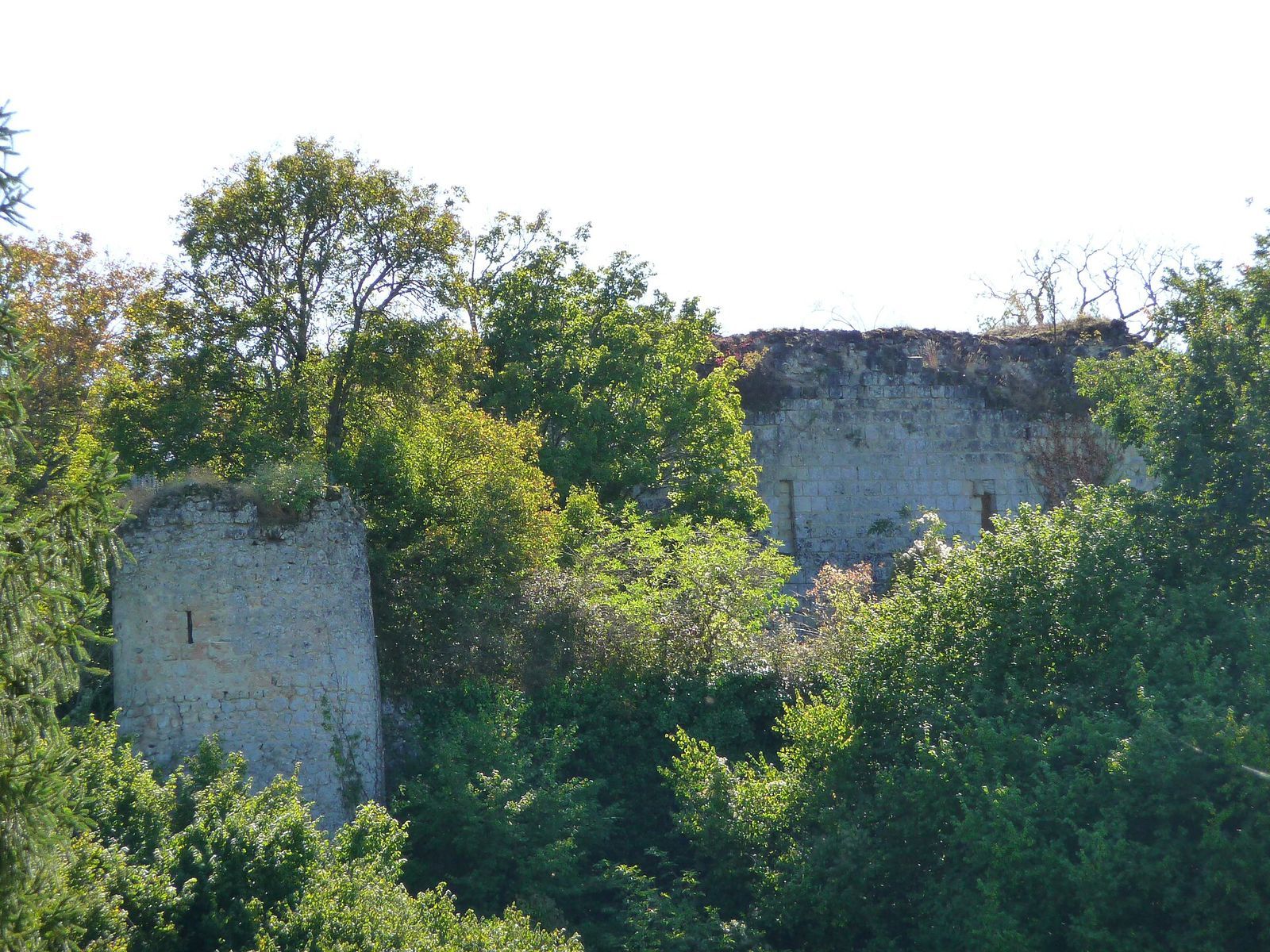
The castle occupies a rocky promontory above a pond that is now dry. A limestone islet about 50 metres in diameter forms its base, and the castle has a centered plan. Two defensive enclosures were built around the keep over the centuries. The inner enclosure follows the contours of the rock. The later outer enclosure had a regular polygonal outline and stood on the pond bed around the rock.
Keep
The oldest part of the castle is a square keep (the principal fortified tower), dating to the twelfth century and measuring 13 metres on each side. Its walls have flat buttresses (projecting supports built against walls). A straight staircase built along one wall provided access to the floors.
Other features
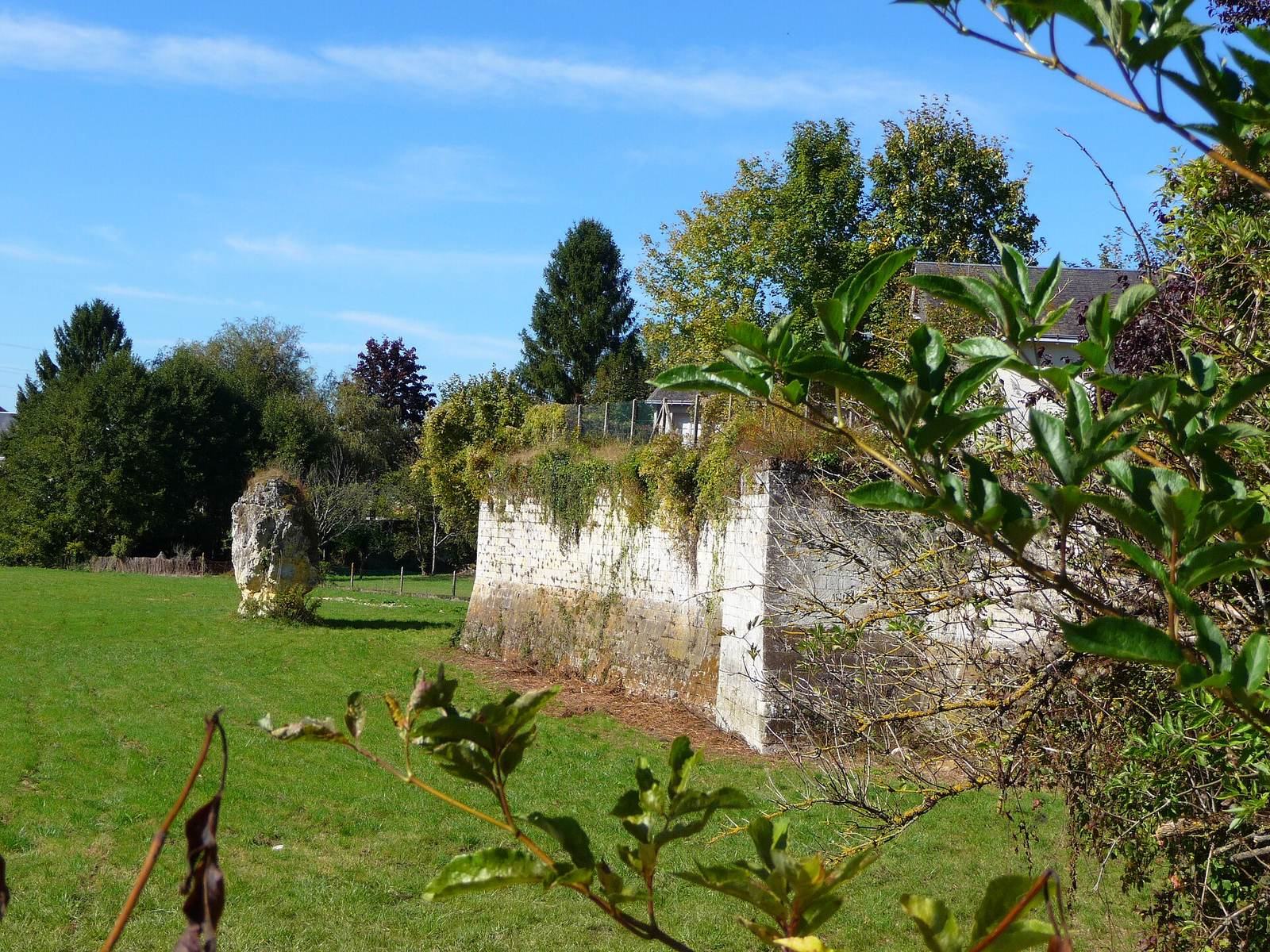
Other features include the stone facing of the outer ditch and an enclosure tower. La Morille, a wooded massif, occupies the spur on which the castle stands.