Château de Saint-Geniès: A Historic Château in France
Site at a Glance
- Rating
- 4.3
- Popularity
- Very Low
- Country
- France
- Primary era
- Early Modern
- Eras represented
- Medieval, Early Modern, Modern
- Civilizations
- French
- Site type
- Military
- Remains
- Castle
On this page5 sections
History
Château de Saint-Geniès is a historic château in Saint-Geniès, France, rebuilt in the sixteenth century by the lords of Saint-Geniès on the basis of buildings dating from the thirteenth century. It stands in the heart of the village, in the Périgord Noir of southeastern Dordogne.
Medieval Foundations and Rebuilding
An earlier château was destroyed before the lords of Saint-Geniès constructed its sixteenth-century replacement. The new building incorporated structures dating from the thirteenth century, linking the later château to an earlier phase of the site’s history.
Later Additions and Protection
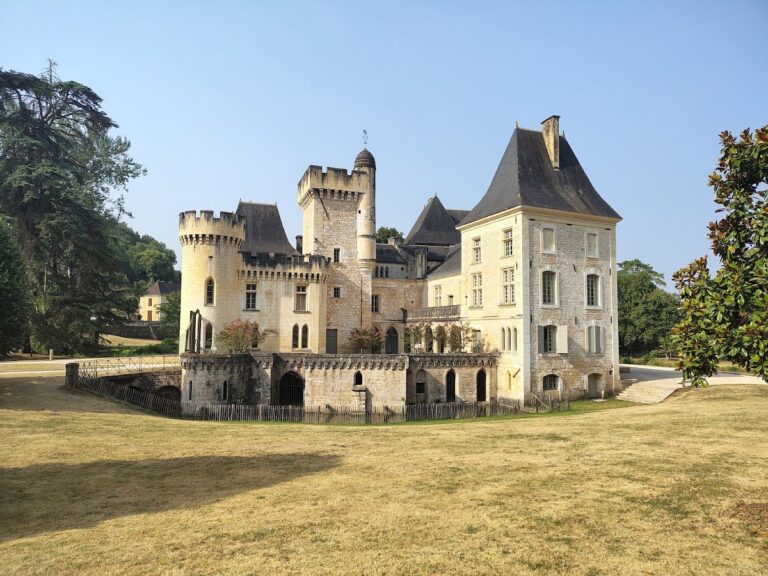
A square tower containing a spiral staircase was added in the seventeenth century. In 1912, the sixteenth-century oval tower was raised to accommodate a wall-walk and machicolations, projecting defensive structures with openings through which objects or liquids could be dropped onto attackers below.
The façades and roofs received classification as historic monuments by decree on 16 March 1976. In France, this designation, known as monument historique, is a legal heritage-protection status for buildings and sites considered historically or architecturally significant. The château remains privately owned, and part of it has been used as a restaurant since 2008.
Remains
Château de Saint-Geniès has a U-shaped plan open to the west. It is almost contiguous with the Church of Notre-Dame de l’Assomption, with a narrow lane separating the two buildings. This arrangement places the château directly beside the church and the small square in front of it.
Towers and Defensive Features
The southern oval tower projects toward the small square and is the only building in the château complex equipped with machicolations. A lower square tower at the northwest contains a spiral staircase. The roofs are entirely covered with lauzes, flat stone slabs traditionally used as roofing material in parts of France. Their restoration was carried out by an artisan whose roofing expertise is listed in France’s Inventory of Intangible Cultural Heritage.
Nearby sites