Château de Placard: A Romanesque Seigneurial Residence in France


Site at a Glance
- Rating
- 4
- Popularity
- Very Low
- Country
- France
- Primary era
- Medieval
- External website
- Open
- Eras represented
- Medieval, Early Modern
- Civilizations
- County of Champagne, French
- Site type
- Domestic
- Remains
- Castle
On this page10 sections
History
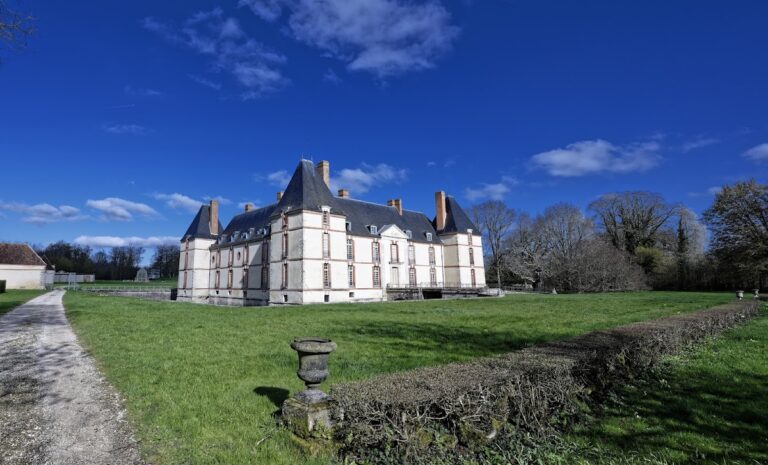
Château de Placard is a Romanesque castle in Mœurs-Verdey, France, whose construction began in the eleventh century as a seigneurial residence, the principal home and administrative centre of a feudal lord. Standing at the boundary of Brie and Champagne, it developed through successive periods of noble ownership, legal dispute, architectural remodelling, and wartime occupation.
Medieval origins and the Pacard family
The site was originally known as Villiers, and the counts of Champagne held the right of lodging there. From the twelfth century, the castle mound was occupied by the Pacarz family, also recorded in Latin as Pacardus. The Pacarz were knights who served as vassals of the counts of Blois-Champagne and Brie. Thierry Pacard appears in charters and other documents dated 1121, 1131, and 1140, while descendants named Thierry, Gautier, and Guillaume continued the family line into the thirteenth century.
The château took its present name from this medieval family only after the Hundred Years’ War. Some texts translate or render Pacardus as “Le Picard,” but the relationship between the Pacardus family and the knightly families called Le Picard, who served the house of Blois-Champagne, cannot be established with certainty.
Ownership from the fifteenth to the seventeenth century
In the fifteenth century, Château de Placard belonged to Pierre Jacques, lord of Les Bordes. His family supported Saint Martin’s Church in Mœurs. At the beginning of the sixteenth century, ownership passed to his sons-in-law, Hugues Fauquier and Georges de Condé. The property later belonged to the lords of La Noue and to members of the family of the writer Charles Sorel, including Nicolas Sorel, who served as provost of Sézanne.
The château is said to have been plundered twice by Leaguers during the Wars of Religion, the sixteenth-century civil and religious conflicts between Catholics and Protestants. The Leaguers were members or supporters of the Catholic League, a Catholic political and military movement active during those struggles.
Later owners included Louis Emmanuel de Valois, Count of Alais, and François de Coeurlys, an apothecary to the Count of Sézanne. During the great fire of 1632, Coeurlys was responsible for the Sézanne Water and Forests office. He had acquired the château from the son of the Duke of Angoulême.
The long dispute over the lordship
François de Coeurlys granted a title to the property to Jean Guillegan de Beaulieu, a mathematician and professor of geometry at the royal tree nursery of Roule. Guillegan spent much of his life defending that title in a lawsuit that lasted nearly seventy years. The opposing claim came from the heirs of Simon Petit, a Parisian notary who had obtained the château through the debts of Coeurlys’s widow and arranged its transfer as his daughter’s dowry. Jean de Coeurlys, François’s brother and also an official in the Water and Forests administration, could not enforce the donation made to Guillegan.
The lawsuit established that the lordship depended directly on the king through the château of Sézanne. That château had been incorporated into the royal domain during the reign of Philip IV the Fair. This finding contradicted the claim of the lord of Étoges, who asserted authority through the barony of Anglure. The reason for the competing claim remained unresolved.
Eighteenth-century remodelling
Charles François Roland Le Virloys substantially remodelled the château in the eighteenth century. He was described as an architect to the King of Prussia and the empress. The work followed contemporary architectural techniques and took place within the intellectual climate of the Enlightenment and physiocracy, an economic doctrine that stressed agriculture and the productivity of land. The remodelling may also have had a connection with Jansenism, a Catholic reform movement associated with moral rigor and a particular doctrine of divine grace, since members of the Caylus family active near the château belonged to that tendency.
Revolutionary and modern ownership
During the French Revolution, the château was not confiscated from the Le Cordelier family, which was allied with the Oudet family. One member of the Oudet family served as national agent of the Sézanne district. Under the First Empire, the property and its furnishings passed to the Chassériau family through a life-annuity arrangement, meaning that the transfer was linked to payments or other terms lasting for the recipient’s lifetime.
After the Revolution of 1848, the property was sold at a candle auction, an auction that ended when a specified candle burned out. General Frédéric Bonamy de Villemereuil acquired it. One of his daughters married the naval officer Albert des Portes, and the Des Portes family has occupied the château since the nineteenth century. Quentin des Portes is identified as its current owner.
War, occupation, and present use
German forces occupied Château de Placard during the Franco-Prussian War of 1870. During the First World War, it was requisitioned as a field hospital during the First Battle of the Marne, the September 1914 battle that halted the German advance toward Paris. The château escaped damage during that conflict. German forces occupied it again from 1940 to 1944, and American forces liberated it in the aftermath of Operation Overlord, the Allied invasion of German-occupied Normandy in June 1944.
Château de Placard remains a private residence undergoing restoration. It is also used for agricultural operations.
Remains
The surviving site combines an eleventh-century Romanesque castle, substantially altered in the eighteenth century, with a wooded setting and a long formal avenue. The surrounding forest occupies an area containing former quarries and clay mines, while the avenue provides a major designed element associated with the château’s later landscape.
The château and its wooded setting
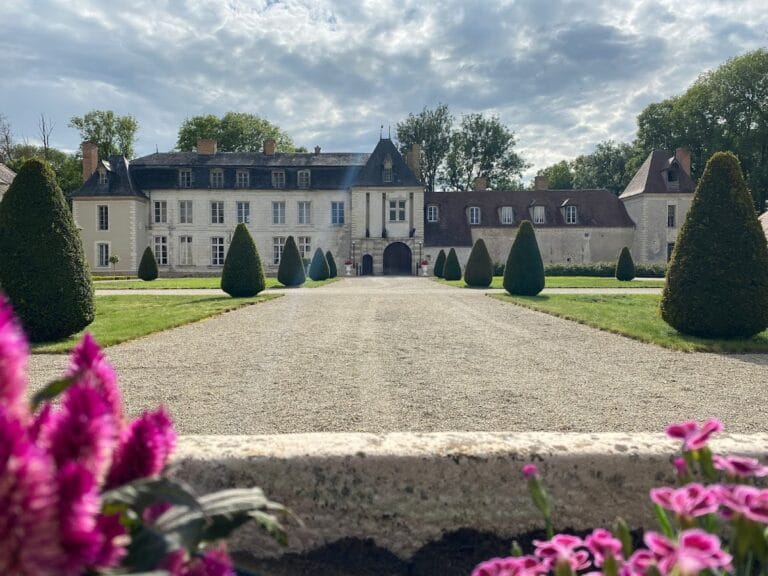
Château de Placard is an eleventh-century Romanesque structure whose form was substantially remodelled by Charles François Roland Le Virloys in the eighteenth century. The building is currently undergoing restoration while continuing to serve as a private residence and a centre for agricultural operations.
The surrounding forest covers former quarries and clay mines. It supports numerous plant and animal species, including a rare variety of orchid. These features form part of the physical environment of the château and preserve evidence of earlier extraction from the land around the residence.
The perspective avenue
A nearly one-kilometre-long avenue with a stone surface borders the forest and can be seen from one wing of the château. It was laid out and planted with trees that are now several centuries old, creating a durable connection between the building and its surrounding landscape.
The avenue was probably created in connection with theoretical work on perspective published in 1717 by the surveyor Varignon. Its formation may also have involved labour obligations established by the Corps of Bridges and Roads in 1738, during Roland Le Virloys’s remodelling of the château. These proposed explanations remain uncertain.