Château de Petite Somme: A Neo-Gothic Castle and Vaishnava Community in Belgium


Site at a Glance
- Rating
- 4.4
- Popularity
- Medium
- Country
- Belgium
- Primary era
- Modern
- External website
- Open
- Eras represented
- Modern
- Civilizations
- Belgian
- Site type
- Domestic
- Remains
- Castle
On this page9 sections
History
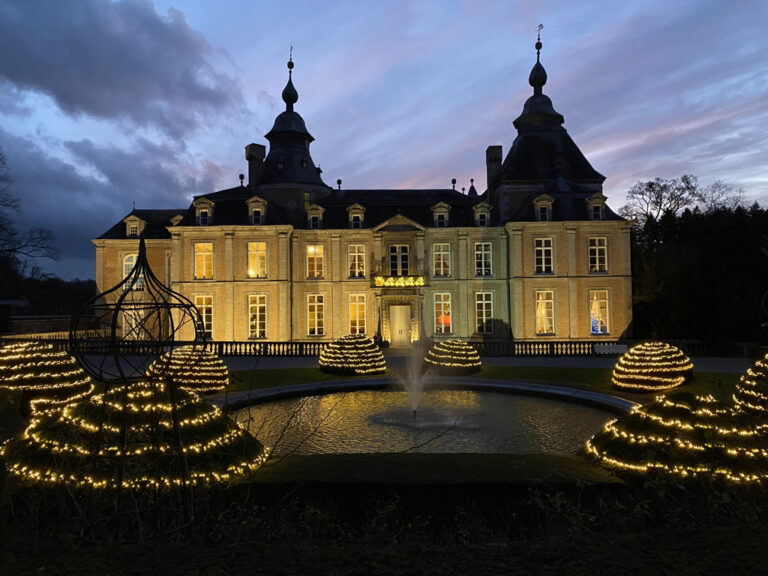
Château de Petite Somme is a nineteenth-century Neo-Gothic castle in Belgium, at Septon in the municipality of Durbuy. Completed in 1888, the limestone building occupies the site of a medieval castle and later country mansion. Today, the restored castle forms the centre of Radhadesh, a Vaishnava religious community and the Belgian headquarters of the International Society for Krishna Consciousness, commonly known as ISKCON or the Hare Krishna movement.
Medieval origins and defensive role
The earliest historical evidence for the site dates to 1065, when its owner, Gozelon de Montaigu, plundered the Abbey of Saint-Hubert. After his death, his remorseful widow transferred the castle and its subjects to the abbey, and control of the land consequently passed to the Bishop of Liège.
By the end of the eleventh century, the castle formed part of a defensive line. At the beginning of the fourteenth century, Jean of Bohemia built a tower at the site. During the same century, the castle became part of the northern defensive line of the Duchy of Luxembourg, which received it as payment for debts.
The Hamal and Favero periods
The Hamal family owned Château de Petite Somme from 1461 until 1774. The property then passed through several aristocratic families from the Benelux and elsewhere before reaching the Favero family.
By the Favero period, the medieval castle had been replaced in practical use by the residence associated with the Hamal family. Baron Charles de Favero demolished that residence and built a country mansion on its foundations. The Favero family retained the property until 1877, when it was inherited by Louise Marie Eulalie, a distant relative of Baron Victor Albert de Favero.
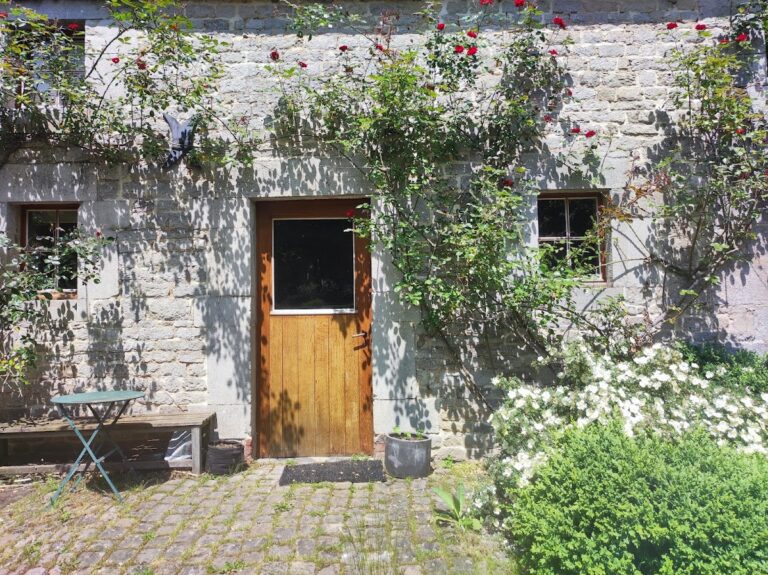
In 1888, the new owners demolished Charles de Favero’s brick mansion and constructed the present Neo-Gothic castle on its site. The nineteenth-century building therefore preserves the location and foundations of an earlier residence while expressing a later architectural period. Some older buildings also remained around the castle, including a doorway bearing the coats of arms of the Hamal and de Grane families.
War, sale, and educational use
During the First World War, the de Vaux family used the castle as a hospital for wounded people. Fighting destroyed houses in the nearby village of Petite-Somme, and villagers sought refuge in the castle. Some buildings adjoining the castle were also damaged.
During the Second World War, several members of the Resistance were killed in the area around the castle. American forces liberated the castle at the end of the war. Count Charles de Jourda, its owner, died in 1946, after which the estate and 160 hectares of adjoining land were sold.
Between 1948 and 1949, a group of philanthropists converted the castle into a recreational centre for students and scholars. The complex included a school, a youth tourist base, a campsite, a hotel, and a restaurant. In 1975, the castle was acquired by the Brussels broker Serge Fransevich, who later sold it in 1979 to the International Society for Krishna Consciousness together with 15 hectares of adjoining land.
Radhadesh and ISKCON
The Belgian branch of ISKCON was formally registered in Brussels in 1977 as the Association pour la conscience de Krishna, under the direction of Claude Nouwe, a former employee of the Free University of Brussels. Its headquarters moved from Brussels to Château de Petite Somme in 1980. ISKCON was founded by Bhaktivedanta Swami Prabhupada, an Indian religious teacher who established an international network of temples and communities within the Vaishnava tradition, a Hindu tradition centred on devotion to Vishnu and his principal manifestations.
ISKCON restored the castle and converted it into a Vaishnava temple and ashram, a residential religious community devoted to spiritual practice, study, and discipline. The community was named Radhadesh, meaning “Land of Radha.” Founded in 1980, it became the Belgian headquarters of the organization and the largest Vaishnava temple in the Benelux.
The community’s religious history includes deities installed at ISKCON’s Amsterdam temple. In 1972, Bhaktivedanta Swami Prabhupada personally installed the deities of Jagannatha, Baladeva, and Subhadra during a ceremonial ritual. The deities of Radha-Gopinatha were installed there in February 1977 and moved to Radhadesh in 1980, where they continue to be worshipped. In this context, deities are consecrated images treated as embodiments of divine presence during worship.
Radhadesh expanded beyond the original 15 hectares, adding 32 hectares of woodland, meadow, and agricultural land to create a total holding of 47 hectares. A guesthouse with a conference hall opened in July 2002, and the Bhaktivedanta College, a Vaishnava theological college, began operating there in the same year. In 2006, about 45 Krishna devotees lived permanently in the ashram, most as monks or nuns receiving spiritual training, while a further 60 to 70 devotee families lived in an area of private houses.
Radhadesh is registered in Belgium as a nonprofit organization governed by a General Assembly, with daily administration carried out by an Administrative Council. Hermann Janssens, whose spiritual name is Hridaya Chaitanya Dasa, has led the community since 1986. He joined ISKCON in Amsterdam in 1980 and settled at Radhadesh that year. The community remains an active centre of worship and spiritual retreats.
Remains
The Neo-Gothic castle
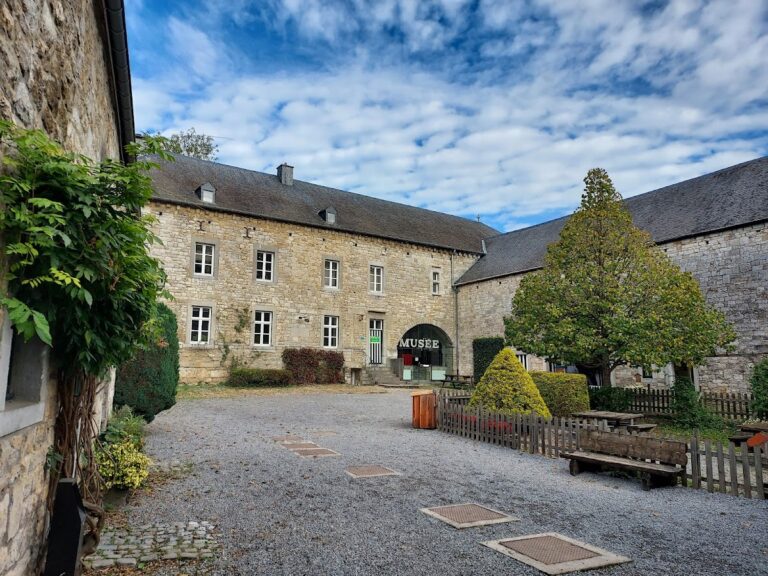
The present castle is a limestone Neo-Gothic building completed in 1888. It stands on the site and foundations of the brick country mansion built by Charles de Favero, which itself followed the earlier residence associated with the Hamal family. The nineteenth-century construction also reshaped the surrounding landscape, with much of the woodland around the castle cut down during the building period. Older fabric survives in the surrounding buildings, including a doorway carrying the coats of arms of the Hamal and de Grane families.
The temple within the castle
The restored castle houses the Radha-Gopinatha temple. Its installed deities include Radha and Krishna, Jagannatha, and Gaura-Nitai, divine forms worshipped within the Krishna devotional tradition. Radha and Krishna are central to Gaudiya Vaishnavism, a Vaishnava tradition associated with devotion to Krishna and Radha. The temple occupies the converted historic building, joining its nineteenth-century architectural fabric with the religious use established at Radhadesh.
Radhadesh grounds and associated buildings
The Radhadesh grounds extend across 47 hectares of woodland, meadows, and agricultural land. The institutional complex includes the Bhaktivedanta College, a guesthouse with a conference hall, and the Gopinatha Park. Other buildings and facilities include a traditional bakery, an Indian-goods shop, a cafeteria, and a vegetarian restaurant. Together, these structures form the wider community surrounding the castle, whose functions include worship, residential religious life, theological study, and spiritual retreats.
Nearby sites