Château de Pardailhan: A Former Seigneurial Residence in France


Site at a Glance
- Rating
- 4.7
- Popularity
- Very Low
- Country
- France
- Primary era
- Early Modern
- External website
- Open
- Eras represented
- Early Modern
- Civilizations
- French
- Site type
- Domestic
- Remains
- Castle
On this page9 sections
History
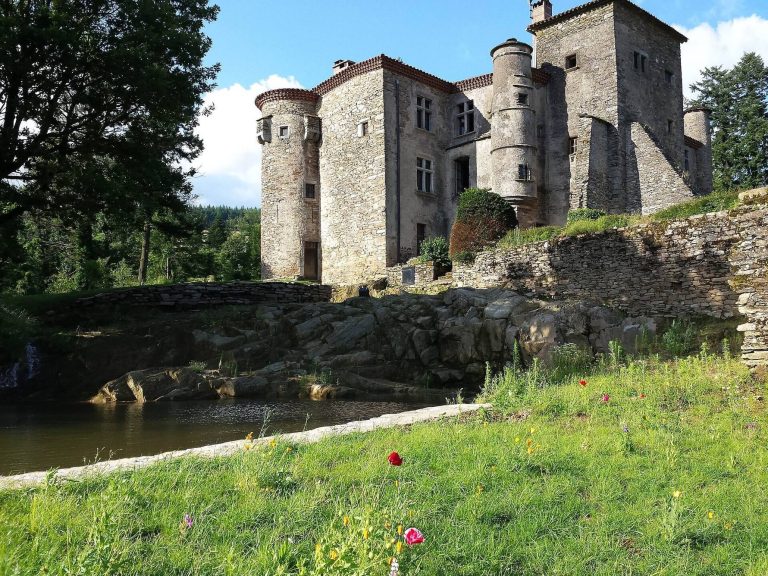
Château de Pardailhan is a former seigneurial residence in France, built by the Brugairoux family around 1650 at Pontguiraud in the village of Pardailhan. A seigneurial residence served as the principal home and administrative center of a feudal lord. The château belongs to a building history extending from the seventeenth to the nineteenth century and replaced neither the older fortified castle nor its site.
The Brugairoux residence
Francelin de Brugairoux was the initial owner of the new château. It stood on the site of a farm and a seigneurial toll station along the former road between Castres and Béziers. The earlier fortified castle, near the hamlet of Pardailho, had already been in ruins since the sixteenth century. The new residence instead occupied the center of the Brugairoux seigneurial domain.
The construction strengthened the family’s authority as the Brugairoux gradually bought the shares of Pardailhan’s co-lordship. This lordship had been divided equally between the king and co-lords. By establishing their residence at the domain’s administrative center, the Brugairoux made the château the principal seat of their local power.
The Portes barony
In 1673, the Brugairoux heirs sold the château and the co-seigneurship of Pardailhan to their cousin François de Portes. Three years later, he acquired the king’s share of the lordship and became its seigneur engagiste, a person who held royal seigneurial rights through an arrangement with the Crown. In 1696, the Montpellier Court of Accounts recognized him as the direct and universal feudal lord of the barony of Pardailhan. He then adopted the title Baron of Pardailhan.
Under François de Portes, the château became a center of renewed seigneurial authority. A court of justice was installed there, allowing the lord to exercise local judicial power. He also pursued the collection of seigneurial rights, including dues that had sometimes fallen into disuse. During war or civil unrest, the château and its adjoining buildings provided refuge for inhabitants and their possessions, while guards were maintained there day and night.
From the Portes to the Treil family
François Joseph de Portes, Marquis of Portes and Baron of Pardailhan, owned the château and seigneurie from 1712 to 1750. He presided over the Parliament of Toulouse, a high royal court with judicial and administrative authority in the Toulouse region. Royal letters patent made him a marquis in 1747.
In 1750, he sold the domain and barony to François de Treil, who had recently entered the nobility through the office of counsellor-secretary to the king. The Treil de Pardailhan family altered the château further, with an inscription in the kitchens recording these works. Thomas de Treil de Pardailhan, who possessed the property from 1782 to 1806, was the last seigneurial baron of Pardailhan.
Thomas de Treil de Pardailhan supported the French Revolution and was elected deputy for the department of Paris to the Legislative Assembly, the representative institution created during the Revolution’s early years. During the Restoration, the return of the Bourbon monarchy after Napoleon’s fall, he was appointed mayor of Pardailhan.
Nineteenth-century ownership and the estate’s division
In 1806, Jean-Baptiste-Charles Legendre de Luçay, First Prefect of the Imperial Palace under Napoleon I, and his wife Jeanne Charlotte Papillon d’Auteroche, Mistress of the Wardrobe to the Empress, bought the château and domain at auction. They sold the property in 1809 to Charlotte Gautier de Vinfrais, the wife of Thomas François de Treil de Pardailhan.
The financially ruined Treil family sold the château and domain in 1829 to André Tissié-Sarrus, a wealthy Protestant banker from Montpellier. The property later passed to his son Louis Tissié. Under André Tissié, the estate grew to more than 700 hectares at its greatest extent. From 1880, the Tissié children divided the Pardailhan domain and sold its parts to local inhabitants.
After the estate’s division, the château became the residence of Gaston Gautier, a major landowner from Narbonne and a noted botanist, who owned it from 1884 to 1908. From 1908 to 1926, the château and its woodland belonged to the Mazauric Beaulieu family, descendants of the Treil family. Gaston Gautier introduced conifers to the region and planted them in the château park. The Joecker family now owns the property, which is used as a holiday rental.
Remains
Residence and estate setting
The surviving château is a seigneurial residence established around 1650 at Pontguiraud, on land previously occupied by a farm and toll station. Its position beside the former Castres to Béziers road formed part of a larger domain whose fields and buildings were administered from the residence. The estate later expanded beyond 700 hectares before being broken up from 1880 onward.
Courtyard and defensive enclosure
A 1670 description presents the complex as more than a single dwelling. It included the lord’s château, a lower courtyard, a sheepfold, towers, and a fausse-braie, an additional low defensive enclosure surrounding a principal fortification. The complex bordered the main road and the lord’s rural meadow, linking the residence with both communications and estate land.
The buildings also accommodated a court of justice and could function as a refuge during war or civil unrest. In those periods, inhabitants brought their possessions inside and maintained a continuous guard. These uses connected the physical complex with the château’s judicial and protective responsibilities within the seigneurial domain.
Kitchen alterations and park
Alterations made by the Treil de Pardailhan family after 1750 are recorded by an inscription in the kitchens. The château park contains conifers planted by Gaston Gautier, including trees he introduced to the region. The park and the surviving residence therefore preserve elements associated with both the eighteenth-century Treil alterations and the later botanical interests of the nineteenth-century owner.