Château de Montjoie-le-Château: A Ruined Fortified Castle in France
Site at a Glance
- Rating
- 3.9
- Popularity
- Very Low
- Country
- France
- Primary era
- Medieval
- External website
- Open
- Eras represented
- Medieval
- Civilizations
- Holy Roman Empire
- Site type
- Military
- Remains
- Castle
On this page7 sections
History
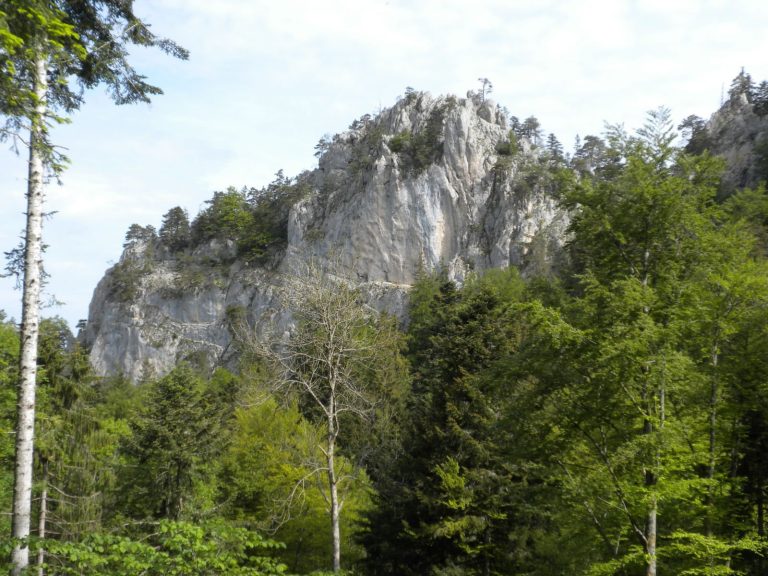
Château de Montjoie-le-Château is a ruined fortified castle in France, built by the Glère family at the beginning of the thirteenth century during the Wars of Méranie. It stands on a rocky spur above Montjoie-le-Château in the Doubs valley, upstream from Saint-Hippolyte, where the river passes through a confined valley. The castle controlled this narrow passage and became the center of the lordship, later the barony, of Montjoie.
Foundation and lordship
The castle appears to have been established during the political and succession struggles connected with the duchy of Mérania. The Glère family probably built it under Richard I de Glère, on the site of an earlier Neolithic camp associated with settled Stone Age communities. Its name refers to the “mountain of joy,” rendered as Mons Gaudii in Latin and Frosberg in German. The name was linked with the site’s association with amusement and festivities.
Medieval conflicts
Montjoie resisted an unsuccessful siege by Jean de Thierstein, bailiff of Ferrette, in 1428. A bailiff was an official with judicial and administrative authority. Imperial troops captured the castle in 1444, and Swiss Confederates took it again in 1475 during the Burgundian Wars, late-fifteenth-century conflicts between the Burgundian state and the Swiss Confederates.
Destruction during the Ten Years’ War
In May 1635, during the Ten Years’ War, the Franche-Comté phase of the wider Thirty Years’ War, the Lorraine captain Saint-Balmont sought refuge at Montjoie while Marshal de La Force pursued him. He brought at least 500 soldiers into the castle. After what appears to have been a three-week siege and more than 200 cannon volleys, the garrison opened the gates on 6 June 1635. French troops under the marshal then definitively ruined the castle.
The site containing the ruins was classified on 27 January 1934. On 24 July 1985, the castle ruins, substructures, chapel, and archaeological remains were inscribed as historic monuments in France.
Remains
The site covers 85 ares on the rocky spur and follows a trapezoidal plan closed by an 11-metre semicircular front. Two thick walls enclosed seigneurial residences, accommodation for the garrison, a chapel, and towers. The surviving structures preserve elements of the castle’s defensive perimeter and internal arrangement.
Keep and defensive remains
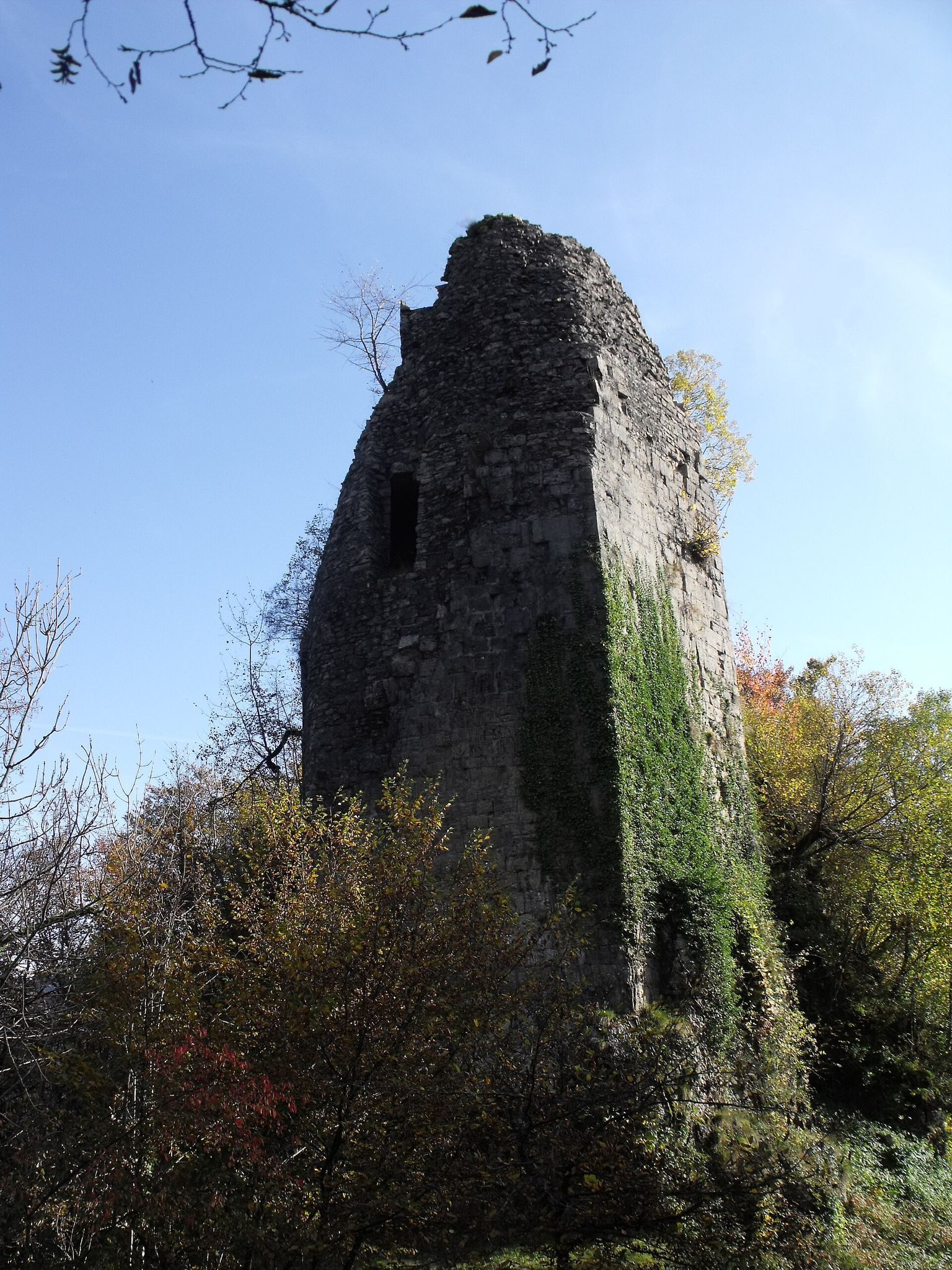
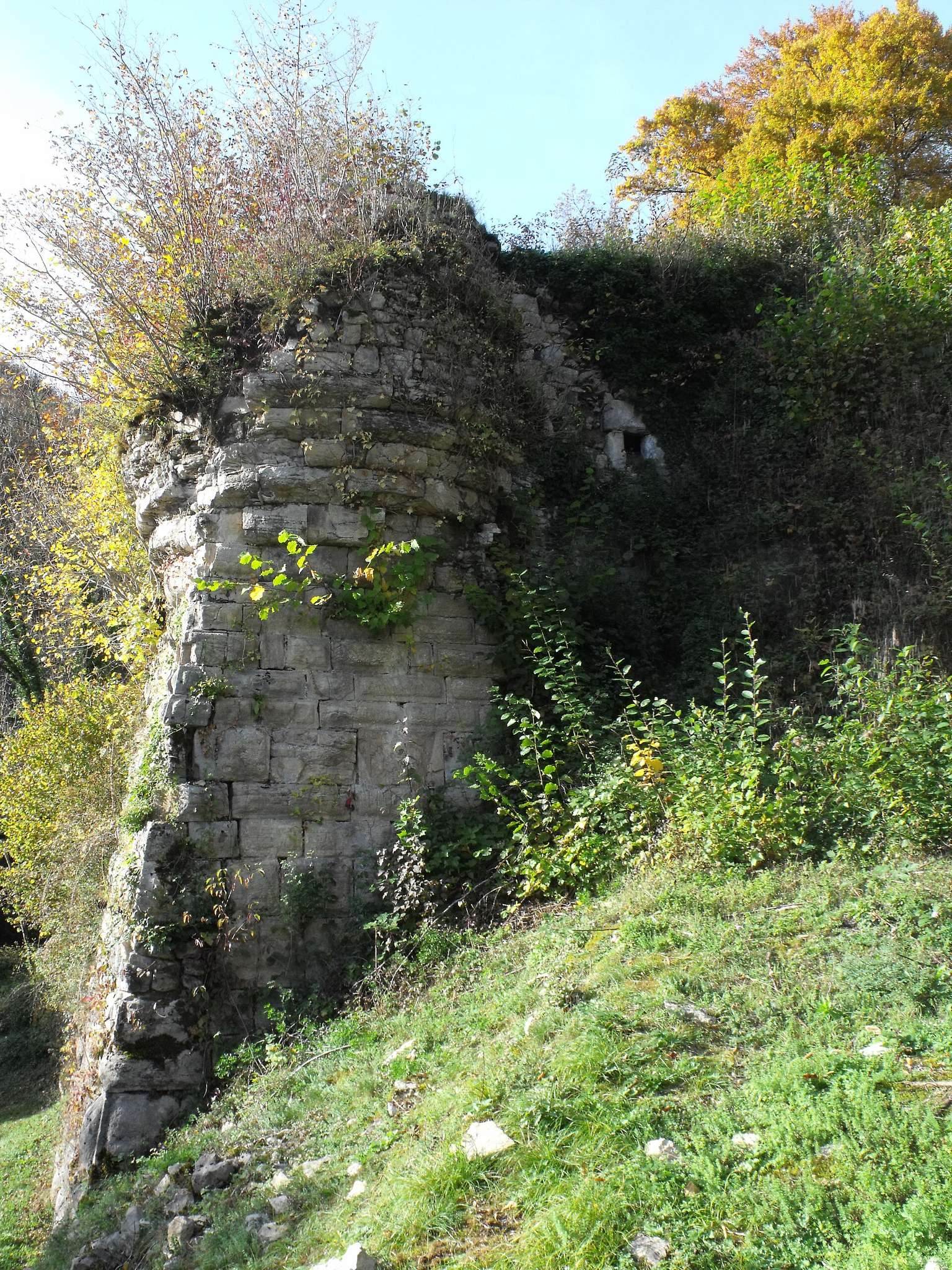
At the highest point stands a massive pentagonal keep, probably constructed at the beginning of the thirteenth century. A substantial part of the tower remains standing. Fireplaces survive on both its first and second floors. Beside the fireplace on the first level are a hand-washing basin and access to latrines. Near the chapel, wall remains include finely bossed stones, whose outer faces project from the wall, supporting the corbel of a projecting tower. In several places, vaults reveal collapsed entrances to former cellars.
Chapel of Saint George
The independent chapel was probably built at the same time as the castle, although its precise date is uncertain. Dedicated to Saint George, a Christian saint traditionally associated with the slaying of a dragon, it survived the French destruction of 1635. The chapel contains the remains of Claudine de Montjoie, a member of the Montjoie family who died in 1612.
The chapel has three bays and Flamboyant architecture, a late Gothic style known for elaborate, flame-like tracery. Its column capitals and bases are undecorated. One window is Romanesque, while two others are Gothic, preserving a transition between the successive medieval architectural styles.