Laclaireau Castle: A Belgian Residence Rebuilt in the 19th Century
Site at a Glance
- Popularity
- Low
- Country
- Belgium
- Primary era
- Modern
- Eras represented
- Modern
- Civilizations
- Belgian
- Site type
- Domestic
- Remains
- Elite Residence
On this page6 sections
History
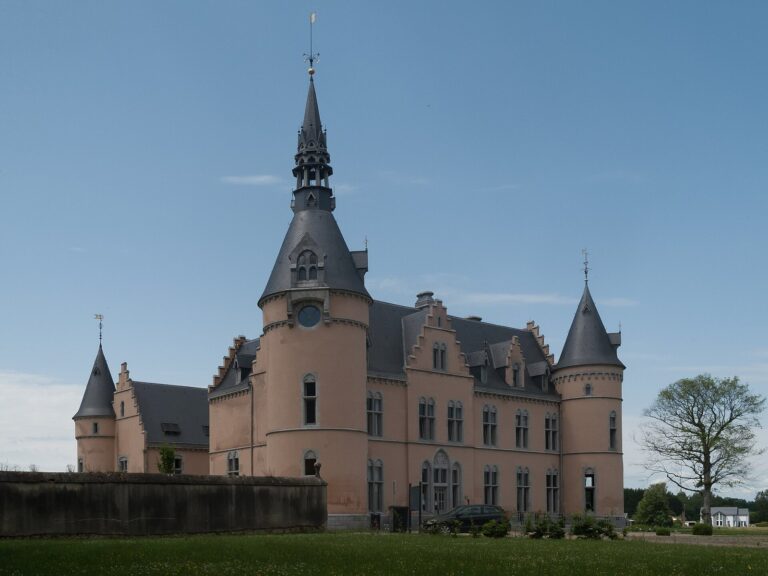
Laclaireau Castle is a country residence in Belgium, rebuilt between 1852 and 1855 in an eclectic style dominated by French Neo-Renaissance design, a revival of Renaissance forms. The estate passed from the Lespine family to the counts of Briey through marriage and was associated with springs and ironmaking.
The Lespine and Briey estate
A residential château stood on the estate by about 1640 and remained the Lespine family’s home until 1772. The family owned a blast furnace and forge at Laclaireau, and the estate’s springs were linked with the development of metallurgy. Charlotte de Lespine’s marriage to Count Louis Giraud Nicolas de Briey brought the property to the Briey family, counts of Briey and barons of Landres. It remained in their possession until 1794.
Destruction and rebuilding
During the French Revolution, the political upheaval that began in 1789, French troops set the château alight on 16 April 1794. The fire destroyed the building amid violence in Ethe on 16 and 17 April.
Count Camille Louis Hyacinthe de Briey (1799-1877) initiated construction of the present château between 1852 and 1855. A senator, he served first as finance minister and then as foreign-affairs minister in Jean-Baptiste Nothomb’s government, which held office from 1841 to 1845, before becoming a diplomat.
From 1985 to 2002, the residence belonged to Mme Boulangé-Bertinchamps. Since 2002, the Foundation Demeures & Châteaux has maintained the estate and is listed as its current owner. The château is used as a private residence.
Remains
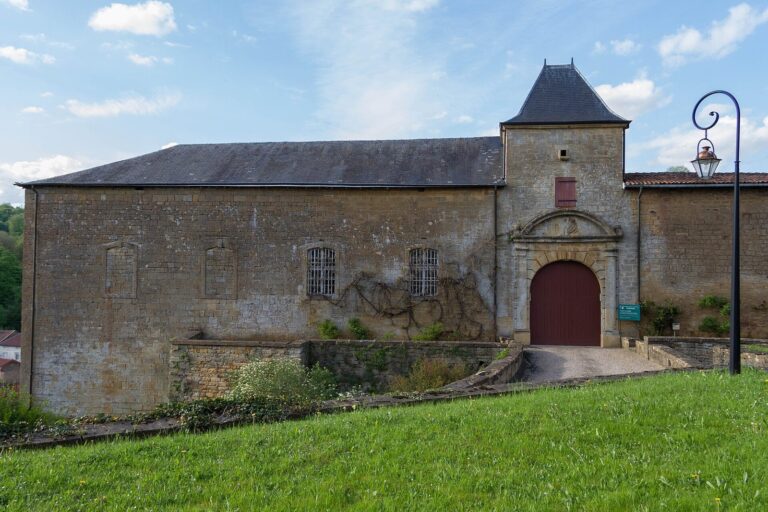
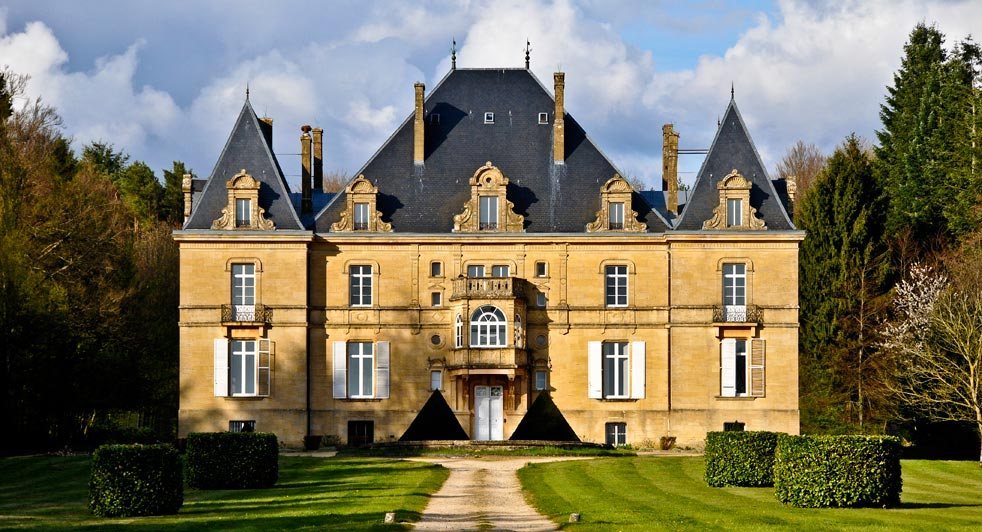
The estate’s residential architecture includes an earlier courtyard-plan complex and the present château, an eclectic building with a centrally organized entrance front.
The earlier château
The earlier residence had a four-sided plan arranged around a courtyard. Its main building and two wings formed the sides of the complex, which was surrounded by a moat.
The present château
The building’s design is restrained and balanced, with French Classicist influence, based on formal proportions, and elements associated with Russia, reflecting de Briey’s diplomatic posting there. A central loggia, an open-sided gallery, overlooks the entrance. Two wings added around 1877 emphasize the building’s horizontal lines and contribute to its Renaissance character.