Château de la Gaudinière: A Historic Estate in Nantes, France


Site at a Glance
- Rating
- 4.5
- Popularity
- Low
- Country
- France
- Primary era
- Modern
- Eras represented
- Modern
- Civilizations
- French
- Site type
- Domestic
- Remains
- Elite Residence
On this page8 sections
History
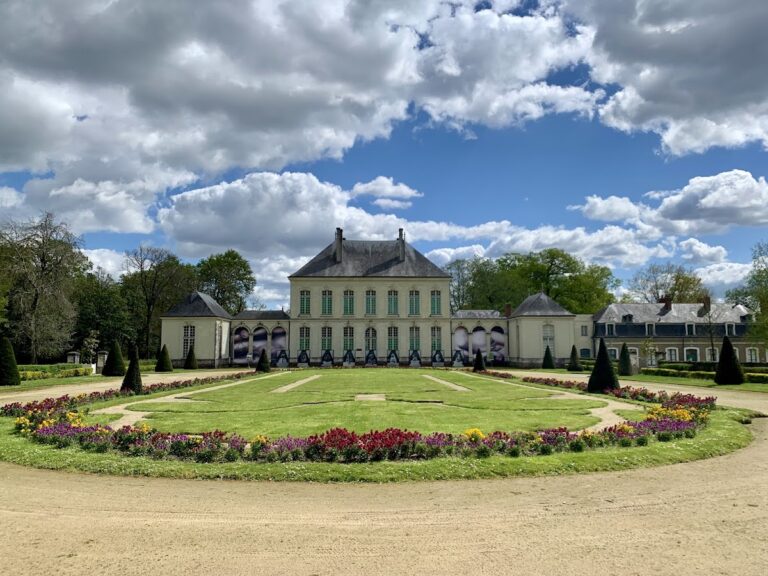
Château de la Gaudinière is a historic estate in Nantes, France, with origins in the eighteenth century and a present château built between 1864 and 1873. It stands in the Breil-Barberie district, where the residence and its park have passed through private, institutional, and municipal ownership.
The eighteenth-century estate
Before the French Revolution, the estate belonged to Louis Chaurand, a wealthy Nantes shipowner connected with the Beauharnais and Tascher de la Pagerie families. The earlier property included a principal residence and landscaped grounds, establishing the estate’s eighteenth-century origins.
Ownership and rebuilding in the nineteenth century
In 1814, ownership passed first to the d’Aux family and then to the Perrien family. During the Restoration, the period from 1814 to 1830 when the Bourbon monarchy returned after Napoleon’s fall, the Goüin family acquired the estate.
Banker J. Brousset, a relative of the Goüin family, purchased the château and park in 1857. He enlarged and embellished the grounds with the participation of the landscape architect Provost. The park grew from 8 hectares at the time of Brousset’s purchase to 17 hectares by 1881.
Between 1864 and 1873, Brousset commissioned Léon Lenoir to replace the earlier residence with the present château. A giant sequoia from North America was planted near the building in the upper part of the park in 1864. The new residence and its enlarged grounds formed the nineteenth-century estate that substantially altered the earlier property.
Institutional use and municipal ownership
In 1918, the Belot banking family acquired the estate and restored the park with assistance from the Nantes horticultural landscapers, the Lizé brothers. The family sold the park to the City of Nantes in 1936, and part of the grounds was used to create Pont du Cens Cemetery. In 1942, the château and its immediate surroundings were sold to Fondation d’Auteuil, a French charitable institution supporting children, young people, and families in difficulty.
In 1948, the Caisse régionale d’assurance maladie acquired the property to establish a functional rehabilitation centre. Over the following years, 7,500 square metres of additional buildings were constructed. The wooded setting prevented further expansion, making relocation necessary.
Return to municipal control
In 1992, the City of Nantes repurchased the château and its surroundings. It demolished the buildings added for the rehabilitation centre and restored the château’s exterior toward its original nineteenth-century appearance. At the beginning of the twenty-first century, the château remained unoccupied. The property is currently owned by the City of Nantes.
Remains
The château and its construction
The present château occupies the site of the earlier residence and was erected between 1864 and 1873 under the direction of Léon Lenoir. Its facade is built of red brick, a material that contrasts with the white tuffeau stone, a fine-grained pale limestone widely used in western France, found in many Nantes follies and large bourgeois residences along the Erdre River. The building has undergone substantial alterations, while the demolition of the rehabilitation-centre additions allowed its exterior to be restored toward its original appearance.
Park and historic estate features
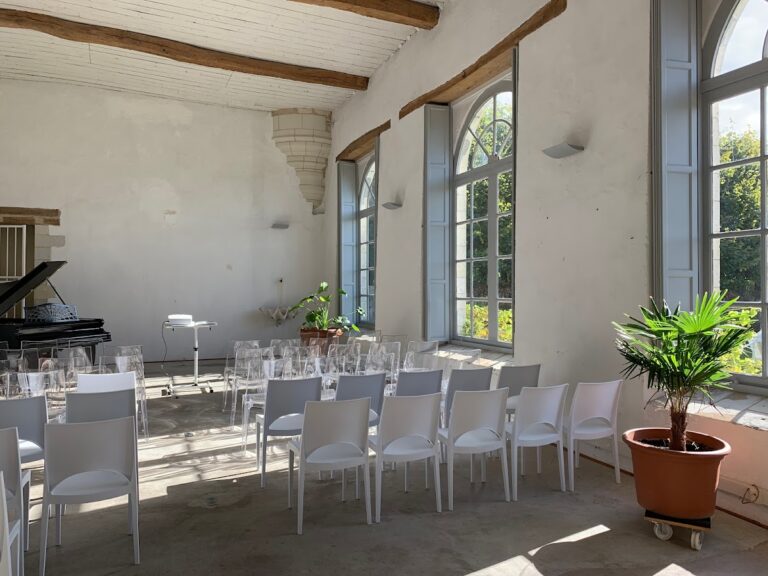
The estate’s grounds include the elements associated with the earlier property: an English-style garden, an orangery, an orchard with a pond, wooded areas, and an upper park. An orangery, a garden building designed to protect citrus and other frost-sensitive plants, formed part of this landscaped setting. The park expanded from 8 hectares in 1857 to 17 hectares by 1881, and the giant North American sequoia planted near the château in 1864 remains a defining historic planting of the upper park.
Nearby sites